

















1 min read
Saturn (Webb NIRCam Wide Image)
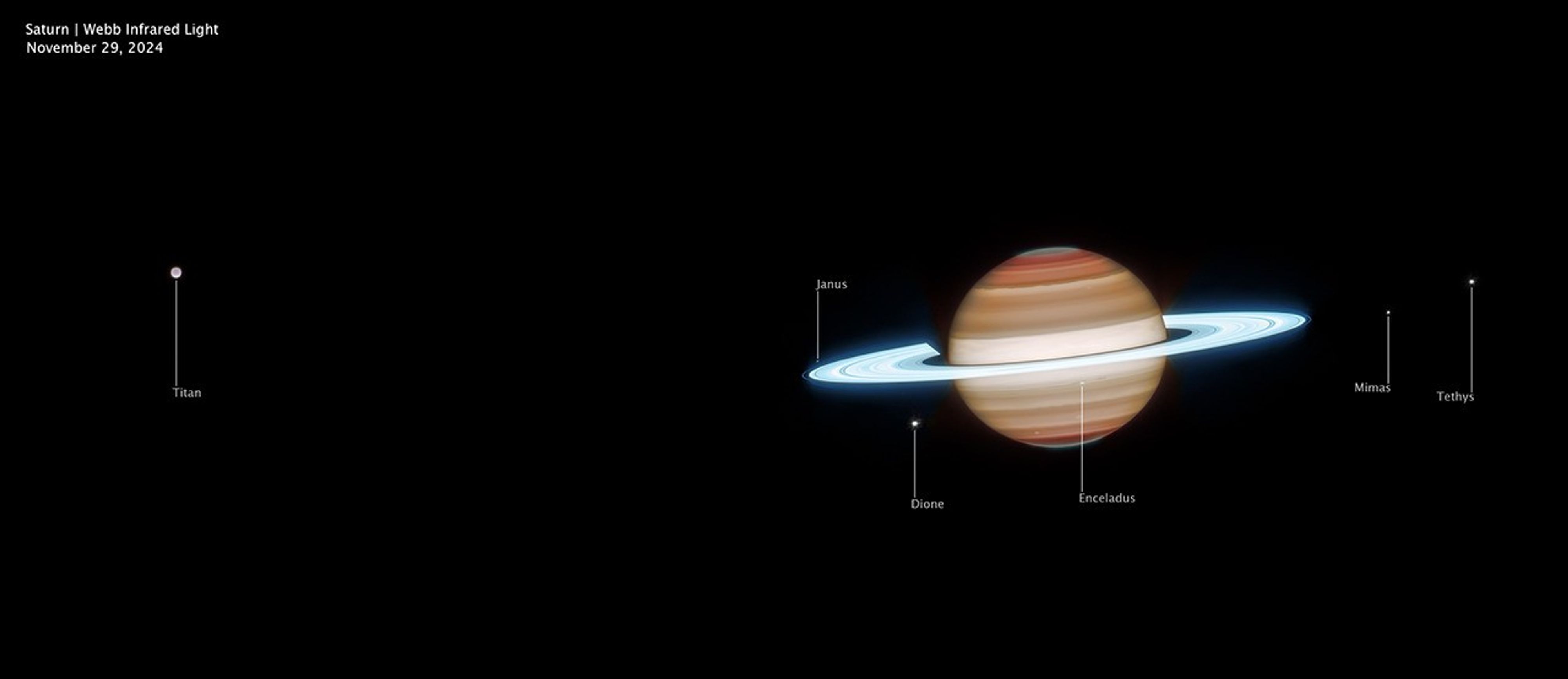
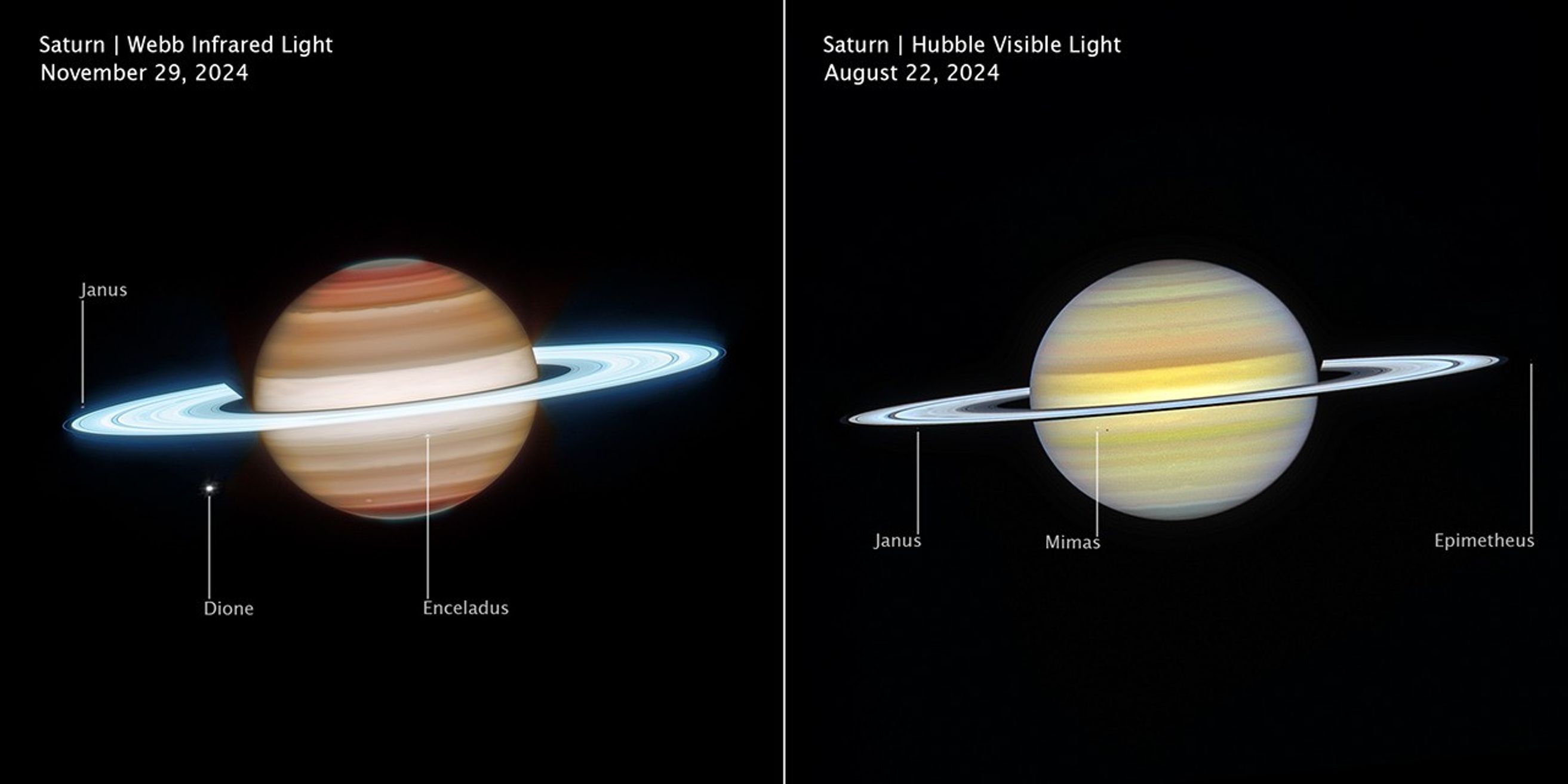
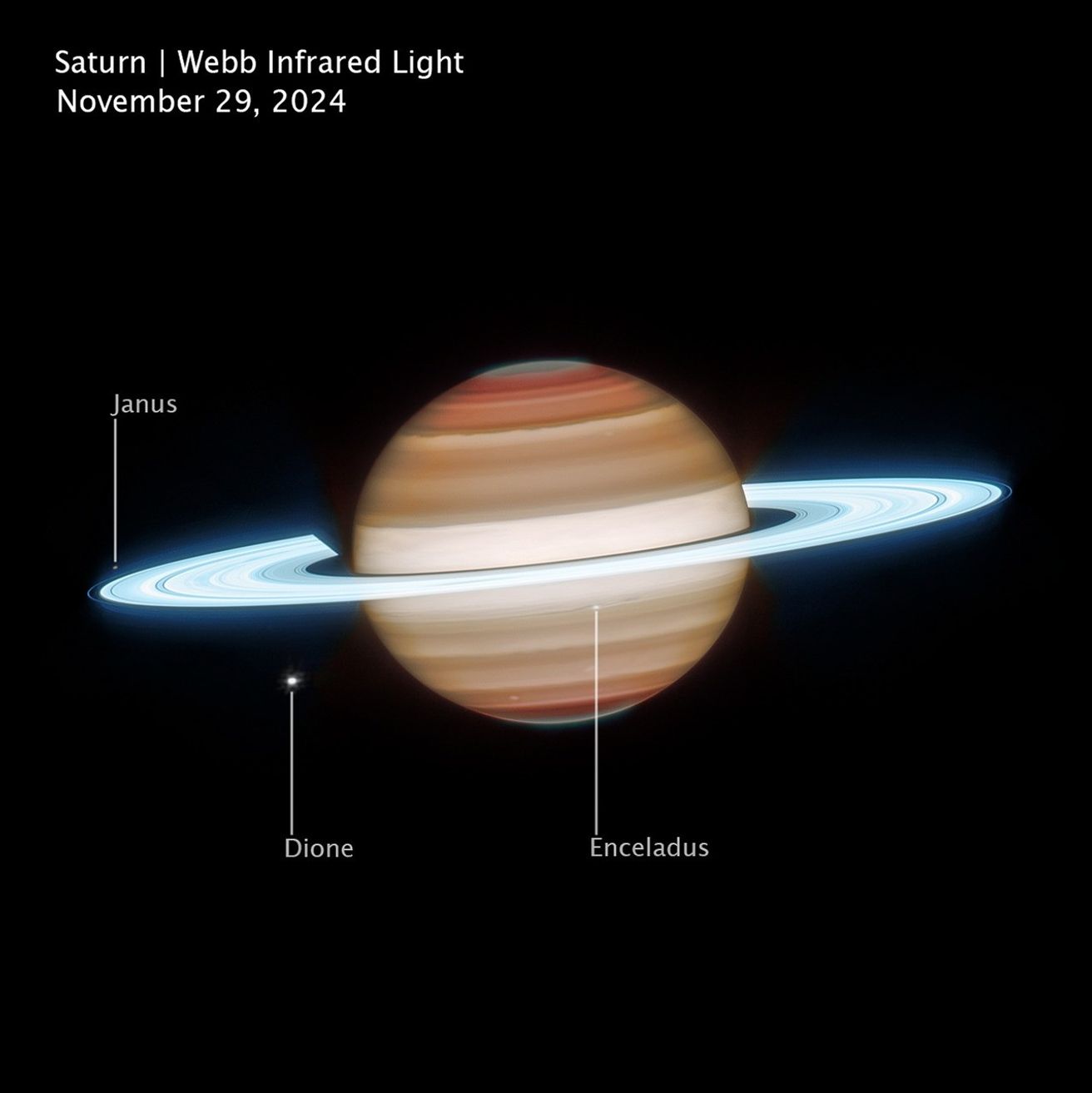
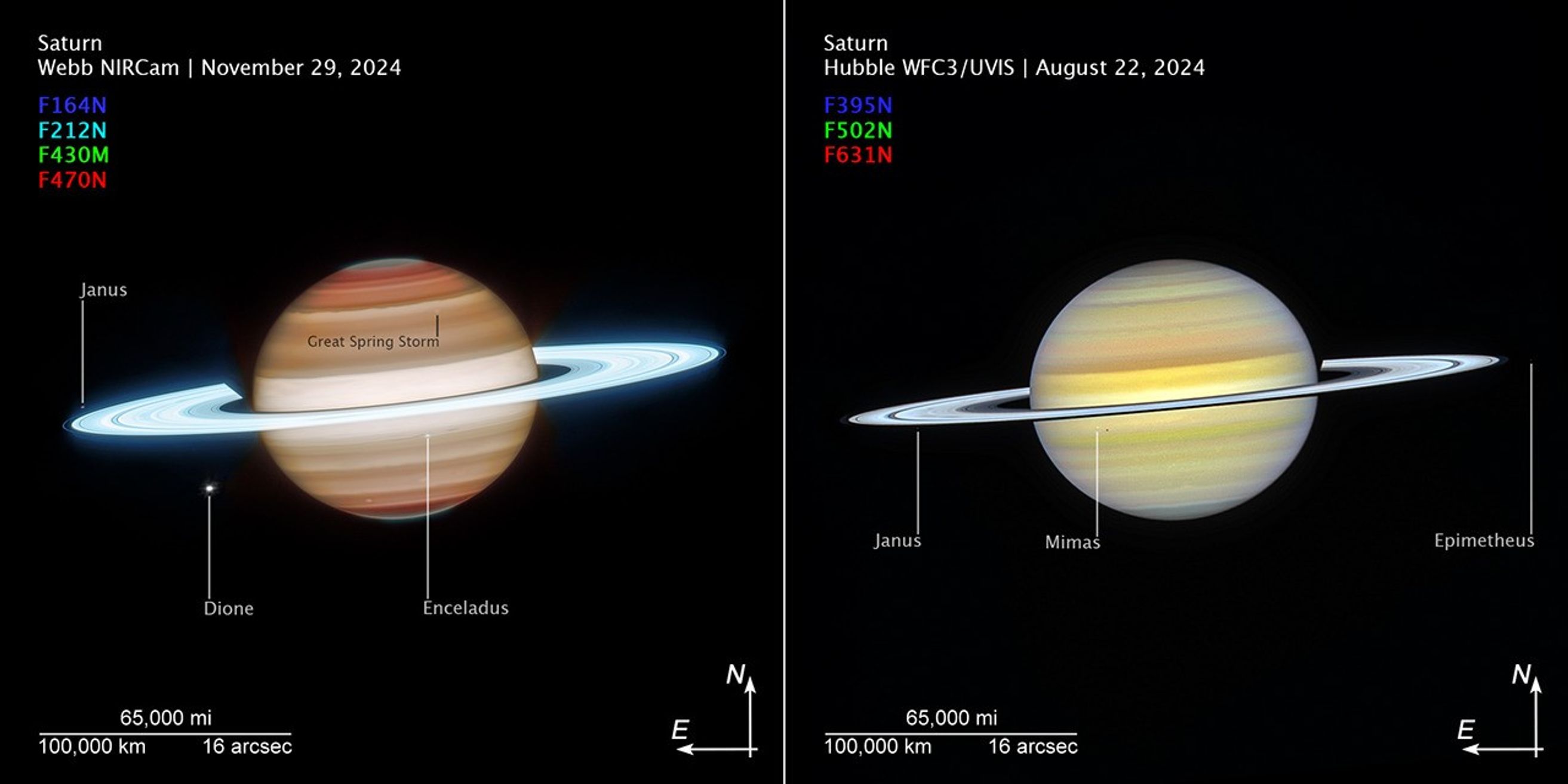
This wider infrared view of Saturn was captured Nov. 29, 2024 by NASA’s James Webb Space Telescope. Saturn’s bright rings glow in reflected sunlight, and Webb’s observations reveal structures at different altitudes throughout the planet's banded atmosphere. Several of Saturn’s larger moons appear across the field of view, including Titan (far left), Janus, Dione, Enceladus, Mimas, and Tethys.
About the Data
- Data DescriptionData DescriptionProposal: A description of the observations, their scientific justification, and the links to the data available in the science archive.
Science Team: The astronomers who planned the observations and analyzed the data. "PI" refers to the Principal Investigator.These images were created with Webb data from proposal: 9219 (M. Garcia Marin)
- InstrumentInstrumentThe science instrument used to produce the data.NIRCam
- Exposure DatesExposure DatesThe date(s) that the telescope made its observations and the total exposure time.November 29, 2024
- FiltersFiltersThe camera filters that were used in the science observations.F164N, F212N, F430M, F470N
- Object NameObject NameA name or catalog number that astronomers use to identify an astronomical object.Saturn
- Object DescriptionObject DescriptionThe type of astronomical object.Ringed Gas Giant
- Release DateMarch 25, 2026
- Science ReleaseNASA Webb, Hubble Share Most Comprehensive View of Saturn to Date
- CreditImage: NASA, ESA, CSA, STScI; Image Processing: Joseph DePasquale (STScI)
Downloads
These images were acquired by the NIRCam instrument on Webb. The color results from assigning different hues (colors) to a monochromatic (grayscale) image. In this case, the assigned colors are: Blue: F164N, Cyan: F212N, Green: F430M, Red: F470N
Related Images & Videos

Share
Details
Laura Betz
NASA’s Goddard Space Flight Center
Greenbelt, Maryland
laura.e.betz@nasa.gov