

















6.2. What types of conditions can life survive in?
A core learning question from the Astrobiology Learning Progressions
Astrobiology Learning Progressions Navigation


Grades K-2 or Adult Naive Learner
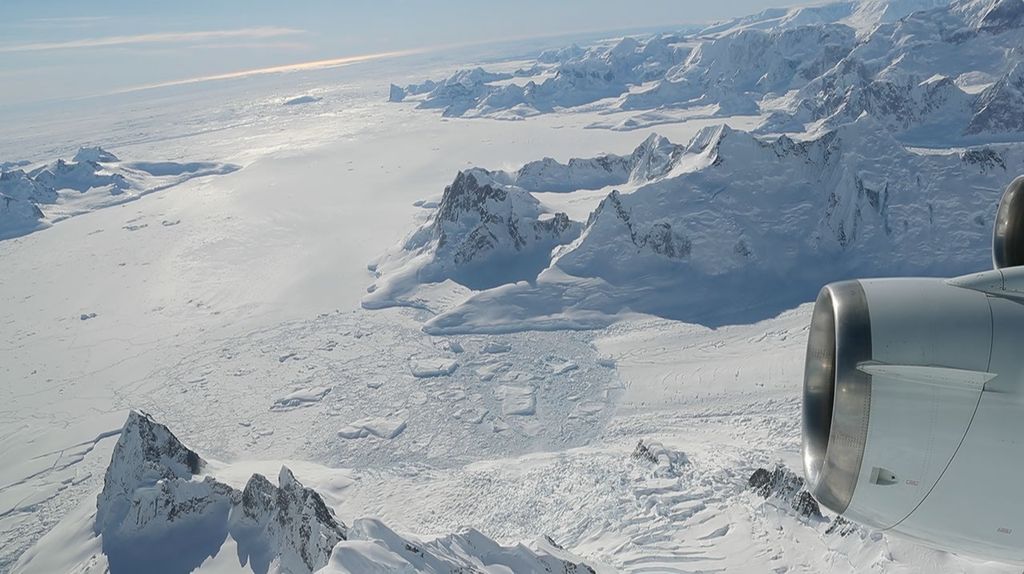
We think about our homes and many are very nice and warm with food and water and everything we need to grow and be safe. When we investigate living things on our planet we notice that there are things living in lots of different places that may not be so fun for us to live in. For instance, some things live in really cold places that are very icy while other things live in hot deserts. We wouldn’t do so well if we lived in those places.
The more we investigate the creatures here we see that living things can be found just about everywhere on Earth. Do you think there might be other places out there beyond Earth that have some similar places where we might find living things?
Disciplinary Core Ideas
LS1.C: Organization for Matter and Energy Flow in Organisms: All animals need food in order to live and grow. They obtain their food from plants or from other animals. Plants need water and light to live and grow. (K-LS1-1)
ESS3.A: Natural Resources: Living things need water, air, and resources from the land, and they live in places that have the things they need. Humans use natural resources for everything they do. (K-ESS3-1)
PS3.B: Conservation of Energy and Energy Transfer: Sunlight warms Earth’s surface. (K-PS3-1, K-PS3-2)
LS4.D: Biodiversity and Humans: There are many different kinds of living things in any area, and they exist in different places on land and in water. (2-LS4-1)
ESS2.E: Biogeology: Plants and animals can change their environment. (K-ESS2-2)
Crosscutting Concepts
Patterns: Patterns in the natural and human designed world can be observed and used as evidence. (K-LS1-1)
Big Ideas: Living things are everywhere on Earth, even in extreme environments. Life may exist in other extreme environments in space.
Boundaries: Students in this grade band use evidence to show how plants and animals (including humans) can change the environment to meet their needs. Grade level appropriate examples of organisms changing their environment could include a squirrel digs in the ground to hide its food and tree roots can break concrete. (K-ESS2-2)
No appropriate content for this grade level. Please use the navigation arrows to switch levels.

Grades 3-5 or Adult Emerging Learner
We think about our homes and many are very nice and warm with food and water and everything we need to grow and be safe. When we investigate living things on our planet we notice that there are organisms living in lots of different places that may not be very well suited for us humans. For instance, some things live in really cold places that are very icy while other things live in hot deserts. There are organisms that live on the bottom of the ocean or who spend most of their time high up in the sky. While we wouldn’t do so well if we lived in those places, the things that do live there are well suited to those environments. For instance, the thick, fatty skin of a whale lets it live in the cold waters of the ocean, an owl’s eyes are adapted to let it see really well at night, and butterflies have camouflage and even disguises on their outsides to avoid being eaten.
The more we investigate the creatures here we see that living things can be found just about everywhere on Earth. Do you think there might be other places out there beyond Earth that have some similar places where we might find living things? What do you think life here on our planet can teach us about what those other things might be like? We definitely need to continue to study and discover life on Earth in order to understand where life beyond Earth may exist.
Disciplinary Core Ideas
LS4.C: Adaptation: For any particular environment, some kinds of organisms survive well, some survive less well, and some cannot survive at all. (3-LS4-3)
LS4.D: Biodiversity and Humans: Populations live in a variety of habitats, and change in those habitats affects the organisms living there. (3-LS4-4)
LS4.A: Evidence of Common Ancestry and Diversity: Some kinds of plants and animals that once lived on Earth are no longer found anywhere. (3-LS4-1) ▪ Fossils provide evidence about the types of organisms that lived long ago and also about the nature of their environments. (3-LS4-1)
LS3.A: Inheritance of Traits: Many characteristics of organisms are inherited from their parents. (3-LS3-1) ▪ Other characteristics result from individuals’ interactions with the environment, which can range from diet to learning. Many characteristics involve both inheritance and environment. (3-LS3-2)
LS3.B: Variation of Traits: Different organisms vary in how they look and function because they have different inherited information. (3-LS3-1) ▪ The environment also affects the traits that an organism develops. (3-LS3-2)
ESS2.A: Earth Materials and Systems: Rainfall helps to shape the land and affects the types of living things found in a region. Water, ice, wind, living organisms, and gravity break rocks, soil, and sediments into smaller particles and move them around. (4-ESS2-1)
LS1.C: Organization for Matter and Energy Flow in Organisms: Food provides animals with the materials they need for body repair and growth and the energy they need to maintain body warmth and for motion. (5-PS3-1) ▪ Plants acquire their material for growth chiefly from air and water. (5-LS1-1)
LS2.B: Cycles of Matter and Energy Transfer in Ecosystems: Matter cycles between the air and soil and among plants, animals, and microbes as these organisms live and die. Organisms obtain gases, and water, from the environment, and release waste matter (gas, liquid, or solid) back into the environment. (5-LS2-1)
Crosscutting Concepts
Patterns: Similarities and differences in patterns can be used to sort and classify natural phenomena. (3-LS3-1) Patterns of change can be used to make predictions. (3-LS1-1)
Big Ideas: Investigations of life on Earth reveal that living things are nearly everywhere and living in every environment on Earth. Even the most extreme environments on Earth are habitable to certain organisms. Organisms are well suited to live in specific environments. Better understanding extreme environments on Earth may help to shed light on where life beyond Earth may exist.
Boundaries: Grade level appropriate examples of traits in organisms being affected by their envrionment could include normally tall plants grown with insufficient water are stunted; and, a pet dog that is given too much food and little exercise may become overweight. (3-LS3-2)
3-5 Red Planet: Read, Write, Explore. Lesson 3: Going to Extremes. Groups of students conduct an experiment on chia seeds to explore how extreme environments affect the growth of the plant. After conducting the experiments, they write and illustrate a fact-based fictional story about an imaginary life form on Mars. This lesson is a part of a collection of six lessons that can be used individually or as a unit. Topics include Mars history, potential habitability, exploration, extreme life, gravity and changes over time. These lessons are flexible, standards-based, and focused on student reading and writing. University of Colorado/NASA. http://lasp.colorado.edu/home/maven/education-outreach/for-educators/red-planet/
3-5, 6-8, 9-12 Marsbound! In this NGSS aligned activity (three 45-minute sessions), students become NASA project managers and design their own NASA mission to Mars. Mars is significant in astrobiology and more needs to be learned about this planet and its potential for life. Students create a mission that must balance the return of science data with mission limitations such as power, mass and budget. Risk factors play a role and add to the excitement in this interactive mission planning activity. Arizona State University/NASA. http://marsed.asu.edu/lesson_plans/marsbound
4-12 Finding Life beyond Earth, Activity 4: Extreme Living (page 22). Using cards that show extremophiles and some of Earth’s extreme environments, kids match a microbe to an extreme environment in which it could live. https://d43fweuh3sg51.cloudfront.net/media/assets/wgbh/nvfl/nvfl_doc_collection/nvfl_doc_collection.pdf
4-12 Finding Life beyond Earth, Activity 5: Home Sweet Home (page 25). Students choose a card describing one of six possible planetary environments and design a form of life that can thrive in the conditions outlined on the card. https://d43fweuh3sg51.cloudfront.net/media/assets/wgbh/nvfl/nvfl_doc_collection/nvfl_doc_collection.pdf
5-8 Astrobiology in Your Classroom: Life on Earth…and Elsewhere. Activity 3: What makes a world habitable? Page 23. This activity examines the question of whether there is life on other planets and moons. The included habitability cards discuss each planet and the six large moons in terms of water temperature, atmosphere, energy, and nutrients, and identify the top candidates for life in the solar system. NASA . https://assets.science.nasa.gov/content/dam/science/psd/astrobiology/learning/Astrobiology-Educator-Guide-2007.pdf
5-12 Astrobiology Graphic Histories. Issue 2: Missions to Mars. These astrobiology related graphic books are ingenious and artfully created to tell the story of astrobiology in a whole new way. The complete series illustrates the backbone of astrobiology from extremophiles, to exploration within and beyond the solar system. This issue covers the ups and downs of the exploration of Mars and new missions to the red planet. NASA . https://astrobiology.nasa.gov/resources/graphic-histories/
5-12 Europa: Ocean World. In this short video (4 minutes), students learn that scientists believe there is an ocean hidden beneath the surface of Jupiter’s moon Europa. NASA - JPL astrobiologist Kevin Hand explains why scientists are so excited about the potential of this ice-covered world to answer one of humanity’s most profound questions. JPL /NASA. https://www.youtube.com/watch?v=kz9VhCQbPAk
Grades 6-8 or Adult Building Learner
When we think about life on this planet most of us will first think about things like people and other large mammals, maybe fish and birds, and plants. But there are definitely lots of different kinds of living things here on Earth. There are mushrooms and algae and corals and grasshoppers and microorganisms that live in the soil and weird looking fish that live deep in the ocean. Life is just about everywhere on the surface of Earth and can definitely be found in places that aren’t so good for humans. Do you think you could live well deep under the ocean without a submarine? There’s a reason why we humans don’t naturally live in really cold places like on top of glaciers or really hot places like in Death Valley.
Research on Earth has actually uncovered a wide variety of harsh conditions where life can still be found thriving. Places like hot springs and hydrothermal vents and inside of glaciers and deep under the ground and on the surfaces of rocks in deserts. We call the organisms that live in these kinds of places “extremophiles,” since the conditions in which they live are way too extreme for us humans. There are extremophiles that survive in areas of extreme temperatures and pressures, where it’s really acidic or not acidic at all, where it’s super salty, where it’s really dry, with lots of radiation, and even in places where the chemistry would be toxic for humans to live.
Finding organisms that live in so many different kinds of environments on Earth tells us that there are lots of potential places where alien life might exist if it’s out there. For instance, there are places in our solar system where some of the kinds of living things here on Earth might be able to survive. These are places like Mars and the moons Europa and Enceladus. And there may be lots of other exoplanets out there in the galaxy that have conditions where living things that we know of could thrive. Understanding the conditions where we can find life here on Earth will help us in looking for possible signs of other life out there in the universe.
Disciplinary Core Ideas
LS2.A: Interdependent Relationships in Ecosystems: Organisms, and populations of organisms, are dependent on their environmental interactions both with other living things and with nonliving factors. (MS-LS2-1)
LS2.B: Cycle of Matter and Energy Transfer in Ecosystems: Food webs are models that demonstrate how matter and energy is transferred between producers, consumers, and decomposers as the three groups interact within an ecosystem. Transfers of matter into and out of the physical environment occur at every level.
LS2.C: Ecosystem Dynamics, Functioning, and Resilience: Ecosystems are dynamic in nature; their characteristics can vary over time. Disruptions to any physical or biological component of an ecosystem can lead to shifts in all its populations. (MS-LS2-4) ▪ Biodiversity describes the variety of species found in Earth’s terrestrial and oceanic ecosystems. The completeness or integrity of an ecosystem’s biodiversity is often used as a measure of its health. (MS-LS2-5)
LS4.C: Adaptation: Adaptation by natural selection acting over generations is one important process by which species change over time in response to changes in environmental conditions. Traits that support successful survival and reproduction in the new environment become more common; those that do not become less common. Thus, the distribution of traits in a population changes. (MS-LS4-6)
ESS1.A: The Universe and Its Stars: Earth and its solar system are part of the Milky Way galaxy, which is one of many galaxies in the universe. (MS-ESS1-2)
ESS2.A: Earth’s Materials and Systems: The planet’s systems interact over scales that range from microscopic to global in size, and they operate over fractions of a second to billions of years. These interactions have shaped Earth’s history and will determine its future. (MS-ESS2-2)
ESS3.A: Natural Resources: Humans depend on Earth’s land, ocean, atmosphere, and biosphere for many different resources. Minerals, fresh water, and biosphere resources are limited, and many are not renewable or replaceable over human lifetimes. These resources are distributed unevenly around the planet as a result of past geologic processes. (MS-ESS3-1)
Crosscutting Concepts
Scale, Proportion, and Quantity: Time, space, and energy phenomena can be observed at various scales using models to study systems that are too large or too small. (MS-ESS1-3)
Big Ideas: Investigations of life on Earth reveal that livings are nearly everywhere and living in even the most extreme environments. Organisms are suited to live in their varied environments. Extremophiles are organisms that can survive in the most extreme environments. Examining the extreme places where life exists on Earth suggests that there may be a wide range of other places throughout the universe that may support life.
Boundaries: Students in this grade band use evidence to explain how genetic variations of traits in a population increase some individuals’ probability of surviving and reproducing in a specific environment. Emphasis is on using simple probability statements and proportional reasoning to construct explanations. (MS-LS4-4)
3-5, 6-8, 9-12 Marsbound! In this NGSS aligned activity (three 45-minute sessions), students become NASA project managers and design their own NASA mission to Mars. Mars is significant in astrobiology and more needs to be learned about this planet and its potential for life. Students create a mission that must balance the return of science data with mission limitations such as power, mass and budget. Risk factors play a role and add to the excitement in this interactive mission planning activity. Arizona State University/NASA. http://marsed.asu.edu/lesson_plans/marsbound
4-12 Finding Life beyond Earth, Activity 4: Extreme Living (page 22). Using cards that show extremophiles and some of Earth’s extreme environments, kids match a microbe to an extreme environment in which it could live. https://d43fweuh3sg51.cloudfront.net/media/assets/wgbh/nvfl/nvfl_doc_collection/nvfl_doc_collection.pdf
4-12 Finding Life beyond Earth, Activity 5: Home Sweet Home (page 25). Students choose a card describing one of six possible planetary environments and design a form of life that can thrive in the conditions outlined on the card. https://d43fweuh3sg51.cloudfront.net/media/assets/wgbh/nvfl/nvfl_doc_collection/nvfl_doc_collection.pdf
5-8 Astrobiology in Your Classroom: Life on Earth…and Elsewhere. Activity 3: What makes a world habitable? Page 23. This activity examines the question of whether there is life on other planets and moons. The included habitability cards discuss each planet and the six large moons in terms of water temperature, atmosphere, energy, and nutrients, and identify the top candidates for life in the solar system. NASA . https://assets.science.nasa.gov/content/dam/science/psd/astrobiology/learning/Astrobiology-Educator-Guide-2007.pdf
5-12 Astrobiology Graphic Histories. Issue 2: Missions to Mars. These astrobiology related graphic books are ingenious and artfully created to tell the story of astrobiology in a whole new way. The complete series illustrates the backbone of astrobiology from extremophiles, to exploration within and beyond the solar system. This issue covers the ups and downs of the exploration of Mars and new missions to the red planet. NASA . https://astrobiology.nasa.gov/resources/graphic-histories/
5-12 Europa: Ocean World. In this short video (4 minutes), students learn that scientists believe there is an ocean hidden beneath the surface of Jupiter’s moon Europa. NASA - JPL astrobiologist Kevin Hand explains why scientists are so excited about the potential of this ice-covered world to answer one of humanity’s most profound questions. JPL /NASA. https://www.youtube.com/watch?v=kz9VhCQbPAk
6-8 or 9-12 Astrobiobound! This lesson engages students by giving them the opportunity to identify a significant target of interest in astrobiology and allowing them to plan their own NASA mission within our Solar System. This simulation follows the same considerations and challenges facing NASA scientists and engineers as they search for life in our Solar System and as they try to answer this compelling question, Are we Alone?. NASA /Arizona State University. https://marsed.asu.edu/lesson-plans/astrobiobound
6-12 Mars: The Xtreme-O-philes. Students in grades 6-12 use real scientific data to gain knowledge about the various types of extremophiles found on Earth and use that information to correlate to Mars’ environmental conditions, both past and present. Students then determine the most likely and interesting candidate landing sites for future Mars exploration, specifically missions searching for potential life. Arizona State University/NASA. http://marsed.asu.edu/content/xtreme-o-philes
6-12 Astrobiology Math. This collection of math problems provides an authentic glimpse of modern astrobiology science and engineering issues, often involving actual research data. Students explore concepts in astrobiology through calculations. Relevant topics include Lakes of Methane on Titan (page 53) and How Hot is That Planet? (page 39). NASA . https://www.nasa.gov/pdf/637832main_Astrobiology_Math.pdf
7-8 Life Underground. This game is an interactive outreach experience for 7th and 8th grade classrooms. Life Underground is presented in a video game experience that is highly motivating for students. The goal is for students to visualize microscopic life at a range of terrestrial and extraterrestrial subsurface conditions. Students take the role of a young scientist investigating extreme subsurface environments for microbial life. They navigate through extreme conditions, including those of temperature, pressure, acidity, and energy limitations, and they begin to recognize what characterizes life in this context. NASA Astrobiology Institute. https://gameinnovationlab.itch.io/life-underground
Grades 9-12 or Adult Sophisticated Learner
When we talk about life on Earth most of us will first think about things like people and other large mammals, maybe fish and birds, and plants. But there are definitely lots of different kinds of living things here on Earth. There are mushrooms, algae, corals, and grasshoppers. There are so many microbes living in the soil and in lakes and oceans and inside of other organisms (including us). Life is just about everywhere on the surface of Earth and can definitely be found in places where we humans simply cannot live. There are so many possible conditions for life as we know it to thrive.
Research has even uncovered a wide variety of harsh conditions where life can still be found thriving. For instance, in 1977 a team of researchers in a submersible in the Atlantic found arguably one of the most important discoveries of the 20th century: hydrothermal vents, with thriving ecosystems that are not dependent on the Sun for energy. The basis for life in this extreme environment comes from chemical reactions between the ocean water and the rocks on the ocean floor. We’ve now discovered organisms living in places like hot springs and hydrothermal vents, inside of glaciers and deep under the ground, and on the surfaces of rocks in deserts. We call the organisms that live in these kinds of places “extremophiles”, since the conditions in which they live are way too extreme for humans. There are extremophiles that survive in areas of extreme temperatures and pressures, where it’s really acidic (low pH) or not acidic at all (high pH; also called “basic”), where the salinity is really high, where it’s really dry, with lots of ionizing radiation, and even in places where the chemistry would be toxic for humans to live.
Finding organisms that live in so many different kinds of environments on Earth tells us that there are lots of potential places where alien life might exist if it’s out there. For instance, there are places in our solar system where some of the kinds of living things here on Earth might be able to survive. These are places like Mars and the moons Europa and Enceladus. There may be lots of other exoplanets out there in the galaxy that have conditions where living things that we know of could thrive. As we continue searching for possible places where alien life may exist, it’s important to consider the conditions where we find life on Earth but also important to remember that there may be living things that thrive in places where even Earth life can’t exist. Understanding the conditions where we can find life here on Earth will most certainly help us in looking for possible signs of other life out there in the universe.
Disciplinary Core Ideas
PS1.B: Chemical Reactions: Chemical processes, their rates, and whether or not energy is stored or released can be understood in terms of the collisions of molecules and the rearrangements of atoms into new molecules, with consequent changes in the sum of all bond energies in the set of molecules that are matched by changes in kinetic energy. (HS-PS1-4, HS-PS1-5)
PS3.A: Definitions of Energy: Energy is a quantitative property of a system that depends on the motion and interactions of matter and radiation within that system. That there is a single quantity called energy is due to the fact that a system’s total energy is conserved, even as, within the system, energy is continually transferred from one object to another and between its various possible forms. (HS-PS3-1, HS-PS3-2) At the macroscopic scale, energy manifests itself in multiple ways, such as in motion, sound, light, and thermal energy. (HS-PS3-2, HS-PS3-3)
PS4.B Electromagnetic Radiation: Electromagnetic radiation (e.g., radio, microwaves, light) can be modeled as a wave of changing electric and magnetic fields or as particles called photons. The wave model is useful for explaining many features of electromagnetic radiation, and the particle model explains other features. (HS-PS4-3) When light or longer wavelength electromagnetic radiation is absorbed in matter, it is generally converted into thermal energy (heat).
LS1.A: Structure and Function: Feedback mechanisms maintain a living system’s internal conditions within certain limits and mediate behaviors, allowing it to remain alive and functional even as external conditions change within some range. Feedback mechanisms can encourage (through positive feedback) or discourage (negative feedback) what is going on inside the living system. (HS-LS1-3)
LS2.B: Cycles of Matter and Energy Transfer in Ecosystems: Photosynthesis and cellular respiration (including anaerobic processes) provide most of the energy for life processes. (HS-LS2-3)
PS3.D: Energy in Chemical Processes: The main way that solar energy is captured and stored on Earth is through the complex chemical process known as photosynthesis.
LS2.A: Interdependent Relationships in Ecosystems: Ecosystems have carrying capacities, which are limits to the numbers of organisms and populations they can support. These limits result from such factors as the availability of living and nonliving resources and from such challenges such as predation, competition, and disease. Organisms would have the capacity to produce populations of great size were it not for the fact that environments and resources are finite. This fundamental tension affects the abundance (number of individuals) of species in any given ecosystem. (HS-LS2-1, HS-LS2-2)
LS2.C: Ecosystem Dynamics, Functioning, and Resilience: A complex set of interactions within an ecosystem can keep its numbers and types of organisms relatively constant over long periods of time under stable conditions. If a modest biological or physical disturbance to an ecosystem occurs, it may return to its more or less original status (i.e., the ecosystem is resilient), as opposed to becoming a very different ecosystem. (HS-LS2-2, HS-LS2-6)
LS2.D: Social Interactions and Group Behavior: Group behavior has evolved because membership can increase the chances of survival for individuals and their genetic relatives. (HS-LS2-8)
LS4.C: Adaptation: Natural selection leads to adaptation, that is, to a population dominated by organisms that are anatomically, behaviorally, and physiologically well suited to survive and reproduce in a specific environment. That is, the differential survival and reproduction of organisms in a population that have an advantageous heritable trait leads to an increase in the proportion of individuals in future generations that have the trait and to a decrease in the proportion of individuals that do not. (HS-LS4-3, HS-LS4-4) ▪ Changes in the physical environment, whether naturally occurring or human induced, have thus contributed to the expansion of some species, the emergence of new distinct species as populations diverge under different conditions, and the decline – and sometimes the extinction – of some species. (HS-LS4-6)
ESS1.C: The History of Planet Earth: Although active geologic processes, such as plate tectonics and erosion, have destroyed or altered most of the very early rock record on Earth, other objects in the solar system, such as lunar rocks, asteroids, and meteorites, have changed little over billions of years. Studying these objects can provide information about Earth’s formation and early history. (HS-ESS1-6)
ESS2.A: Earth Materials and Systems: Evidence from deep probes and seismic waves, reconstructions of historical changes in Earth’s surface and its magnetic field, and an understanding of physical and chemical processes lead to a model of Earth with a hot but solid inner core, a liquid outer core, a solid mantle and crust. Motions of the mantle and its plates occur primarily through thermal convection, which involves the cycling of matter due to the outward flow of energy from Earth’s interior and gravitational movement of denser materials toward the interior. (HS-ESS2-3
ESS2.C: The Roles of Water in Earth’s Surface Processes: The abundance of liquid water on Earth’s surface and its unique combination of physical and chemical properties are central to the planet’s dynamics. These properties include water’s exceptional capacity to absorb, store, and release large amounts of energy, transmit sunlight, expand upon freezing, dissolve and transport materials, and lower the viscosities and melting points of rocks. (HS-ESS2-5)
ESS2.D: Weather and Climate: The foundation for Earth’s global climate systems is the electromagnetic radiation from the Sun, as well as its reflection, absorption, storage, and redistribution among the atmosphere, ocean, and land systems, and this energy’s re-radiation into space. (HS-ESS2-2)
Crosscutting Concepts
Systems and System Models: Models (e.g., physical, mathematical, computer models) can be used to simulate systems and interactions — including energy, matter, and information flows — within and between systems at different scales. (HS-LS2-5)
Big Ideas: Investigations of life on Earth reveal that livings are nearly everywhere and living in even the most extreme environments. Organisms are well suited to live in their varied environments. Extremophiles are organisms that can survive in the most extreme environments. There are places on Earth where life survives by using chemical energy without direct energy from the Sun. In hydrothermal vents, water is heated by Earth below the seafloor and then comes back out and forms large mineral chimneys with hot, black water billowing out. Many organisms survive and thrive in this environment. This discovery helps to broaden the set of possible conditions that make a planet or environment habitable. Mars once could have supported life and may have been more similar to Earth in the past than it is now. Astrobiologists are looking for signs of life on Mars, the moons of Jupiter, and outside of our solar system. By studying other planets and moons, astrobiologists hope to get a better understanding of the origins of life on Earth.
Boundaries: Students in this grade band evaluate the claims, evidence, and reasoning that the complex interactions in ecosystems maintain relatively consistent numbers and types of organisms in stable conditions, but changing conditions may result in a new ecosystem. Examples of changes in ecosystem conditions could include modest biological or physical changes, such as moderate hunting or a seasonal flood; and extreme changes, such as volcanic eruption or sea level rise. (HS-LS2-6)
3-5, 6-8, 9-12 Marsbound! In this NGSS aligned activity (three 45-minute sessions), students become NASA project managers and design their own NASA mission to Mars. Mars is significant in astrobiology and more needs to be learned about this planet and its potential for life. Students create a mission that must balance the return of science data with mission limitations such as power, mass and budget. Risk factors play a role and add to the excitement in this interactive mission planning activity. Arizona State University/NASA. http://marsed.asu.edu/lesson_plans/marsbound
4-12 Finding Life beyond Earth, Activity 4: Extreme Living (page 22). Using cards that show extremophiles and some of Earth’s extreme environments, kids match a microbe to an extreme environment in which it could live. https://d43fweuh3sg51.cloudfront.net/media/assets/wgbh/nvfl/nvfl_doc_collection/nvfl_doc_collection.pdf
4-12 Finding Life beyond Earth, Activity 5: Home Sweet Home (page 25). Students choose a card describing one of six possible planetary environments and design a form of life that can thrive in the conditions outlined on the card. https://d43fweuh3sg51.cloudfront.net/media/assets/wgbh/nvfl/nvfl_doc_collection/nvfl_doc_collection.pdf
5-12 Astrobiology Graphic Histories. Issue 2: Missions to Mars. These astrobiology related graphic books are ingenious and artfully created to tell the story of astrobiology in a whole new way. The complete series illustrates the backbone of astrobiology from extremophiles, to exploration within and beyond the solar system. This issue covers the ups and downs of the exploration of Mars and new missions to the red planet. NASA . https://astrobiology.nasa.gov/resources/graphic-histories/
5-12 Europa: Ocean World. In this short video (4 minutes), students learn that scientists believe there is an ocean hidden beneath the surface of Jupiter’s moon Europa. NASA - JPL astrobiologist Kevin Hand explains why scientists are so excited about the potential of this ice-covered world to answer one of humanity’s most profound questions. JPL /NASA. https://www.youtube.com/watch?v=kz9VhCQbPAk
6-8 or 9-12 Astrobiobound! This lesson engages students by giving them the opportunity to identify a significant target of interest in astrobiology and allowing them to plan their own NASA mission within our Solar System. This simulation follows the same considerations and challenges facing NASA scientists and engineers as they search for life in our Solar System and as they try to answer this compelling question, Are we Alone?. NASA /Arizona State University. https://marsed.asu.edu/lesson-plans/astrobiobound
6-12 Mars: The Xtreme-O-philes. Students in grades 6-12 use real scientific data to gain knowledge about the various types of extremophiles found on Earth and use that information to correlate to Mars’ environmental conditions, both past and present. Students then determine the most likely and interesting candidate landing sites for future Mars exploration, specifically missions searching for potential life. Arizona State University/NASA. http://marsed.asu.edu/content/xtreme-o-philes
6-12 Astrobiology Math. This collection of math problems provides an authentic glimpse of modern astrobiology science and engineering issues, often involving actual research data. Students explore concepts in astrobiology through calculations. Relevant topics include Lakes of Methane on Titan (page 53) and How Hot is That Planet? (page 39). NASA . https://www.nasa.gov/pdf/637832main_Astrobiology_Math.pdf
9-12 Microbial Life Educational Resources. A WebQuest Exploring the Life and Ecology of Mono Lake. The waters of Mono Lake were once considered to be virtually lifeless. Today, however, we know the lake is teeming with life. Mono Lake is teaching scientists about life’s ability to tolerate extreme conditions. In this interactive web quest, students explore this extreme environment and the extremophiles that live there. The website also contains a variety of educational and supporting materials for students and teachers of microbiology. There is information about microorganisms, extremophiles and extreme habitats, as well as links to online information about the ecology, diversity, and evolution of microorganisms. Carlton College. https://serc.carleton.edu/microbelife/k12/alkaline/WQintro.html https://serc.carleton.edu/microbelife/index.html
Storyline Extensions
What makes an extremophile extreme?
The word “extremophile” is sometimes seen as being a little anthropocentric. That’s because the one thing that makes extremophiles extreme is that they live in extreme environments relative to us and most of the living things that we commonly interact with. Extremophiles live in extremes of temperature and pressure and acidity and such, but what about billions of years ago? Just before the rise of oxygen in our atmosphere, for instance, the things that could breathe oxygen would have been the extremophiles. That’s enough to make us wonder what we might find if/when we meet alien life. Alien life might seem to live in an extreme way compared to how we live here on Earth, but does that make that life “extreme”? A fun thought experiment is to ask yourself what if there are lots of worlds with alien life and most of those aliens are all alike but they’re all very different from us. Wouldn’t that then make us the extremophiles?