















NASA Scientists Find Clues to Ancient Ice Beyond Neptune
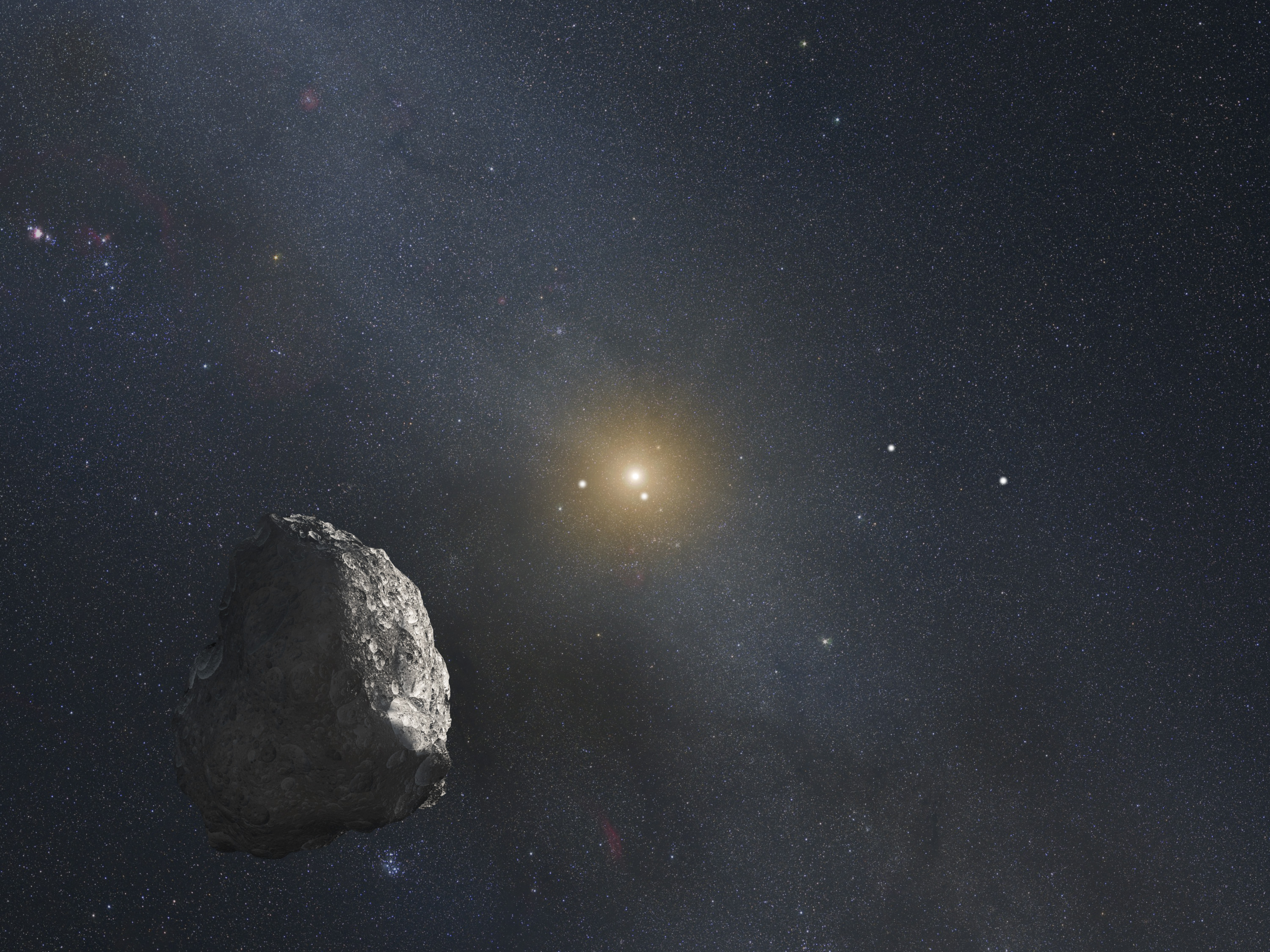
NASA scientists studying tiny grains of space dust collected high in Earth’s atmosphere have found compelling evidence of an ancient reservoir of ice in the Kuiper Belt, a distant region of the solar system beyond Neptune. The discovery offers new insight into how materials were distributed throughout the early solar system and contributed to planet formation.
For decades, scientists have suspected that ice containing high amounts of heavier oxygen isotopes existed in the outer solar system. Previous studies of meteorites and samples returned from carbon-rich asteroids provided clues, but evidence remained limited.
Researchers at NASA’s Johnson Space Center in Houston analyzed 12 dust particles collected from Earth’s stratosphere by the agency’s ER-2 high-altitude research aircraft. High concentrations of solar energetic particle tracks helped scientists trace their origins to the Kuiper Belt. Working with colleagues at the University of California, Los Angeles (UCLA), the team used advanced electron microscopy at NASA and an ion microprobe at UCLA to study the particles’ minerals and oxygen isotopic compositions.
The researchers identified minerals that formed when water interacted with dust early in the solar system’s history. Their chemical signatures indicate that the ancient water was enriched with heavier oxygen isotopes.
The findings help scientists understand how materials from different regions of the solar system contributed to planet formation. Measurements from NASA’s Genesis mission provide a reference for comparing oxygen isotopes, while the scarcity of similar signatures in meteorites suggests giant planets may have limited mixing between the outer and inner solar system.
