












1 min read
Exoplanet VHS 1256 b and Its Stars (Illustration)
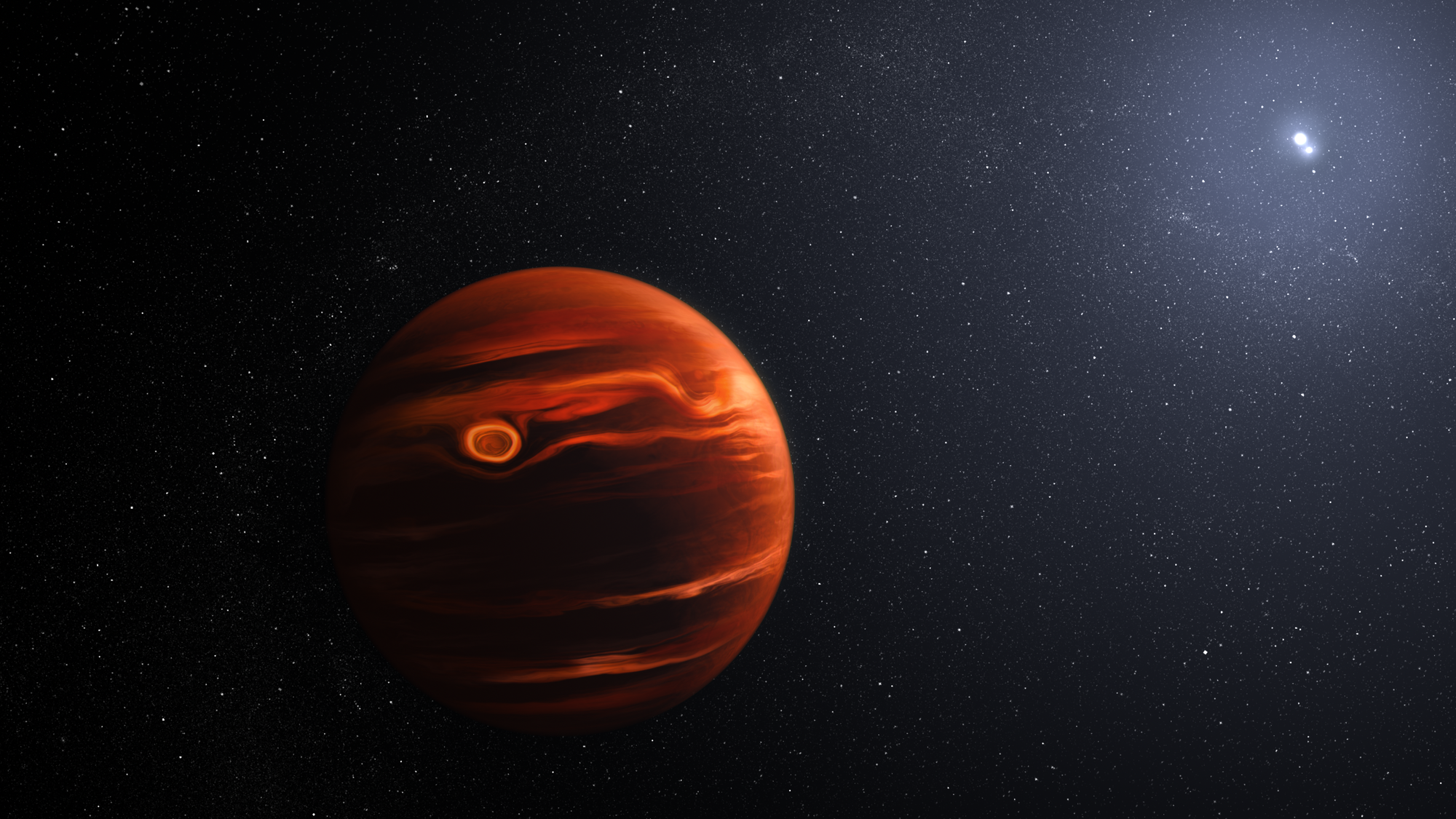
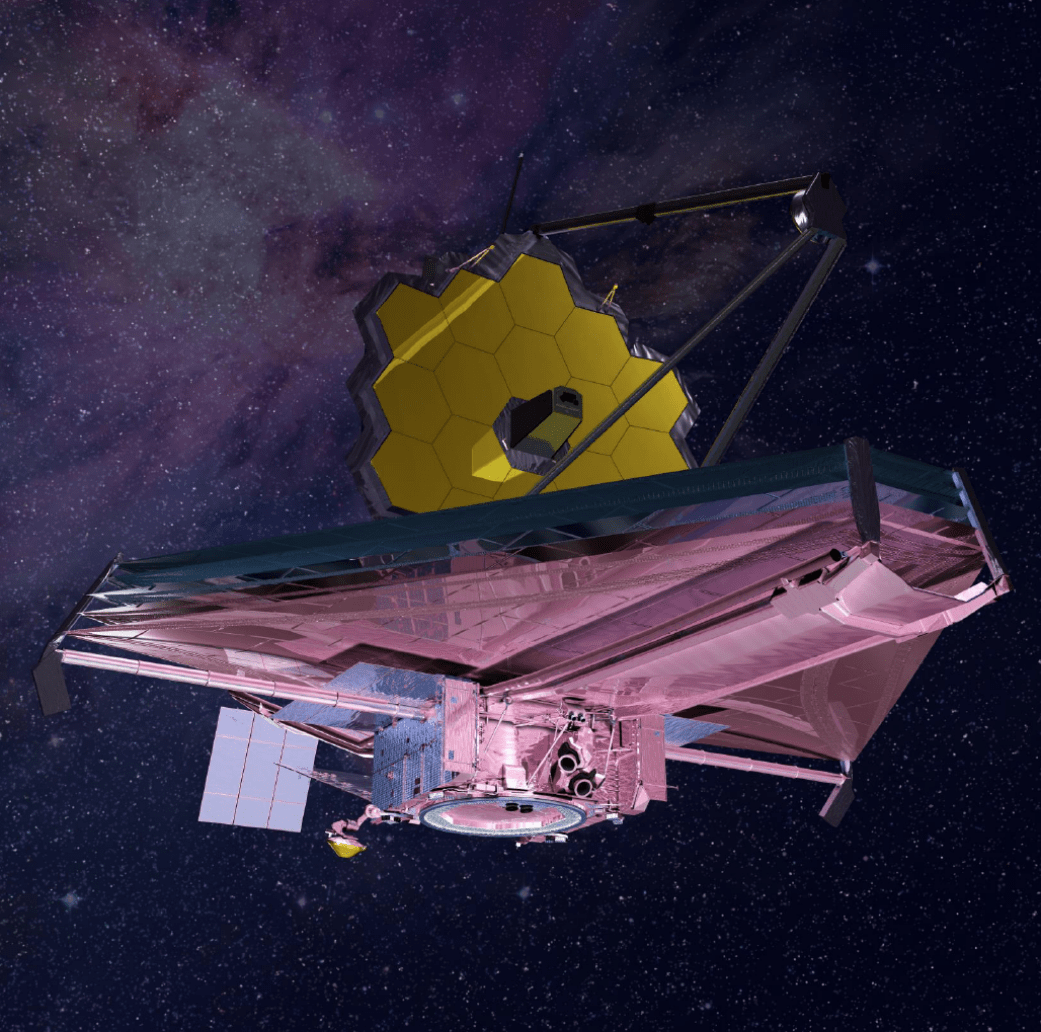
This illustration conceptualizes the swirling clouds identified by the James Webb Space Telescope in the atmosphere of exoplanet VHS 1256 b. The planet is about 40 light-years away and orbits two stars that are locked in their own tight rotation.
Its clouds are constantly rising, mixing, and moving during its 22-hour day. Plus, they’re filled with silicate dust. Some clouds contain silicate grains as tiny as smoke particles. Other contain slightly larger flecks that are similar to small grains of sand. Researchers detected both brighter and darker cloud patches, indicating some clouds are lower and hotter or higher and cooler than others, respectively.
VHS 1256 b is about four times farther from its stars than Pluto is from our Sun. The planet completes a full orbit in about 10,000 years. Its cloud cover points to another fact: It’s quite young in astronomical terms – only 150 million years have passed since it formed and it will continue to change over billions of years. Over time, the planet will become colder, and its skies may transition from cloudy to clear.
This illustration is based on observations from Webb. The camera that is part of Webb’s Near Infrared Spectrograph’s integral field unit does not have the resolution to capture the planet in detail at this distance.
About the Object
- ConstellationConstellationOne of 88 recognized regions of the celestial sphere in which the object appears.Corvus
About the Data
- Data DescriptionData DescriptionProposal: A description of the observations, their scientific justification, and the links to the data available in the science archive.
Science Team: The astronomers who planned the observations and analyzed the data. "PI" refers to the Principal Investigator.
- Object NameObject NameA name or catalog number that astronomers use to identify an astronomical object.VHS 1256-1257 b (VHS 1256 B)
- Object DescriptionObject DescriptionThe type of astronomical object.Exoplanet
- Release DateMarch 22, 2023
- Science ReleaseNASA’s Webb Spots Swirling, Gritty Clouds on Remote Planet
- CreditIllustration: NASA, ESA, CSA, Joseph Olmsted (STScI)
Related Images & Videos
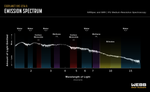
Exoplanet VHS 1256 b (NIRSpec and MIRI Emission Spectrum)
Ready to look for clouds and molecules on a distant planet? A research team led by Brittany Miles of the University of Arizona used two instruments known as spectrographs aboard the James Webb Space Telescope, one on its Near Infrared Spectrograph (NIRSpec) and another on its...
Share
Details
Laura Betz
NASA’s Goddard Space Flight Center
Greenbelt, Maryland
laura.e.betz@nasa.gov
NASA, ESA, CSA, Joseph Olmsted (STScI)