















1 min read
Circinus Galaxy Center (Artist’s Concept)

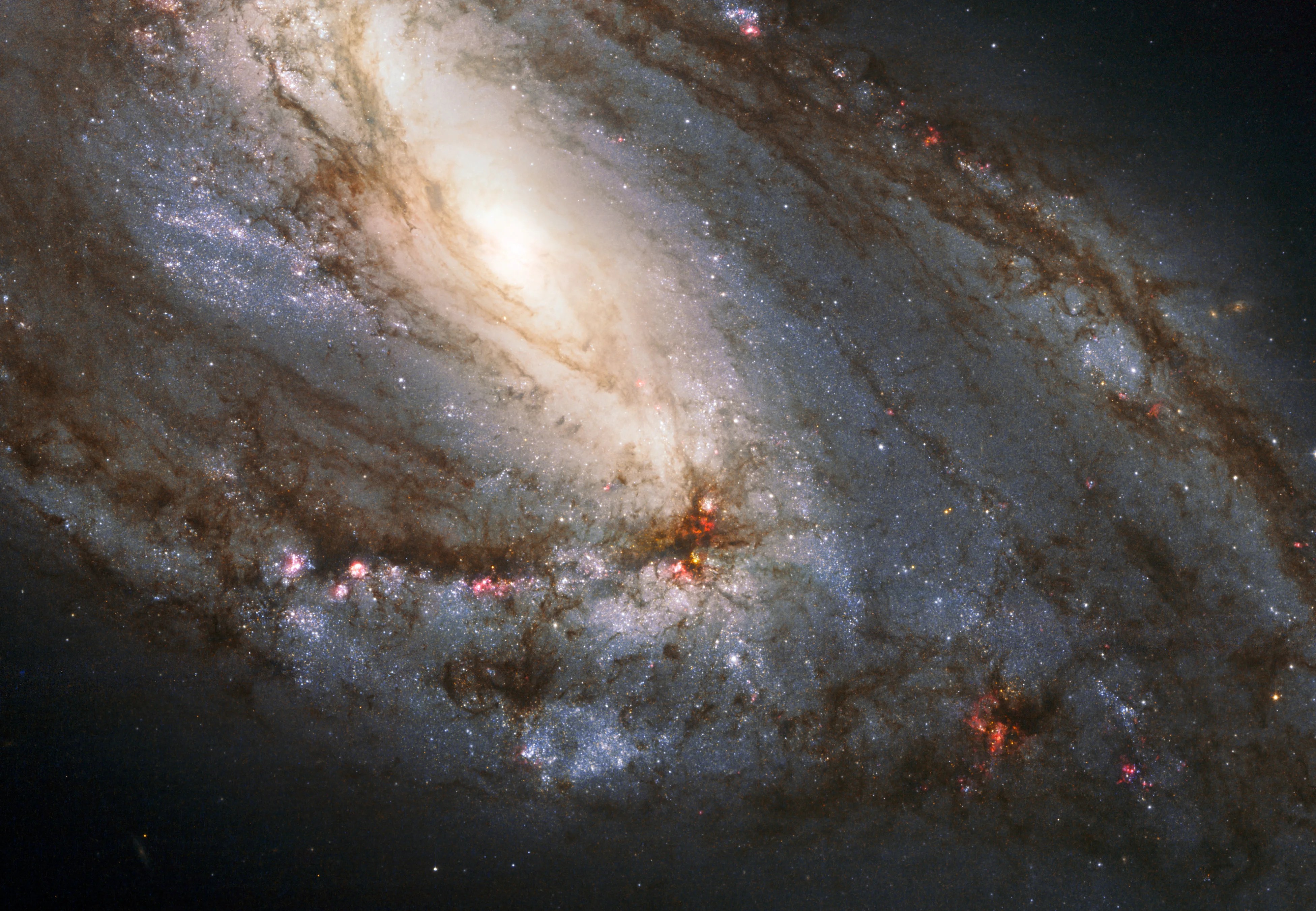
This artist’s concept depicts the central engine of the Circinus galaxy.
At the center is the supermassive black hole, shown as a bright, compact core. You don’t see the black hole itself, but the intense glow from material heating up as it spirals inward. Surrounding the center is a thick, donut-shaped disk of gas and dust (the torus). In Circinus, this torus, about 16 light-years across, is optically dense, meaning visible light can’t penetrate.
The illustration emphasizes that this dusty structure is brightest close to the black hole, matching the newest finding from NASA’s James Webb Space Telescope that most of the light is coming from hot dust feeding the black hole rather than being blown away.
The narrow, bright beams shooting outward represent jets, streams of energized material launched perpendicular to the disk.
The soft, hazy glow around everything represents the surrounding galaxy and diffuse material.
- Release DateJanuary 13, 2026
- Science ReleaseNASA’s Webb Delivers Unprecedented Look Into Heart of Circinus Galaxy
- CreditArtwork: NASA, ESA, CSA, Ralf Crawford (STScI)
Related Images & Videos
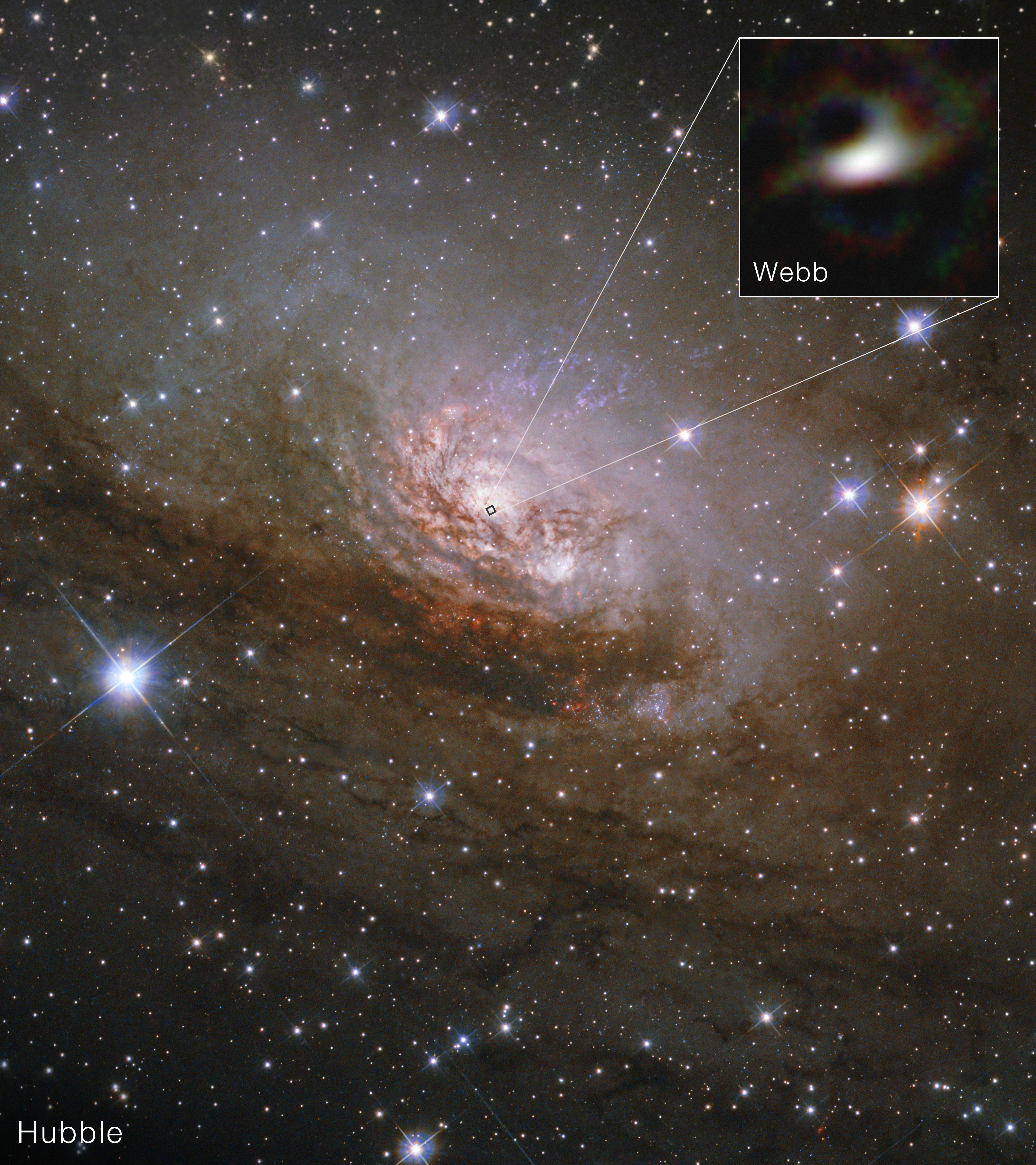
Circinus Galaxy (Hubble and Webb)
This image from NASA’s Hubble Space Telescope shows the Circinus galaxy. A close-up of its core from NASA’s James Webb Space Telescope shows the inner face of the hole of the donut-shaped disk of gas disk glowing in infrared light. The outer ring appears as dark spots.

Circinus Galaxy (Hubble and Webb Compass Image)
This image shows two views of the Circinus galaxy, one captured by the Hubble Space Telescope and the other by the James Webb Space Telescope’s NIRISS (Near-Infrared Imager and Slitless Spectrograph. It shows compass arrows, scale bar, and color key for reference.
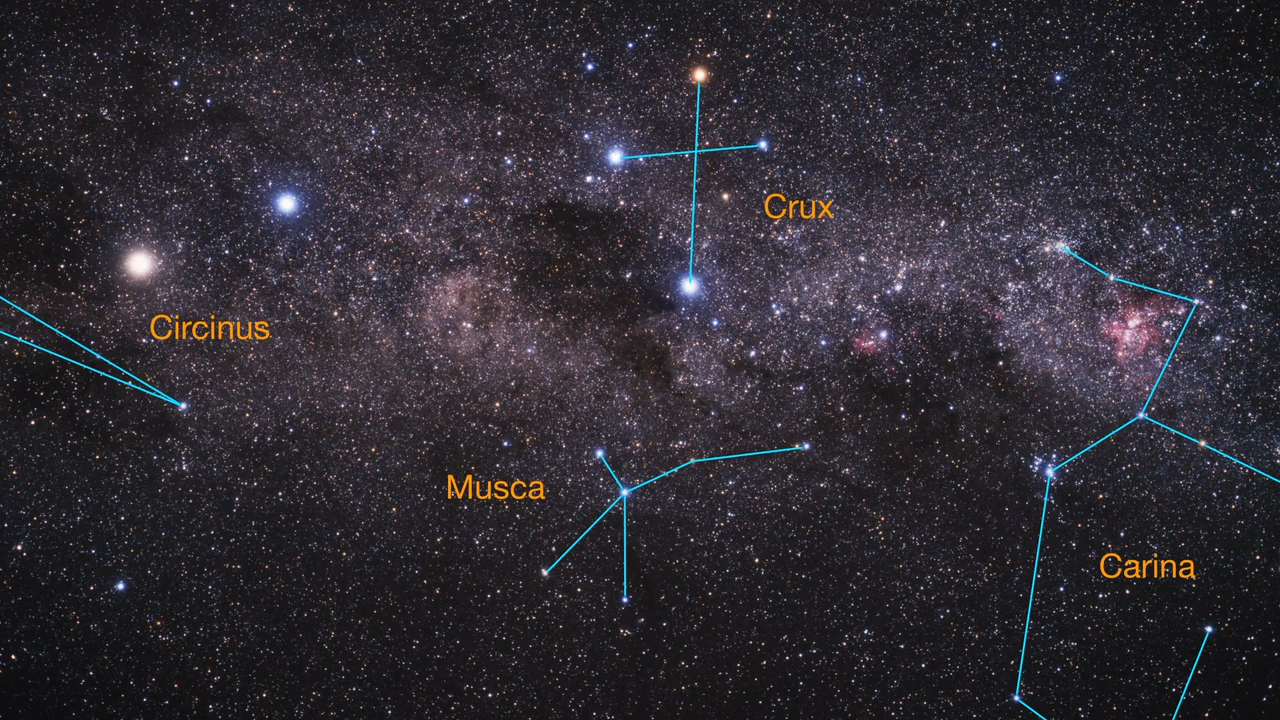
Circinus Galaxy Zoom
This zoom-in video shows the location of the Circinus galaxy on the sky. It begins with a ground-based photo of the constellation Circinus by the late astrophotographer Akira Fujii. The video closes in on the Circinus galaxy, using views from the Digitized Sky Survey and the Dark...
Share
Details
Laura Betz
NASA’s Goddard Space Flight Center
Greenbelt, Maryland
laura.e.betz@nasa.gov