





1 min read
Gravitational Lensing Diagram
Extended Description and Image Alt Text
Extended Description
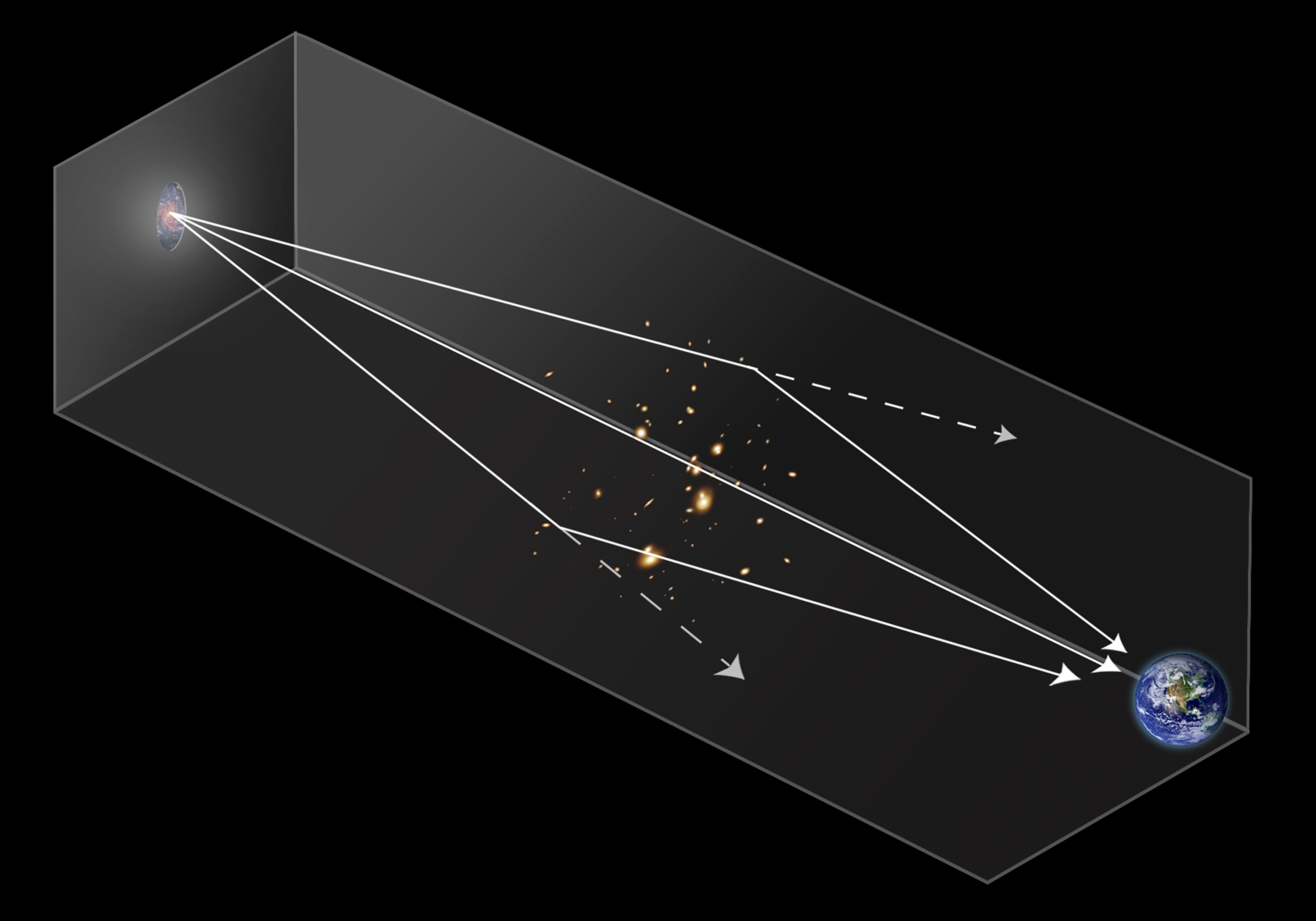
This ray diagram, which traces the path that light takes, illustrates how light from a distant galaxy or star can be bent by the gravity of an intervening galaxy cluster.
Light from a galaxy in the top left corner of the diagram is shown moving toward Earth at the bottom right corner. Between the distant galaxy and Earth, in the center of the diagram, is a depiction of a massive galaxy cluster: A series of gold dots representing galaxies of various sizes scattered across the center of the scene.
Solid white lines that end in arrows show the actual paths of the light from the distant galaxy as it travels to Earth. Dashed white lines with arrows show the paths the light would have taken had it not been bent by the gravity of the intervening cluster.
The solid white lines start out straight in the beginning, but when they reach the intervening central galaxy cluster, two of the three light paths (the left and right) are bent by the cluster’s gravity and redirected toward Earth. The third solid white line (middle) travels straight from the distant galaxy through the galaxy cluster to Earth.
The dashed white lines begin at the middle of the cluster, at left and right, and continue on a straight path.
Image Alt Text
This ray diagram, which traces the path that light takes, illustrates how light from a distant galaxy or star can be bent by the gravity of an intervening galaxy cluster.
- Release DateApril 25, 2018
- Science ReleaseNASA’s James Webb Space Telescope Could Potentially Detect the First Stars and Black Holes
- CreditImage: NASA, ESA, Ann Feild (STScI), Frank Summers (STScI)
Related Images & Videos
Hubble Frontier Field Abell 2744
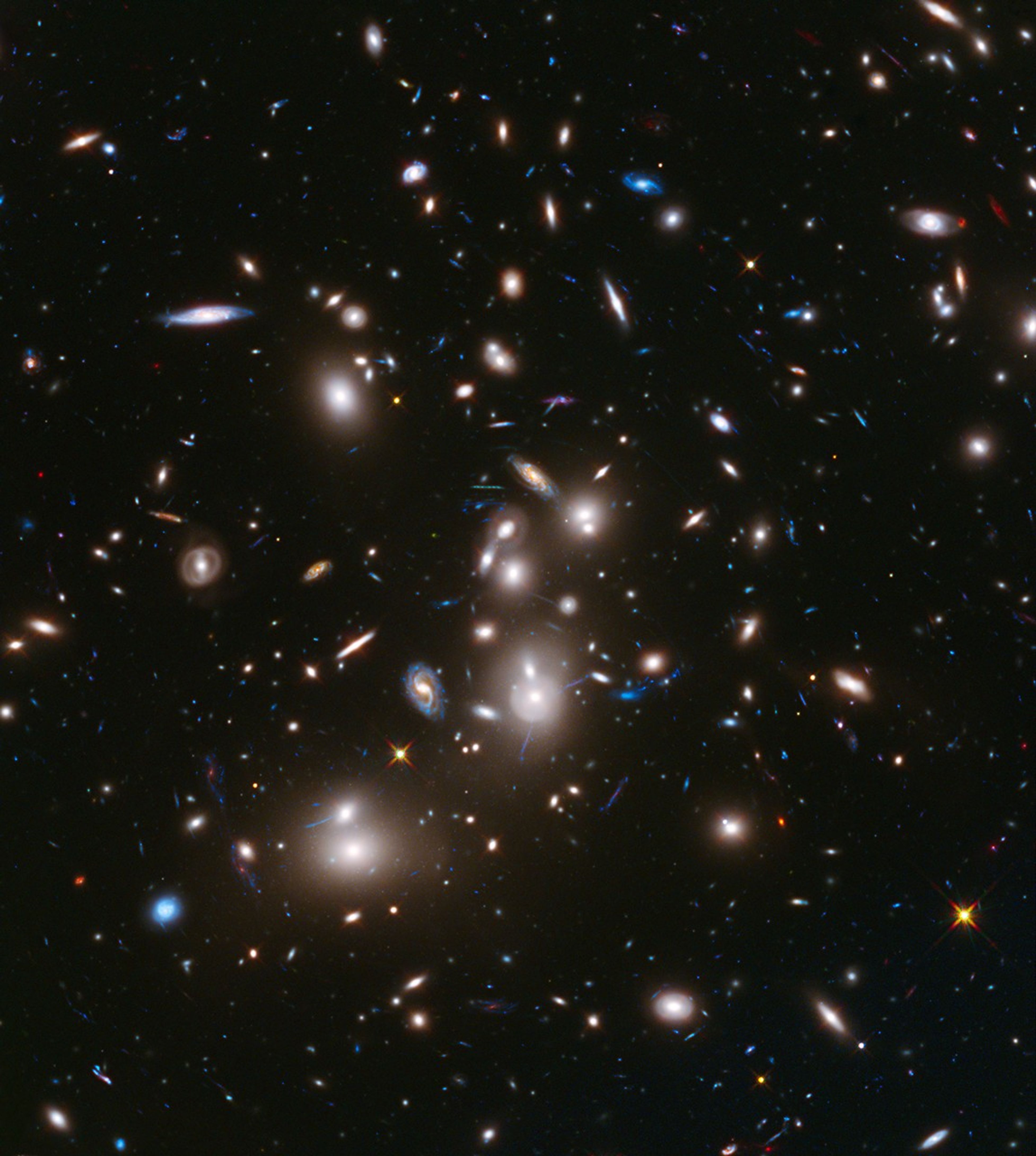
This long-exposure Hubble Space Telescope image of massive galaxy cluster Abell 2744 shows some of the faintest and youngest galaxies ever detected in space. Abell 2744, located in the constellation Sculptor, appears in the foreground of this image. It contains several hundred...
Share
Details
Laura Betz
NASA’s Goddard Space Flight Center
Greenbelt, Maryland
laura.e.betz@nasa.gov
NASA, ESA, Ann Feild (STScI), Frank Summers (STScI)