







1 min read
Imaging Modes of Webb’s Scientific Instruments
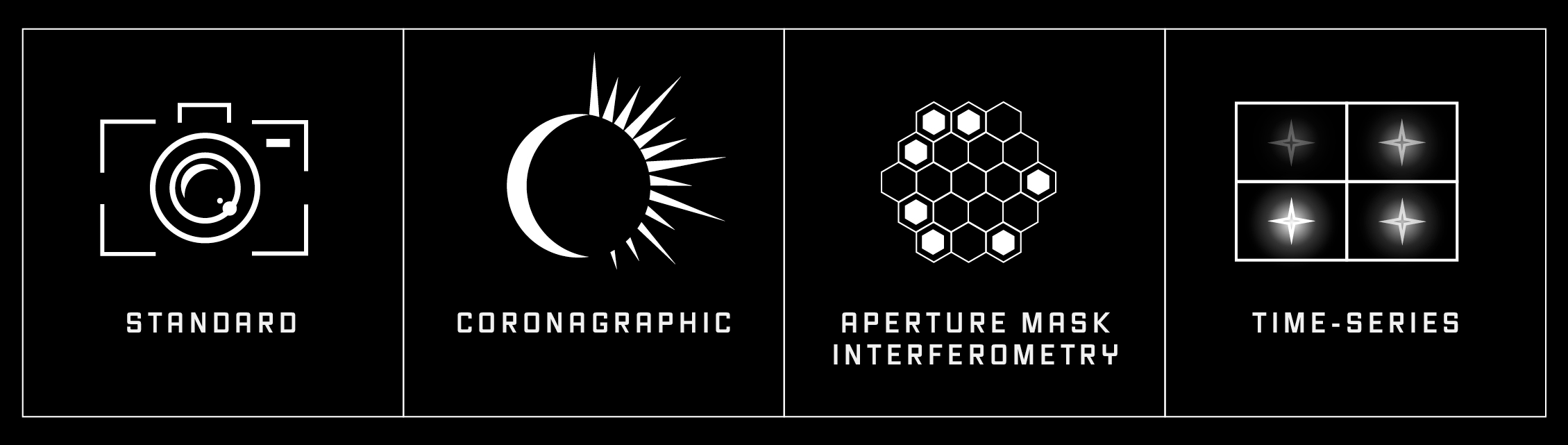
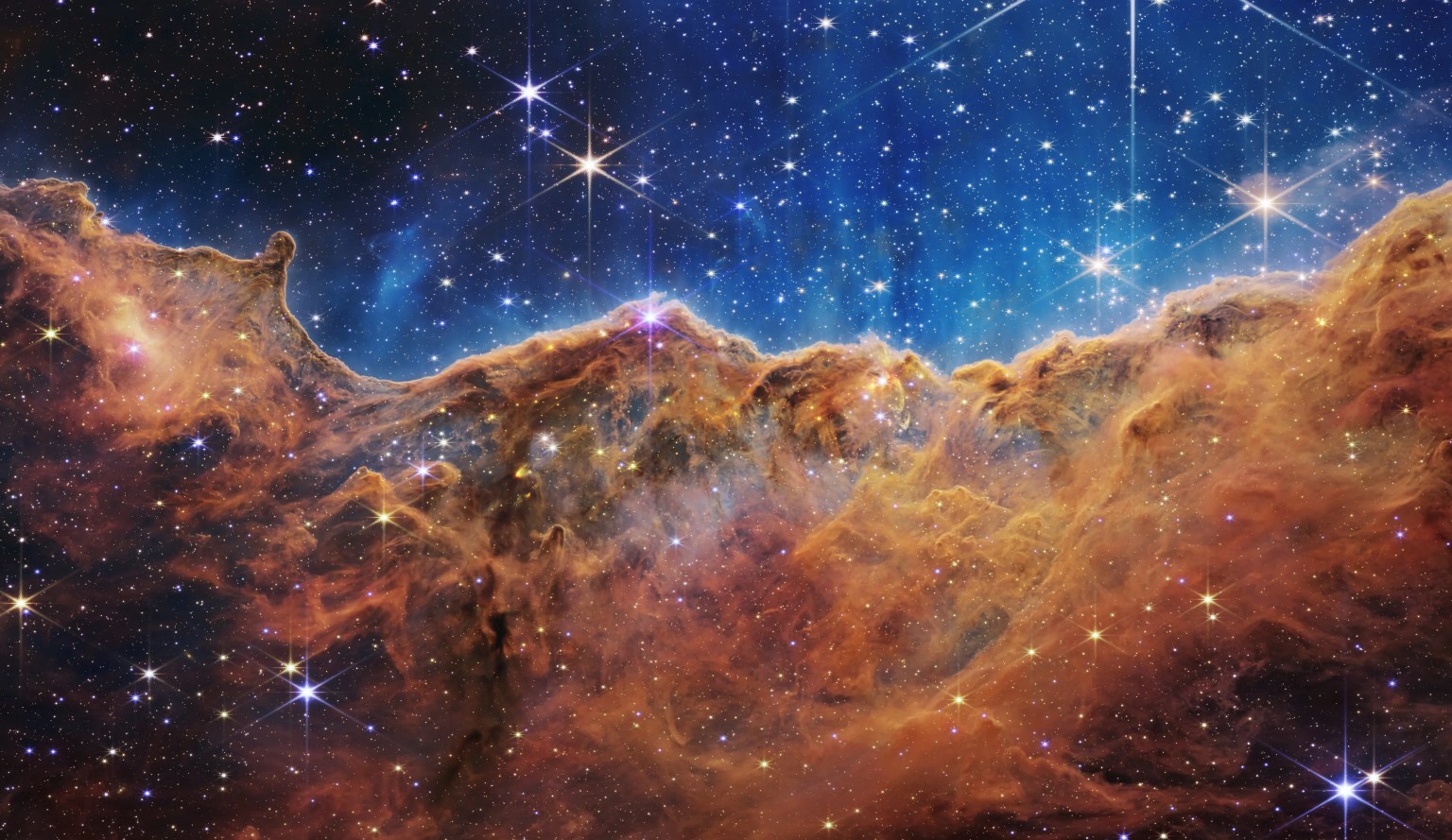
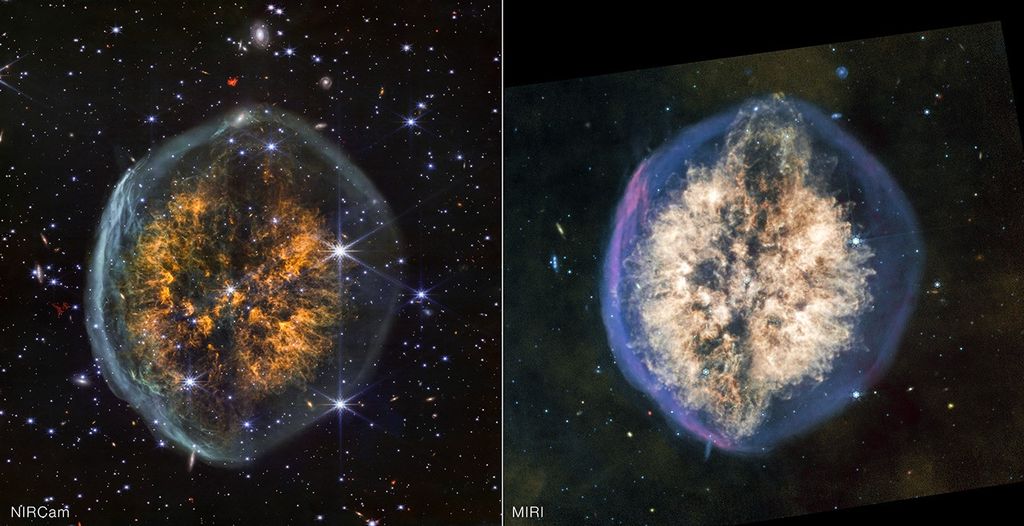
Imaging is equivalent to digital photography. Imaging is used to detect objects in a large field of view; map the spatial relationship between various objects and materials in space; and investigate the shape and structure of individual objects. During imaging, infrared light from space is passed through filters onto an array of detectors. The detectors measure the intensity (brightness) of infrared light at thousands of points (pixels) across the field of view. Three of Webb’s four scientific instruments (NIRCam, NIRISS, and MIRI) are capable of imaging.
Standard Imaging is the equivalent to basic digital photography and involves capturing pictures of a wide variety of objects and materials in space that emit or reflect infrared light. (NIRCam, NIRISS, and MIRI)
Coronagraphic Imaging (sometimes called high-contrast imaging) involves using an opaque disk known as a coronagraph to block the light of a star in order to reveal the much dimmer light of nearby objects, such as exoplanets and debris disks. (NIRCam and MIRI)
Aperture Mask Interferometry (AMI) involves using an aperture mask, a metal plate with holes, to increase the effective resolution of the telescope and capture more detailed images. When the aperture mask is in place, only the light that passes through the holes makes it to the detectors—the rest is blocked. AMI simulates the effect of a telescope array, in which a number of telescopes work together to simulate the light-gathering ability of a single, much larger telescope. AMI is used to separate light of bright objects like stars that are close together in space or on the sky. (NIRISS)
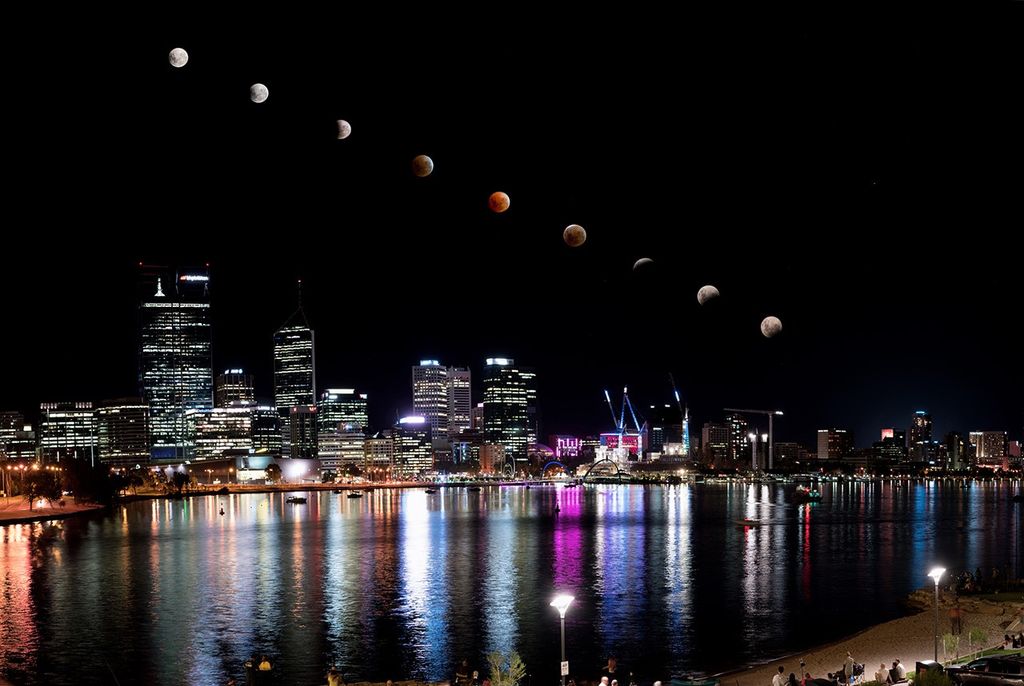
Time-Series Imaging involves capturing a series of images at regular intervals in order to measure changes over time. Time-series is sort of like burst mode on a camera, and can be used to track changes in the brightness of a star or can be combined with coronagraphic imaging to track the motion of a planet. (MIRI and NIRCam)
Share
Details
Laura Betz
NASA’s Goddard Space Flight Center
Greenbelt, Maryland
laura.e.betz@nasa.gov
NASA, ESA, CSA, Andi James (STScI)