













1 min read
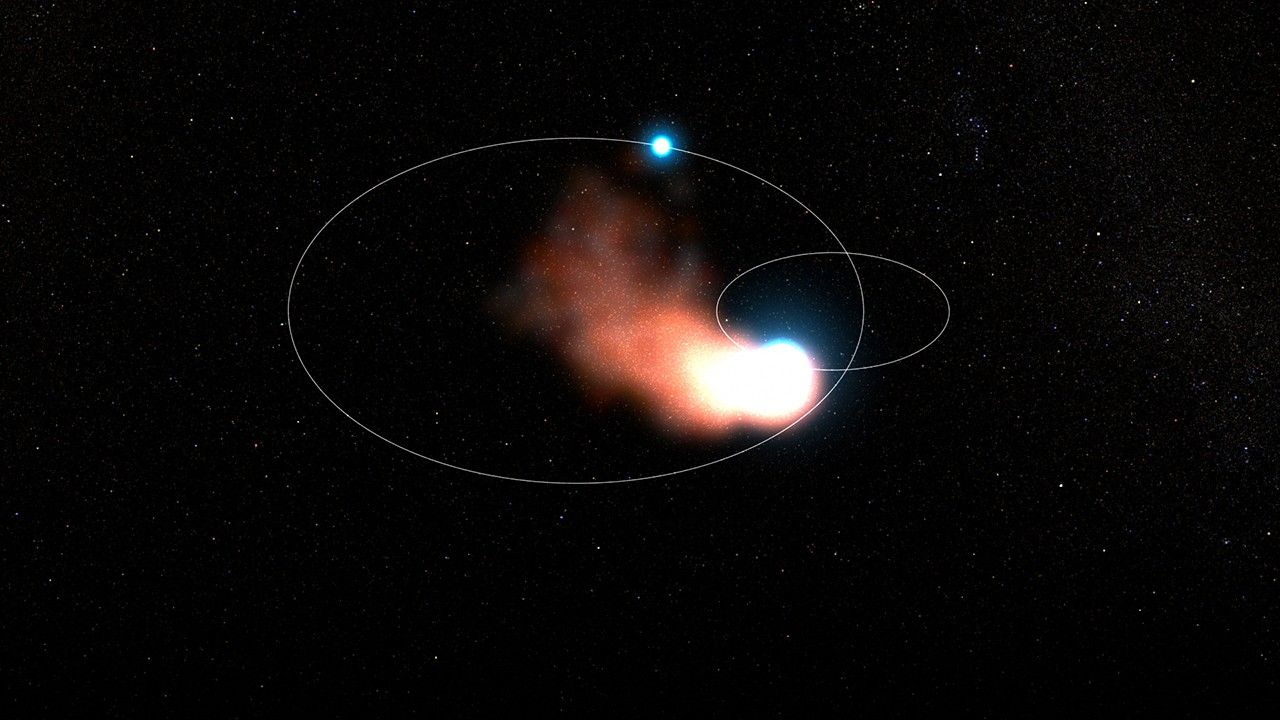
WR 140 Binary System: Perspective View
This animation shows the production of dust in the binary star system WR 140 as the orbit of the Wolf-Rayet star approaches the O-type star and their stellar winds collide. The stronger winds of the Wolf-Rayet star blow back behind the O star, and dust is created in its wake as the mixed stellar material cools. As the process repeats over and over, the dust will form a distinctive pinwheel shape.
- Release DateNovember 18, 2020
- Science ReleaseThe Cosmic Dust in Your Bones—NASA’s Webb Telescope Will Investigate the Intertwined Origins of Dust and Life
- CreditVideo: NASA, ESA, CSA, Joseph Olmsted (STScI)
Related Images & Videos
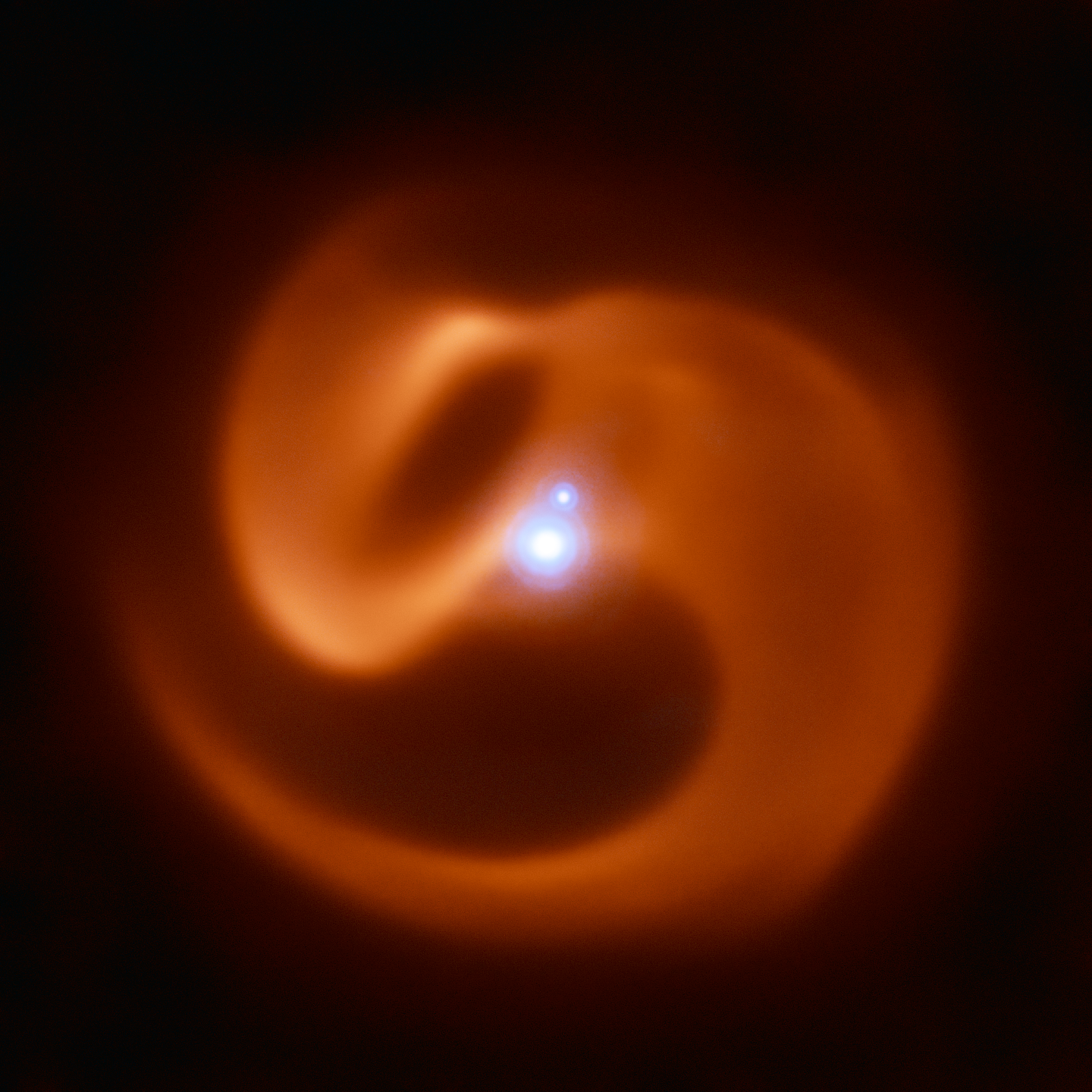
Apep Star System (VLT)
Evidence indicates that large amounts of cosmic dust are produced as the stellar winds of massive stars collide in Wolf-Rayet binary or multiple-star systems. As the stars orbit each other and dust is produced, a distinctive pinwheel pattern is formed, as shown in this image...
WR 140 Binary System: Top View
This animation looks down from above the orbital plane to depict the spiraling creation of dust in the binary star system WR 140. A Wolf-Rayet star — the dense core of an aging massive star — and an O-type star orbit one another, their stellar winds colliding as they get close....
Share
Details
Last Updated
Aug 28, 2025
Contact
Media
Laura Betz
NASA’s Goddard Space Flight Center
Greenbelt, Maryland
laura.e.betz@nasa.gov
Video Credit
NASA, ESA, CSA, Joseph Olmsted (STScI)