
























Commercial Spacecraft for NASA’s Swift Boost Continues Tech Demo
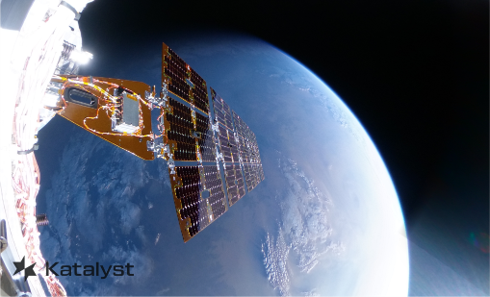
This week, Katalyst Space conducted in-space tests and maneuvers to exercise the capabilities of its robotic servicing spacecraft, LINK.
NASA and Katalyst scaled back a mission that would have used LINK to boost the agency’s Neil Gehrels Swift Observatory to a higher altitude, because of attitude control issues with LINK. However, Katalyst continues to demonstrate as many of LINK’s capabilities in space as possible, to collect data to inform future spacecraft servicing technology and operations.
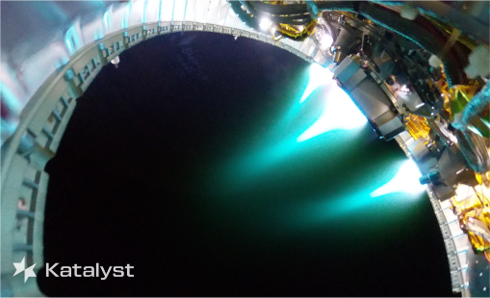
Over the past few days, Katalyst raised LINK’s orbit and made adjustments to align with Swift’s orbit. The team also deployed all three of LINK’s robotic arms and fired all three of the electric propulsion thrusters at the same time.
LINK came within 7.5 to 9 miles (12 to 15 kilometers) of Swift. LINK will not make any closer approach to Swift throughout its remaining operations in orbit. The Katalyst team estimates LINK will deorbit after another 2 to 3 weeks.
Monitor the Swift blog for more updates:
https://science.nasa.gov/blogs/swift
