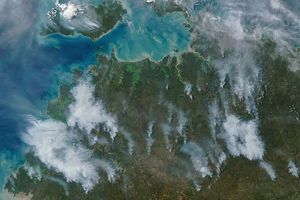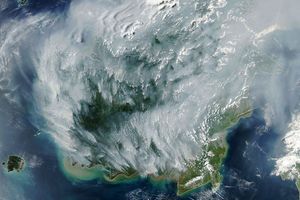

















Early dry season fires (red dots) were burning across Arnhem Land in Northern Territory, Australia, at the time of this Moderate Resolution Imaging Spectroradiometer (MODIS) image from the Aqua satellite captured on June 17, 2004. Fires were also detected on Melville Island, to the northwest of the mainland across Van Diemen Gulf, which is filled with streamers of tan-colored sediment. A particularly smoky line of fires is burning east of the Joseph Bonaparte Gulf, at lower left in the image. The image is available in multiple resolutions.
The regionâs dry season is generally from May until October, with prescribed fire on rangeland and farmland typically conducted in the early part of the season and naturally ignited blazes dominating the late dry season. The Northern Territory has one of the highest frequencies of early season fires in Australia because land managers there conduct numerous prescribed fires to reduce grass that could act as fuel for more severe wildfires later in the dry season. For more information on the tropical savannas of northern Australia, visit the Savanna Explorer Website of Australiaâs Cooperative Research Center for Tropical Savannas Management.
References & Resources
Image courtesy the MODIS Rapid Response Team, NASA-GSFC