




















October 23, 2005
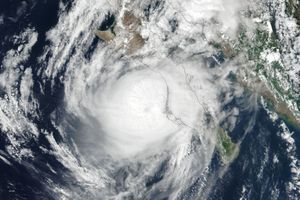
Hurricane Wilma was a powerful Category 3 storm after subjecting Mexico’s Yucatan Peninsula to two days of rain and high winds. When the Moderate Resolution Imaging Spectroradiometer (MODIS) on NASA’s Terra satellite took this image at 12:15 p.m. Eastern Daylight Time, on October 23, 2005, Wilma was regaining some power as it crossed the Gulf of Mexico’s warm waters. The outer edges of the hurricane were just starting to reach southern Florida at this time.
While weaker than in recent days, Wilma was still a very powerful and dangerous storm. The eye of the storm is 80 kilometers (50 miles) wide, a size usually associated with the most powerful storms. Winds within the hurricane were reaching peak gusts of 230 kilometers per hour (145 miles per hour). As such storms are prone to do, it has been spawning tornadoes within the hurricane’s reach, including one that touched down at NASA’s Kennedy Space Center, causing some structural damage, though no reported injuries. Elsewhere, three deaths in Mexico had been attributed to the storm.The high-resolution image provided above has a spatial resolution of 250 meters per pixel. The MODIS Rapid Response Team provides this image at additional resolutions.
References & Resources
NASA image courtesy Jeff Schmaltz, MODIS Rapid Response Team, Goddard Space Flight Center