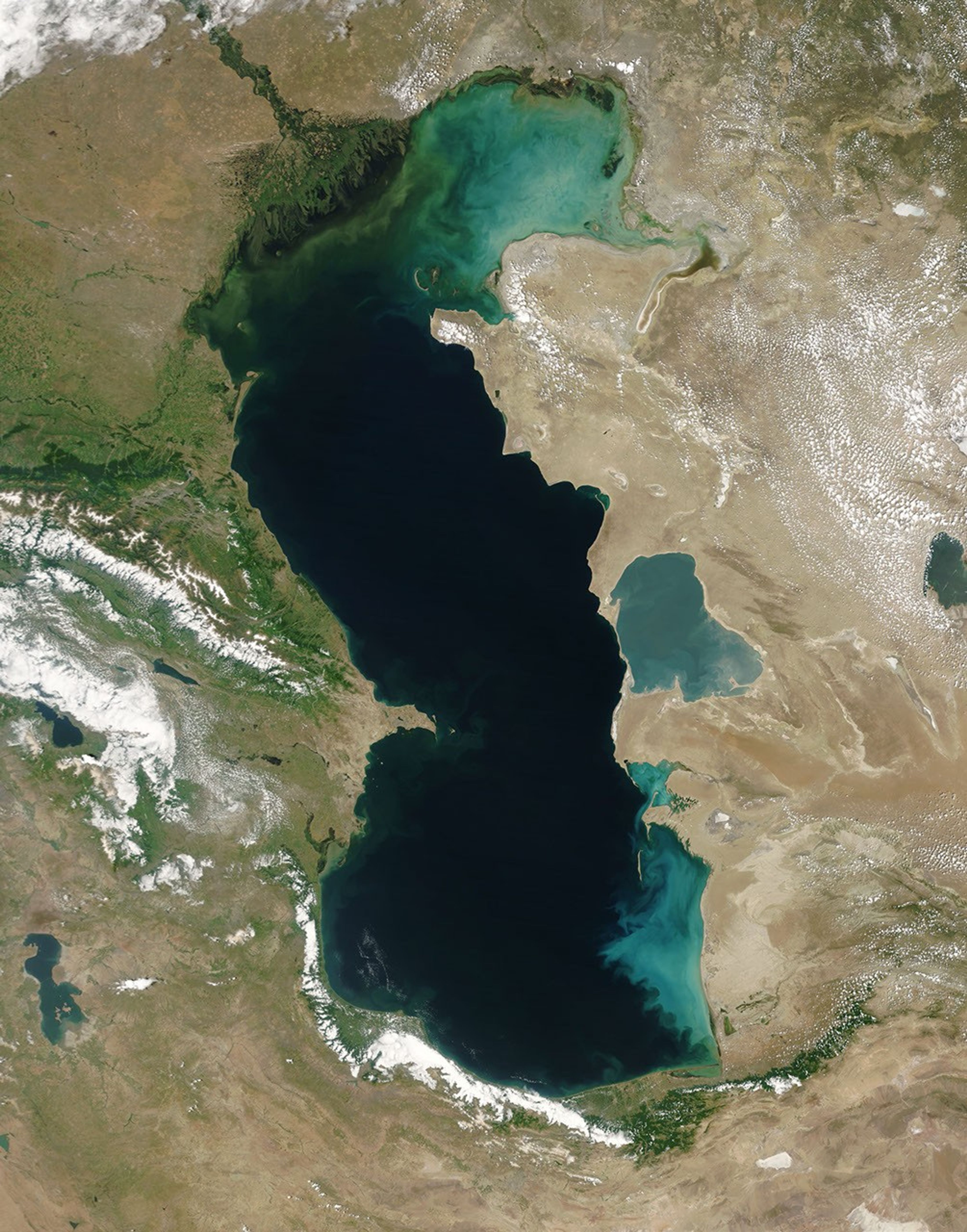




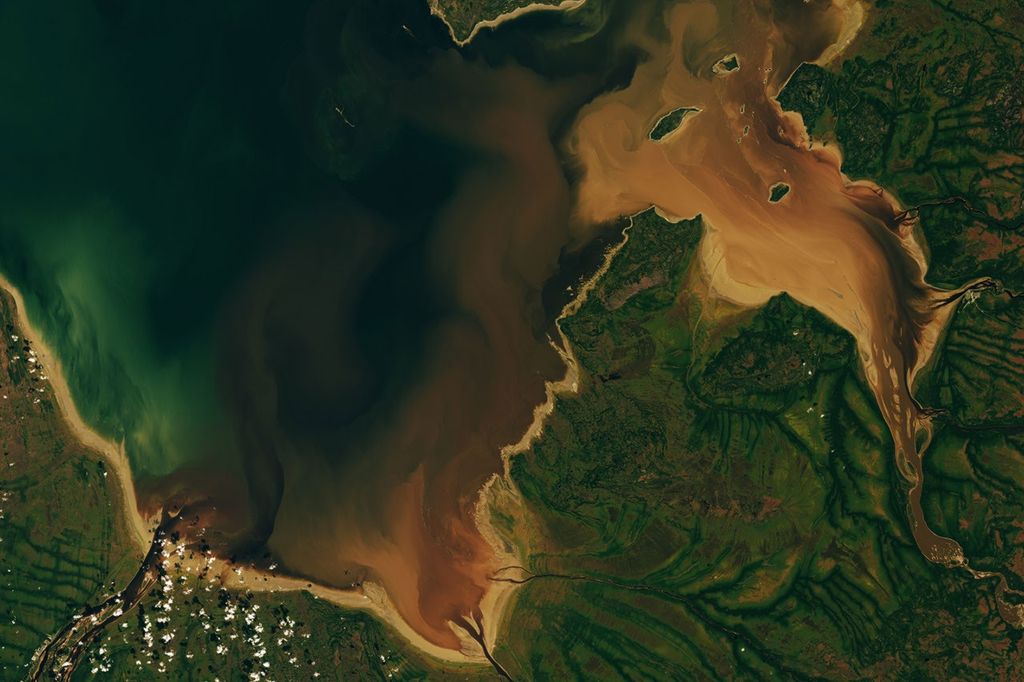
















The bright, salty, sediment-filled water of the Zaliv Kara-Bogaz-Gol (also known as the Garabogazköl Gulf) contrasts sharply with the dark and clear water of the Caspian Sea. This shallow basin is connected to the Caspian Sea by a narrow channel, which is its only source of fresh water. Over the past century water level in the Zaliv Kara-Bogaz-Gol has varied tremendously, with detrimental affects for the local environment. Drought and diversion of water from the Volga and Kür Rivers (the primary sources of fresh water for the Caspian) lowered the level of the Caspian Sea for most of the 20th Century. In 1980 the Soviet Union completed a dam that blocked the flow of water from the Caspian into the Zaliv Kara-Bogaz-Gol, which then dried out almost completely. As a result sturgeon spawning grounds were destroyed and dust storms drove away the local inhabitants. Shortly after the dam was built, however, a rise in the Caspian’s level necessitated the release of water back into the Zaliv Kara-Bogaz-Gol. In 1992 the dam was destroyed.
For a closeup of the channel linking the Zaliv Kara-Bogaz-Gol to the Caspian Sea, view astronaut photograph STS111-E-5485.
References & Resources
Image courtesy Jeff Schmaltz, MODIS Land Rapid Response Team at NASA GSFC