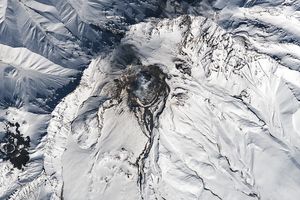







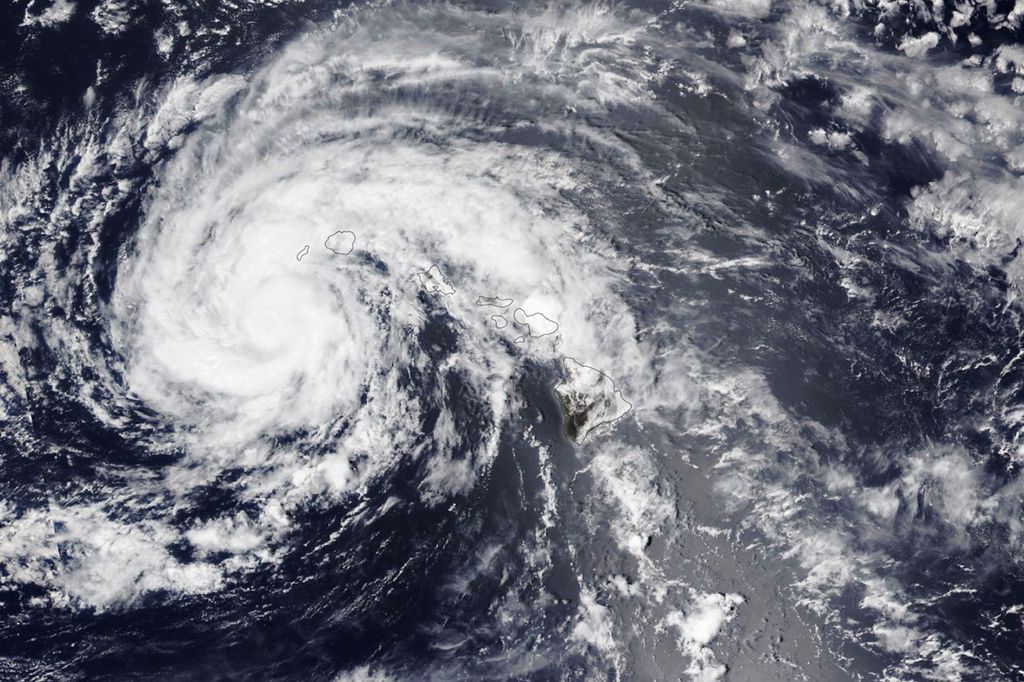
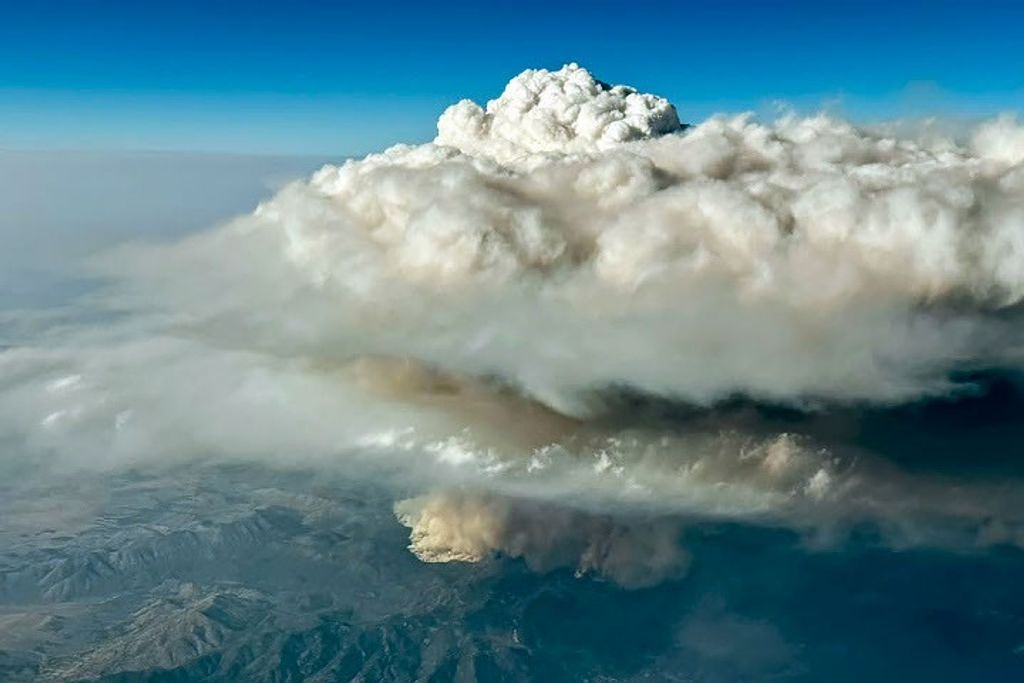









On October 22, 2005, the Sierra Negra Volcano on Isla Isabela in the Galapagos Islands began erupting, sending ash as high as 7,600 meters (25,000 feet). The Moderate Resolution Imaging Spectroradiometer (MODIS) flying onboard the Terra satellite took this picture on October 23. In this image, clouds obscure the Sierra Negra Volcano itself. The volcanic ash plume it emits, however, is visible, along with the summits of a few other volcanoes on the same island, including Wolf Volcano, Darwin Volcano, and Alcedo Volcano.
The Galapagos Islands are a collection of volcanic summits poking their heads above sea level along the equator, west of South America. With the exception of Isla Isabela, each major island consists of a single volcanic summit. Isla Isabela, the largest in the archipelago, is composed of six volcanoes that merged above the water. The volcanoes are all shield volcanoes shaped like flattened domes with very gentle slopes. In contrast to volcanoes built from a combination of lava, rock, and ash flows, shield volcanoes are built exclusively from lava flows. Hardened black lava characterizes the islands, and the Sierra Negra’s name translates as “Black Mountain Range.”
Geologically speaking, the islands are young, ranging in age from hundreds of thousands to several millions of years old. Some volcanoes are still forming, and the Galapagos remain one of the world’s most volcanically active regions. No land bridges have ever connected these volcanic summits to another landmass, and the nearest continent is several hundred miles away. Puzzling over the plants and animals that populated these islands helped the naturalist Charles Darwin develop his theory of natural selection.
- Recommended Further Reading:
- The Geography and Geology of the Galapagos Islands from the Public Broadcasting Service (PBS).
References & Resources
NASA image courtesy Jeff Schmaltz, MODIS Rapid Response Team, Goddard Space Flight Center