


















NASA’s Guide to Finding and Photographing Auroras
Auroras are one of our night sky’s most dramatic spectacles. With modern cameras and smartphones, photographing these beautiful displays is easier than ever. Digital camera sensors are incredibly sensitive and can even allow you to record auroras you can’t see with the naked eye.
Here is NASA’s quick guide with tips and tricks for helping you to see and photograph auroras.
What Is an Aurora?
-
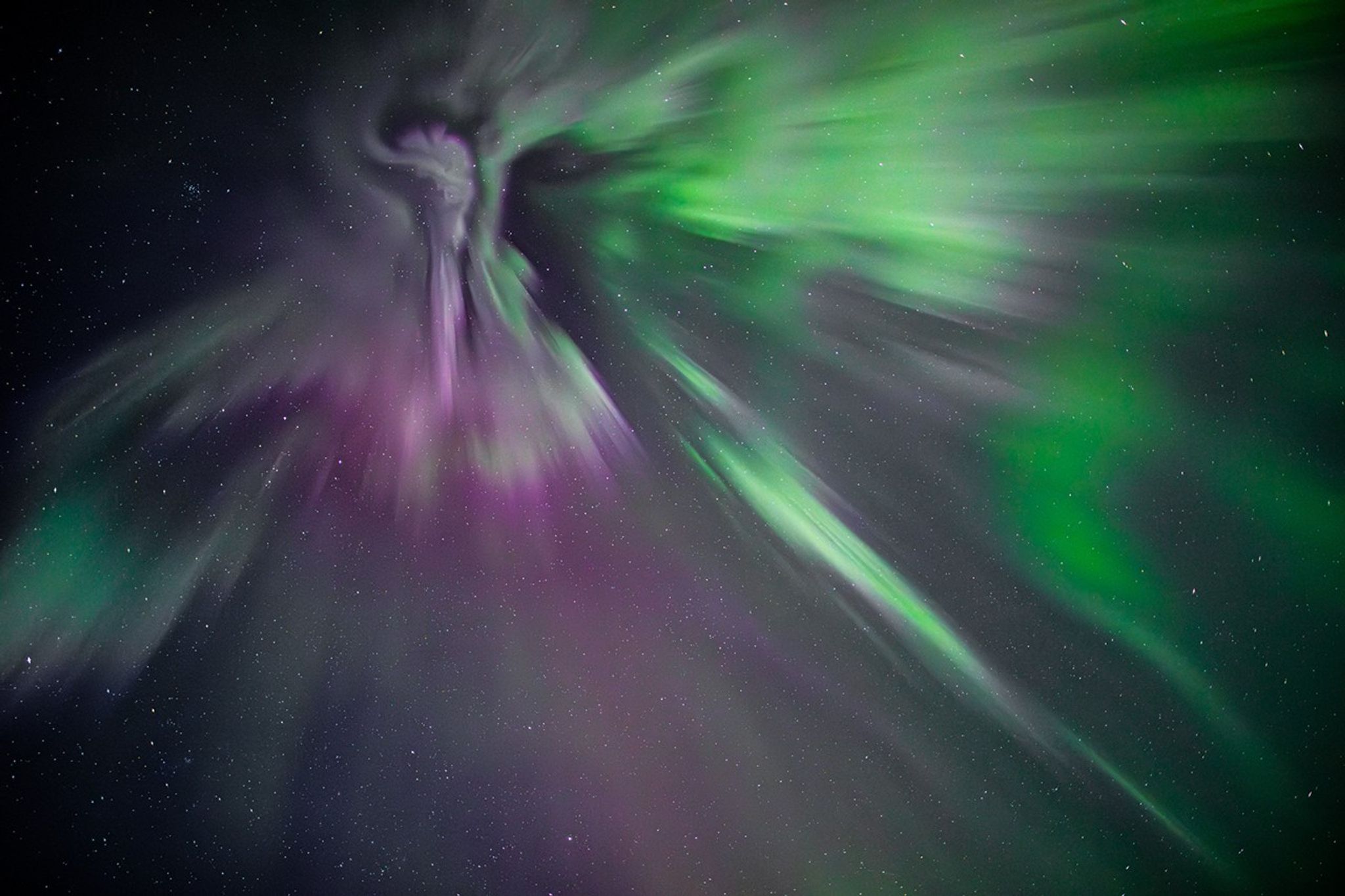
Auroras, also known as the northern or southern lights, are colorful and dynamic displays that glow in the night sky.
Auroras occur in an upper layer of Earth’s atmosphere called the ionosphere, but they typically originate with activity on the Sun. Occasionally, during explosions called coronal mass ejections, the Sun releases charged particles that speed across the solar system.
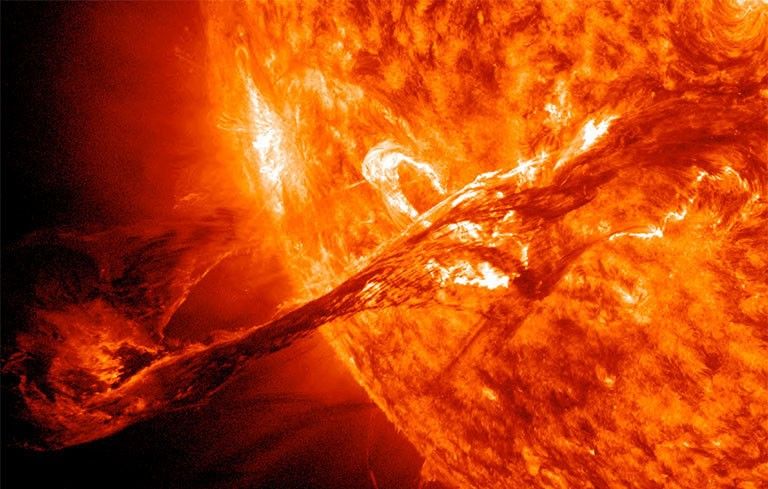 NASA’s Solar Dynamics Observatory (SDO) captured this coronal mass ejection on August 31, 2012, which created auroras on Earth three days later. For more images of this event: https://svs.gsfc.nasa.gov/11095/
NASA/Goddard Space Flight Center -
Under the right conditions, these particles interact with Earth’s magnetic environment and cause a build-up of energy.
When too much energy is pent up, the magnetic field lines snap and release energetic particles that follow magnetic field lines to rain down on Earth’s poles. When they strike atoms in the atmosphere, the energetic particles cause the atoms to glow, creating auroras. This happens more often and more strongly when the Sun is at its peak activity level in its 11-year cycle, called solar maximum.
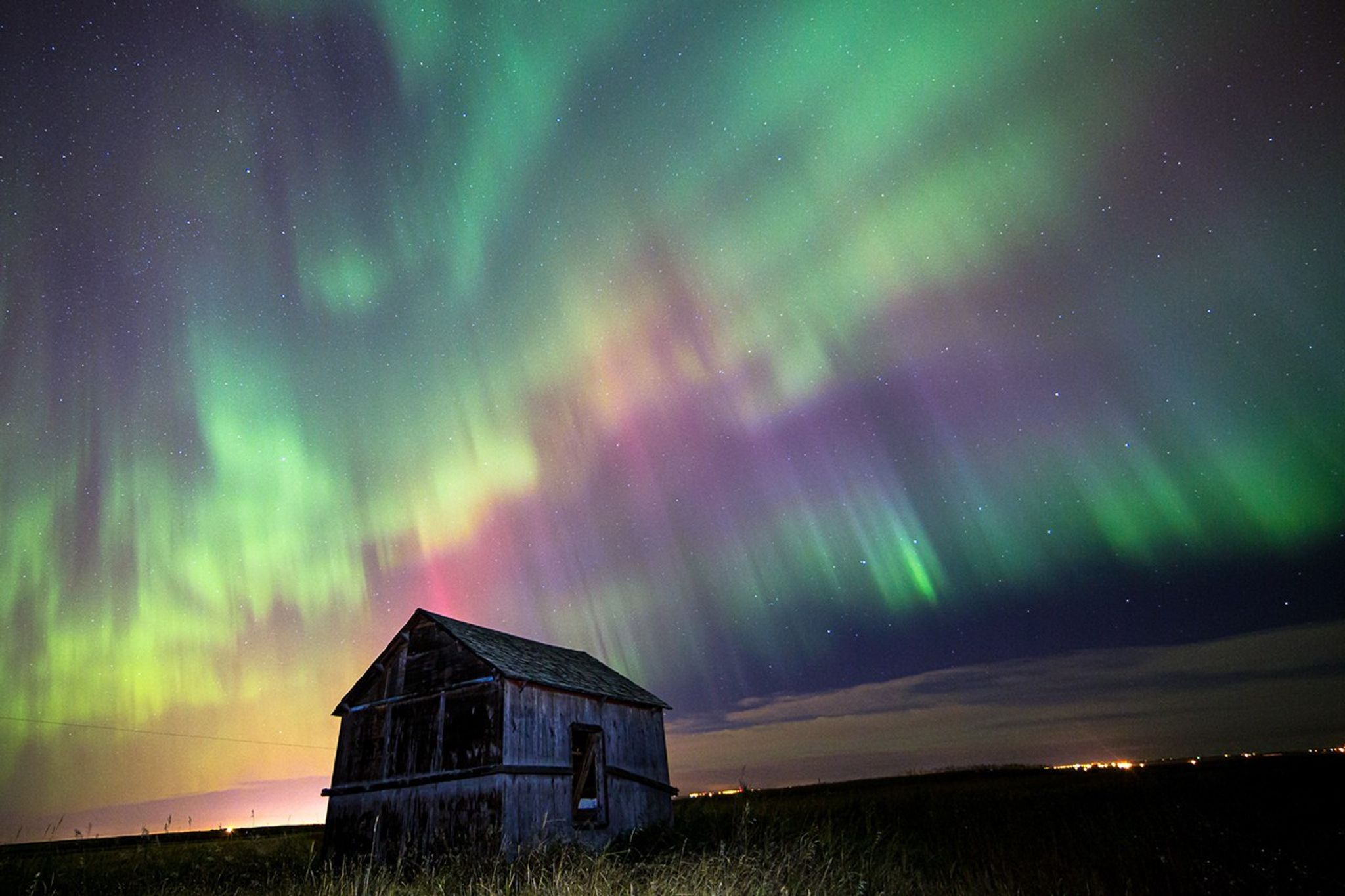 Colorful auroras form south of Carseland, Alberta.
Neil Zeller
What the Colors of an Aurora Reveal
-
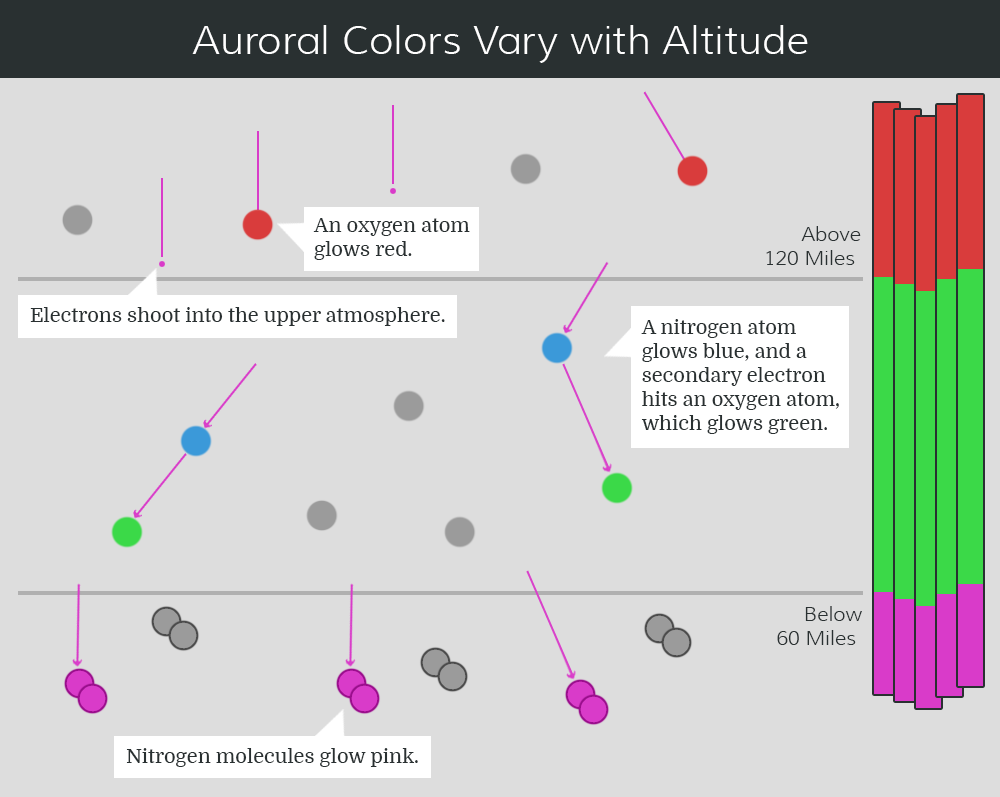
The various colors of auroras are created by different atoms and molecules in the atmosphere.
The various colors of auroras are created by different atoms and molecules in the atmosphere. When an energetic particle hits an oxygen atom, it releases red or green light depending on the energy of the oxygen atom. Nitrogen atoms and molecules emit blue and pink light. Depending on the mix of atoms and molecules in the upper atmosphere, auroras can blend to create other colors such as yellow and white. One reason red auroras are the most common color seen at lower latitudes is because the oxygen atoms that glow red are found highest in the atmosphere.
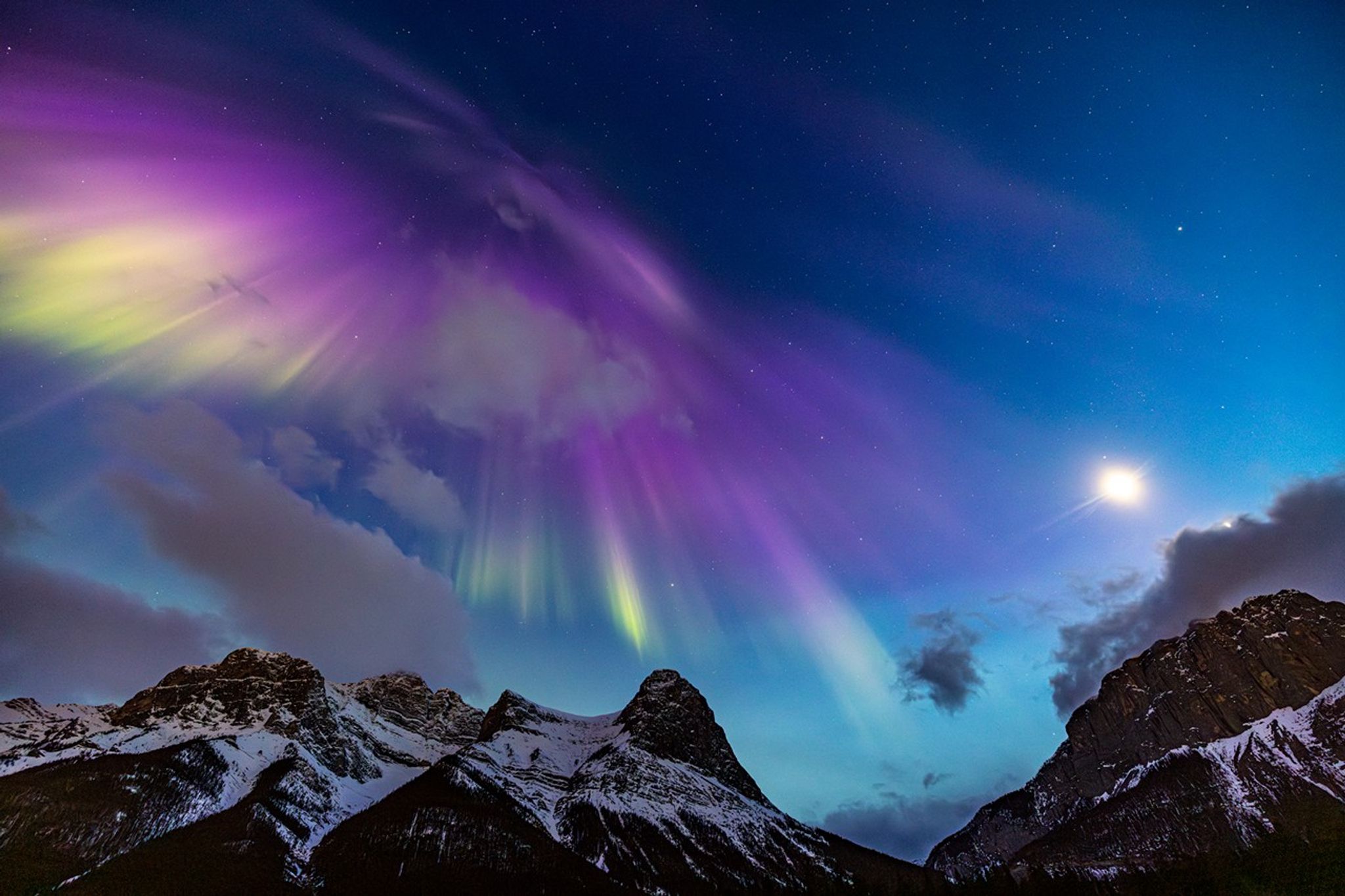 A bright aurora seen above snowcapped mountains.Neil Zeller
How to Find Auroras
-
Auroras happen all the time but are most visible during solar maximum.
Since auroras typically originate with activity on the Sun, scientists can sometimes determine a day or two in advance that there may be a chance of seeing auroras. However, it’s not until the storm of particles reaches space weather monitoring satellites an hour out from Earth that scientists have a better grasp of the likelihood of auroras. At that point, scientists know the orientation of the Sun’s magnetic field, which is critical for understanding where auroras may be seen.
The National Oceanic and Atmospheric Administration’s Space Weather Prediction Center runs an aurora dashboard that is a good source for checking forecasts. The Kp index is used by some to determine when auroras might be seen, but this metric is primarily useful as a rough guide of intensity, not for real-time or predictive timing for an event. This index assesses Earth’s geomagnetic field activity and ranges from 0 to 9, with higher values indicative of a greater likelihood of brighter auroras farther from the poles. In the continental United States, northern states can see auroras when the Kp index is as low as 4. Higher Kp indexes are needed for viewing farther south. Join a local, online aurora chasing group to learn more about seeing auroras in your area.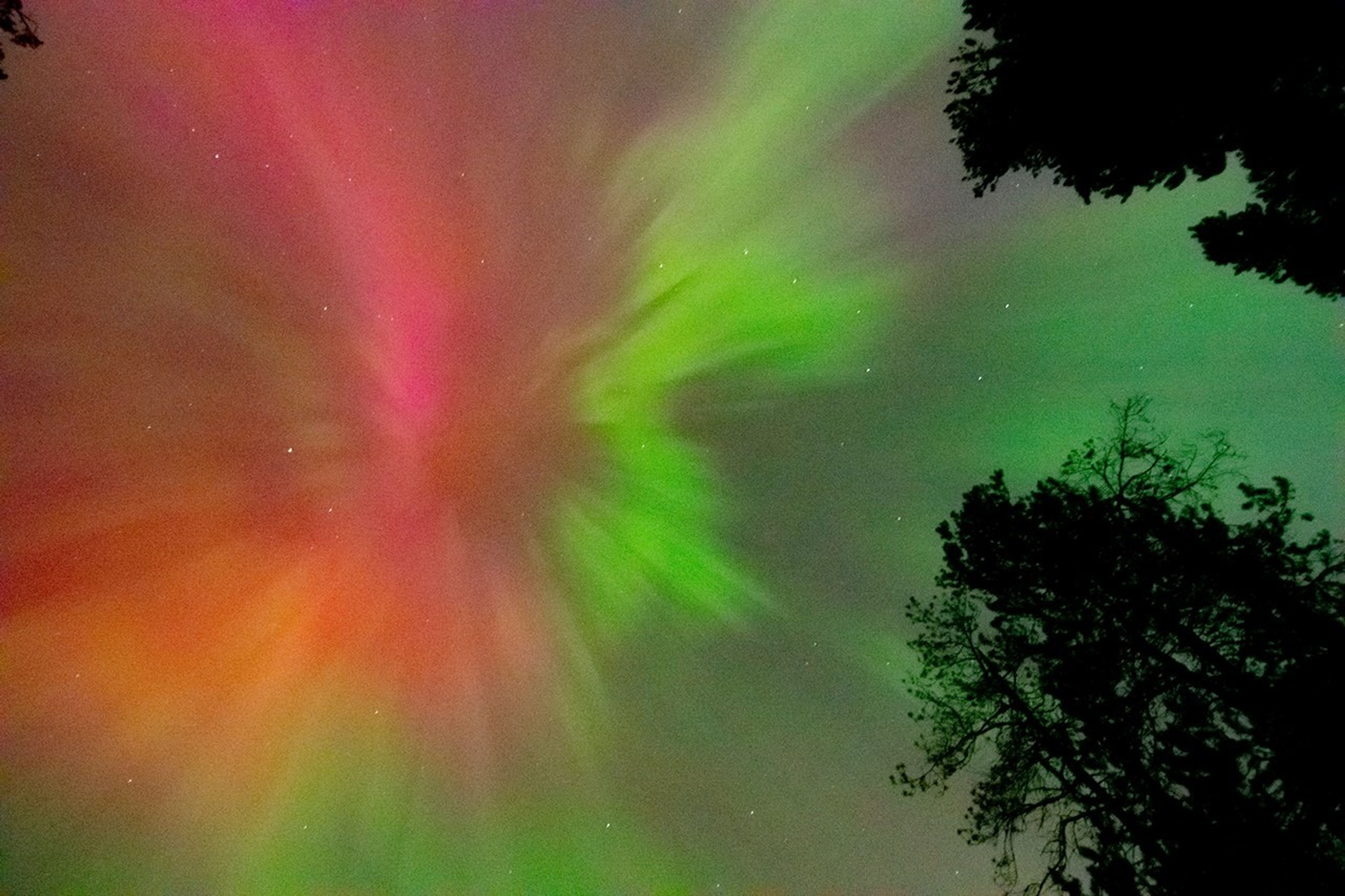 A coronal aurora appeared overhead in southwestern British Columbia on May 10, 2024, during a strong solar storm that reached a Kp index of 9.
NASA/Mara Johnson-Groh -
When auroras are likely, check your local weather forecast to ensure you’ll have clear skies and head to a safe, dark location.
Plan your aurora viewing location in advance so you know where to go and can park in a safe location. Strong auroras can be seen even in big cities, but the best views will be in areas with little or no light pollution. If you live at a mid-latitude in the northern hemisphere, try to have a clear view to the north as the auroras may appear close to the horizon.
Be patient as you wait for the auroras. Aurora chasing is always a game of chance, so don’t be disappointed if your first outing isn’t successful. While displays can last all night, sometimes they are much shorter lived and can wax and wane in brightness throughout the night. During large events, auroras may be seen as early as sunset and as late as sunrise, but they usually maximize around midnight.Auroras move across the sky above Swalwell, Alberta.
Neil Zeller
Packing For Success
-
As you’re getting ready to head out to photograph auroras, don’t forget to pack these essential items:
– Extra camera batteries or battery pack for your phone. On cold nights, keep them in your pocket to keep them warm since cold batteries lose power quickly.
– Warm clothing layers and blankets, especially in the winter
– Tripod to stabilize your shots
– Red headlight to help maintain your night vision as you get set up
– Snacks and hot beverages if you’re planning for a long night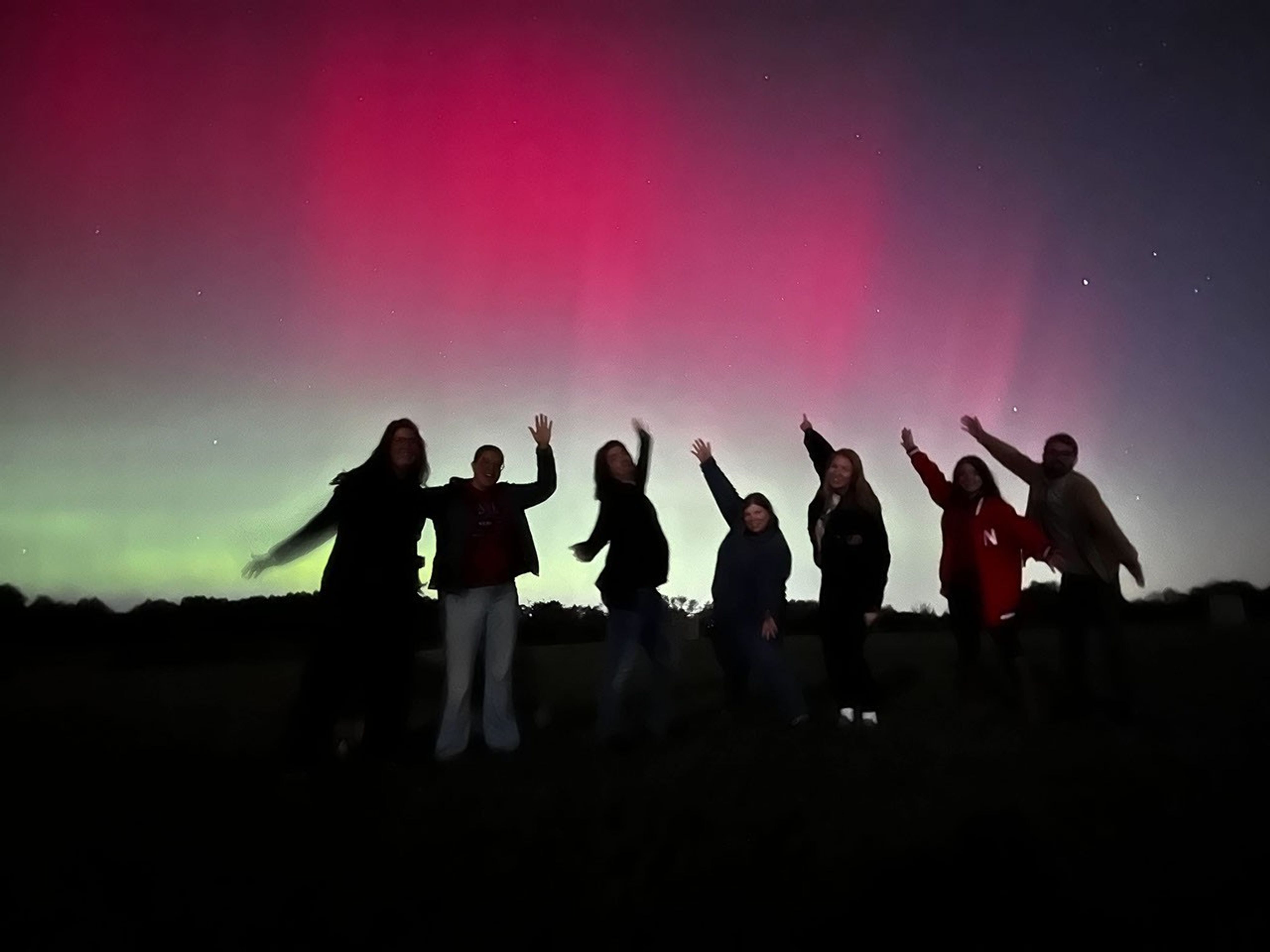 Members of NASA’s Moon to Mars Space Weather Analysis Office, who track solar storms for the agency, jumping for a photo of when aurora were visible in Maryland in October 2024.Kayden Etter