













“What do scientists learn from studying solar eclipses?” Activity
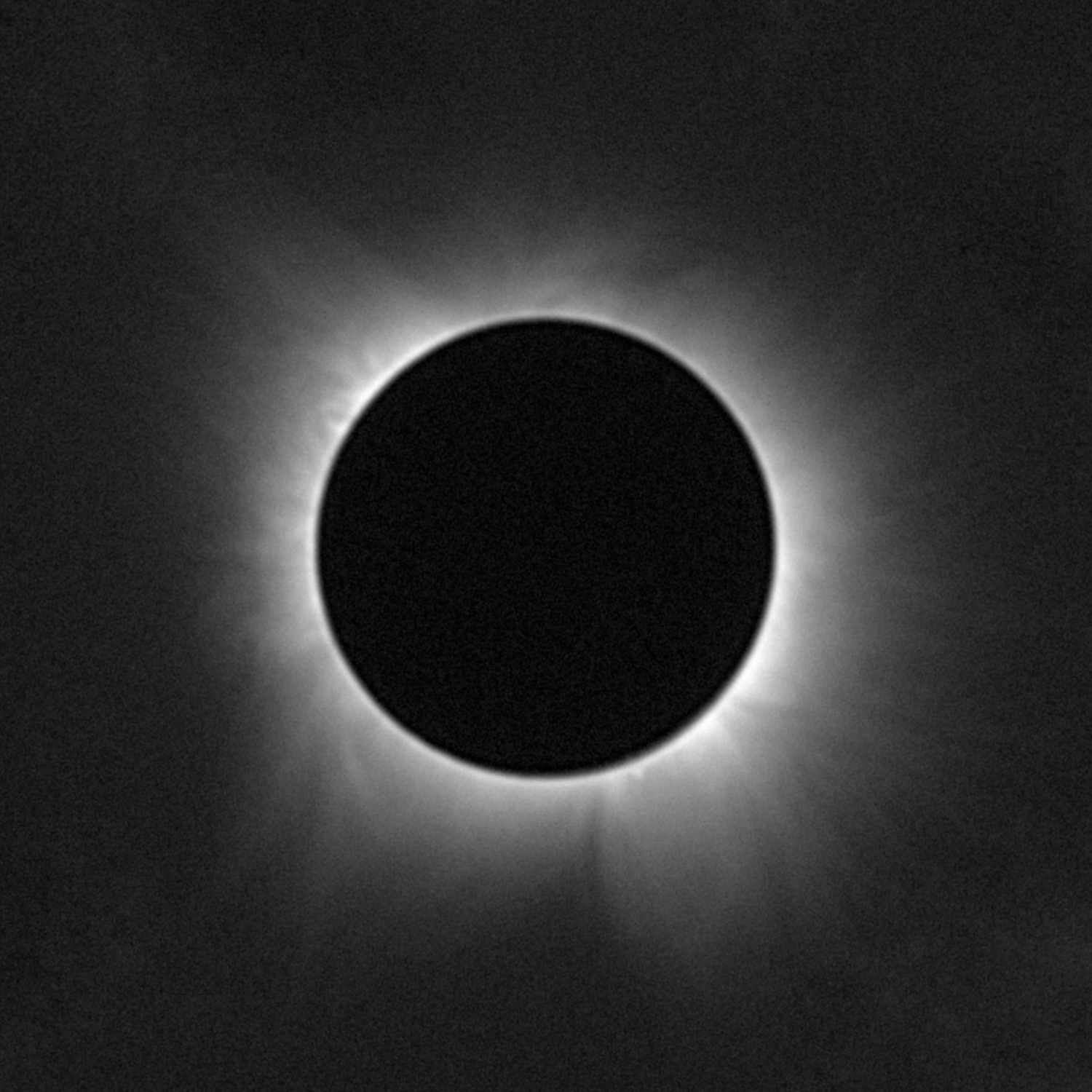
This image of the total solar eclipse is a combination of 30 50-millisecond exposures taken with a camera mounted on one of NASA’s WB-57 aircraft on April 8, 2024. It was captured in a wavelength of light emitted by ionized iron atoms. This Fe XIV emission highlights electrified gas, called plasma, at a specific temperature (around 3.2 million degrees Fahrenheit) that often reveals arch-like structures in the corona.
B. Justen, O. Mayer, M. Justen, S. Habbal, and M. Druckmuller
| Levels |
|
|---|---|
| Material Type |
|
| Heliophysics Topics |
|
| Heliophysics Missions |
|
| Material Cost per Learner | Free |
| Language | English |
In this My NASA Data activity, students calculate Sun-Moon ratios and distances to determine possible solar eclipse types. Students will calculate the ratio of the size of the Sun to the Moon and compare the distances of both celestial bodies from Earth. Through these mathematical calculations, learners determine what type of solar eclipse is possible based on the geometric relationships between Earth, Moon, and Sun. This activity combines astronomy concepts with mathematical problem-solving using real NASA data.