




















Journey Through the Heliosphere: The Sun-Earth System in Color
| Levels |
|
|---|---|
| Material Type |
|
| Heliophysics Big Ideas |
|
| NGSS |
|
| Heliophysics Topics |
|
| Heliophysics Missions |
|
| Material Cost per Learner | Free |
| Language | Multiple Languages |
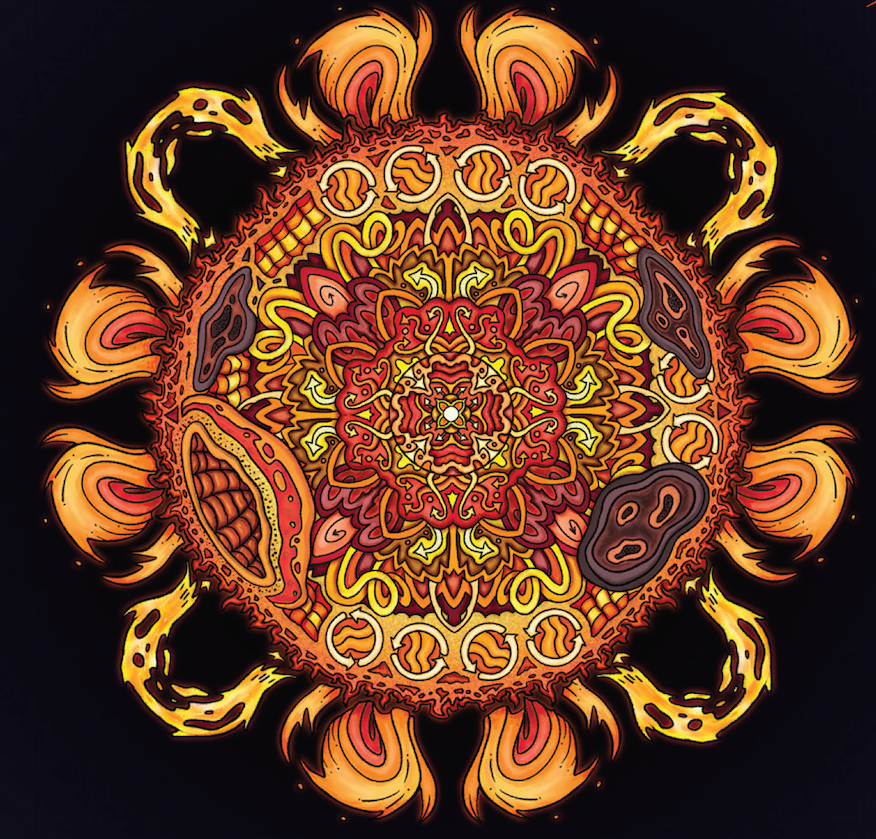
"Journey Through the Heliosphere: The Sun-Earth System in Color" is a coloring booklet that blends art and science, making complex heliophysics concepts accessible. A collaborative work between the University of Alaska Fairbanks Geophysical Institute and the NASA Heliophysics Education Activation Team (HEAT), the coloring book aims to educate readers about the Sun and its influence on Earth and the solar system.
The book covers various topics related to the Sun-Earth system, including:
- Our Sun (pages 6-7)
- Our Earth
- The Universe
- Voices of Alaska (pages 4-5)
- A significant feature of the book is its inclusion of Alaska Native languages, providing words related to the Sun and sky from cultures such as Alutiiq/Sugpiaq, Central Yupik/Cup'ik, Iñupiaq, Lower Koyukon Athabascan, Ten Kenaga'/Lower Tanana Athabascan, Ts'msyen/Sm'algyax, and Xaad kil/Haida.
The coloring book is designed for both educators and learners, aims to spark curiosity and creativity, and is aligned with the Framework for Heliophysics Education (FHE). A glossary of science terms is provided at the end.
This project is the result of collaboration between NASA HEAT, the UAF Geophysical Institute, and Arctic and Earth SIGNS, a UAF International Arctic Research Center project also funded through NASA's SciAct program.