























AMSR-E
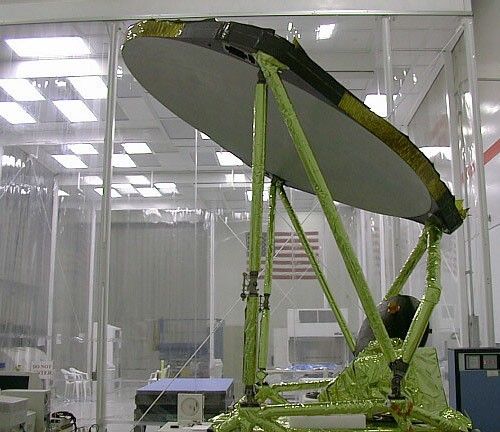
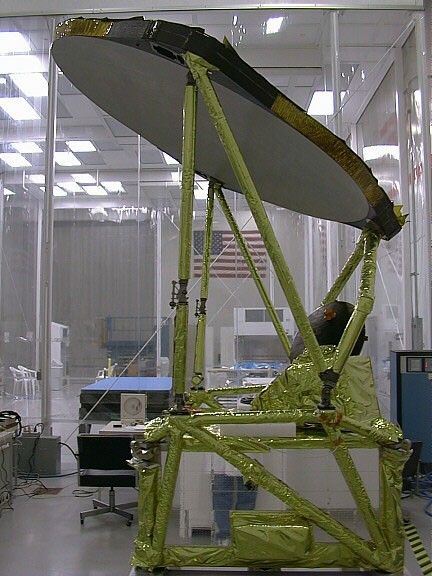
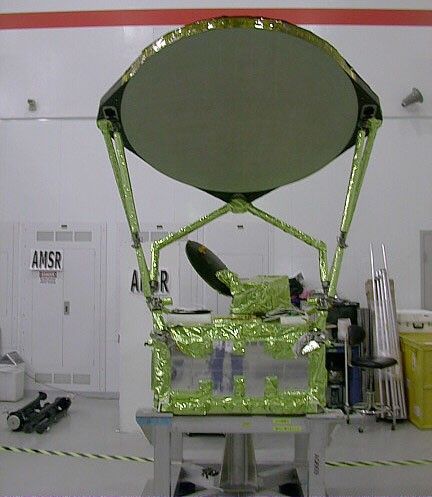
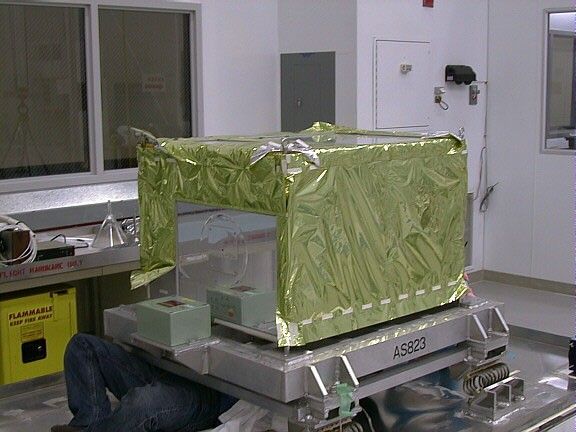
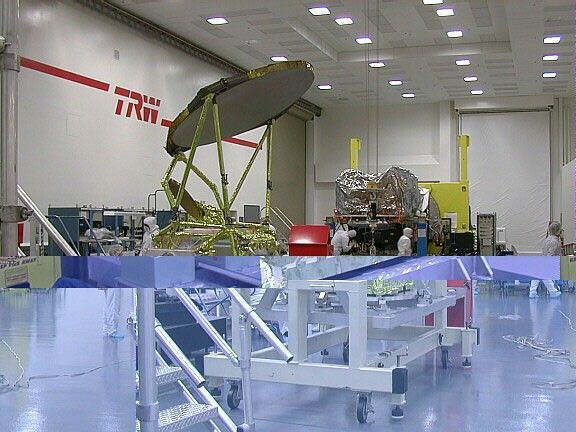
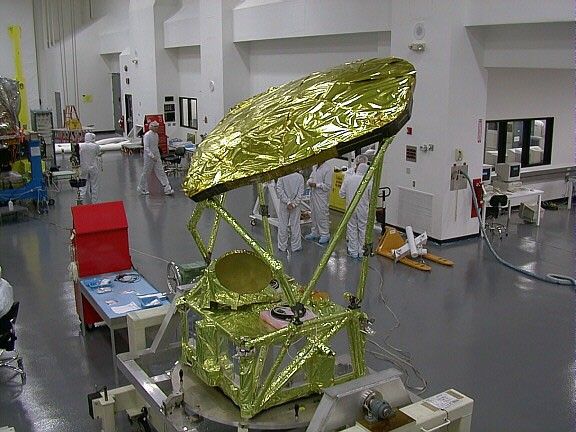
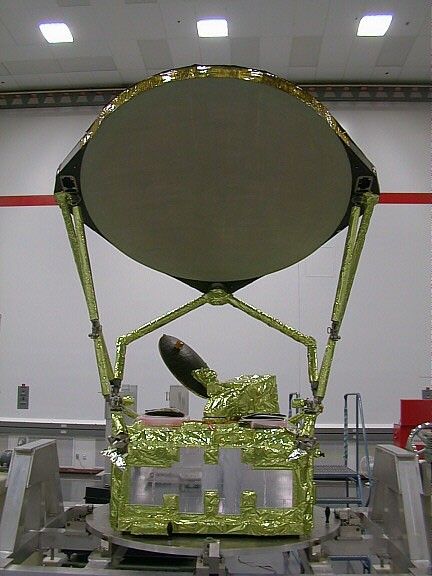
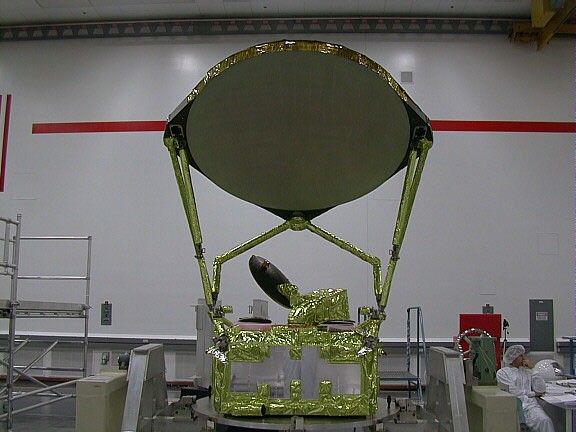
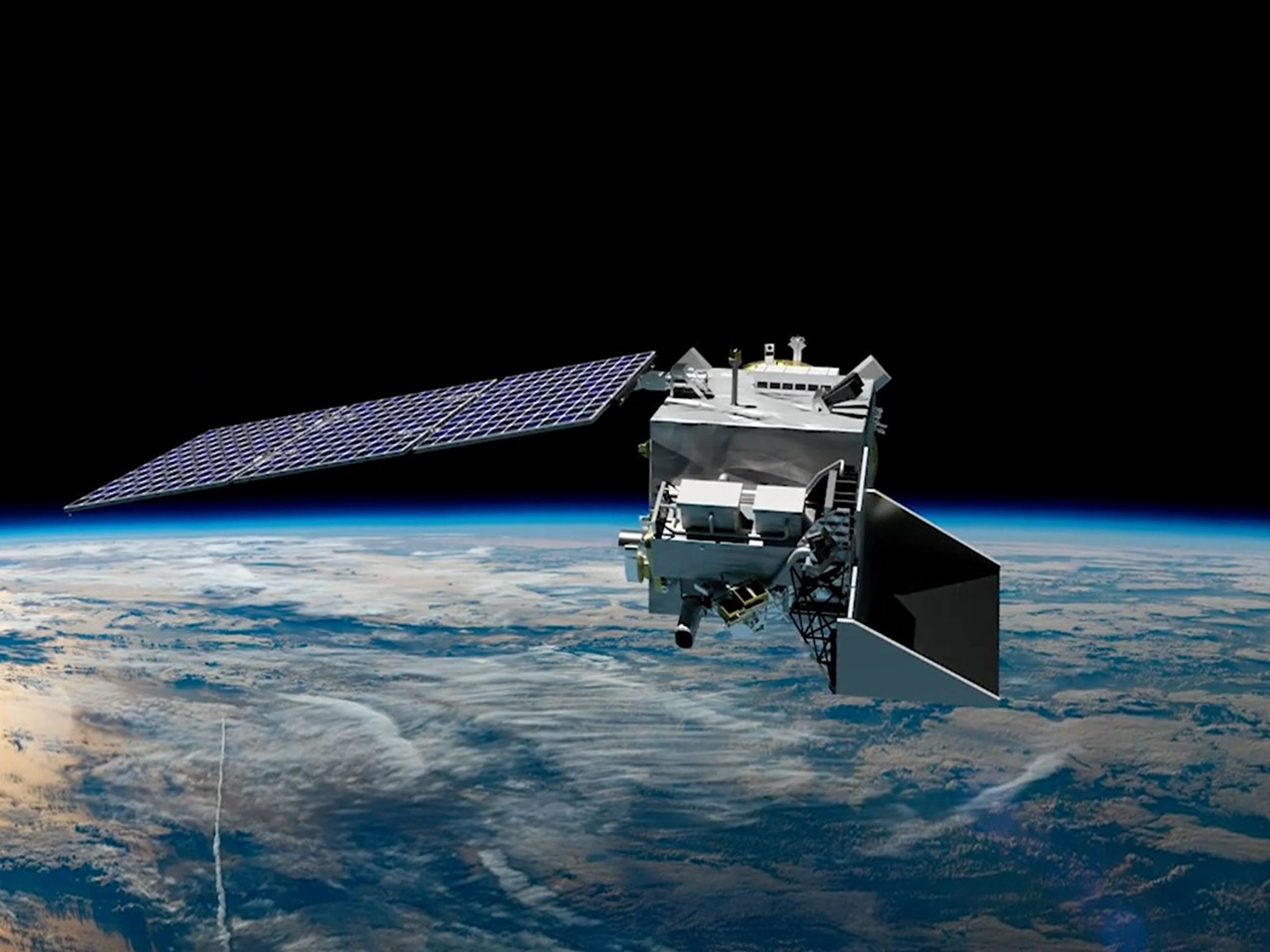
The Advanced Microwave Scanning Radiometer for EOS (AMSR-E) is a twelve-channel, six-frequency, total power passive-microwave radiometer system. It measures brightness temperatures at 6.925, 10.65, 18.7, 23.8, 36.5, and 89.0 GHz. Vertically and horizontally polarized measurements are taken at all channels. The Earth-emitted microwave radiation is collected by an offset parabolic reflector 1.6 meters in diameter that scans across the Earth along an imaginary conical surface, maintaining a constant Earth incidence angle of 55° and providing a swath width array of six feedhorns which then carry the radiation to radiometers for measurement. Calibration is accomplished with observations of cosmic background radiation and an on-board warm target. Spatial resolution of the individual measurements varies from 5.4 km at 89.0 GHz to 56 km at 6.9 GHz.
Instrument Characteristics
- Passive microwave radiometer, twelve channels, six frequencies, dual polarization, conically scanning.
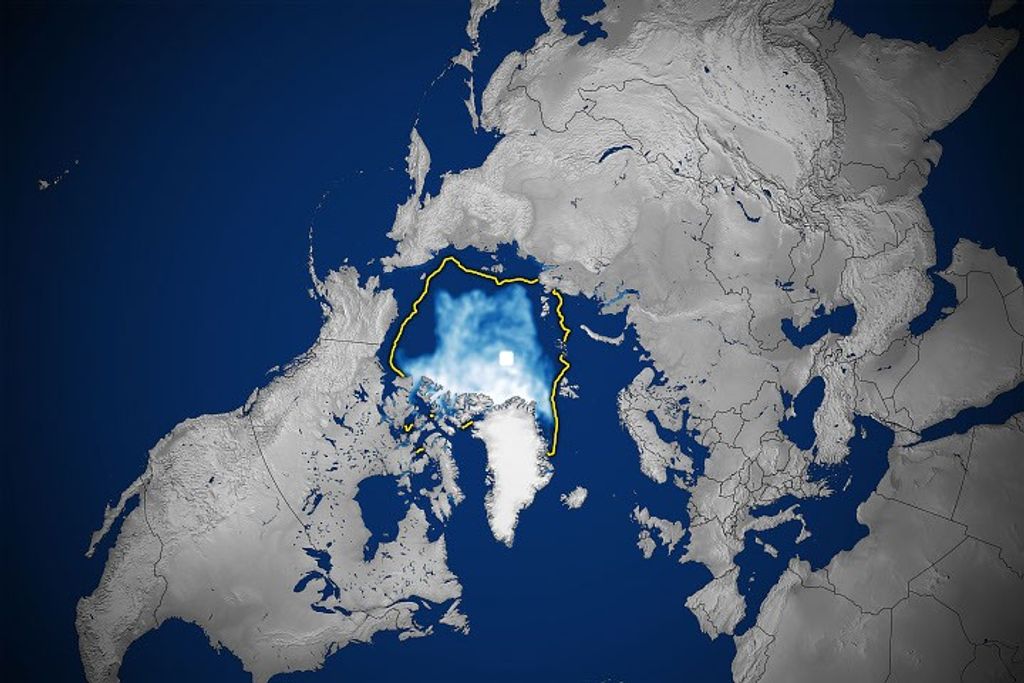
- Measures precipitation rate, cloud water, water vapor, sea surface winds, sea surface temperature, ice, snow, and soil moisture.
- All-weather measurements of geophysical parameters supporting several global change science and monitoring efforts.
- External cold load reflector and a warm load for calibration.
- Offset parabolic reflector, 1.6 m in diameter, and rotating drum at 40 rpm.
- Multiple feedhorns (6) to cover six bands from 6.9 to 89 GHz with 0.3 to 1.1 K radiometric sensitivity; vertical and horizontal polarization.
| Instrument Facts | |
| Responsible Agency: | Japan Aerospace Exploration Agency (JAXA) |
| Heritage: | Scanning Multichannel Microwave Radiometer (SMMR) on board Nimbus 7 and Seasat, Special Sensor Microwave Imager (SSM/I) on board the Defense Meteorological Satellite Program (DMSP), Advanced Microwave Scanning Radiometer (AMSR) on board the Advanced Earth Observing Satellite II (ADEOS II) |
| Accuracy: | 1 K or better |
| Swath: | 1445 km |
| Spatial Resolution: | 6 x 4 km (89.0 GHz), 14 x 8 km (36.5 GHz), 32 x 18 km (23.8 GHz), 27 x 16 km (18.7 GHz), 51 x 29 km (10.65 GHz), 75 x 43 km (6.925 GHz) |
| Incidence Angle: | 55° |
| Sampling Interval: | 10 km for 6-36 GHz channels, 5 km for the 89 GHz channel |
| Mass: | 324±15 kg |
| Duty Cycle: | 100% |
| Data Rate: | 87.4 kbps avg, 125 kbps peak |
| Thermal Control By: | Passive radiator, thermostatically controlled heaters |
| Thermal Operating Range: | -5 to 40°C |
| Pointing Requirements, design value (instrument only, 3σ) | |
| Accuracy: | 600 arcsec/axis for roll and pitch; NA for yaw |
| Knowledge: | 300 arcsec/axis for roll and pitch; NA for yaw |
| Stability: | 80 arcsec/sec/axis for roll and pitch; NA for yaw |
| Jitter: | TBD |
| Physical Size: | Sensor Unit: 139.7 x 77.5 x 76.2 cm (stowed), 139.7 x 151.2 x 76.2 cm (deployed) Control Unit: 0.8 x 1.0 x 0.6 m |