
























Explore the Observatory Support Systems
This the main body and structure that all other spacecraft pieces are attached to. It holds the electronics and equipment that support the telescope and instruments.
Primary Structure
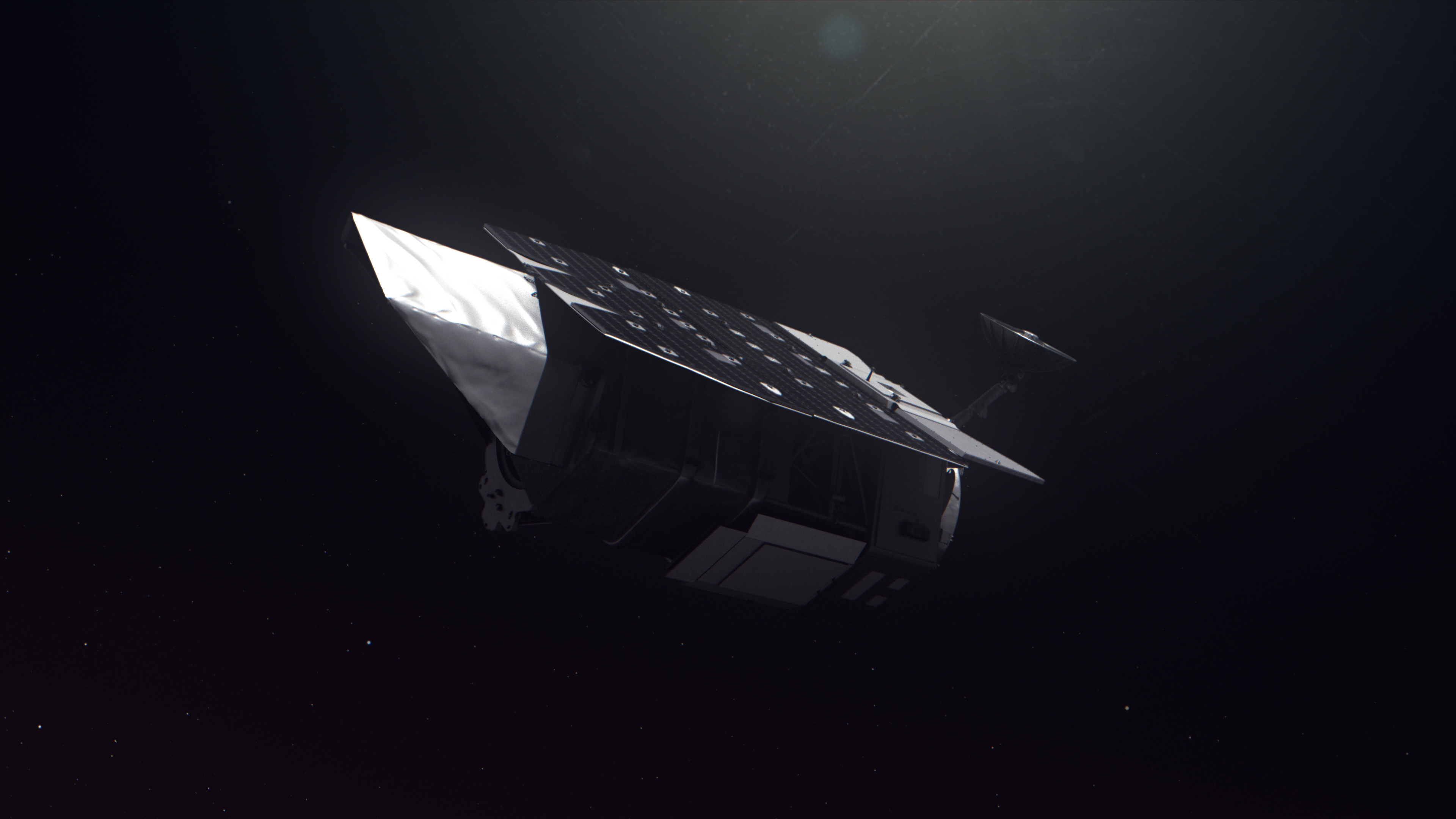
The six-sided primary structure, also called the spacecraft bus, provides the structural support for the observatory. It contains six compartments, or avionics bays, that house key electronics and components for running the rest of the spacecraft. It's made up of a central cylinder with a top deck that supports the rest of the observatory and a bottom deck that interfaces to the rocket during launch.

Partner(s): NASA's Jet Propulsion Lab (JPL)
Lower Instrument Sun Shade (LISS)
The LISS consists of two deployable panels attached to the spacecraft bus, which are designed to help shield the observatory from sunlight.

Partner(s): NASA's Goddard Space Flight Center
Attitude Control System (ACS)
The ACS is a three-axis stabilized system that uses precision pointing to rotate the observatory to the right position for science. Six motorized flywheels, called reaction wheels, will enable the observatory to perform short, frequent movements to repoint at different regions of the sky required for science observations.

Partner(s): Honeywell Aerospace | Jena-Optronik GmbH | European Space Agency (ESA)
Propulsion
The propulsion system will use hydrazine in its two types of thrusters to maneuver the observatory. Hydrazine is a monopropellant, which means it doesn't need a second chemical to combust – only contact with a catalyst. Roman will have enough fuel to operate for at least 10 years.

Partner(s): Taber Industries | ATK Space Systems
Power
Solar cells on the solar array panels will convert sunlight into power to provide 4,100 watts to the observatory electronics while shading the spacecraft underneath it. This system includes a battery to regulate the voltage to all electrical components and provide back-up power when there is no Sun available to the solar array. This will not be used often because the observatory's orbit at L2 will keep it in full view of the Sun at all times.

Partner(s): European Space Agency (ESA) | ABSL Space
Command and Data Handling (C&DH)
The C&DH system is responsible for monitoring the health and safety of the observatory. This includes collecting telemetry and housekeeping data, monitoring temperatures, sending out hardware commands. It will also store up to four terabytes of science data in its Science Data Recorder (SDR) for downlink to the ground when a ground station is in view.

Partner(s): NASA's Goddard Space Flight Center