












ROSES-23 Blog
Theoretical and Computational Astrophysics Networks (TCAN program element D.4 of ROSES-25) supports coordinated efforts in fundamental theory and computational techniques to make advances in astrophysics that extend beyond the scope of individual investigator projects.
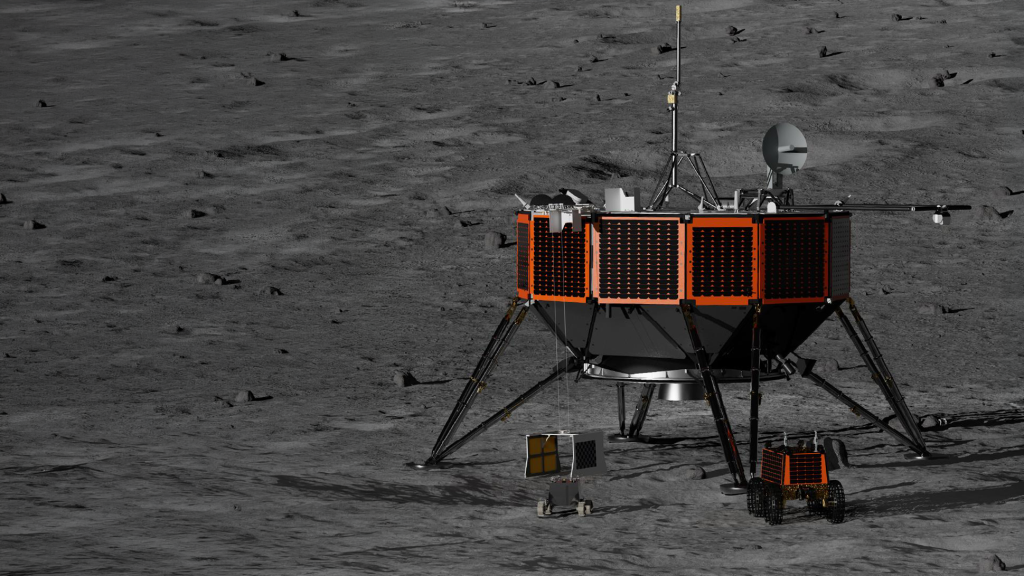
The lunar south pole’s coldest shadowed regions are hypothesized to contain lunar ice near some of the oldest materials on the lunar surface. Our CS-6 science payloads that will demonstrate unprecedented technology, search for life-sustaining materials, and study our solar…
At about 4.3 billion years old, over 20,000 feet high, and with a high likelihood of containing life-sustaining materials, Mons Mouton is rife for science.
The lunar surface is uneven, rocky, and unforgiving. Landing deliveries safely and securely requires acute awareness of the terrain and its response to a lander’s descent plumes. Our science payloads on CT-3 will provide thorough descent data that will benefit…
High above Earth’s poles, intense electrical currents called electrojets flow through the upper atmosphere when auroras glow in the sky. These auroral electrojets push about a million amps of electrical charge around the poles every second. They can create some…
Auroras, often called the northern lights (aurora borealis) or southern lights (aurora australis), are colorful, dynamic, and often visually delicate displays of an intricate dance of particles and magnetism between the Sun and Earth called “space weather.” When energetic particles…
Discover the wonders of the night sky! Learn how Earth's atmosphere transforms after dark, setting the stage for breathtaking phenomena like auroras, meteors, solar terminator waves, and sprites.
UPDATE Feb. 11, 2025: The second rocket of the GIRAFF mission launched on Saturday, Feb. 8, at 11:35 p.m. Alaska Standard Time, through pulsating aurora over Venetie, Alaska. The principal investigator reported that all of the instruments looked healthy. The Black…
For decades, scientists have tried in vain to accurately predict solar flares — intense bursts of light on the Sun that can send a flurry of charged particles into the solar system. Now, using NASA’s Solar Dynamics Observatory, one team…