
















ROSES-25 Blog
The Heliophysics Low-Cost Access to Space (H-LCAS) program (B.7 of ROSES) solicits proposals for the development and application of innovative instruments, technologies, and flight investigations that can be accomplished using sounding rockets, high-altitude balloons, and CubeSats. H-LCAS provides pathways to…
New Program Element A.18 Geosphere solicits proposals addressing one or more of the following sub-elements: On or about October 2, 2026, ROSES-2025 Amendment 77 releases A.18 Geosphere as a new opportunity in ROSES-25. Mandatory Notices of Intent (NOIs) are due…
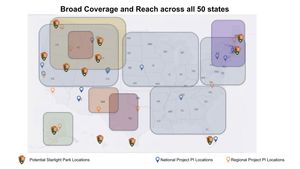
NASA’s Science Mission Directorate (SMD) has selected the next portfolio of Science Activation project teams through the ROSES‑25 (F.6 Science Activation) solicitation. Science Activation is a nationwide network of competitively-selected, collaborative projects that extend the impact of NASA science by…
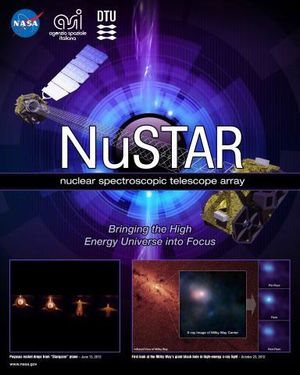
The Nuclear Spectroscopic Telescope Array (NuSTAR) General Observer (GO) Program solicits proposals for basic research relevant to the NuSTAR mission. NuSTAR Cycle 13 will commence on or about June 1, 2027, and last for a nominal period of 12 months.…

Information about the required SciENcv format for biographical sketch and current and pending support was expanded/improved in A.13 Accelerating Earth Solutions, A.14 Atmosphere, A.15 Biosphere, A.16 Cryosphere, A.17 Hydrosphere, C.4 Planetary Science Enabling Facilities, and D.4 Theoretical and Computational Astrophysics…
Through ROSES-25 A.14 Atmosphere NASA is soliciting proposals for data analysis and modeling of NASA supported airborne campaign data. NASA’s Earth Science Division has supported numerous airborne campaigns during the last few years, see Section 2 of the program element…
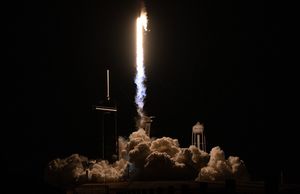
The IXPE Guest Observer (GO) Program solicits proposals for investigations in any area of astrophysics (not constrained to IXPE’s prime science areas). Individuals may submit proposals for observations that will advance the IXPE mission science return. Observing proposals may be…
Habitable Worlds Observatory (HWO) Instrument Concept Assessments (HWO-ICA) program element D.9 of ROSES-25, solicits proposals to support maturation of the HWO mission concept. The objective of HWO-ICA is to expand and deepen exploration of the HWO instrument trade space by…

A.17 Hydrosphere solicits research on the Earth’s Hydrosphere: to advance the understanding of the physics of Earth’s water across the ocean, land, and the atmosphere. This Hydrosphere element is composed of three Earth science disciplines: ocean physics, terrestrial hydrology, and…