



















Henry Throop, PhD
Program Scientist
< Back to Program Officers List
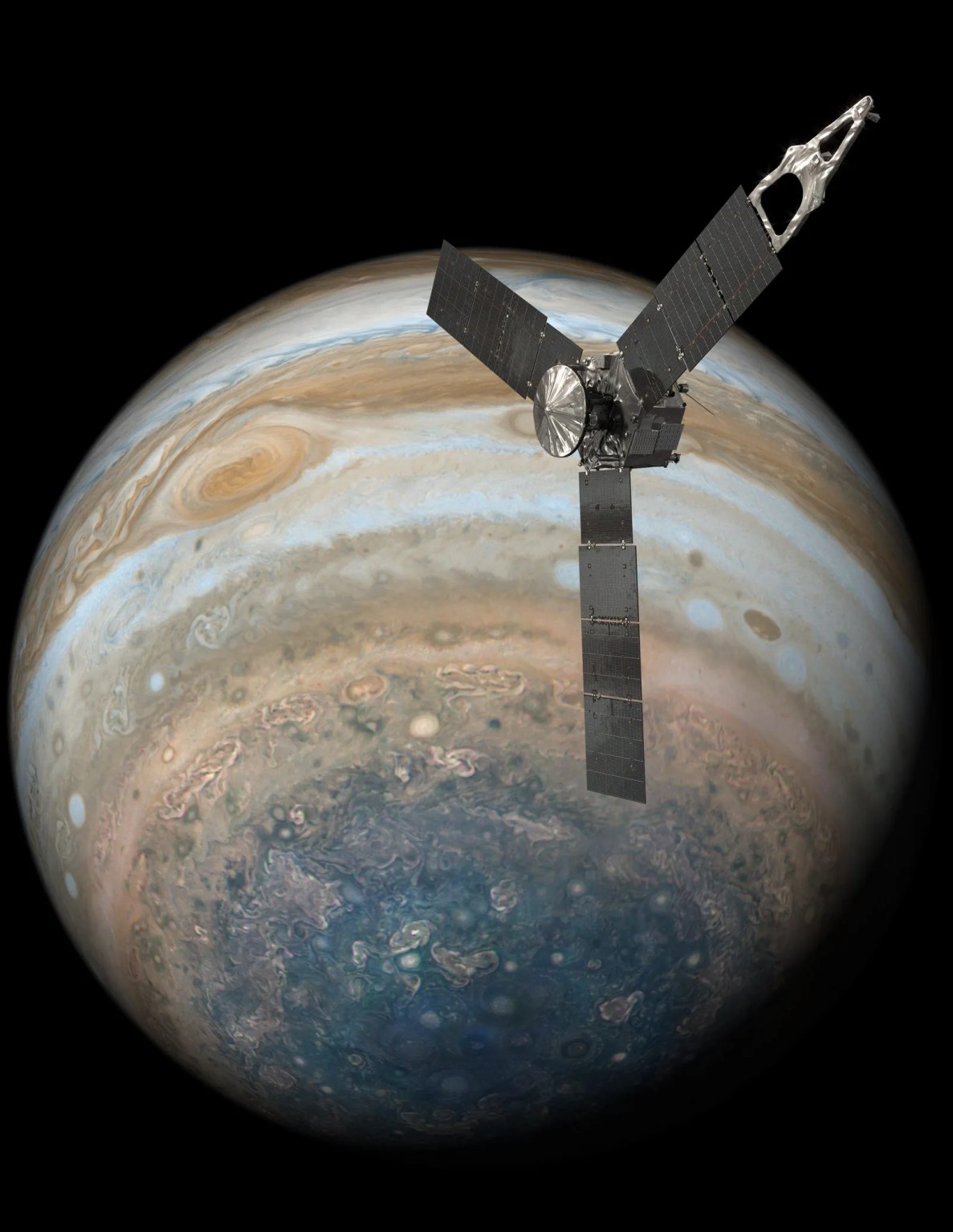
Henry Throop (ASRC) is a Program Scientist in the Planetary Science Division at NASA Headquarters, and the Deputy Program Scientist for NASA’s Juno mission to Jupiter. He assists in managing PSD’s solar system research programs, where he has led the Cassini Data Analysis Program (CDAP), the New Frontiers Data Analysis Program (NFDAP), the Preliminary Science Investigations for Europa (PSIE), the Juno Participating Scientists Program (JunoPSP), the Future Investigators in NASA Earth and Space Science and Technology program (FINESST), and the Solar Systems Working program (SSW). Henry leads NASA’s Planetary Mission Senior Review (PMSR), and he is the NASA POC for the Outer Planets Assessment Group (OPAG).
Throop’s research focuses on the outer solar system, and he has published over 40 articles in scientific journals, on topics ranging from to planetary rings, to planet and star formation, to astrobiology and the origins of life, to searching for (and co-discovering) Pluto’s smallest moon, Styx, in 2012. Throop is an expert in the analysis and modeling of planetary rings, including the dusty rings of Jupiter and Saturn, and searches for rings at Pluto and Arrokoth. Throop was a member of the science team for NASA’s New Horizons mission, and was involved in its encounters with Pluto in 2015 and MU69 Arrokoth in 2019.
Throop graduated from Grinnell College with a BA in Physics in 1994. He has a MS and PhD in Astrophysical, Planetary, and Atmospheric Sciences from the University of Colorado.
Throop has spent much of his career bringing astronomy to the developing world. While living for 15 years in Mexico, South Africa, India, Sri Lanka, and Chile, he worked extensively with schools and community groups, helping to develop their science programs and inspire the next generation of leaders. He has presented more than 400 talks for science festivals, planetariums, school groups, and public events across the world. Throop’s work has been featured in Science, Nature, Time, The Washington Post, and on the History Channel and National Geographic TV, as well as dozens of newspapers from Pakistan to Hungary to Namibia. Throop has held faculty appointments at St. Xavier’s College (Mumbai, India), the University of Pretoria (South Africa), the National Autonomous University of Mexico (Mexico City), and the University of Colorado (Boulder).
Henry’s photography has been featured by National Geographic, The New York Times, NASA, NOVA, and the US State Department’s “Art in Embassies” program.
Please direct questions or corrections on this page to SARA@nasa.gov