










NASA Study Refines Projections for Thwaites Glacier
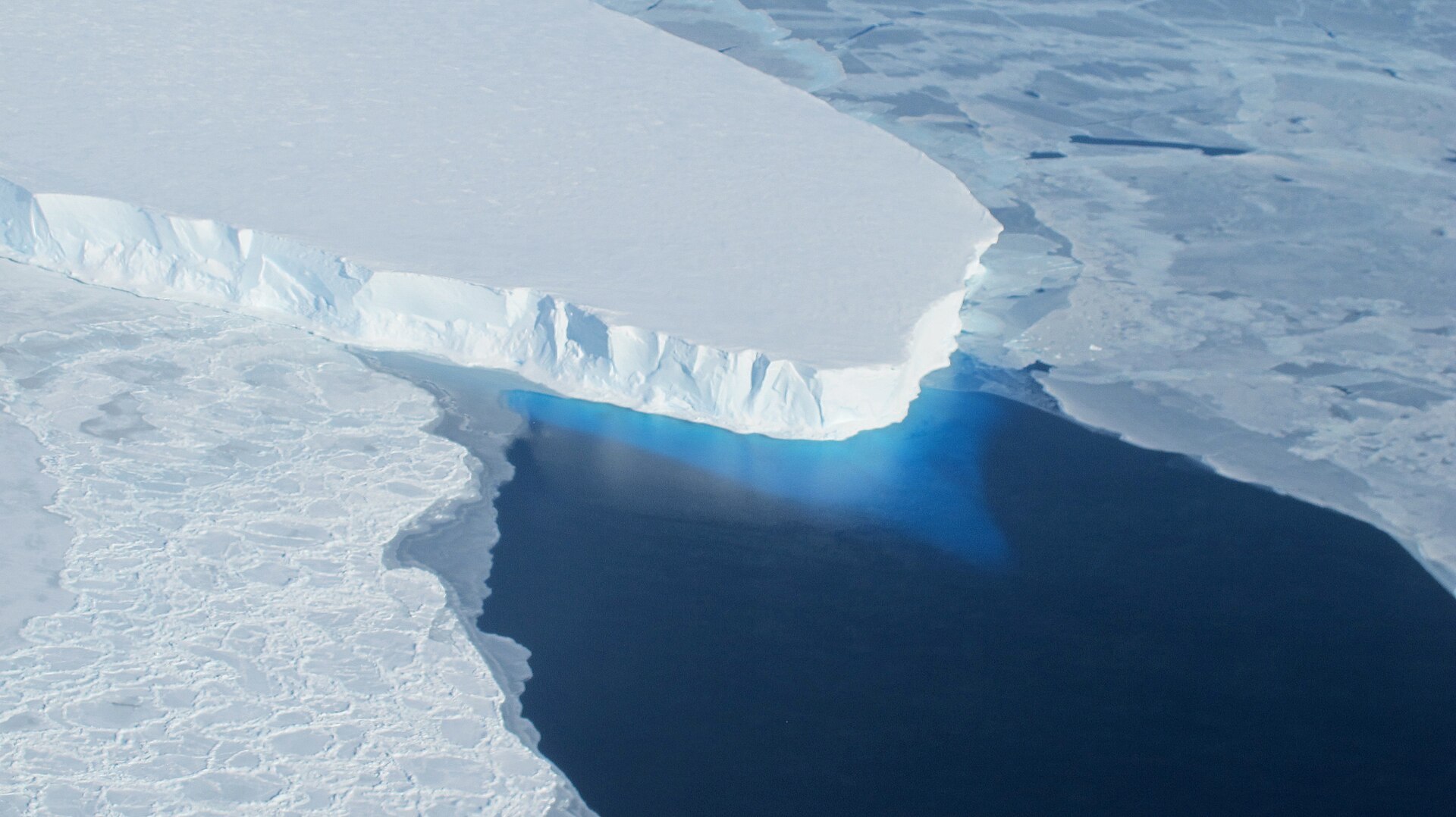
A new study using a computer model developed by NASA’s Jet Propulsion Laboratory in Southern California, along with the University of California, Irvine, and Dartmouth College, finds Antarctica’s Thwaites Glacier could contribute more to sea level rise by the end of the century than some previous estimates. In some model simulations, the glacier’s contribution was as much as twice current projections.
While the glacier is a major contributor to global sea level rise, projecting its long-term impacts has proved challenging because of complex processes. The study, published Oct. 12 in Nature Communications, reduces that uncertainty by homing in on the transitional area where glacial ice is no longer bound to the land and, instead, is afloat.
Existing ice sheet models typically treat this transitional area as a distinct boundary, commonly labeled grounding lines. The researchers’ model instead, accounts for these areas as grounding zones — areas where seawater penetrates several miles beneath glacial grounded ice, lifting the ice during tidal cycles that can generate instabilities. The process introduces warmer seawater to the grounded ice, accelerating its melt and destabilizing the glacier more than a distinct line would allow.
Incorporating grounding zones improved the accuracy of the model’s ability to simulate glacial retreat. The model matched historical satellite data dating back to the 1990s four times more closely than models that don’t include this factor.
The researchers believe this model could provide more reliable information on glacier dynamics, informing coastal regions most impacted by higher sea levels.
~Kristy Hutchings, NASA Jet Propulsion Laboratory