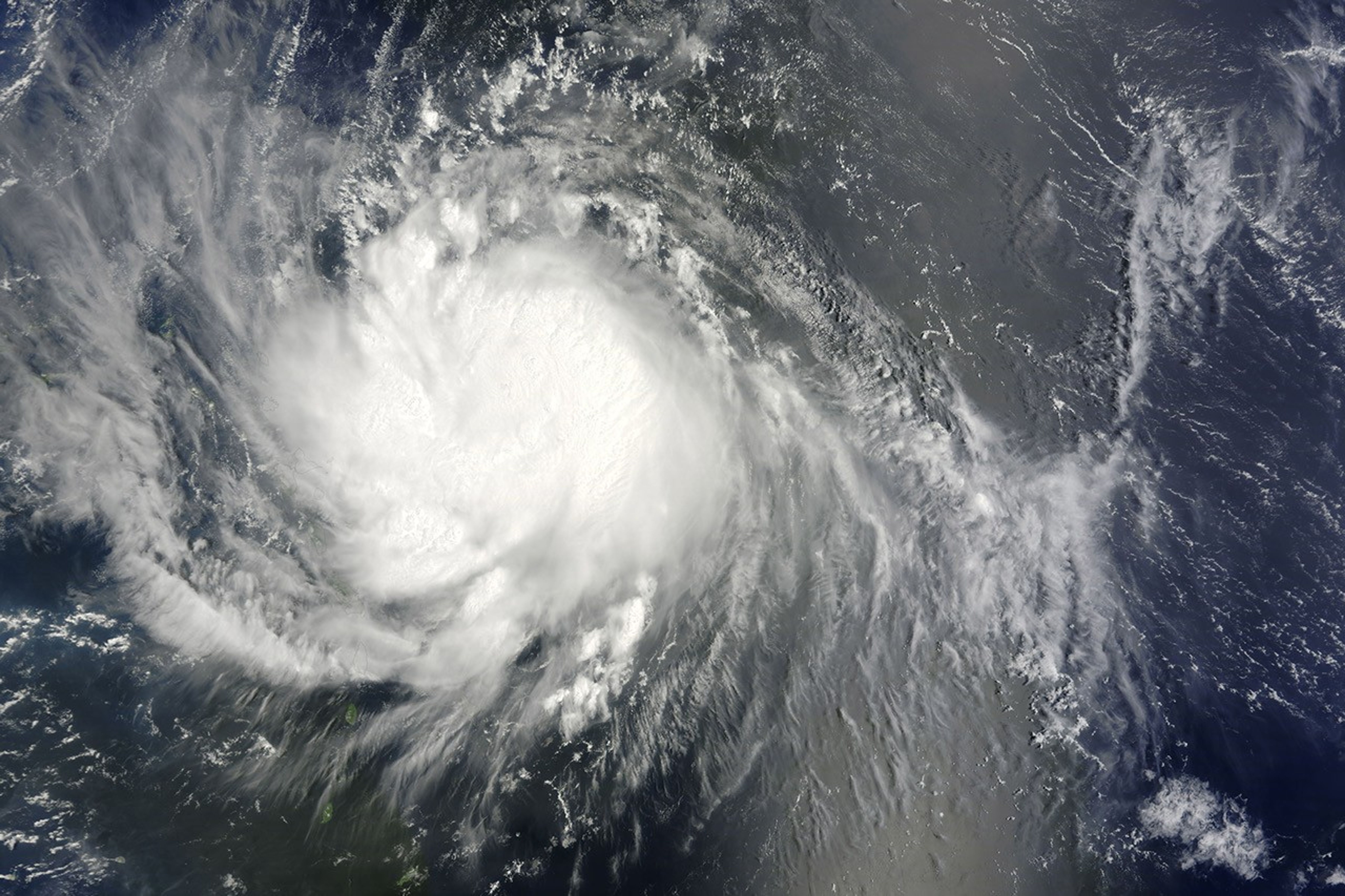


























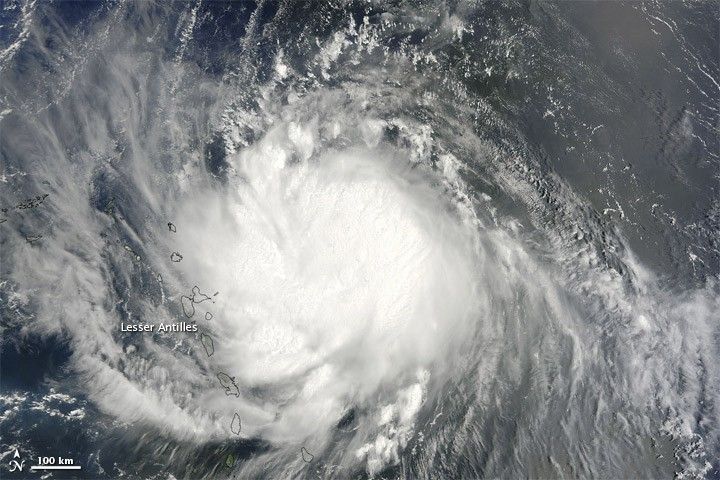
At 14:20 Universal Time (UTC) on August 29, 2010, the Moderate Resolution Imaging Spectroradiometer (MODIS) on NASA’s Terra satellite captured this natural-color image of Hurricane Earl over the tropical Atlantic Ocean. At 15:00 UTC on August 29, the U.S. National Hurricane Center (NHC) reported that Earl had sustained winds of 75 miles (120 km) per hour, with minimum air pressures of 985 millibars.
At the time, the hurricane was centered near 17 degrees North latitude, 58 degrees West longitude, about 225 miles (360 kilometers) east of Antigua and 315 miles (510 km) east of St. Martin. Both islands are among the Windward Islands of the Lesser Antilles chain of the Caribbean.
Researchers participating in NASA's Genesis and Rapid Intensification Processes field campaign have already made two flights over Tropical Storm/Hurricane Earl, which formed on August 29. By the afternoon of August 30, it was a major hurricane with 120 mph (205 kph) winds and hurricane warnings in effect for Anguilla, St. Martin, St. Barthelemy, St. Maarten, Saba, St. Eustatius, the British Virgin Islands, the U.S. Virgin Islands and the Puerto Rican islands of Culebra and Vieques.
Both Earl and Hurricane Danielle appeared in a single overpass of the Terra satellite on August 29, 2010.
References & Resources
- National Hurricane Center. (2010, August 30). Hurricane Earl Advisory Archive. Accessed August 30, 2010.
- NASA. (2010, August 30). Genesis and Rapid Intensification Processes field campaign. Accessed August 30, 2010.
NASA image by Jeff Schmaltz, MODIS Rapid Response Team at NASA GSFC. Caption by Mike Carlowicz.