






















Heliophysics Education Community presentation – April 2025
| Levels |
|
|---|---|
| Material Type |
|
| Heliophysics Big Ideas |
|
| NGSS |
|
| Heliophysics Topics |
|
| Heliophysics Missions |
|
| Material Cost per Learner | Free |
| Language | English |
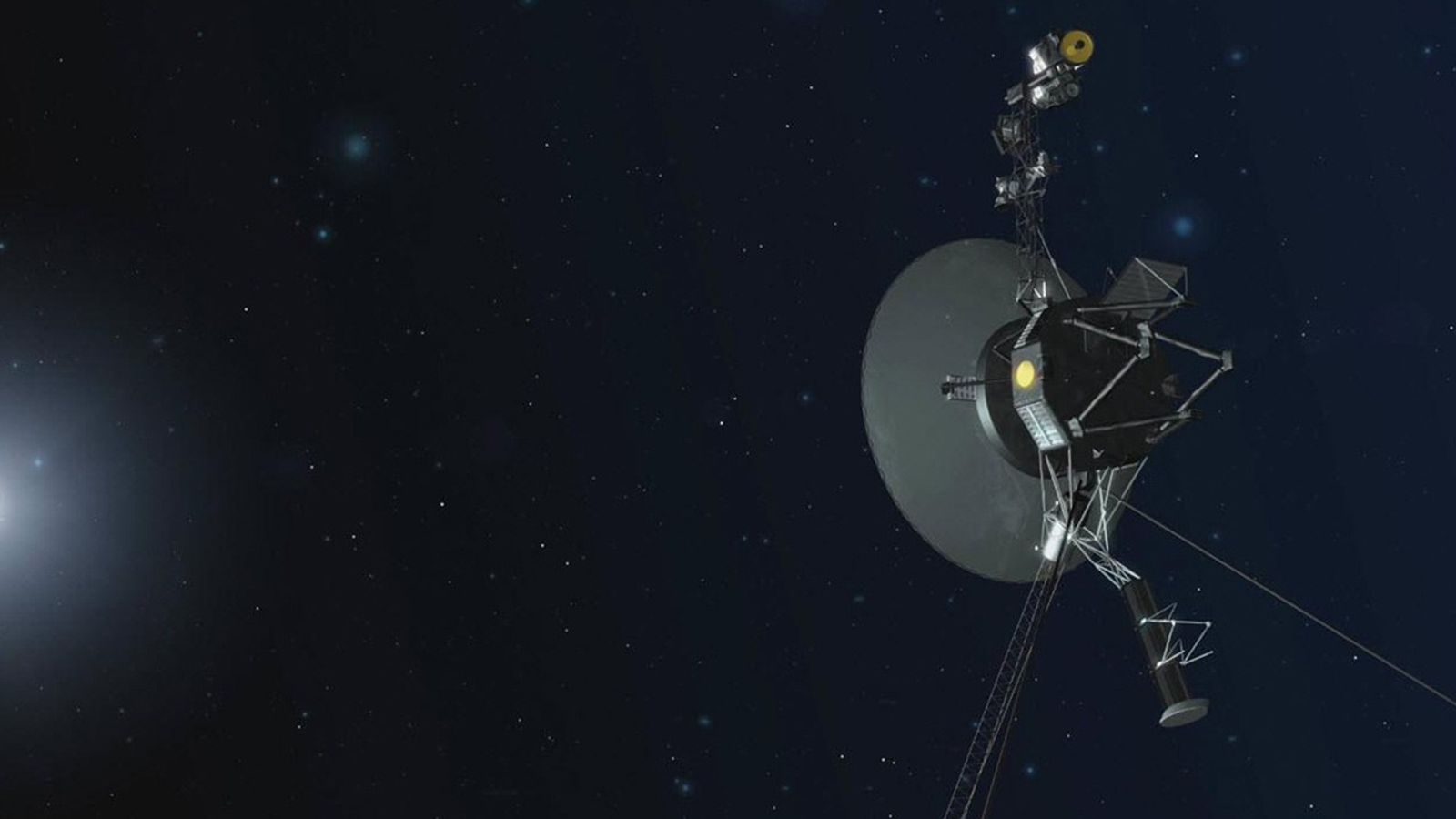
Presentation | Grades 6-12+ | Dr. Jamie Rankin, the Deputy Project Scientist for the Voyager mission, presented highlights of the scientific discoveries from Voyager 1 and 2, focusing specifically on their journey out of the solar system and into the interstellar medium (ISM). She touched on several key findings and discoveries: 1. The heliosphere acts as a shield to cosmic radiation. 2. Cosmic rays in interstellar space may be studied for the first time without the Sun's interference. 3. Interstellar shocks: surprisingly, solar weather still impacts interstellar space. Solar disturbances (like Coronal Mass Ejections) can merge, survive the journey through the heliosphere, and push waves into the ISM. This creates long-lasting, thick pressure shocks outside of our solar system. 4. Interstellar pressure: shocks waves lead to calculations of the pressure of the ISM for the first time.
Starting in mid-2020, Voyager 1 observed a sudden, sustained jump in both magnetic field strength and plasma density; they remained highly elevated. That's a mystery for scientists. Jamie also talked about the health and operations of the probes. It would take communications a 2-day round trip, but the team is planning to celebrate its 50th anniversary in 2027.
Credit: NASA