



















Pack a Northern Lights Backpack
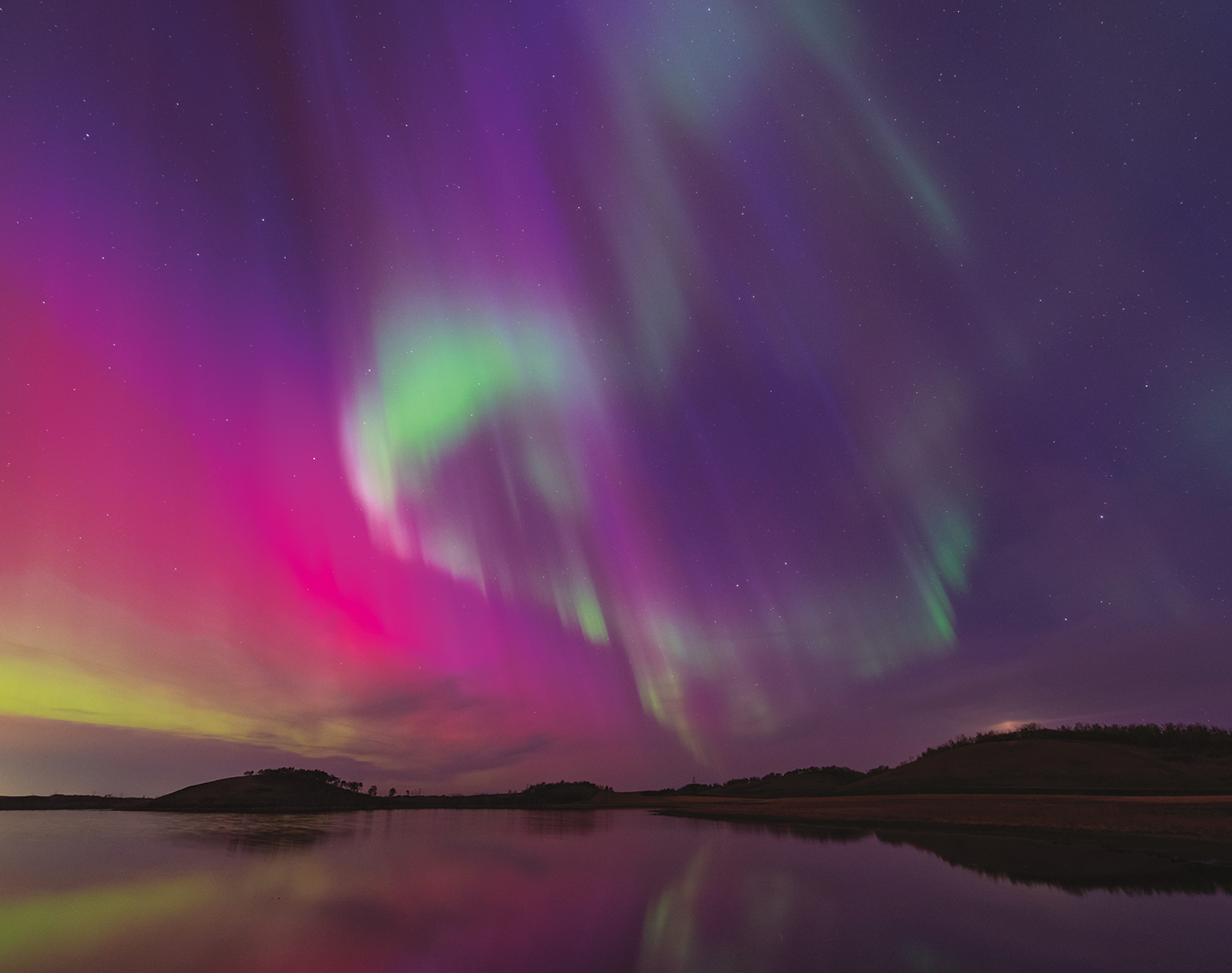
The strongest geomagnetic storm in over two decades dazzled scientists and skywatchers in May 2024. Overnight on May 10-11, an extreme storm culminated in a remarkable display of the aurora that was visible from many areas worldwide, including latitudes where aurora sightings are uncommon. Photographers captured the striking range of colors in ground-based photos, some of which they shared with NASA's Aurorasaurus project-a citizen science effort that maps crowdsourced aurora reports. This photo, shot by Aurorasaurus ambassador Gunjan Sinha, shows the sky on May 11, 2024, near Saskatoon in Saskatchewan, Canada. Aurorasaurus launched in 2014 around the time of the solar maximum, part of an approximately 11-year cycle when the Sun is most active and auroras are more frequent and intense. The Sun's activity ramped up again in 2024, and brilliant photos of the aurora poured in from citizen scientists, marking the first solar maximum that has included widespread pictures taken with smartphones. These reports help researchers better understand geomagnetic storms and verify models of where the aurora will be visible from the ground. Anyone can submit aurora sightings to Aurorasaurus online. Aurorasaurus is a project of the New Mexico Consortium, supported by the National Science Foundation and NASA. Photo and text credit: Photo by Aurorasaurus ambassador Gunjan Sinha; text by NASA Earth Observatory/Kathryn Hansen
| Levels |
|
|---|---|
| Material Type |
|
| Heliophysics Big Ideas |
|
| NGSS |
|
| Heliophysics Topics |
|
| Heliophysics Missions |
|
| Material Cost per Learner | Free |
| Language | English |
Lesson Plans/Activities | Grades K-5 | This hands-on activity provides a template for elementary students to pack a virtual backpack for an aurora viewing trip, making it highly useful for geography and weather units. Educators can integrate this tool into their science curricula to explore concepts related to Earth's atmosphere, magnetic fields, and solar wind. By mapping out essential items for a northern lights observation, students learn how the active Sun impacts Earth via space weather. This resource can be paired with lessons on energy or matter to fulfill Next Generation Science Standards.
Credit: UAF