
























Caldwell 80
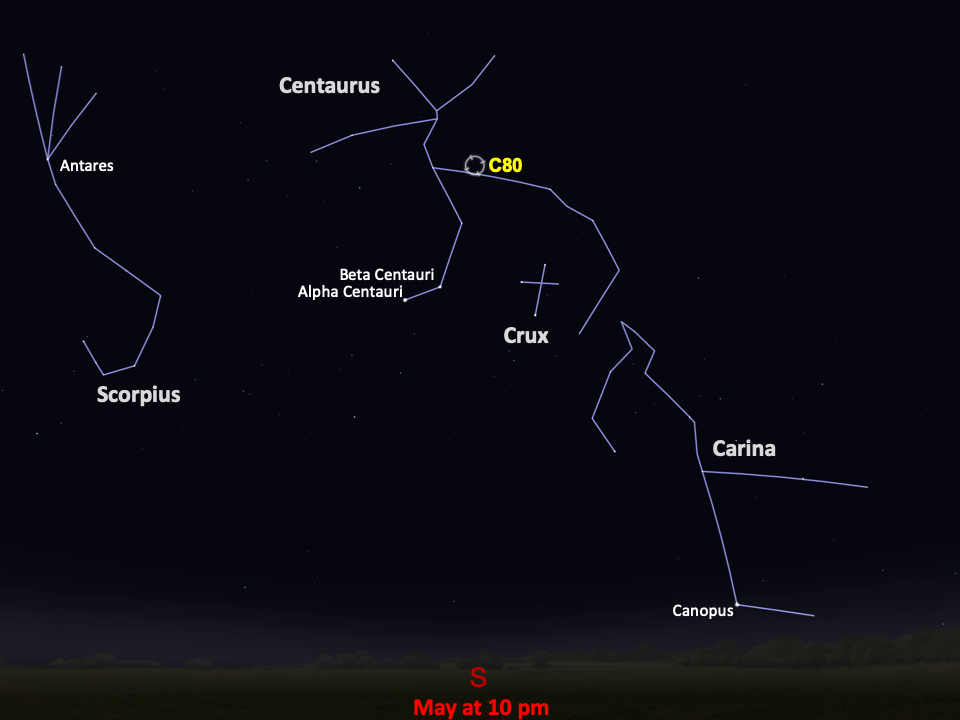
Better known as Omega Centauri, Caldwell 80 is home to around 10 million stars.
Distance
17,000 light-years
Apparent Magnitude
3.7
constellation
Centaurus
object type
Globular Cluster
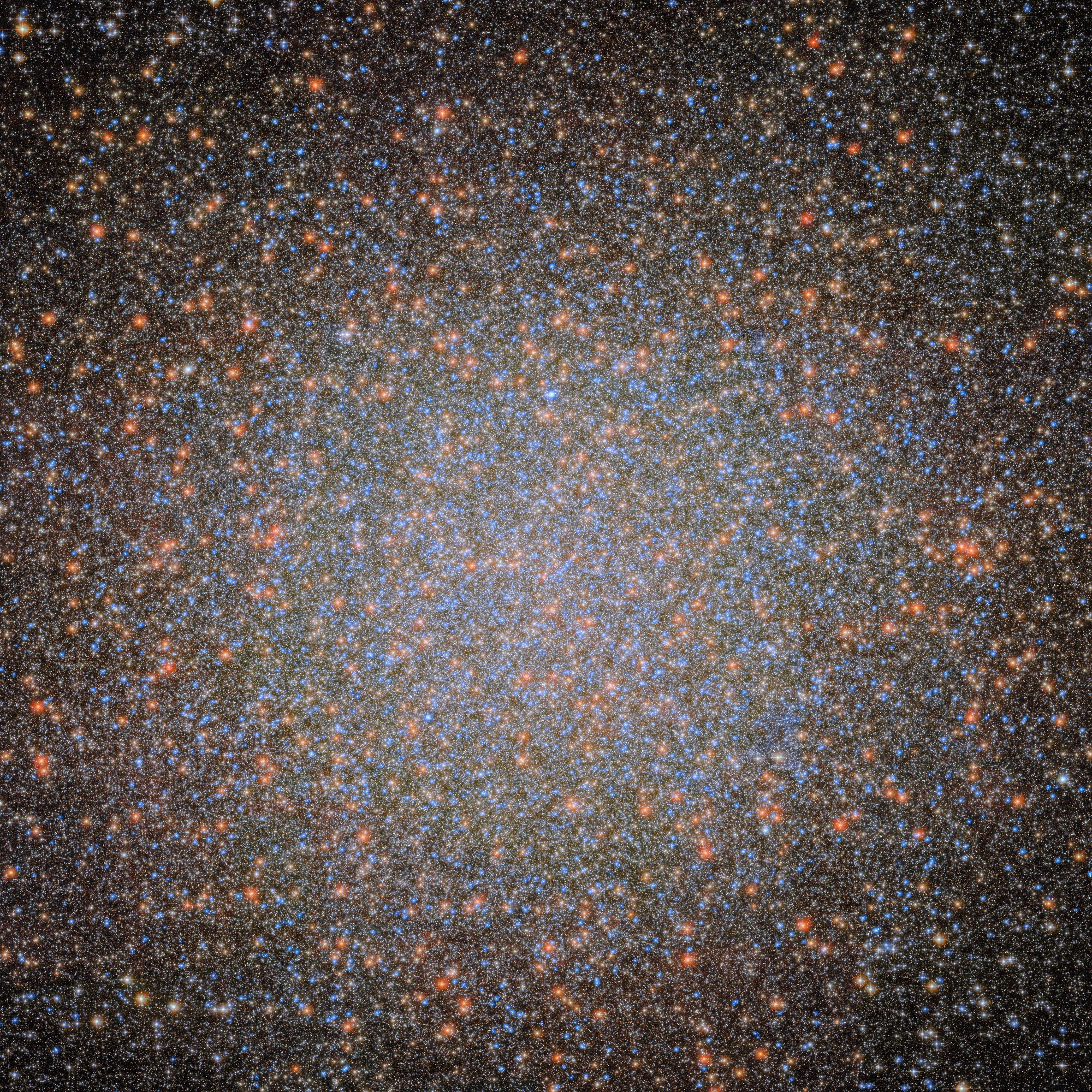
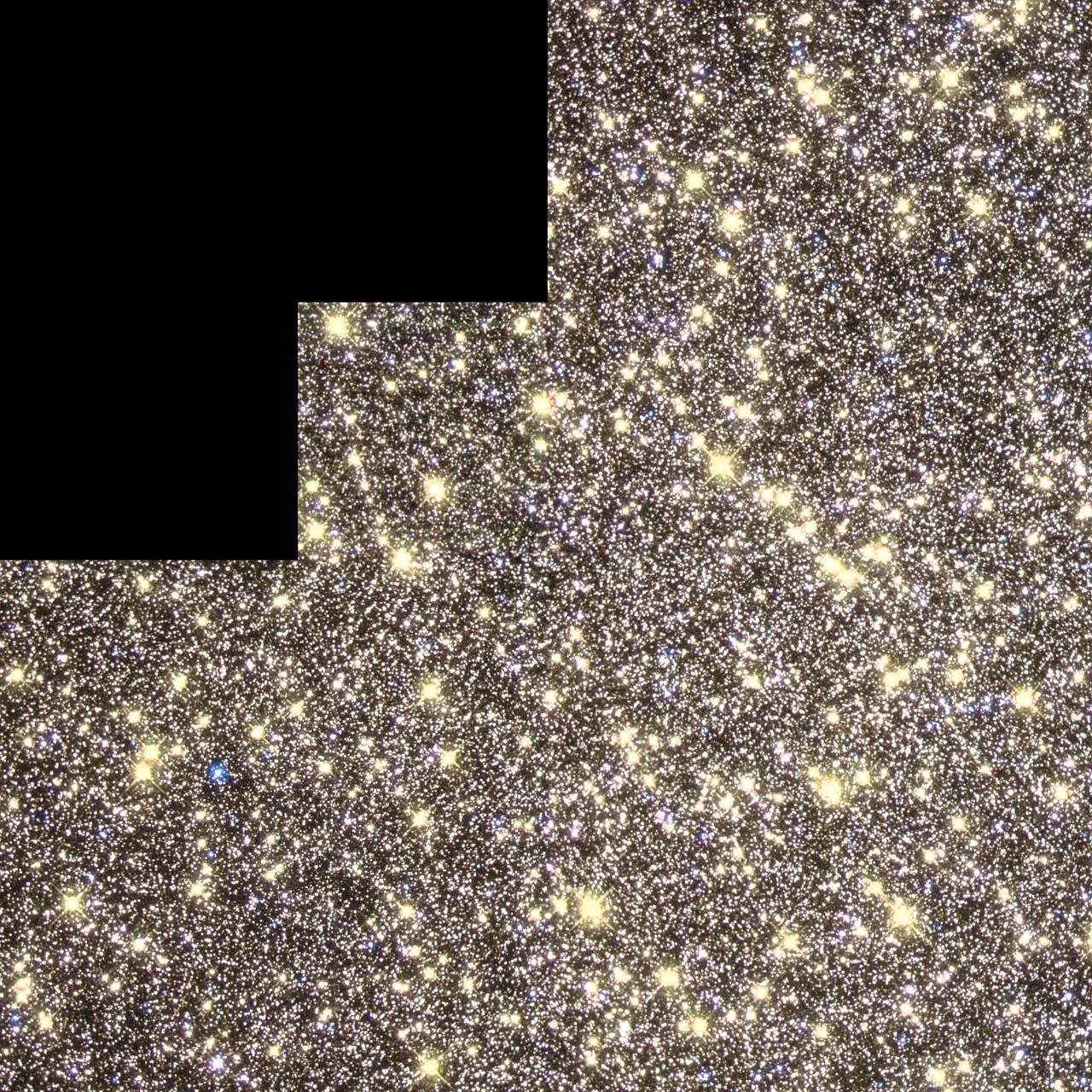
The Hubble image below shows off 2 million members of the biggest and brightest ball of stars in our galaxy. Caldwell 80, also known as NGC 5139 and commonly called Omega Centauri, is home to around 10 million stars. Located about 17,000 light-years away from Earth toward the Centaurus constellation, the cluster has a diameter of about 450 light-years. The image, taken with the Advanced Camera for Surveys in 2002, covers a region only about 50 light-years across.

Globular clusters like this one are spherical groups of mostly old, low-mass stars that are bound together by gravity. Omega Centauri has always been a bit of a black sheep since it has several characteristics that set it apart. In addition to it being the most massive globular cluster in our galaxy, it also includes stars of various ages, whereas other globular clusters typically contain stars from only one generation. What’s more, observations using Hubble and ground-based telescopes indicate that there is a black hole at the center of the cluster. This suggests that Omega Centauri may not be a globular cluster after all — it might actually be a dwarf galaxy that has somehow been stripped of its outer stars.
Omega Centauri has been known since at least the time of the ancient astronomer Ptolemy, though he thought the cluster was a star. English astronomer Edmund Halley classified it as a nebulous object in 1677. Omega Centauri was finally correctly identified as a star cluster by another English astronomer, John Herschel, in 1836.
With a magnitude of 3.7, Omega Centauri is often considered the most dazzling globular cluster in the sky. It’s so bright that it can easily be seen with the unaided eye, though binoculars or a telescope will reveal an especially breathtaking spectacle. The cluster is a favorite observing target for amateur astronomers, but it is only visible to observers at low northern latitudes and south of the equator. Autumn skies in the Southern Hemisphere will present the best opportunity to observe it.
For more information about Hubble’s observations of Caldwell 80, see:
Astronomers Find Suspected Medium-Size Black Hole in Omega Centauri
Peering into the Core of a Globular Cluster
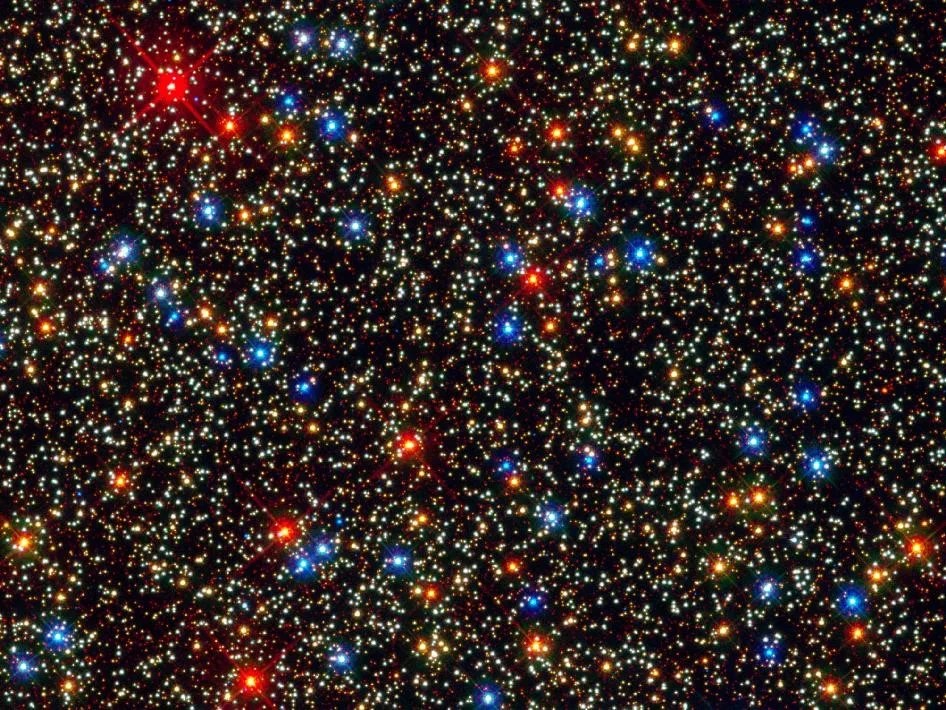
Colorful Stars Galore Inside Globular Star Cluster Omega Centauri
Glossary
Dwarf Galaxy - A small, faint galaxy with only millions to a few billion stars.
Globular Cluster - A spherical group of stars that are gravitationally bound to each other, with most of the stars concentrated at the cluster’s center.
Magnitude - The brightness of an astronomical object, represented by a number; bright objects have low numbers on the magnitude scale, while dim objects have high numbers.
Explore Hubble's Caldwell Catalog
The following pages contain some of Hubble’s best images of Caldwell objects.
Also known as NGC 188, this group of stars formed from a large cloud of gas making the stars roughly…
This shell of gas is expanding outward, away from the dying star within.
This barred spiral galaxy was first spotted by British astronomer William Herschel in April 1793 in the constellation Draco.