



















Helio and You: December 2025
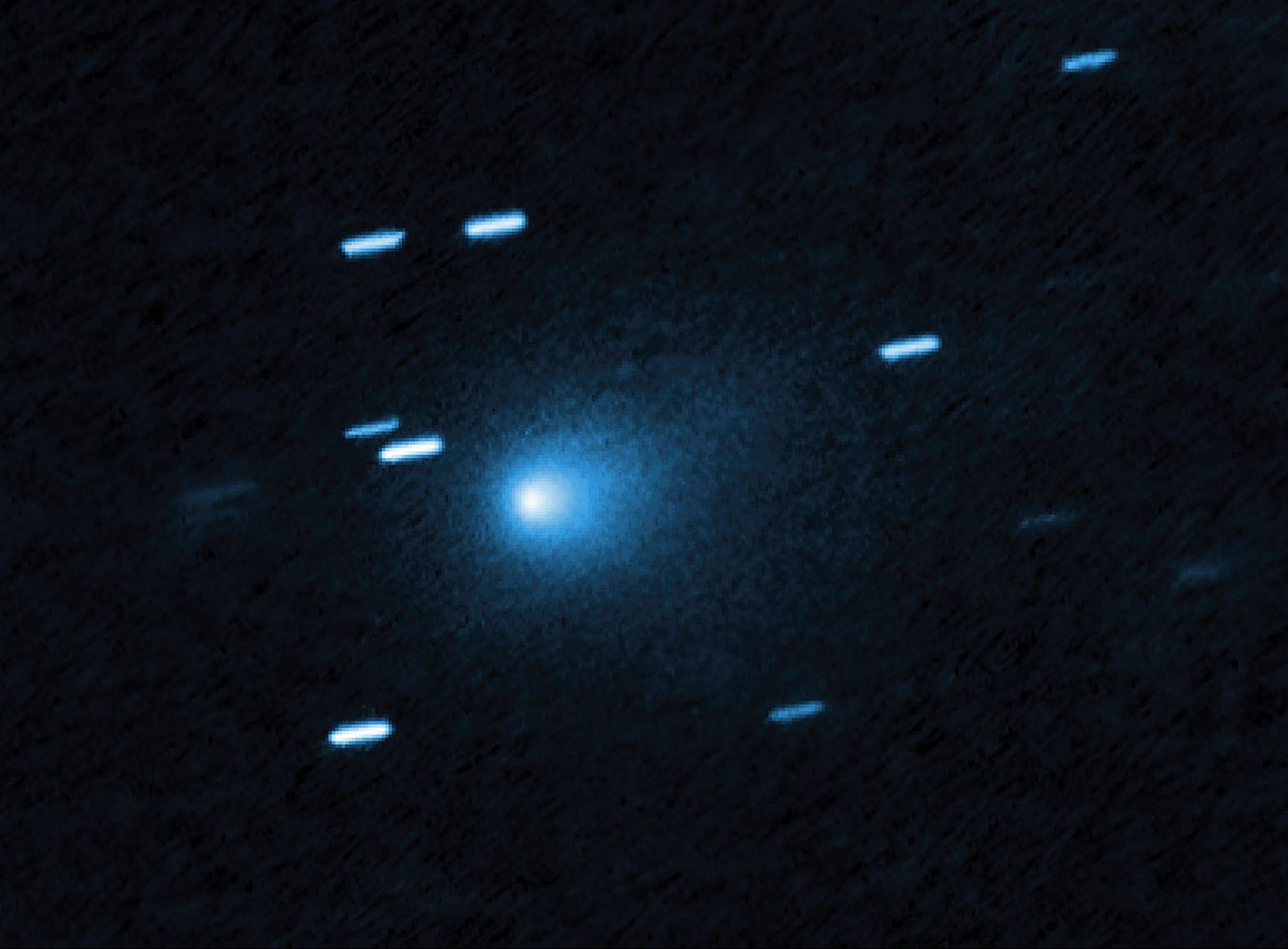
Hubble captured this image of the interstellar comet 3I/ATLAS on July 21, 2025, when the comet was 277 million miles from Earth. Hubble shows that the comet has a teardrop-shaped cocoon of dust coming off its solid, icy nucleus.
| Levels |
|
|---|---|
| Material Type |
|
| Heliophysics Big Ideas |
|
| NGSS |
|
| Heliophysics Topics |
|
| Heliophysics Missions |
|
| Related Missions |
|
| Material Cost per Learner | Free |
| Language | English |
Comets are icy bodies which swing through the solar system on long, highly elliptical orbits. Aside from being amazing to view, comet tails are also an important part of the way we study the Sun, including its magnetic field and the effects of the solar wind. This article shows how studying comets can teach us more about the Sun and Space Weather and is connected to educational resources that help K-12+ teachers explain solar wind and space science concepts in simple, engaging ways for students.