























1 min read
Galaxy MXDFz4.4 (Artist’s Concept)

This illustration portrays galaxy MXDFz4.4, which was bursting with young, massive stars that were tightly packed together. The galaxy existed only 1.4 billion years after the big bang, when the universe was still a mix of opaque and transparent gas as the Era of Reionization was gradually ending.
This concept is based on images and data from NASA’s Hubble Space Telescope, which show the younger stellar populations, and NASA’s James Webb Space Telescope, which detail the galaxy’s older stars.
A research team led by Ilias Goovaerts, a postdoctoral fellow at the Space Telescope Science Institute (STScI) in Baltimore, used Hubble to show that the galaxy’s younger stars formed within the last few million years of the galaxy’s existence and transformed the space around them from opaque to clear.
MXDFz4.4 is about 100 times smaller by area than our Milky Way galaxy, but it is forming stars up to 10 times faster.
- Release DateJune 23, 2026
- Science ReleaseHubble Details Early Galaxy Transforming Neighborhood
- CreditIllustration: NASA, ESA, Leah Hustak (STScI)
Related Images & Videos

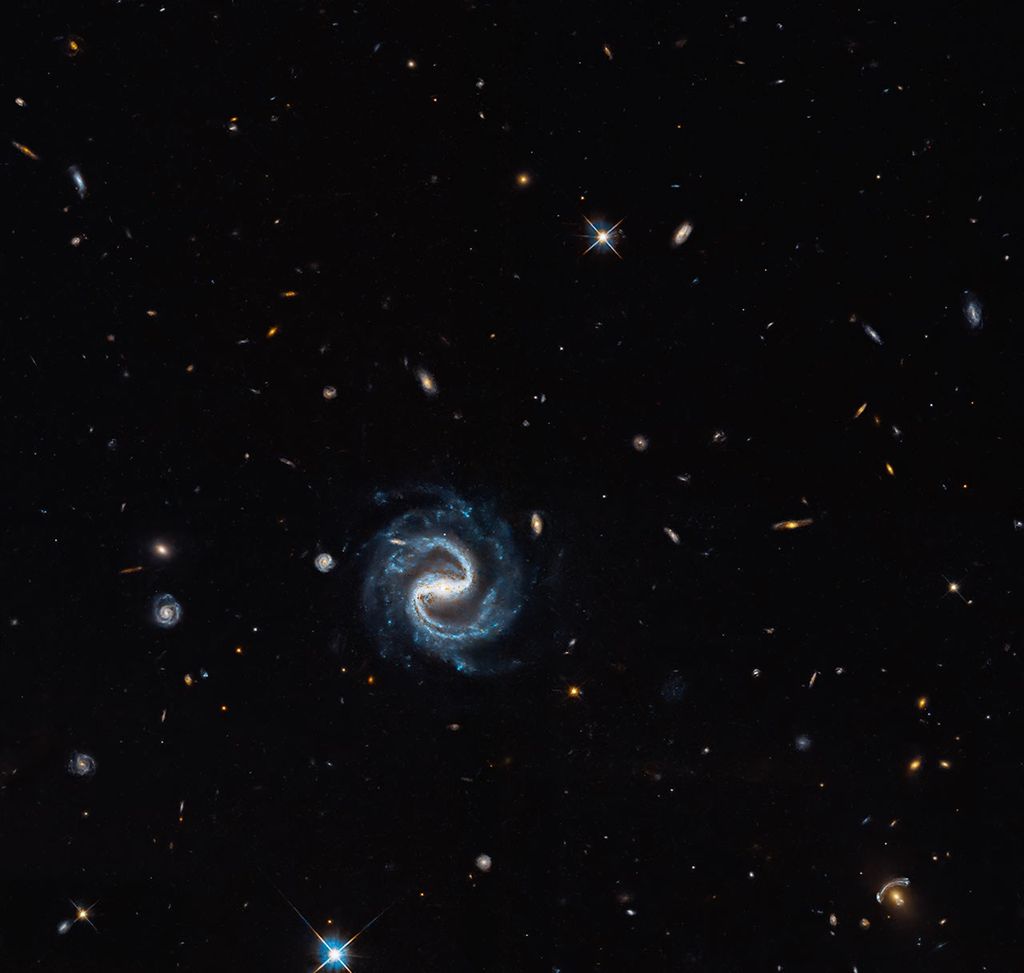
Galaxy MXDFz4.4 (Hubble and Webb Image)
Detailed visible-light images from Hubble reveal that several bursts of younger stars cleared the space in and around galaxy MXDFz4.4. Astronomers have long sought evidence to explain this transition — and Hubble has provided the first example in this time period.

Share
Details
Claire Andreoli
NASA’s Goddard Space Flight Center
Greenbelt, Maryland
claire.andreoli@nasa.gov