
















Helio and You: September 2026
The Solar TErrestrial RElations Observatory (STEREO) mission helped us to see the Sun from a new viewpoint. This article explains how this mission and others like it revolutionize our understanding of the Earth-Sun system.
A Fresh Perspective on the Sun
What is the STEREO Mission?
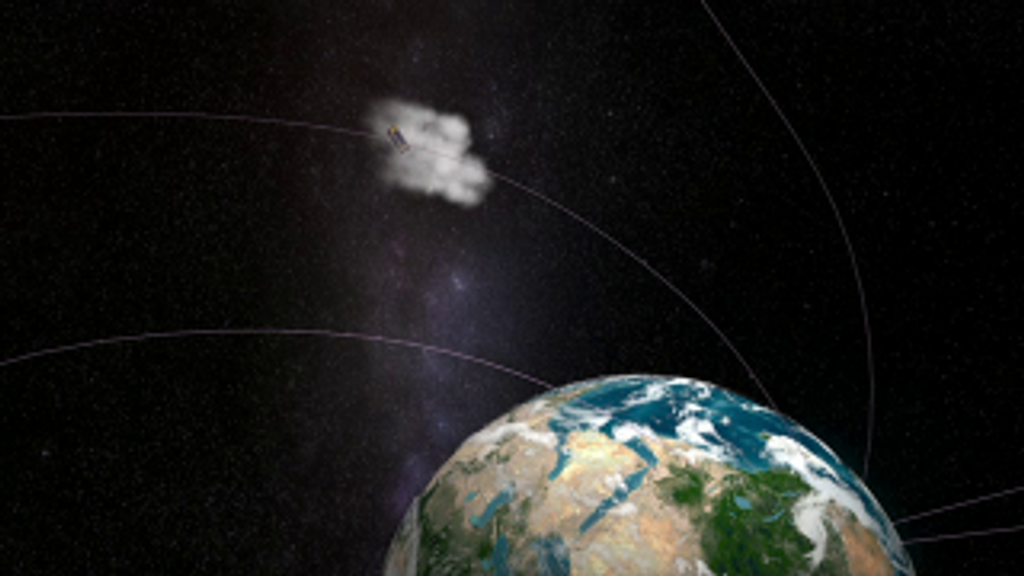
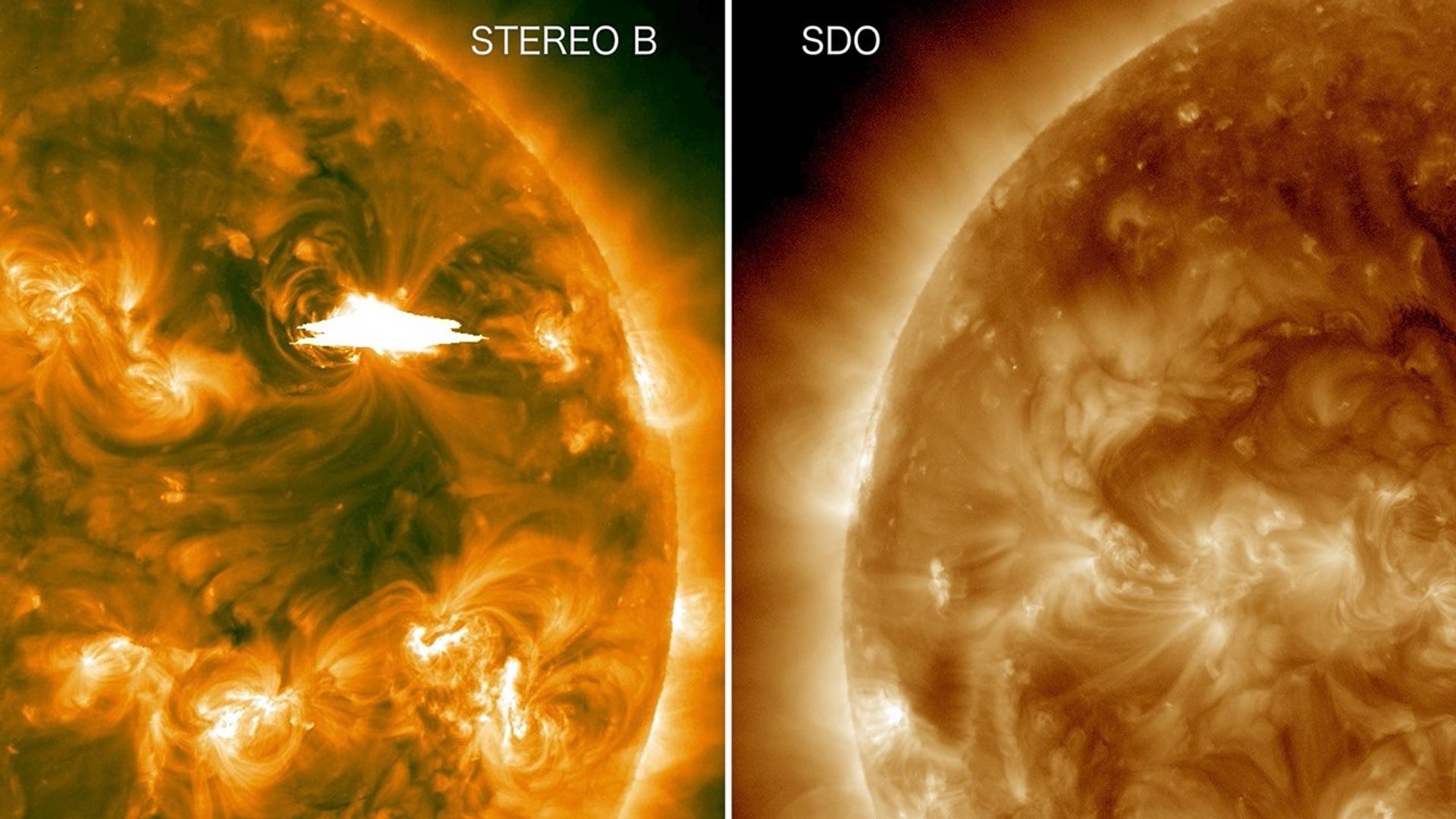
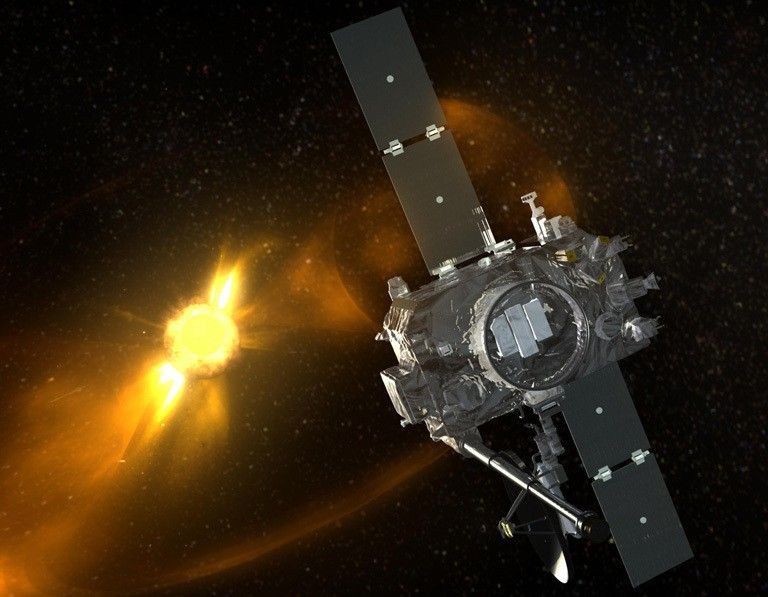
Twenty years ago, NASA launched a groundbreaking mission to explore the Sun in ways never tried before. The Solar TErrestrial RElations Observatory (STEREO) mission consisted of two nearly identical spacecraft (STEREO-A and STEREO-B) which were designed to move into orbital locations both behind and in front of Earth in its own orbital track. This unique pattern allowed scientists to reveal the 3D structure of the Sun’s most powerful outbursts, called coronal mass ejections (CMEs) for the first time.
The STEREO mission helped to revolutionize our understanding of the Sun by pairing two spacecraft for stereoscopic rather than flat, 2D views of the Sun. The placement of the spacecraft also allowed scientists to take imagery of the Sun’s far side for the first time, which made it possible to generate more detailed predictions of space weather activity as previously hidden regions rotated into view. Although the STEREO-B spacecraft’s mission ended on Oct. 17, 2018, STEREO-A remains in service today and continues to be one of the key NASA heliophysics missions that helps to predict solar storms heading toward Earth, the Moon, and Mars.
What Did the STEREO Mission Make Possible?
Before the STEREO mission, scientists were restricted not just in the scope of their ability to see the Sun, but also in the ways in which they could examine its features. Pre-STEREO missions could not simultaneously image the Sun and remotely measure data about the material of which it is composed. But the STEREO mission changed all that by combining remote sensing with in-situ instruments. This, coupled with the stereoscopic vantage points offered by the mission as a whole, allowed STEREO to track CMEs from when they first emerged from the Sun (remote-sensing data), all the way to the STEREO spacecraft, where it physically measures the velocity and density of the solar material as they pass over the spacecraft (in-situ data).
Coronal mass ejections (CMEs) are large eruptions of plasma which emerge from the Sun’s corona. They can eject billions of tons of material at a time, which travels outward from the Sun at speeds ranging from slower than 155 miles per second (250 kilometers per second) to more than 1,860 miles per second (3,000 km/s). At those speeds, the fastest CMEs can reach our planet in as little as 15-18 hours. If they are directed at Earth, these events can cause major impacts on everything from satellites to the electrical grid.
But CMEs can also impact missions traversing between the planets, including future missions to the Moon, Mars, and beyond. If a powerful storm were to strike a crewed mission in deep space (such as one taking the multi-month journey to Mars), it could damage the spacecraft’s sensitive electronics, potentially impacting the crew’s mission. Beyond that, the intense flux of SEPs could harm the astronauts themselves, which has possible repercussions ranging from mild illness to higher chance of developing certain cancers.
By allowing scientists to track solar energetic particles (SEPs) and the solar wind throughout the solar system, the STEREO mission also helped shift the focus from just Earth-centric space weather monitoring to a model focusing on truly interplanetary, full solar system space weather. This in turn laid the groundwork for predicting space weather at the orbits of other planets, which is a crucial step in the path to future deep space exploration. After all, if we are to safely venture into space and set up outposts on the Moon and Mars, we will need to be able to detect and track CMEs and other space weather conditions across the entire solar system.
Why is Predicting Space Weather Important?
On July 23, 2012, a massive CME erupted from the Sun and into the solar system beyond. Some scientists described it as the largest solar storm since the 1859 Carrington Event, a solar storm so powerful that it created bright auroras as far south as Florida. Although this storm missed Earth, it washed right over STEREO-A. As a result, scientists were able to directly study the characteristics of this storm and learned more about the CME’s magnetic structure and the kind of shock waves and energetic particles it produced.
One of the dangers of CMEs is that the immense solar energy can overload everything from orbiting satellites to the pumps that power sewer systems. As a result, a major CME like the one on July 23, 2012, could prove disastrous if it were to hit Earth directly, with everything from small-scale GPS errors to major nationwide blackouts as possible consequences of such an event.
Solar storms like the one in 2012 are measured by a unit called Dst (disturbance–storm time), which is essentially an indicator of how much the storm in question would “shake” Earth’s magnetosphere if it were to hit our planet. A storm in March 1989 which knocked out power across Quebec measured in at Dst=-600 nT (nanoTesla), while the Carrington Event is estimated to have been somewhere between -800 and -1750 nT. The storm in July 2012 was measured at -1200 nT, meaning that it could have caused calamity if it had hit Earth.
Given that this could also threaten future missions to deep space, heliophysicists work hard to detect and track space weather events across the whole solar system. Just as meteorologists predict the weather here on Earth using a global network of sensors, scientists looking to accurately track space weather while conducting a multi-month journey to Mars need to know what the Sun is doing from all angles. The STEREO mission helped to prove the viability of this concept, opening the door for even more innovative missions to follow.
What Are Some Other Benefits of STEREO?
In addition to revolutionizing our ability to study space weather, the STEREO mission also led to the first ever 3D planetarium show. An IMAX 3D movie that has been shown at the Smithsonian was also produced based on STEREO data, as well as mobile apps that allow people to "hold the Sun in the palm of their hand" using stereoscopic glasses. These deliverables helped to bring the Sun to people here on Earth, making it possible for everyone to engage with our nearest star in ways that most people never have.
In addition, the STEREO mission is an international collaboration, with as much as 50% of the instrument payload contribution for STEREO having been provided by European Space Agency (ESA) member states. This is a prime example of global scientific cooperation, which other missions like Solar Orbiter (headed by the ESA) and the joint NASA-ESA Solar and Heliospheric Observatory (SOHO) have also typified.
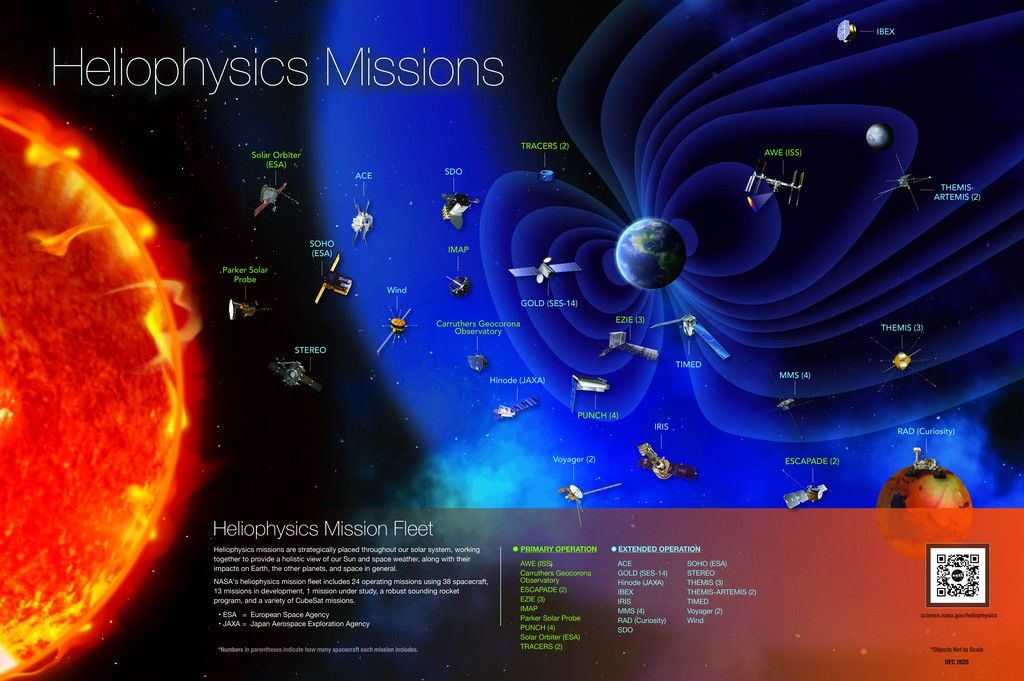
It is also important to note that while STEREO gave us a 3D view of the Sun from the plane of the ecliptic, missions like the Solar Orbiter are advancing our knowledge by moving up to 30 degrees off the ecliptic. The ecliptic is the flat plane that passes through the Sun’s equator and which most planets’ generally stick close to as they orbit. As missions like Solar Orbiter depart this orbital region, they give us better views of the Sun's poles, which only serves to further flesh out our understanding of the Sun in 360 degrees.
Since the STEREO mission has been going for 20 years now, giving scientists the chance not only to gather data on the Sun from multiple angles but also across over multiple 11-year solar cycles (a necessity if patterns are to be surmised), its success truly underscores why missions like STEREO are built to last.
What Does the Future Hold?
Observations STEREO made possible help us to better understand the potential impacts space weather can have on human society, which then makes it easier to prepare for and mitigate those impacts. Future missions can expand on this legacy by more closely examining the Sun from multiple angles and across multiple solar cycles.
We can only speculate about the results for now. But as NASA and its partners prepare to build bases on the Moon and put the first humans on Mars, studying space weather is more important than ever. It is clear that in this new era of space exploration, missions like STEREO, which push the boundaries of what is known by establishing new standards of scientific discovery, will be vital to determining the best course for our future in space.
Resources for Educators ↓
Heliophysics Resource Database
NASA Helio Club: Observing the Sun
In Session 2 of the NASA Helio Club study unit, students are led through activities that help them explore ways to safely observe the Sun.
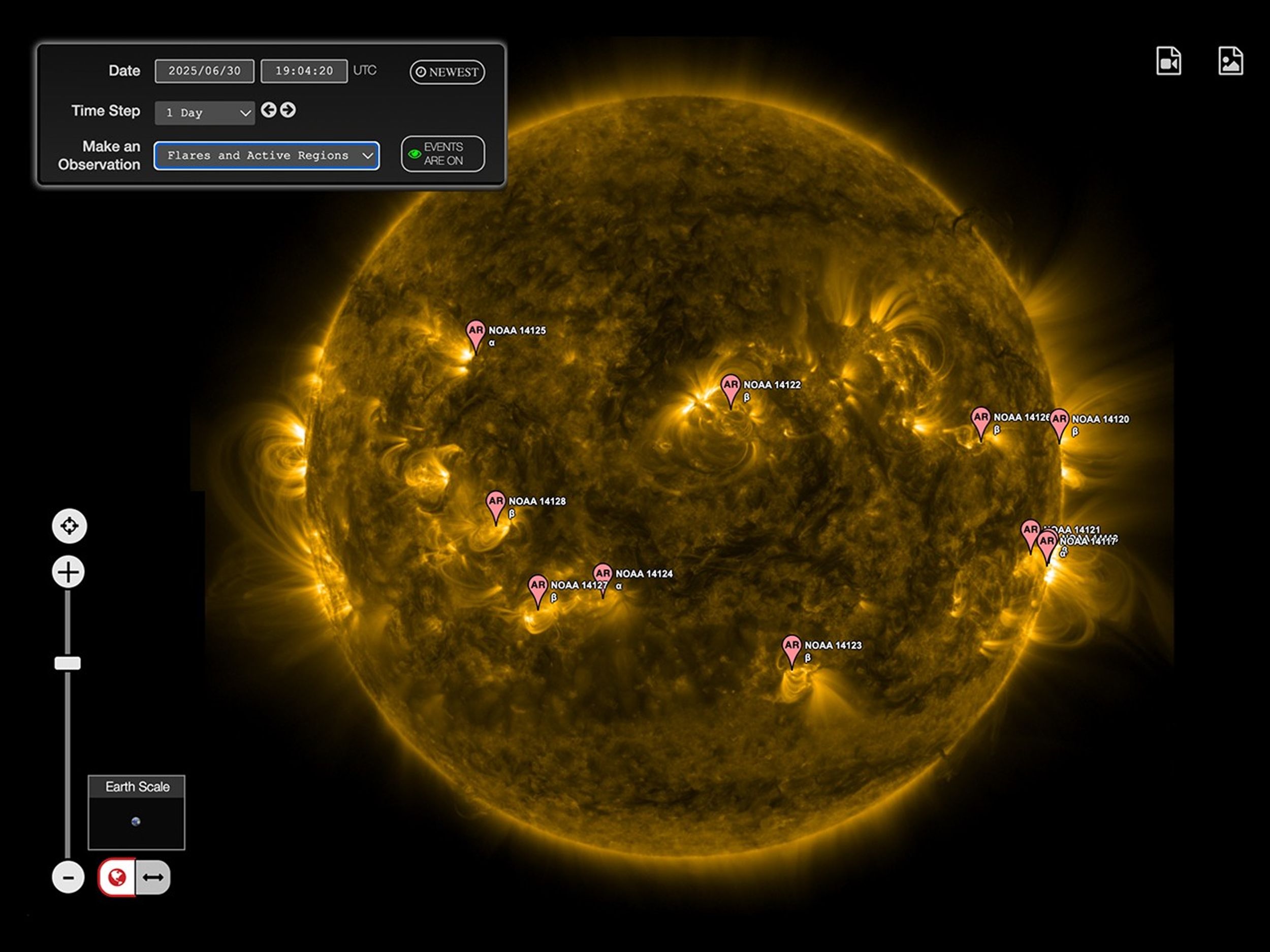
STEREO Imaging Data at Helioviewer
Helioviewer.org is part of the Helioviewer Project, an open-source project which visualizes solar and heliospheric data from different missions.
Watching Comet ISON’s Journey
A collection of images and videos which illustrate how various spacecraft from NASA’s heliophysics mission fleet observed Comet ISON in 2013.
STEREO Science Center
A collection of galleries featuring images, videos, and other representations of the STEREO mission over the 20-plus years of its operation.
Educator’s Guide – Exploring Magnetism
In this teacher’s activity guide, students can learn about magnetic fields and electromagnetism through inquiry and measurement.
Related Articles
Keep up with the latest news in NASA heliophysics and the Science Activation portfolio.

Christine Shupla and Claire Ratcliffe Adams, from the NASA Science Activation program’s NASA@ My Library project, facilitated a professional development Co-Design Space Science, Technology, Engineering, & Mathematics (STEM) Workshop for Tribal libraries on August 29, 2024, hosted at the New…
Total Solar Eclipse in South America – December 14, 2020 NASA Space Science Education Consortium (NSSEC) members delivered products, gave presentations, and collaborated with NASA en Español, Office of Communications, and Pontificia Universidad Católica de Chile to engage many with…
In January, the American Museum of Natural History (AMNH) hosted its monthly planetarium program, offering attendees an insightful journey into the study of our solar system’s star. On January 23, 2024, Dr. Nour Raouafi, project scientist of the Parker Solar…