
















Messier 81
This stately spiral galaxy holds a black hole at its heart that is 70 million times the mass of the Sun.
Distance
11.6 million light-years
Apparent Magnitude
6.9
constellation
Ursa Major
object type
Spiral Galaxy
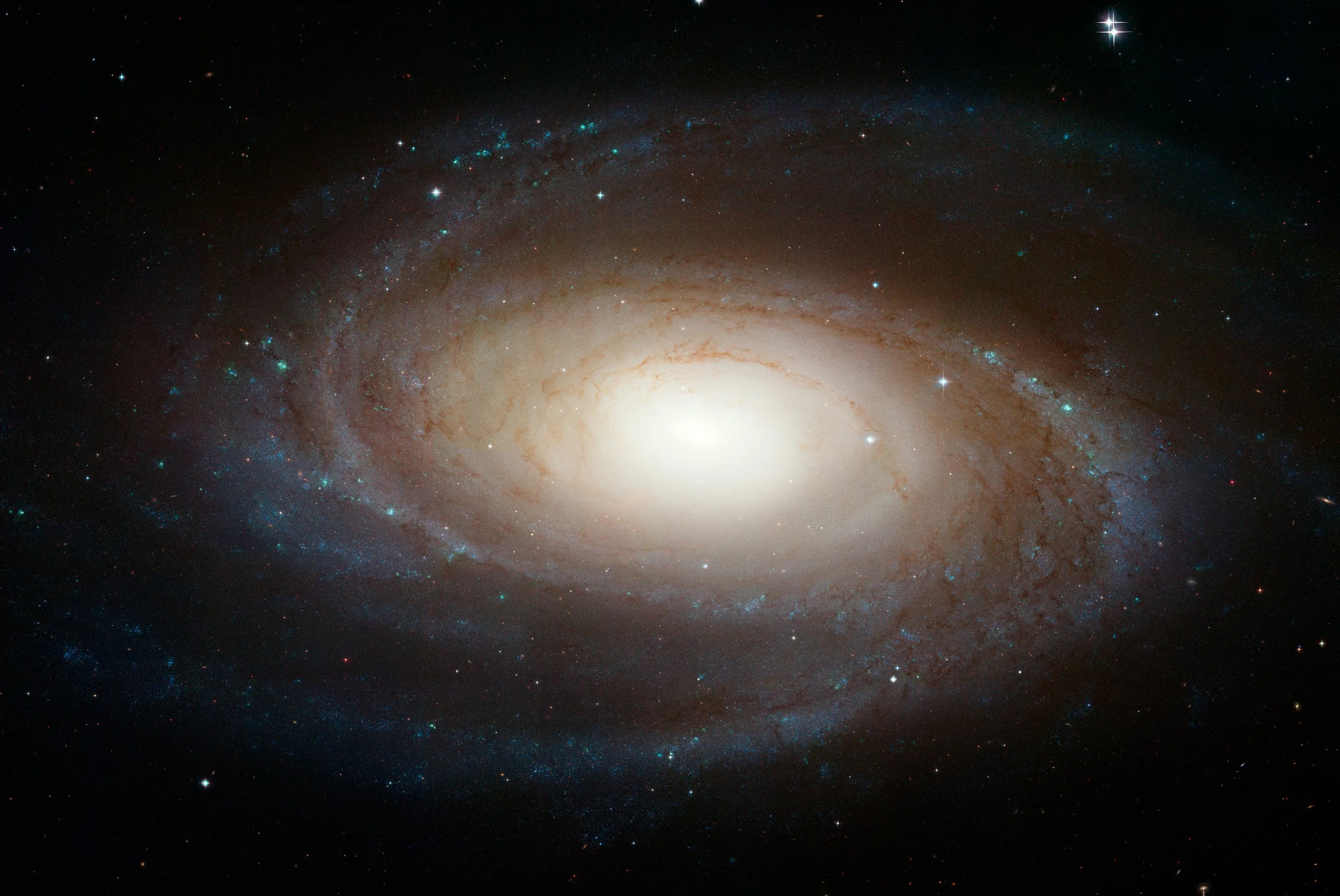
Discovered by the German astronomer Johann Elert Bode in 1774, M81 is one of the brightest galaxies in the night sky. It is located 11.6 million light-years from Earth in the constellation Ursa Major and has an apparent magnitude of 6.9. Through a pair of binoculars, the galaxy appears as a faint patch of light in the same field of view as M82. A small telescope will resolve M81’s core. The galaxy is best observed during April.
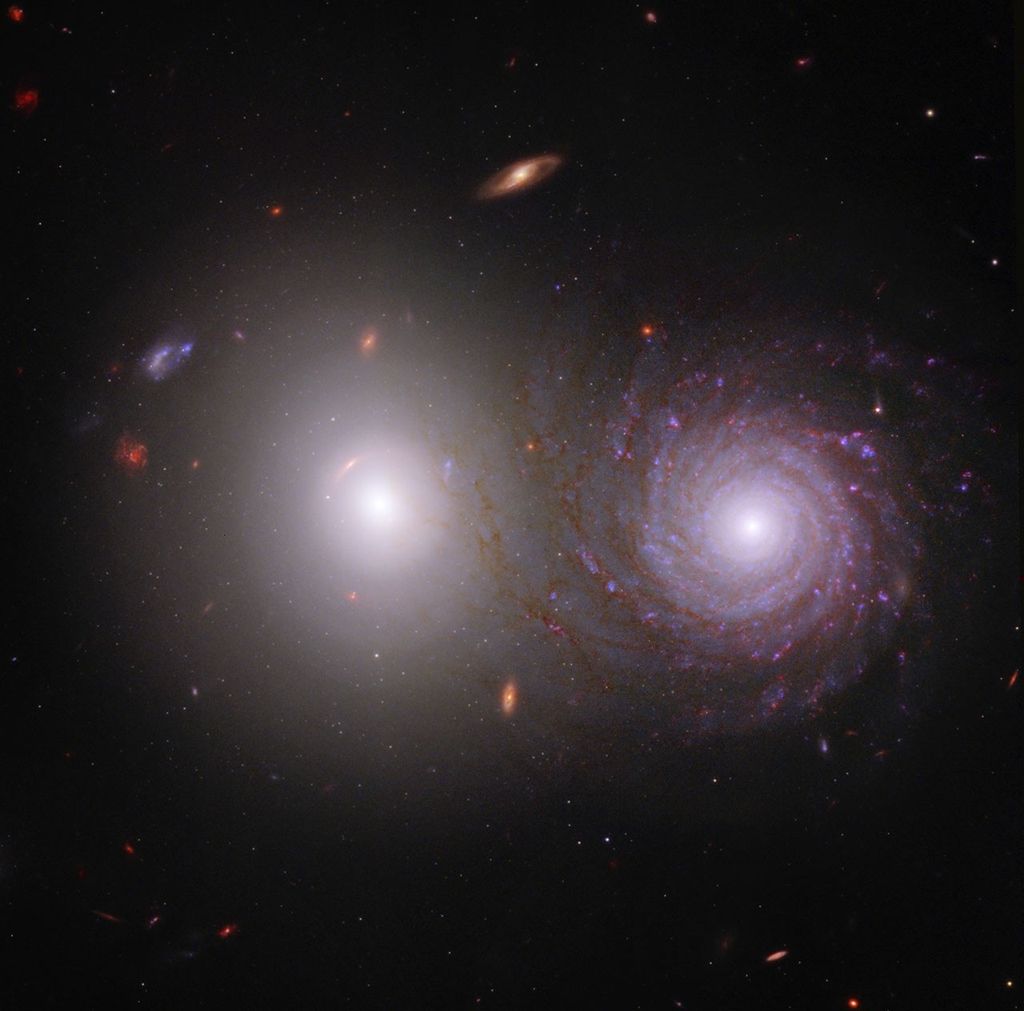
This stunning Hubble image was assembled using observations in visible and infrared light. The galaxy’s spiral arms, which wind all the way down into its nucleus, are made up of young, bluish, hot stars formed in the past few million years. They also host a population of stars formed in an episode of star formation that started about 600 million years ago. Ultraviolet light from hot, young stars is fluorescing the surrounding clouds of hydrogen gas. A number of sinuous dust lanes also wind all the way into the nucleus of M81.
The galaxy’s central bulge contains much older, redder stars. It is significantly larger than the Milky Way’s bulge. A black hole of 70 million solar masses resides at the center of M81 and is about 15 times the mass of the Milky Way’s central black hole. Previous Hubble research showed that the size of the black hole in a galaxy’s nucleus is proportional to the mass of the galaxy’s bulge.
Amateur vs. Hubble Image

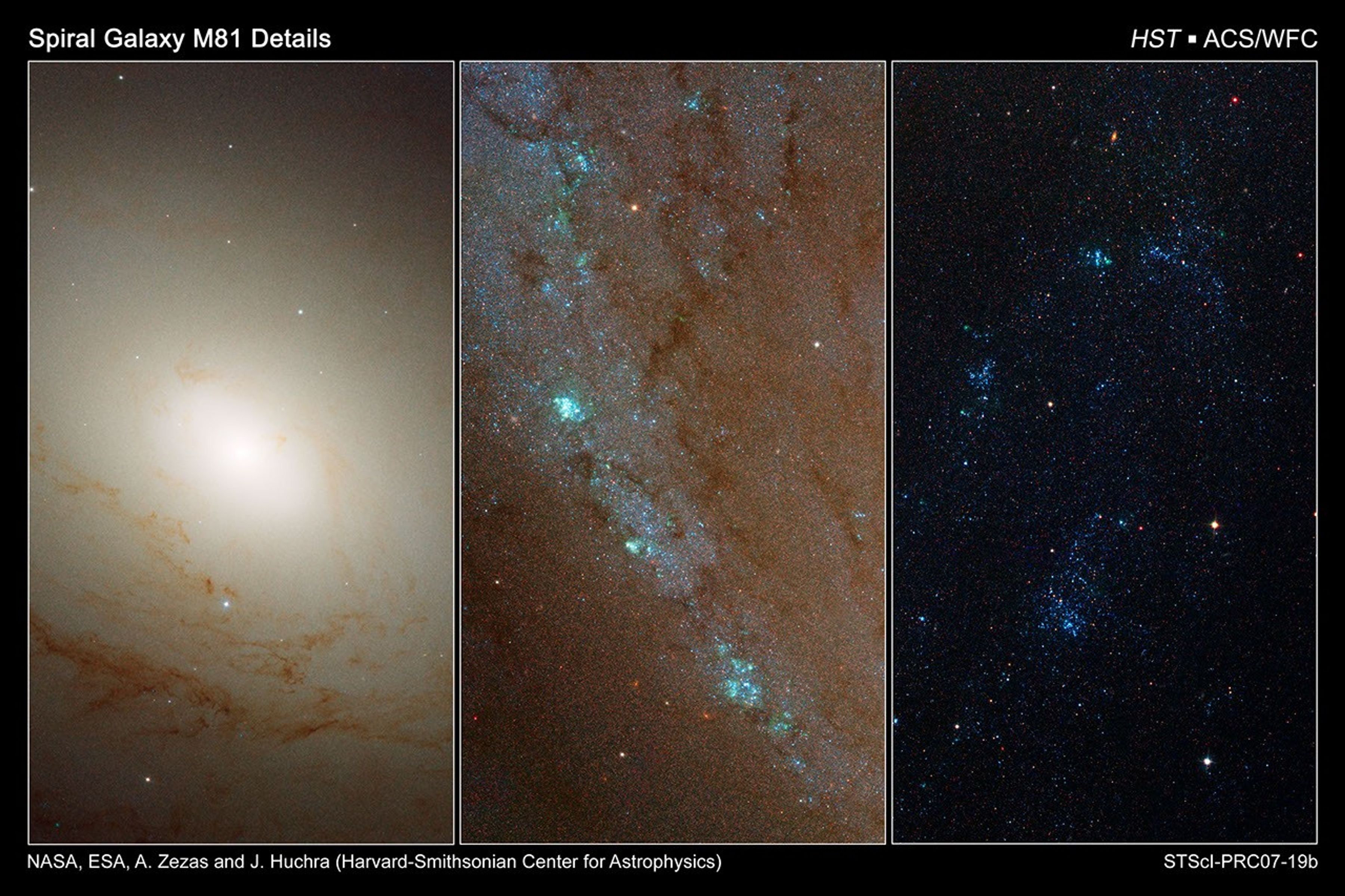
For more information about Hubble’s observations of M81, see:
- Hubble Photographs Grand Design Spiral Galaxy M81
- Supernova 1993J in Spiral Galaxy M81
- Hubble Finds that "Blue Blobs" in Space are Orphaned Clusters of Stars

Explore Hubble's Messier Catalog
The following pages contain some of Hubble’s best images of Messier objects.
Overview The Messier catalog, begun by astronomer Charles Messier in the 18th Century and revised over the years, includes some…

Better known as the Crab Nebula, Charles Messier originally mistook Messier 1 for Halley’s Comet, which inspired him to create…
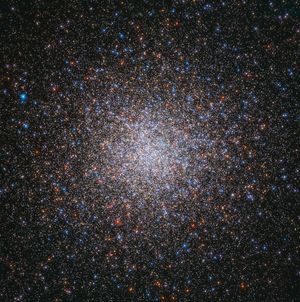
Hubble's image of Messier 2 is comprised of visible and infrared wavelengths of light.