









Suggested Searches

Messier 95

Messier 95 is visible as a hazy smudge on a clear, dark night using a good pair of binoculars.

Distance

33 million light-years

Apparent Magnitude

9.7

constellation

Leo

object type

Barred Spiral Galaxy
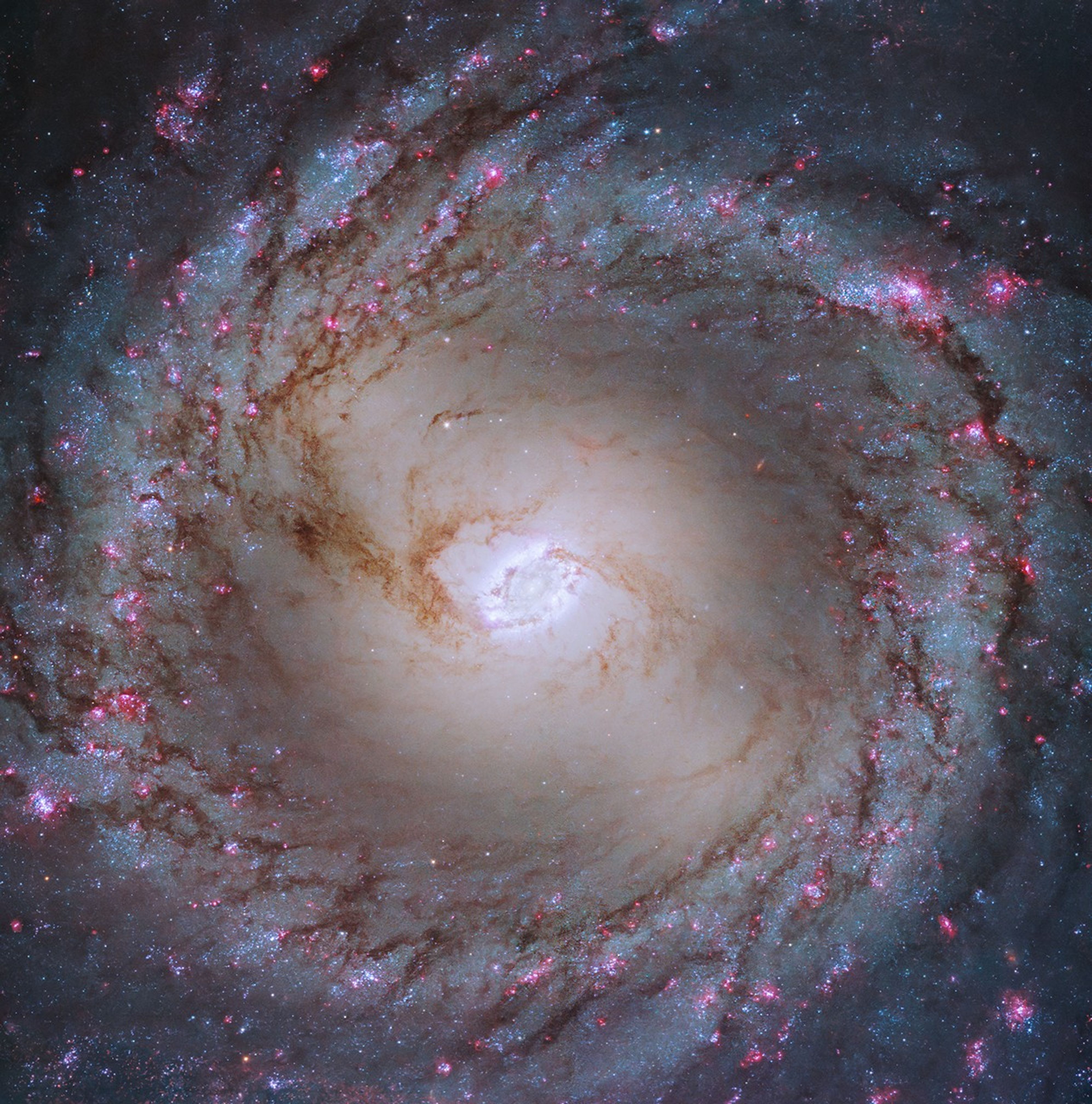
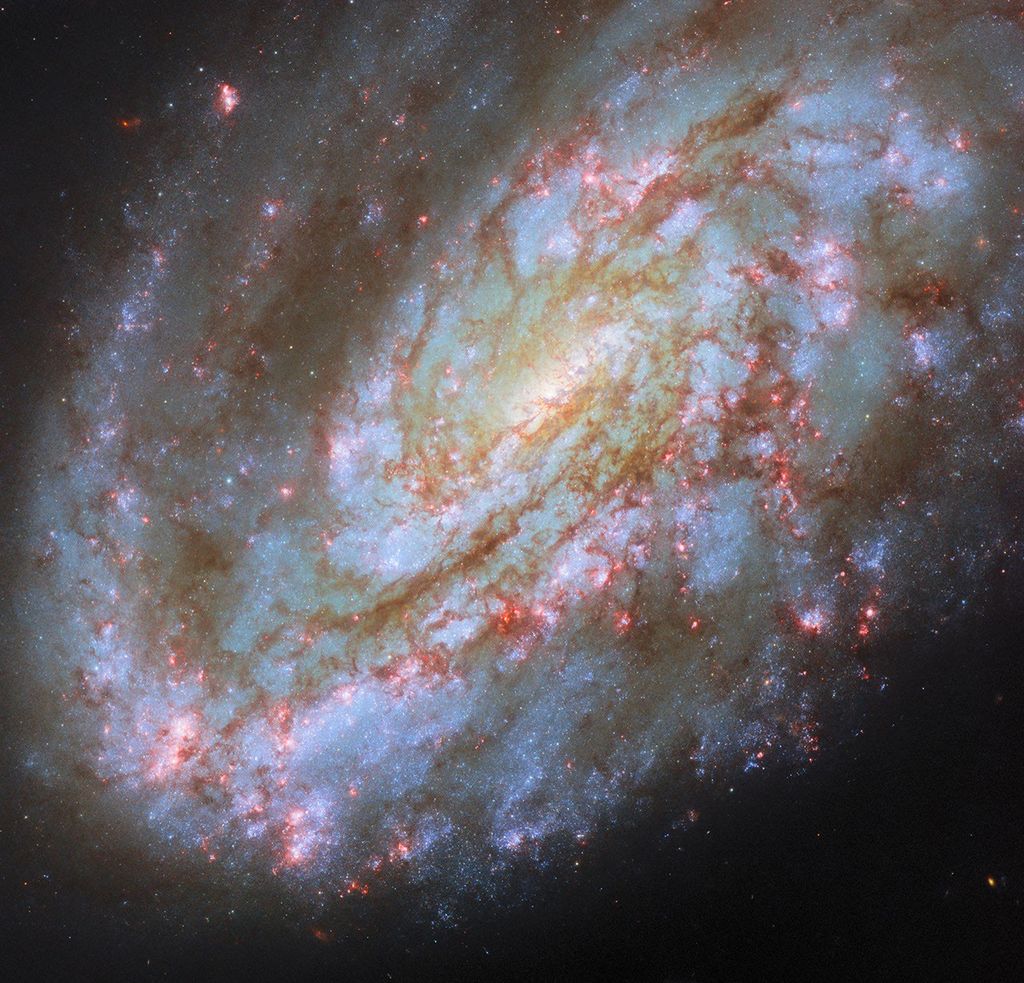
A face on spiral galaxy fills the view. Its bright, barred core is at the center of the image. The galaxy’s core is bisected by reddish-brown dust that extends into its spiral arms. Bright pink-white star forming regions dot the spiral arms.
This beautiful image of Messier 95 includes data from two different Hubble observing programs. The first looked at connections between young stars and cold gas in star clusters and molecular clouds. The second looked at more than 50,000 gas clouds in 19 nearby galaxies. These datasets will help astronomers better understand the process of star formation and the large-scale evolution of galaxies.
NASA, ESA, J. Lee (STScI), and R. Chandar (University of Toledo); Image Processing: Gladys Kober (NASA/Catholic University of America)

​Located in the constellation Leo, Messier 95 (M95, also called NGC 3351) is a beautiful barred spiral galaxy. It was discovered in 1781 by Pierre Méchain, a colleague of Charles Messier.

M95 is located approximately 33 million light-years away and has a magnitude of 9.7. It has around 40 billion stars. Its spiral arms host a flurry of star birth activity and sparkle with the light of countless young, blue stars. The arms themselves are very tightly wound around the galaxy’s core and are nearly circular.

M95 is visible as a hazy smudge on a clear, dark night using a good pair of binoculars, but large telescopes will reveal more detail. It appears close to M96, M105 and a number of fainter galaxies that all belong to the Leo I (or M96) group. The best time of the year to view M95 is in April.
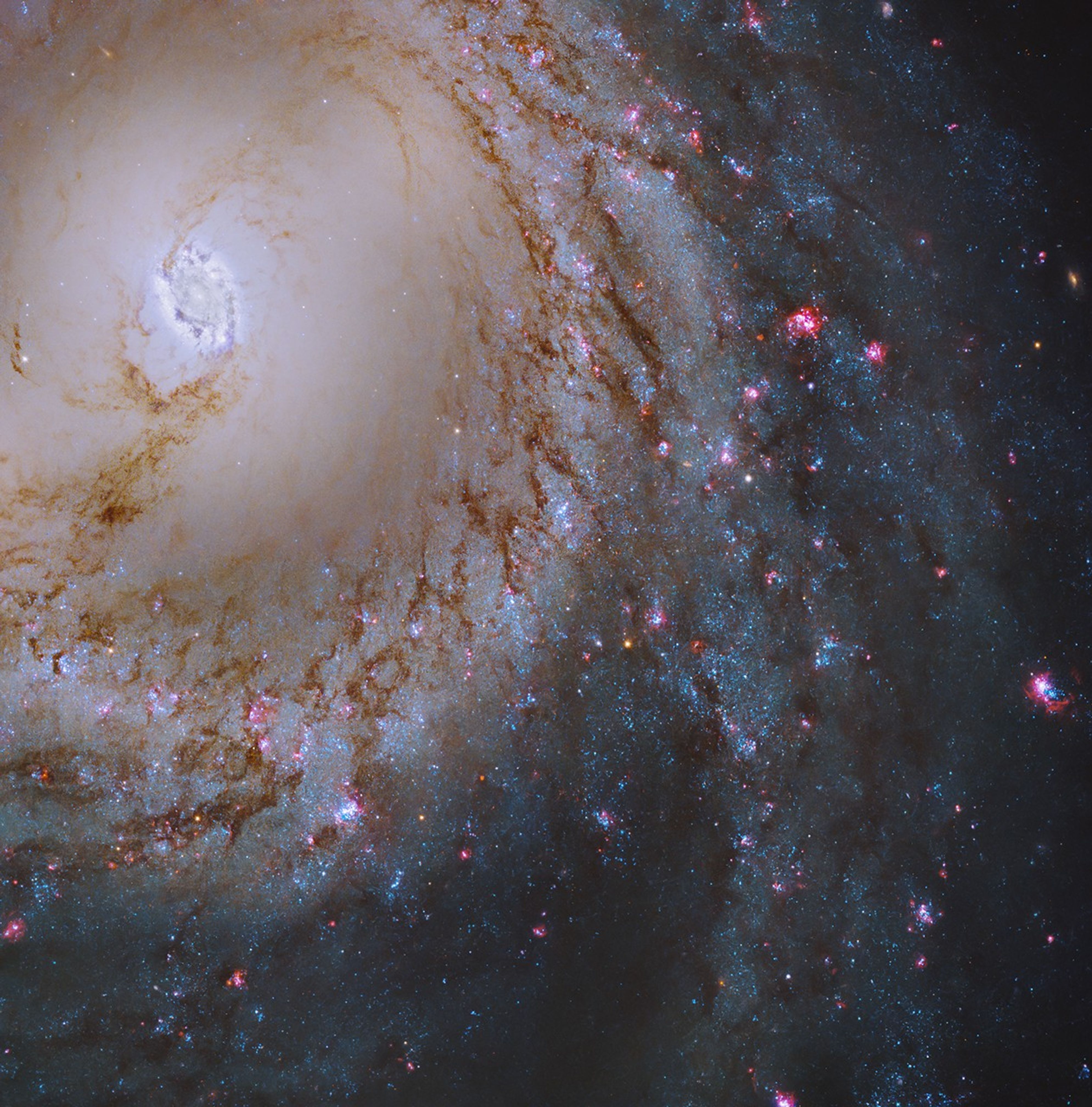
A portion of a barred spiral galaxy is visible in the upper-right corner of the image. Its bright core is near the upper-right corner while a large spiral arm curves downward from top-center of the image. The galaxy’s barred core is bisected by reddish-brown dust that extends into the spiral arms. Bright pinkish-red star forming regions dot the spiral arm.
This Hubble observation reveals a section of Messier 95 featuring its central bar of stars in the upper left and one of its spiral arms extending to the lower right. The observations were taken in near-infrared, visible, and ultraviolet wavelengths of light with Hubble’s Wide Field Camera 3. Hubble took these observations of M95 to better understand star formation in nearby galaxies.
NASA, ESA, D. Calzetti (University of Massachusetts – Amherst), and R. Chandar (University of Toledo); Image Processing: Gladys Kober (NASA/Catholic University of America)

For more information about Hubble's observations of M95, see:
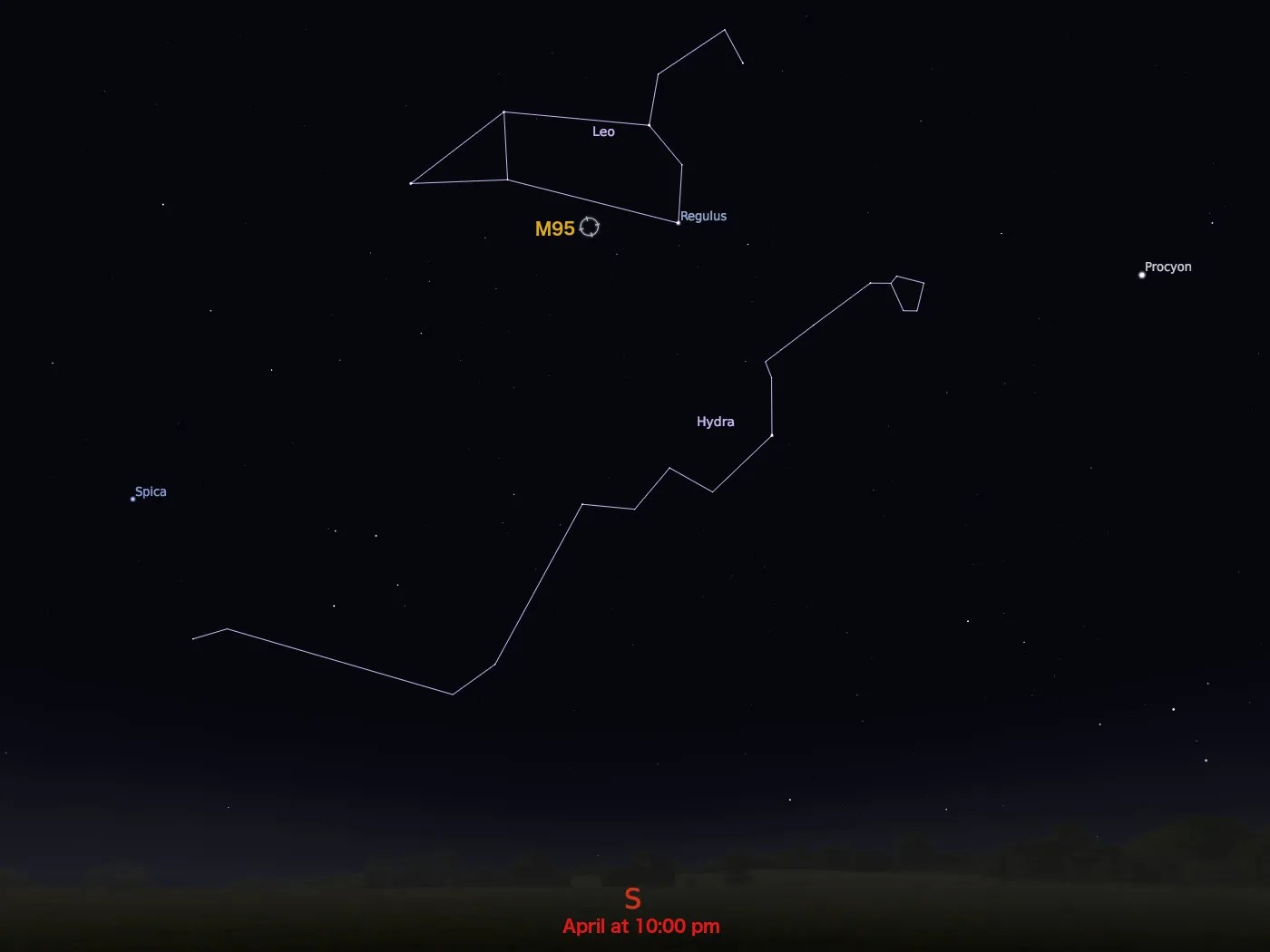
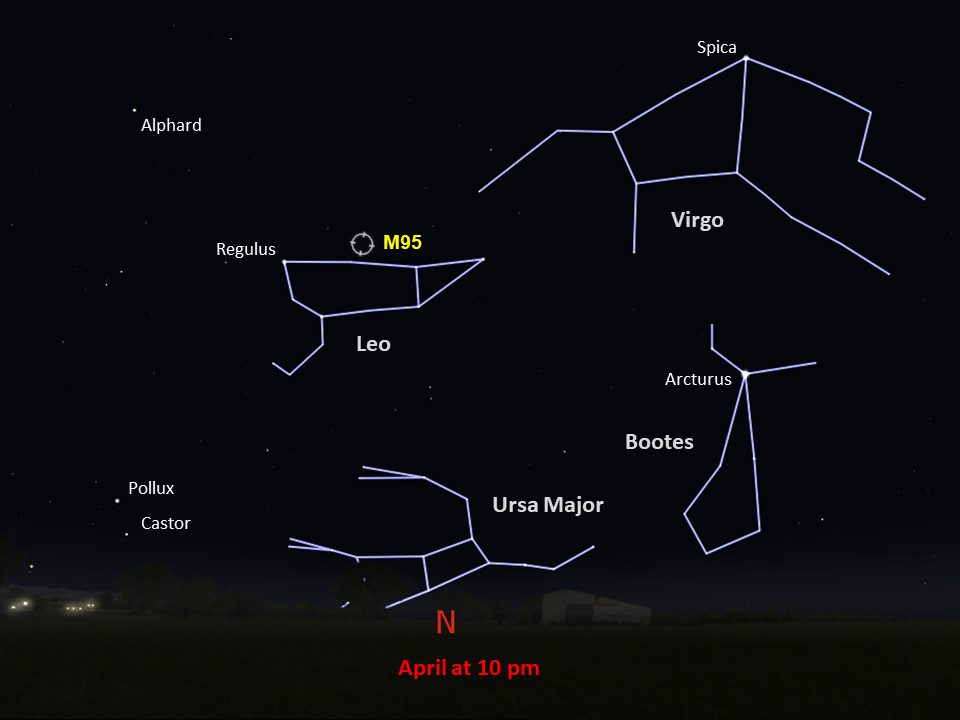
star chart showing location in night sky of M95
This star chart for M95 represents the view from mid-northern latitudes for the given month and time.
Image courtesy of Stellarium
Annotated star chart for M95 in the southern hemisphere, facing the northern sky in April at 10 PM.
This star chart for M95 represents the view from mid-northern latitudes for the given month and time.
Image courtesy of Stellarium

Explore Hubble's Messier Catalog

The following pages contain some of Hubble’s best images of Messier objects.
Hubble’s Messier Catalog

Overview The Messier catalog, begun by astronomer Charles Messier in the 18th Century and revised over the years, includes some…

Messier 1 (The Crab Nebula)

Better known as the Crab Nebula, Charles Messier originally mistook Messier 1 for Halley’s Comet, which inspired him to create…
Messier 2

Hubble's image of Messier 2 is comprised of visible and infrared wavelengths of light.