























1 min read
Infrared Universe: NGC 2207 (and IC 2163)
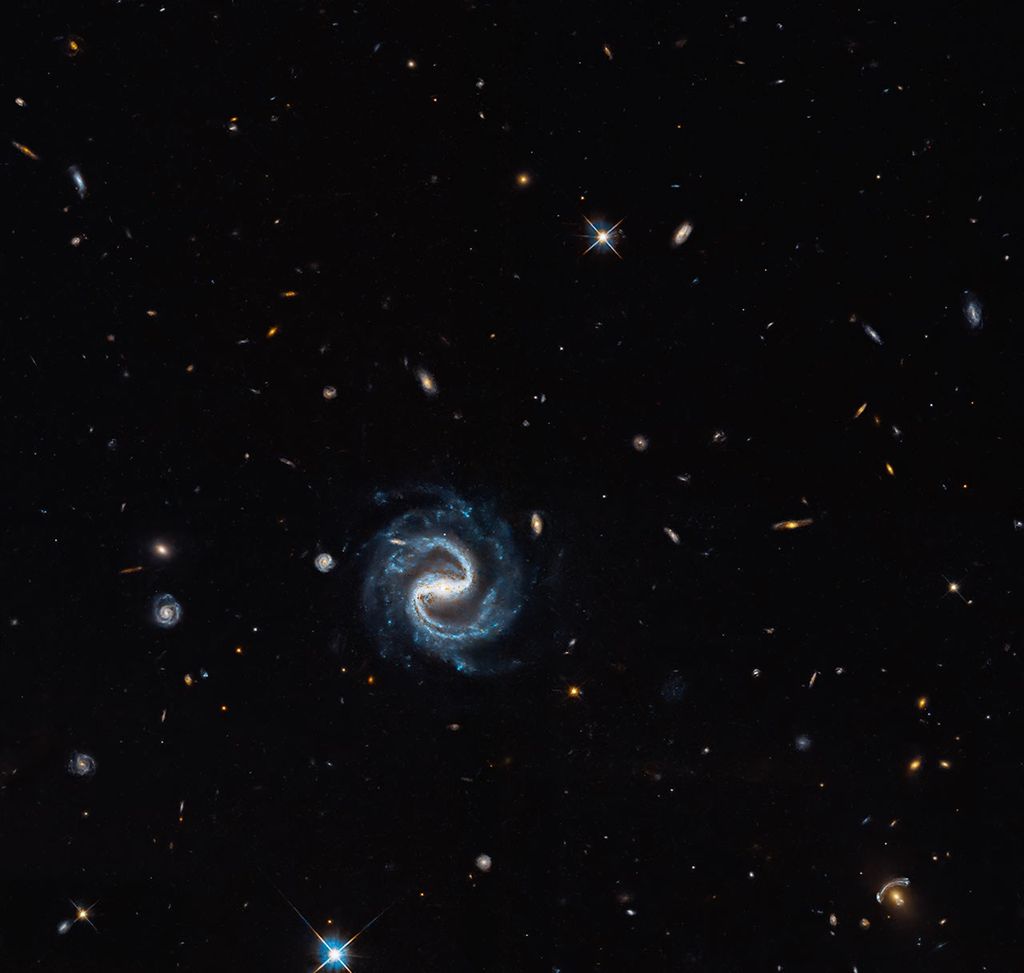
NGC 2207 is a pair of colliding spiral galaxies. Their bright nuclei resemble a striking set of eyes. Though individual stars are too far apart to collide, the material between the stars merges to create high-density pockets of gas. These regions gravitationally collapse, triggering a firestorm of star birth. The galaxy collision will go on for several millions of years, leaving the galaxies’ shapes completely altered.
Optical: Hubble data shows trails of stars and gas trace out spiral arms, stretched by the tidal pull between the galaxies.
Credit: NASA, ESA, and The Hubble Heritage Team (STScI)
Infrared: Spitzer data reveals the glow of warm dust; raw material for the creation of new stars and planets.
Credit: NASA, JPL-Caltech
X-ray: Chandra view reveals areas of active star formation and the birth of super star clusters.
Credit: NASA, CXC, SAO, S. Mineo et al.
About the Infrared Universe Collection
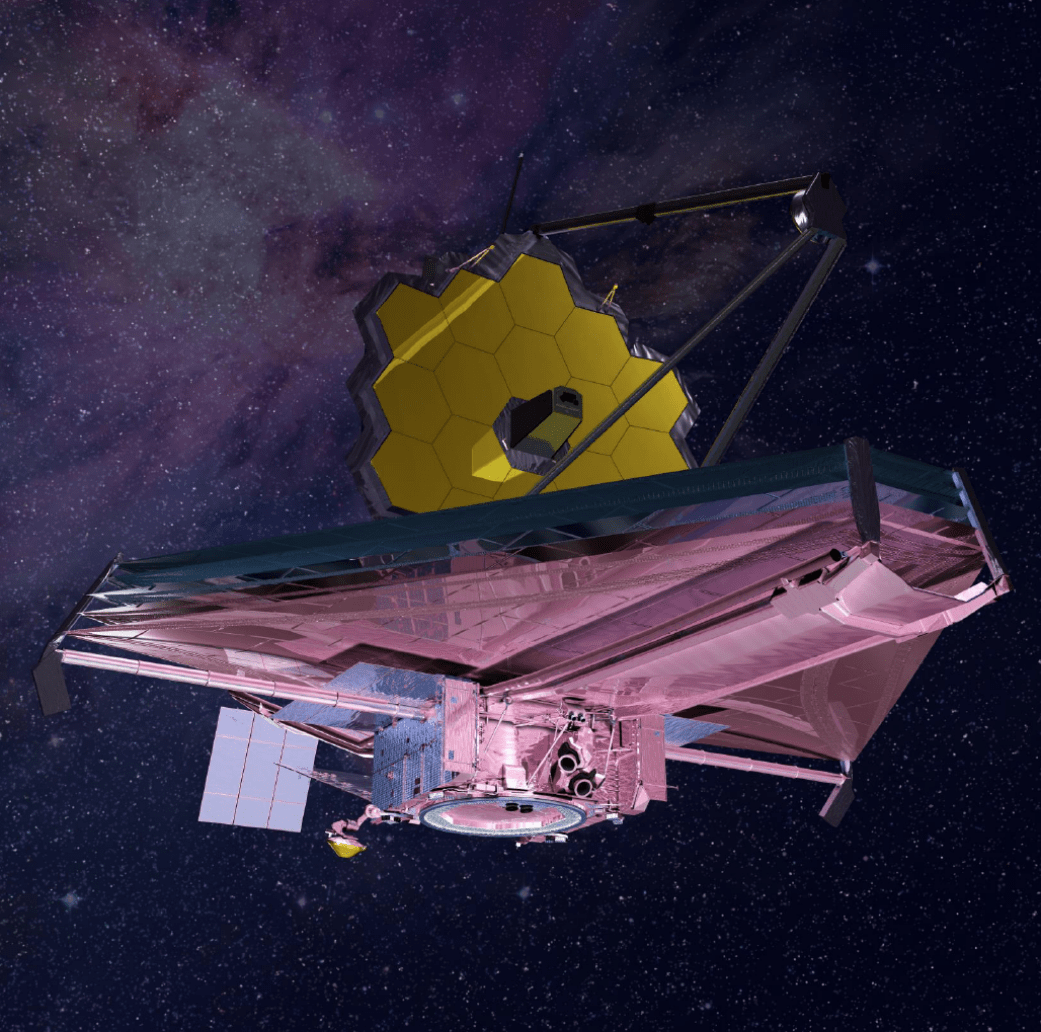
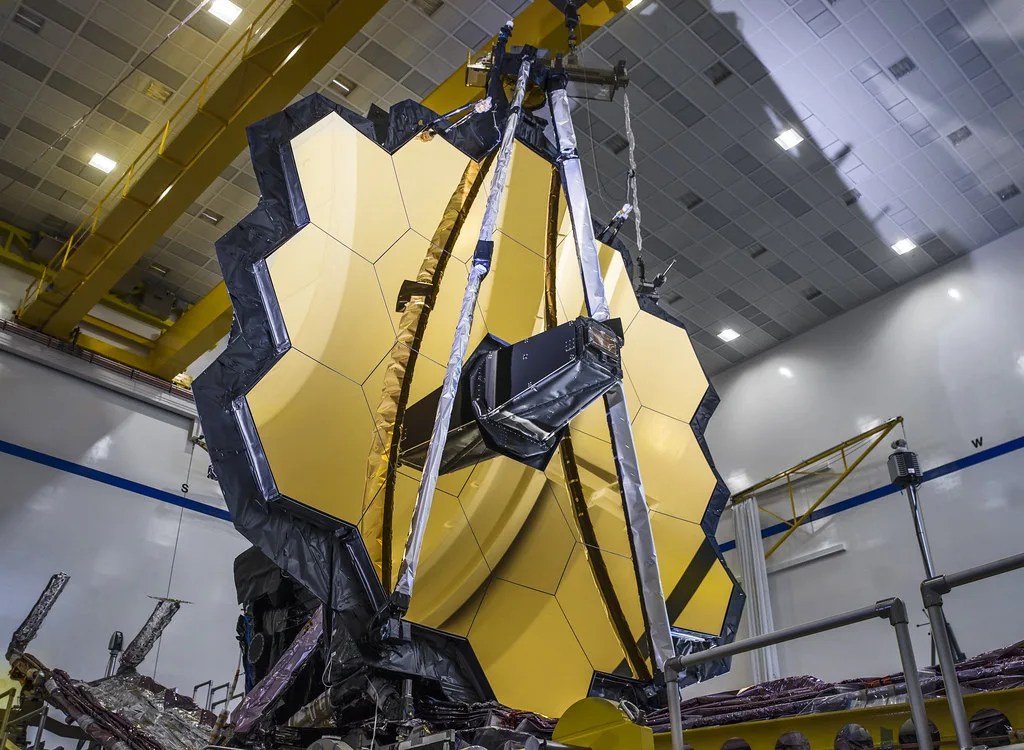
The human eye can only see visible light, but objects give off a variety of wavelengths of light. To see an object as it truly exists, we would ideally look at its appearance through the full range of the electromagnetic spectrum. Telescopes show us objects as they appear emitting different energies of light, with each wavelength conveying unique information about the object. The Webb Space Telescope will study infrared light from celestial objects with much greater clarity and sensitivity than ever before. Explore the Infrared Universe. Adapted from Cool Cosmos by IPAC, with additional contributions from Bruno Merin and Miguel Merin (Pludo).
- Release DateMay 22, 2018
- CreditVideo: NASA, ESA, Gregory Bacon (STScI)
Downloads
Share
Details
Laura Betz
NASA’s Goddard Space Flight Center
Greenbelt, Maryland
laura.e.betz@nasa.gov
NASA, ESA, Gregory Bacon (STScI)