
















1 min read
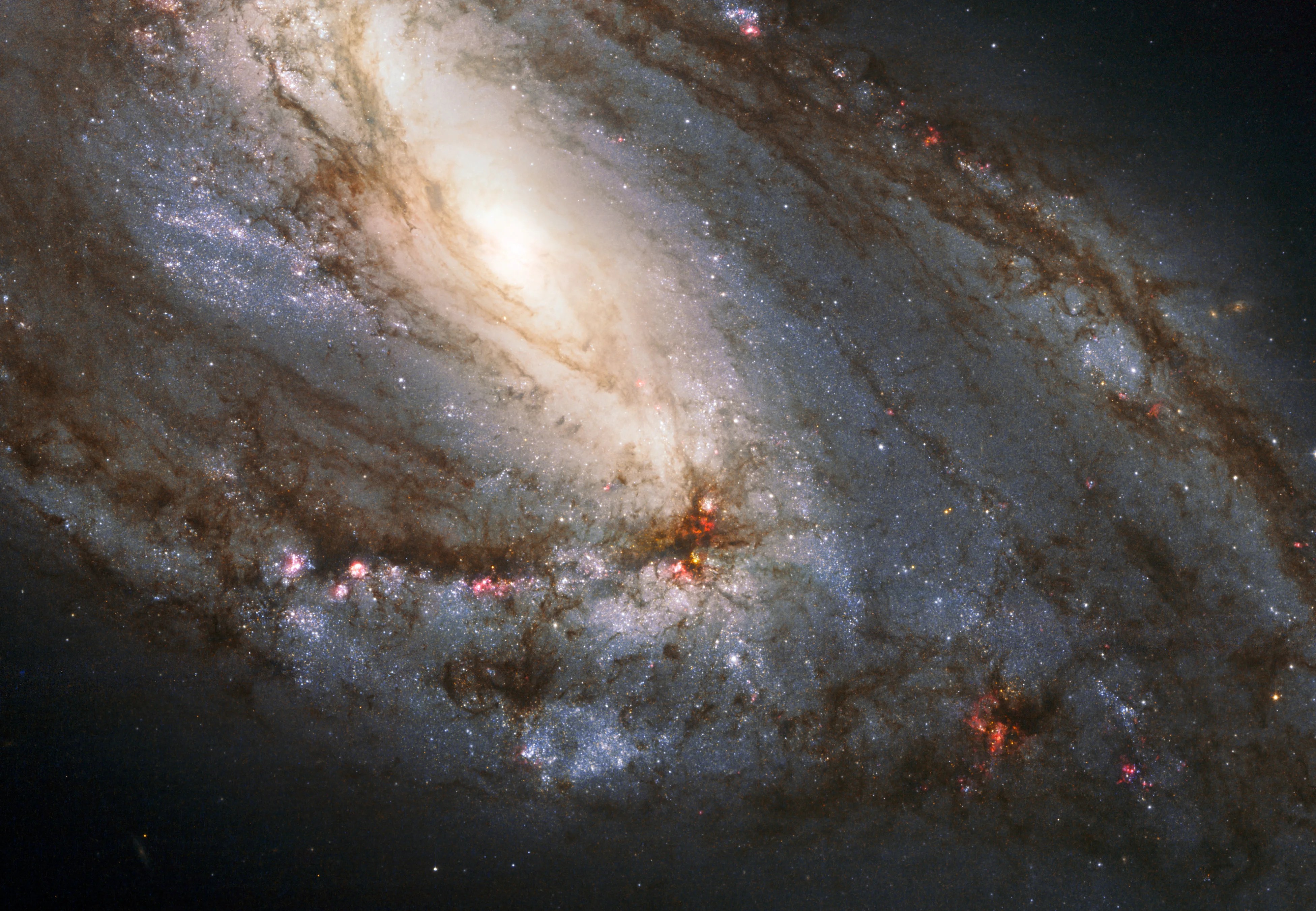
Comet C/2025 K1 Orbit Illustration

This diagram shows the path the long-period comet C/2025 K1 (ATLAS), or K1 for short, took as it swung past the Sun and began its journey out of the solar system. On Nov. 10, 2025, NASA’s Hubble Space Telescope captured the inset image of the fragmenting comet. Hubble took this image just a month after K1’s closest approach to the Sun, called perihelion.
During perihelion, a comet experiences its most intense heating and maximum stress. Just past perihelion is when some long-period comets like K1 tend to fall apart. The comet’s perihelion was inside Mercury’s orbit, about one-third the distance of the Earth from the Sun. This is the first time Hubble has witnessed a comet so early in the process of breaking up.
- Object NameObject NameA name or catalog number that astronomers use to identify an astronomical object.Comet C/2025 K1 (ATLAS)
- Release DateMarch 18, 2026
- Science ReleaseNASA’s Hubble Unexpectedly Catches Comet Breaking Up
- CreditIllustration: NASA, ESA, Ralf Crawford (STScI)
Related Images & Videos
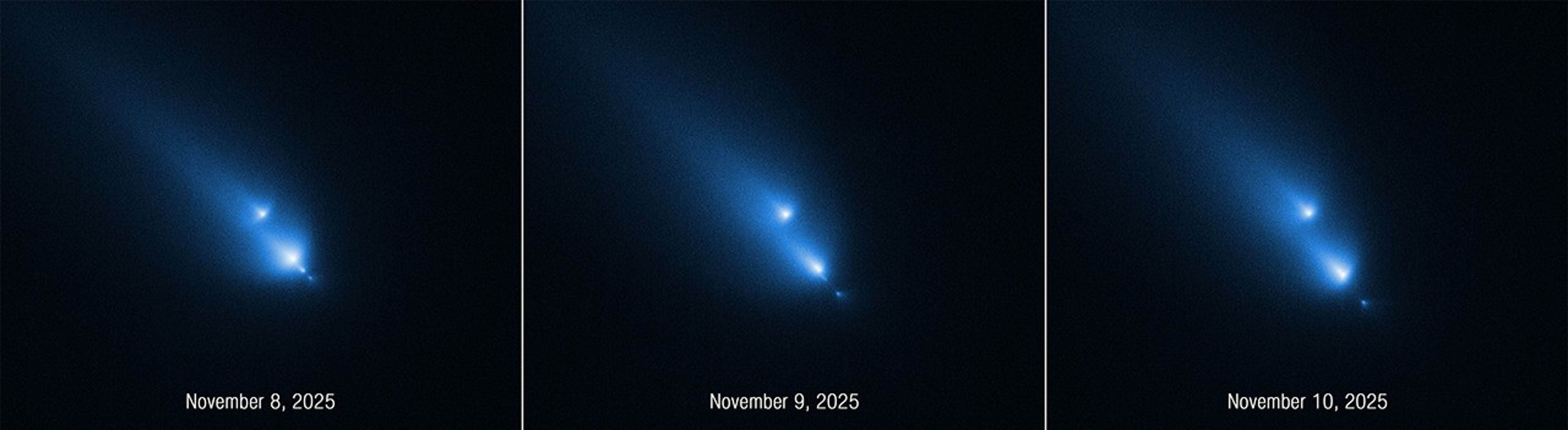
Fragmentation of Comet C/2025 K1
This series of images from NASA’s Hubble Space Telescope of the fragmenting comet C/2025 K1 (ATLAS) was taken over the course of three consecutive days: Nov. 8, 9, and 10, 2025. This is the first time Hubble has witnessed a comet so early in the process of breaking up.


Share
Details
Claire Andreoli
NASA’s Goddard Space Flight Center
Greenbelt, Maryland
claire.andreoli@nasa.gov