















1 min read
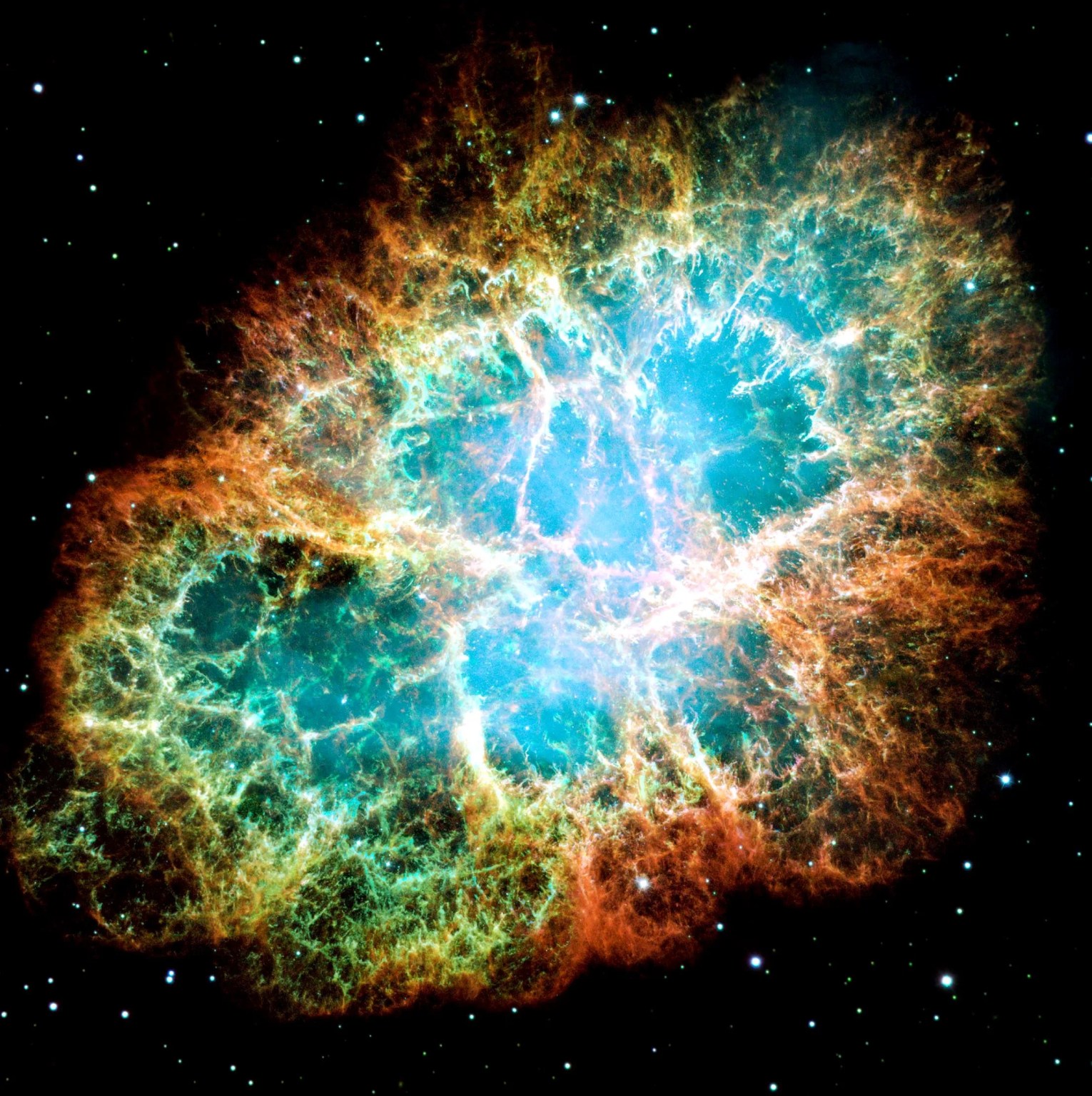
Crab Nebula (2024)
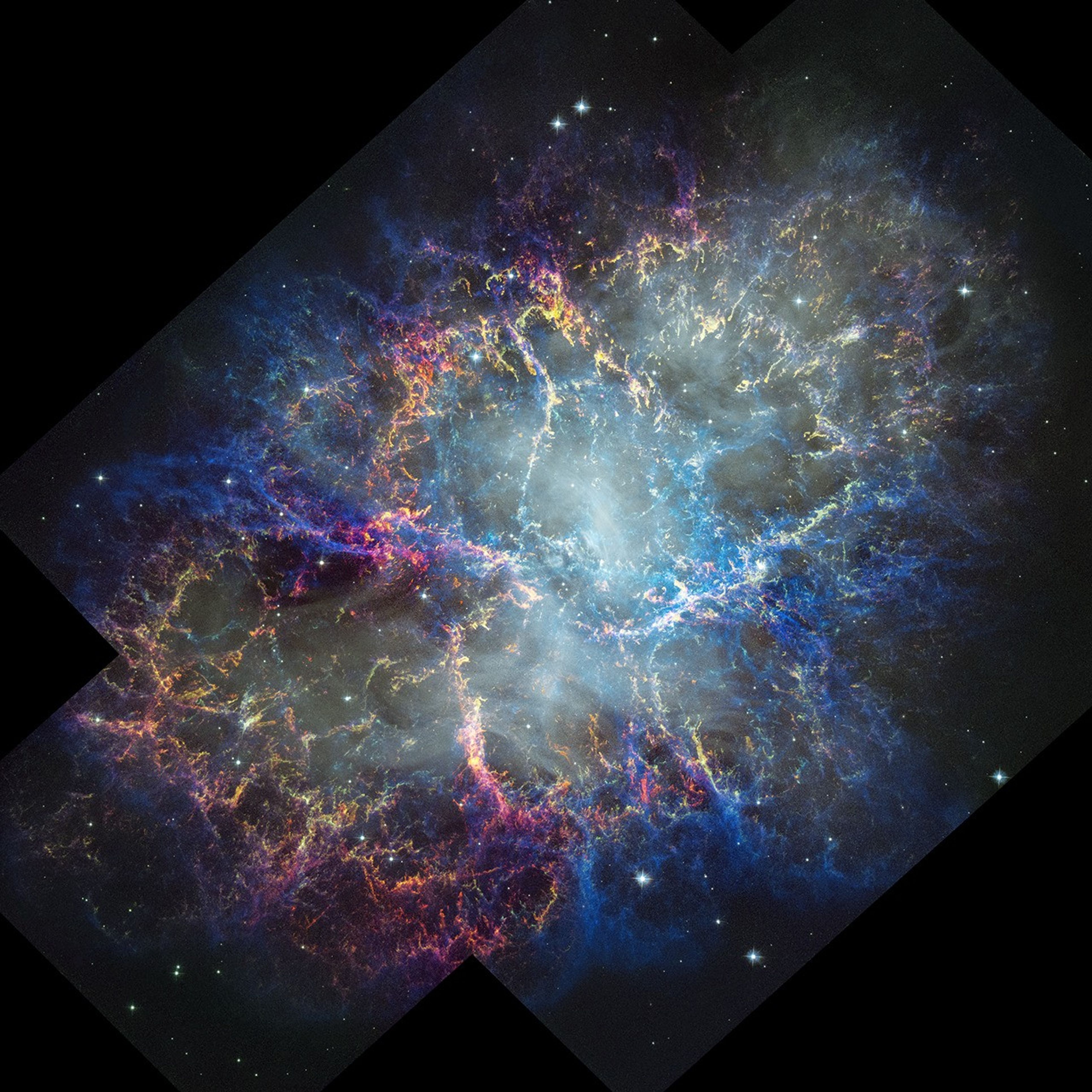
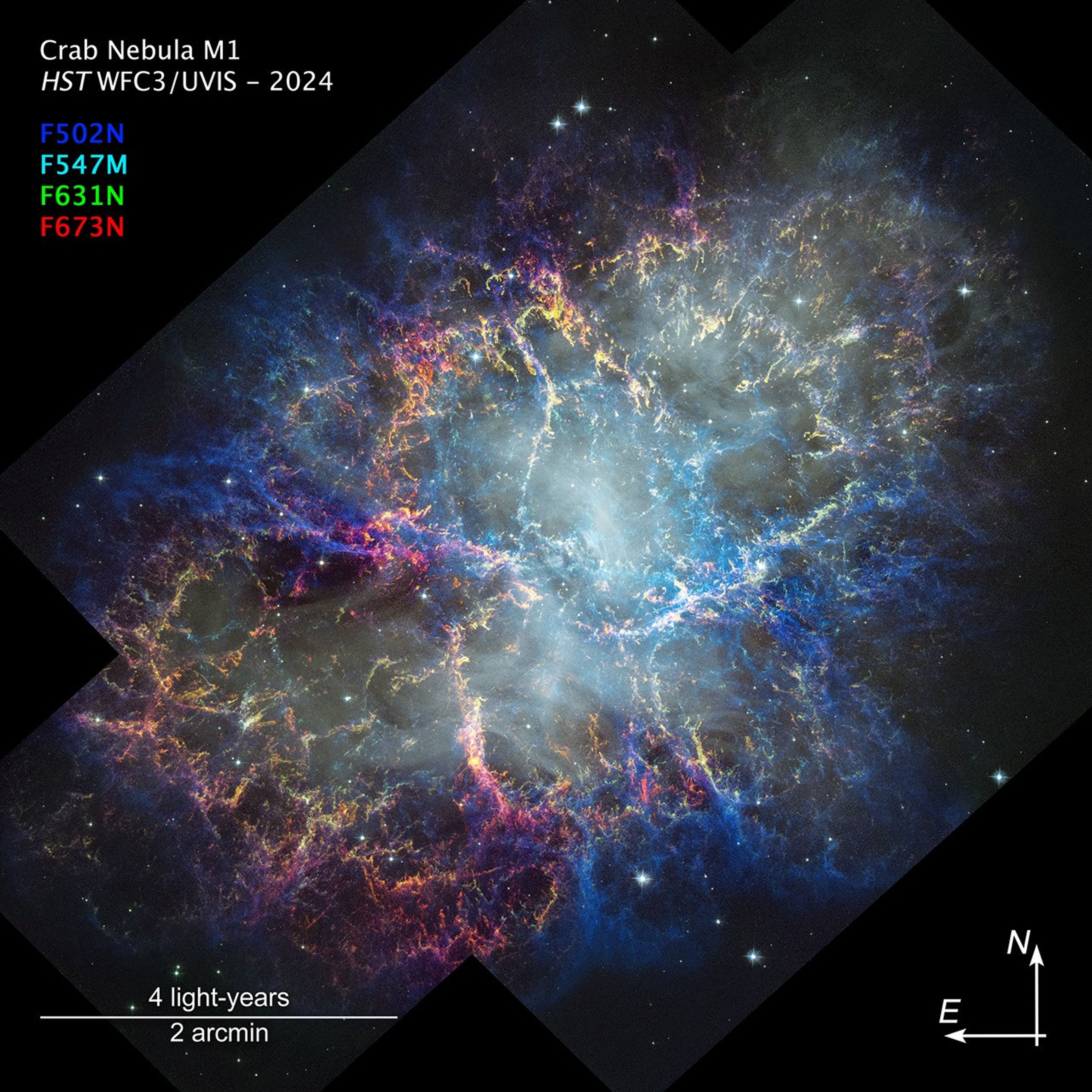
NASA’s Hubble Space Telescope captured the intricate detail of the Crab Nebula with its Wide Field Camera 3. The colors in the image trace Hubble’s detection of oxygen and sulfur gases in the nebula at varying densities and energies. The blue areas are the hottest and lowest density. While there is not a lot of green in the image, showing dense neutral oxygen, there is quite a lot of yellow, which appears where green and the red of energized sulfur are near to each other and similarly bright.
The white haze in the central region is synchrotron radiation, which is produced by interaction between the magnetic field of the central pulsar and the Crab’s nebulous material. This emission heats the surrounding filaments, causing them to glow. Synchrotron radiation is also powering the nebula’s ongoing expansion, distinguishing the Crab from other well-known young supernova remnants. The Crab Nebula is the closest supernova remnant of this kind to Earth, making it invaluable to astronomers using Hubble to study its evolution in unparalleled detail.
About the Object
- R.A. PositionR.A. PositionRight ascension – analogous to longitude – is one component of an object's position.05:34:32.0
- Dec. PositionDec. PositionDeclination – analogous to latitude – is one component of an object's position.22:00:51.99
- ConstellationConstellationOne of 88 recognized regions of the celestial sphere in which the object appears.Taurus
- DistanceDistanceThe physical distance from Earth to the astronomical object. Distances within our solar system are usually measured in Astronomical Units (AU). Distances between stars are usually measured in light-years. Interstellar distances can also be measured in parsecs.6,500 light-years
- DimensionsDimensionsThe physical size of the object or the apparent angle it subtends on the sky.The image is 6 arcminutes along the bottom (12 light-years)
About the Data
- Data DescriptionData DescriptionProposal: A description of the observations, their scientific justification, and the links to the data available in the science archive.
Science Team: The astronomers who planned the observations and analyzed the data. "PI" refers to the Principal Investigator.The Hubble image was created from HST data from proposal 17500 (W. Blair)
- InstrumentInstrumentThe science instrument used to produce the data.WFC3/UVIS
- Exposure DatesExposure DatesThe date(s) that the telescope made its observations and the total exposure time.February - April, 2024
- FiltersFiltersThe camera filters that were used in the science observations.F502N, F547M, F631N, F673N
- Object NameObject NameA name or catalog number that astronomers use to identify an astronomical object.Crab Nebula, M1, NGC 1952
- Object DescriptionObject DescriptionThe type of astronomical object.Supernova Remnant
- Release DateMarch 23, 2026
- Science ReleaseNASA’s Hubble Revisits Crab Nebula to Track 25 Years of Expansion
- CreditImage: NASA, ESA, STScI, William Blair (JHU); Image Processing: Joseph DePasquale (STScI)
Downloads
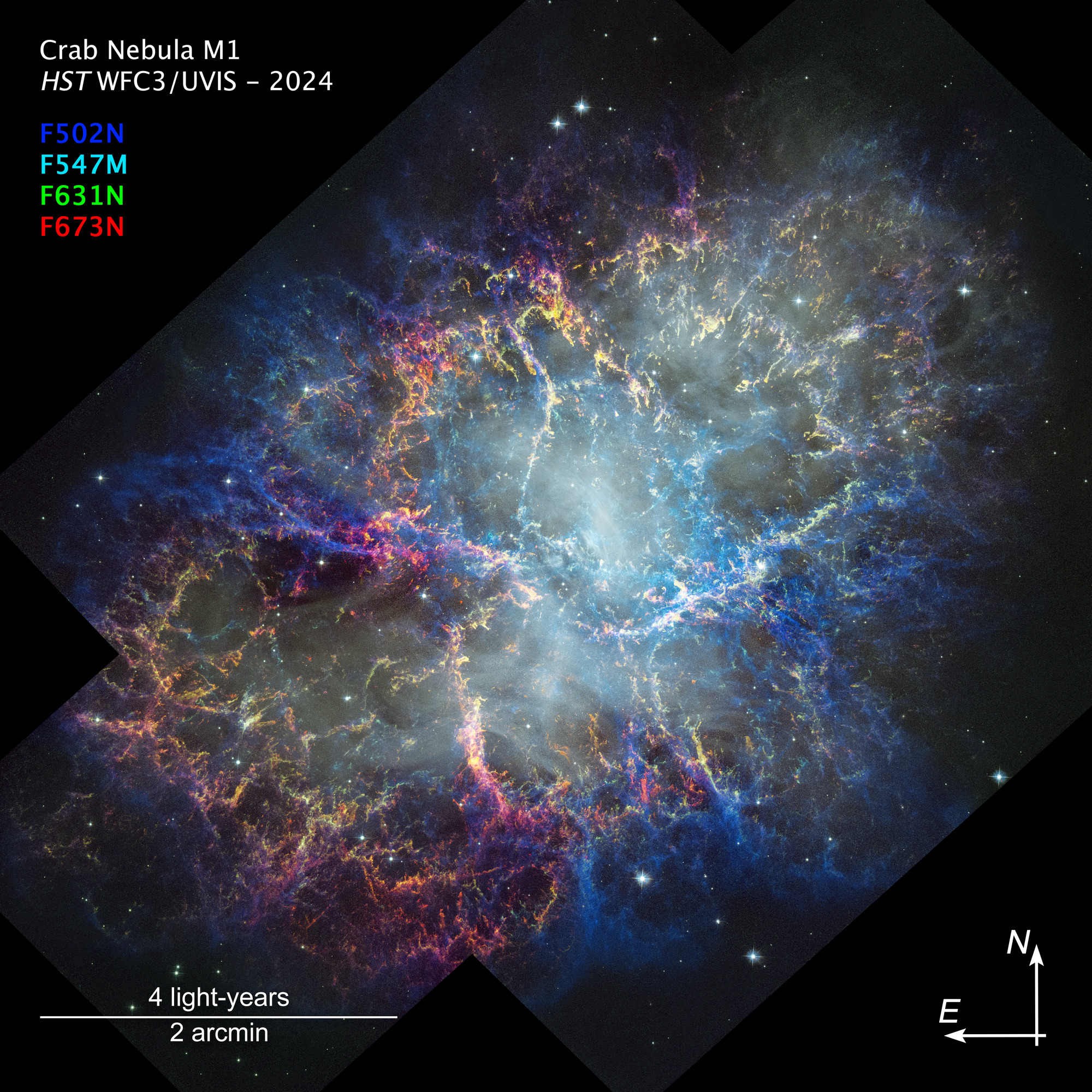
This image was acquired by the WFC3 instrument on the Hubble Space Telescope. The color results from assigning different hues (colors) to a monochromatic (grayscale) image. In this case, the assigned colors are: Blue: F502N, Cyan: F547M, Green: F631N, Red: F673N
Related Images & Videos
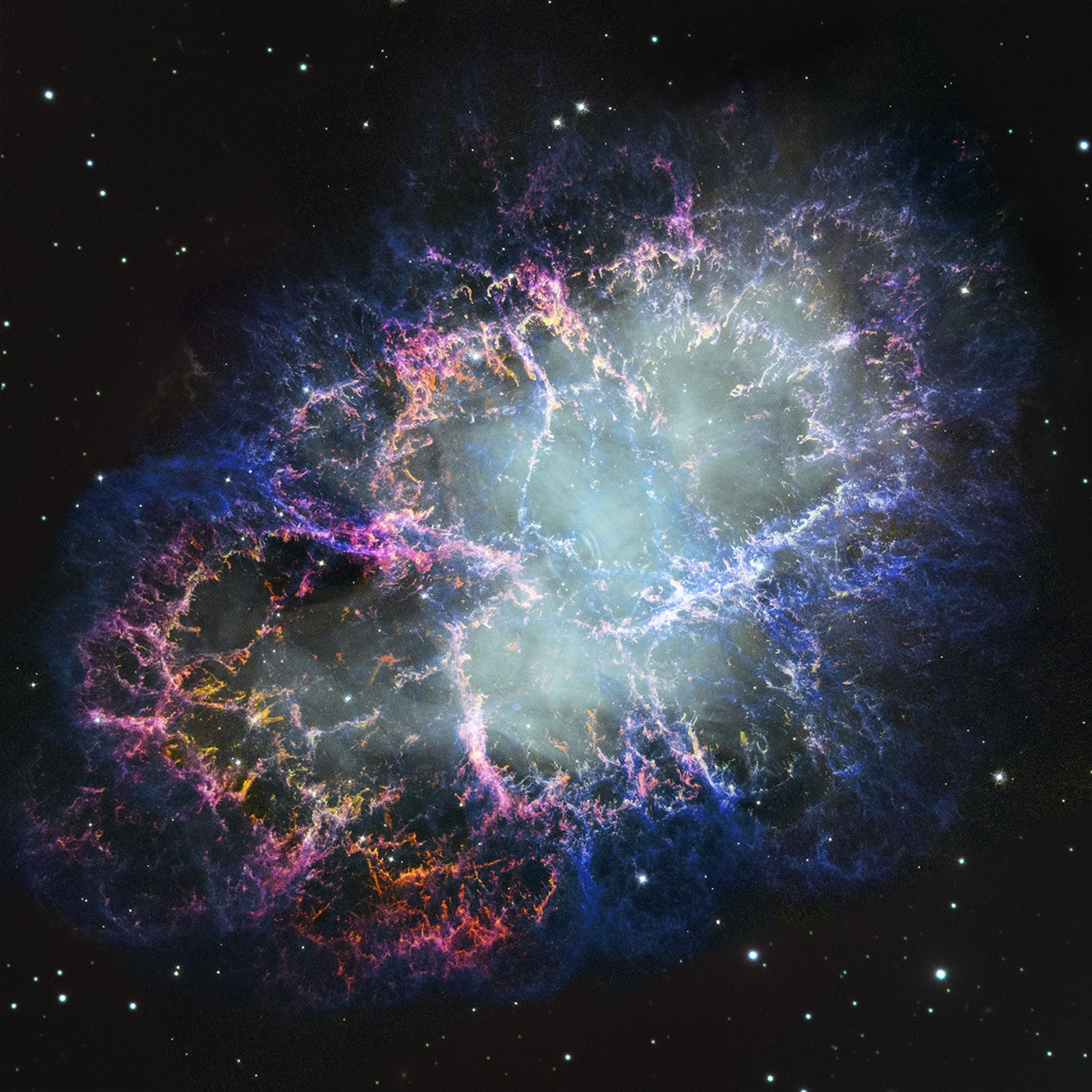
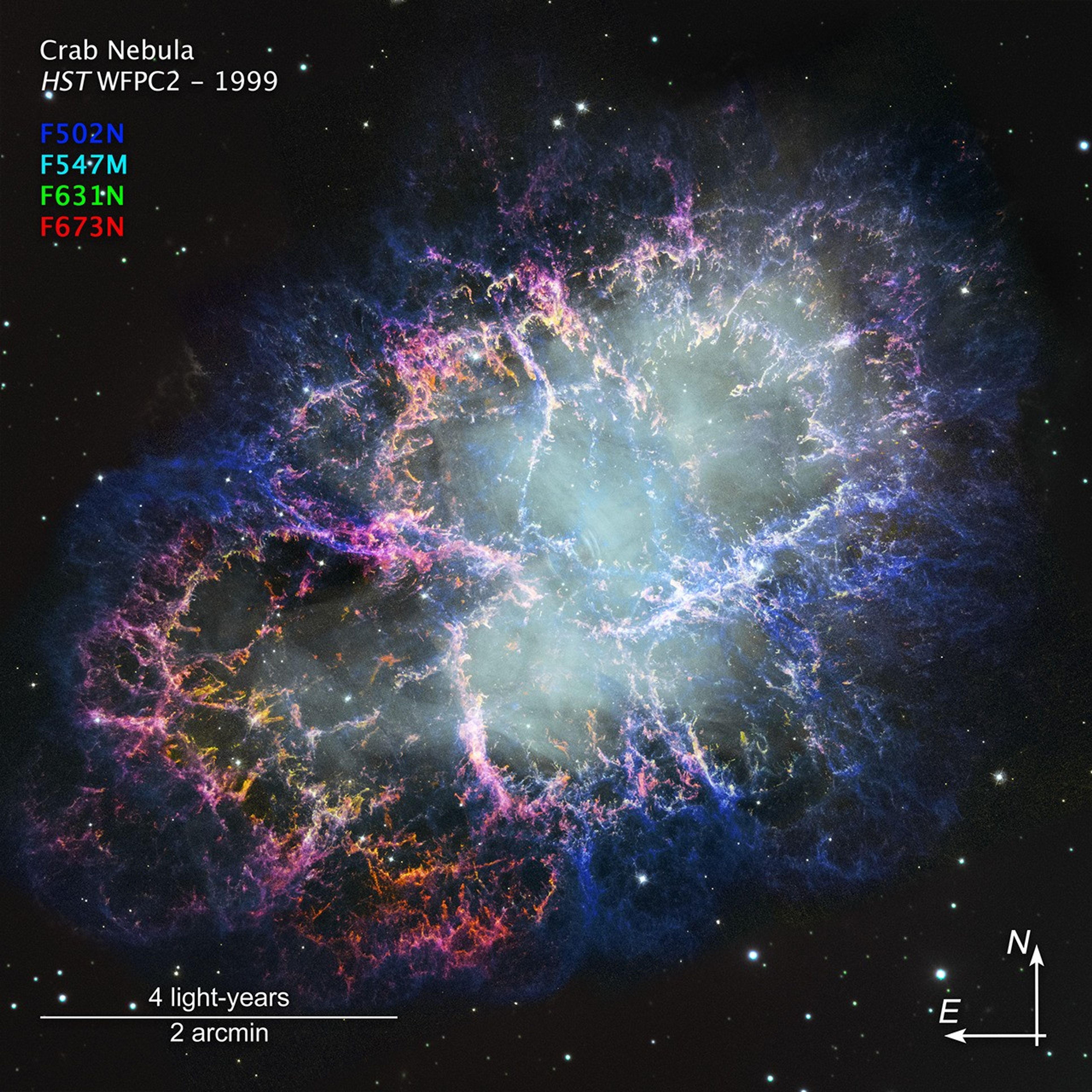
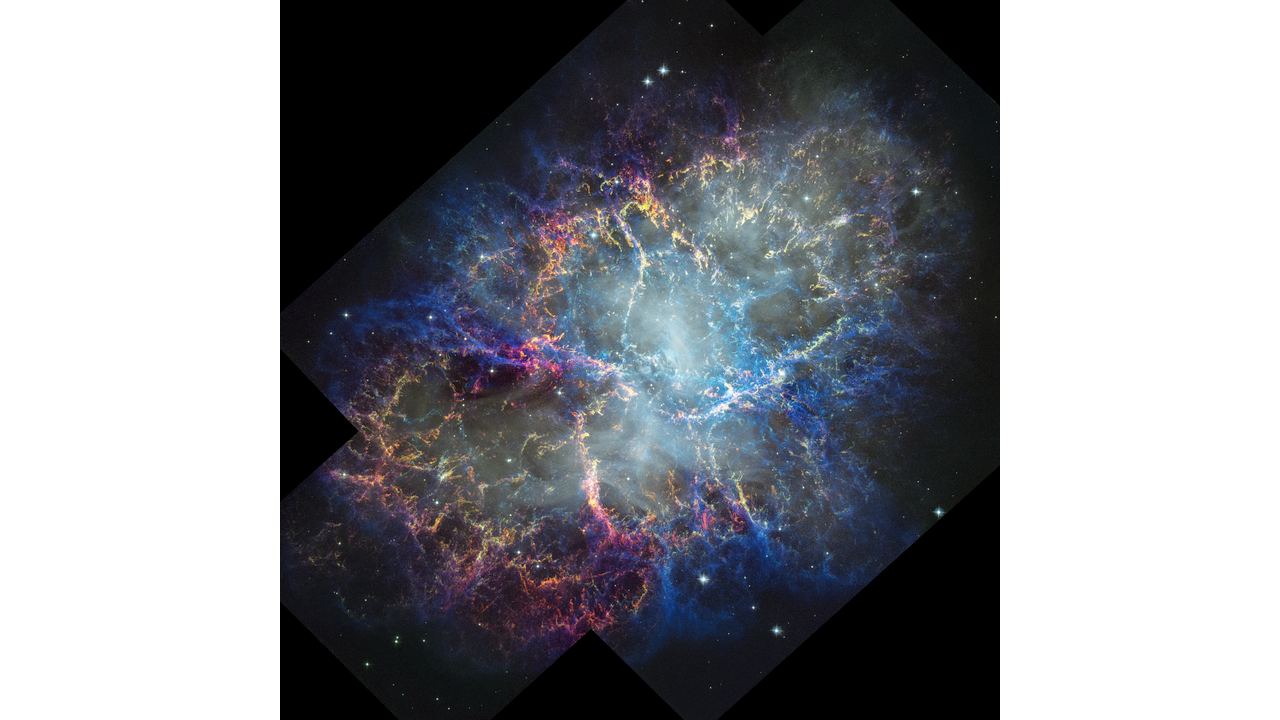
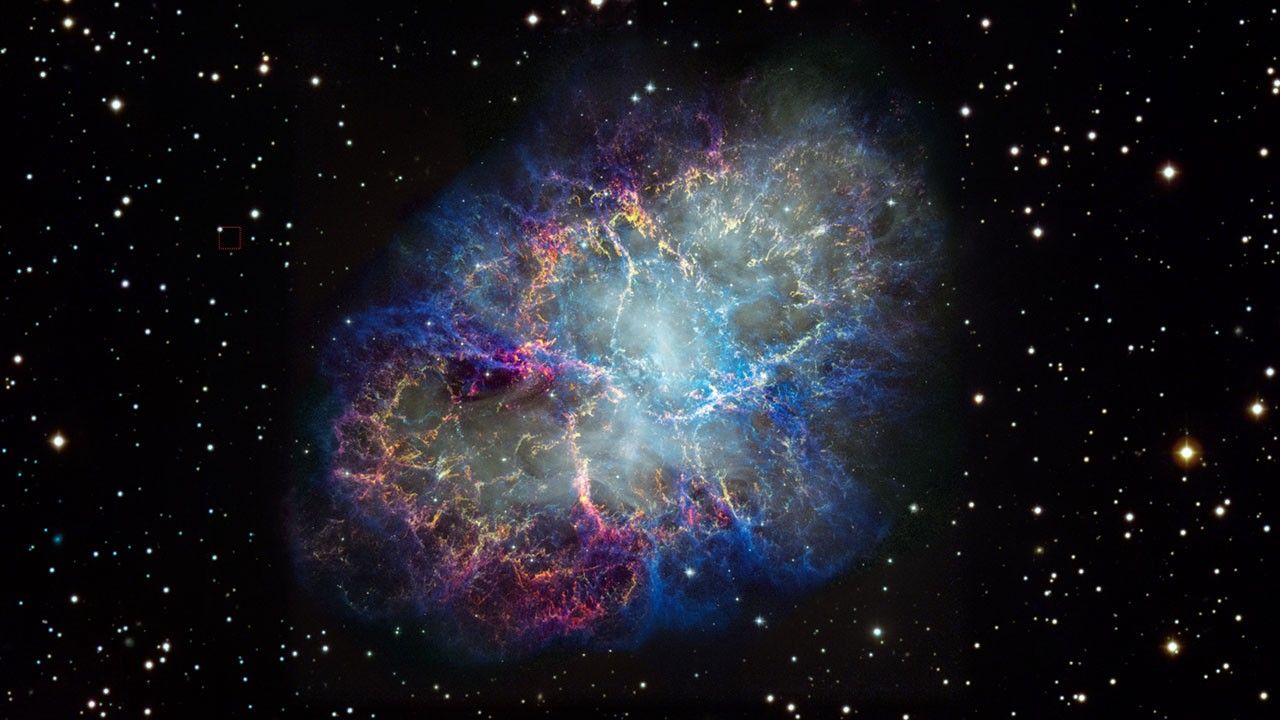
Crab Nebula Expansion over 25 Years
The Crab Nebula is a dynamic supernova remnant that has been expanding and evolving for nearly one thousand years. Often nebulas and other objects in space appear frozen in a single telescope snapshot, providing stunning detail but no sense of change over time. However, thanks to...
Share
Details
Claire Andreoli
NASA’s Goddard Space Flight Center
Greenbelt, Maryland
claire.andreoli@nasa.gov