













1 min read
Crab Nebula Expansion over 25 Years
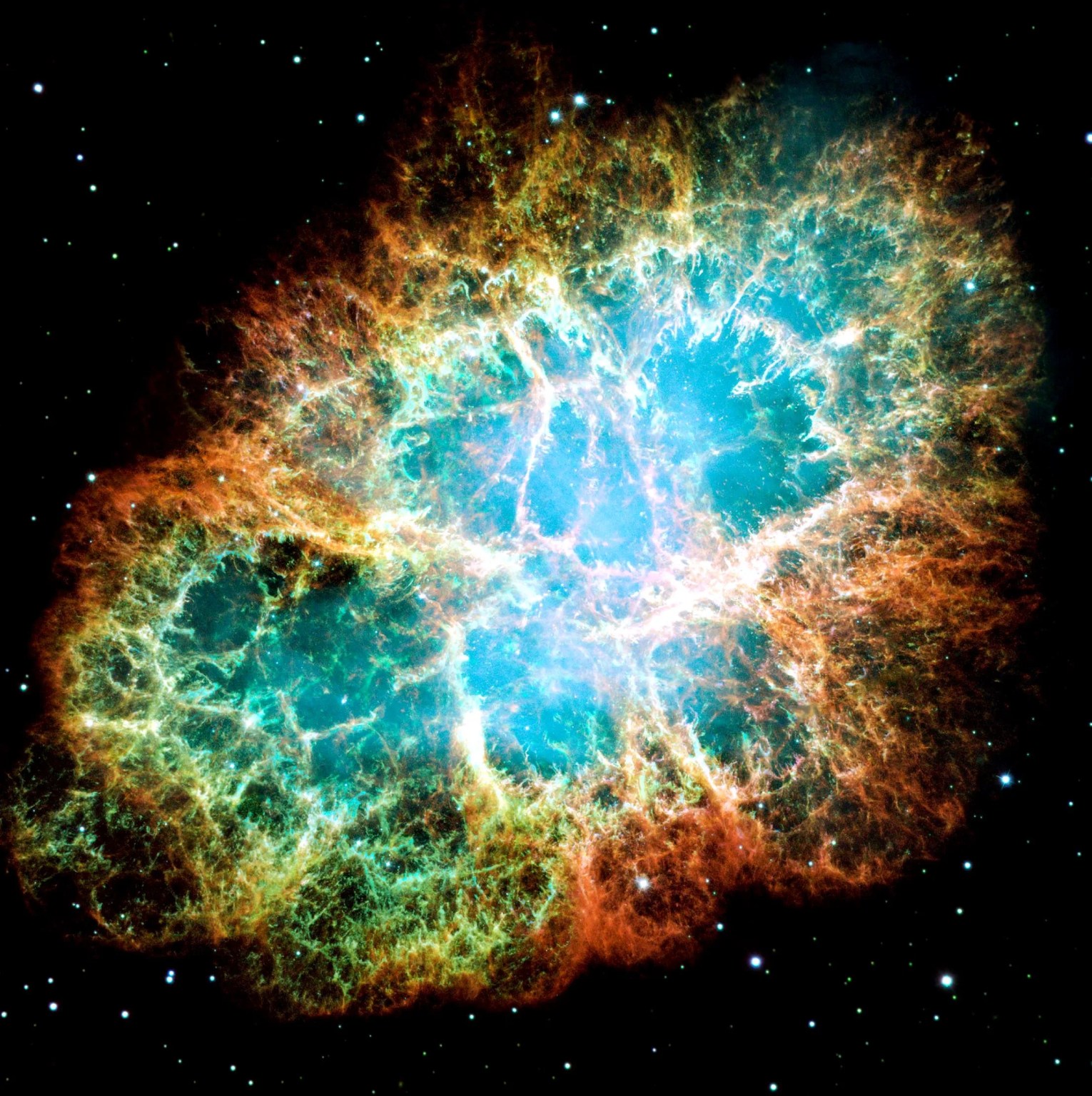
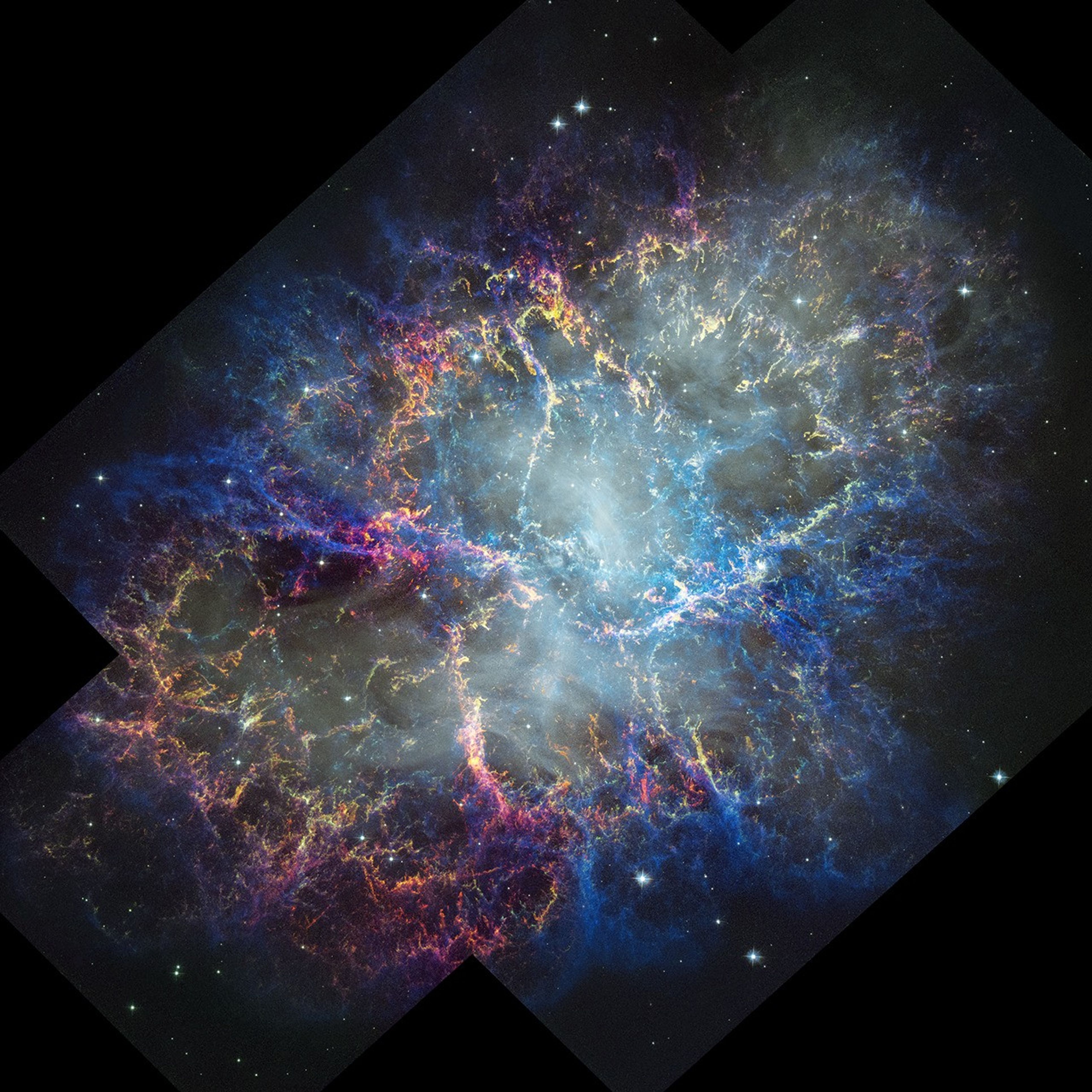
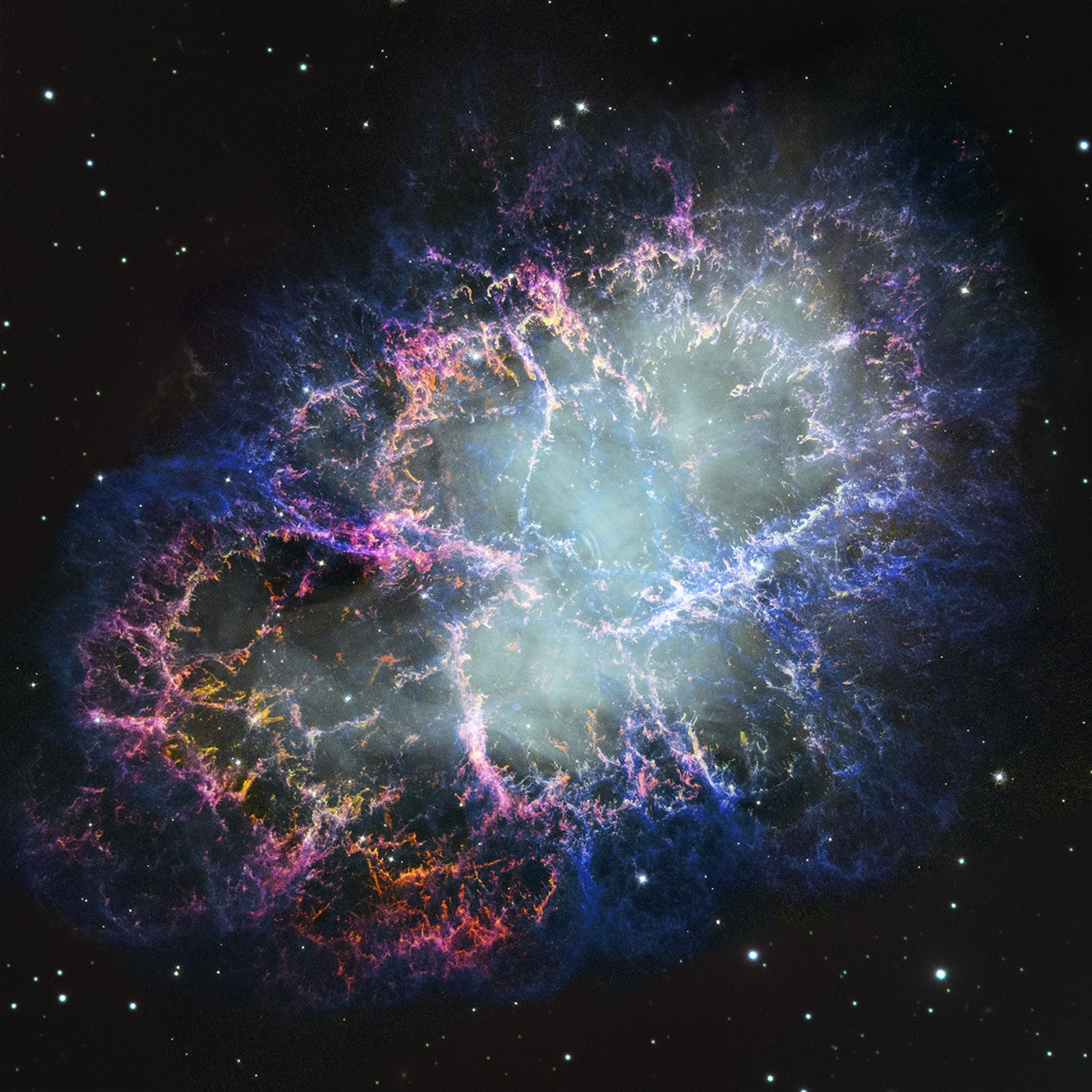
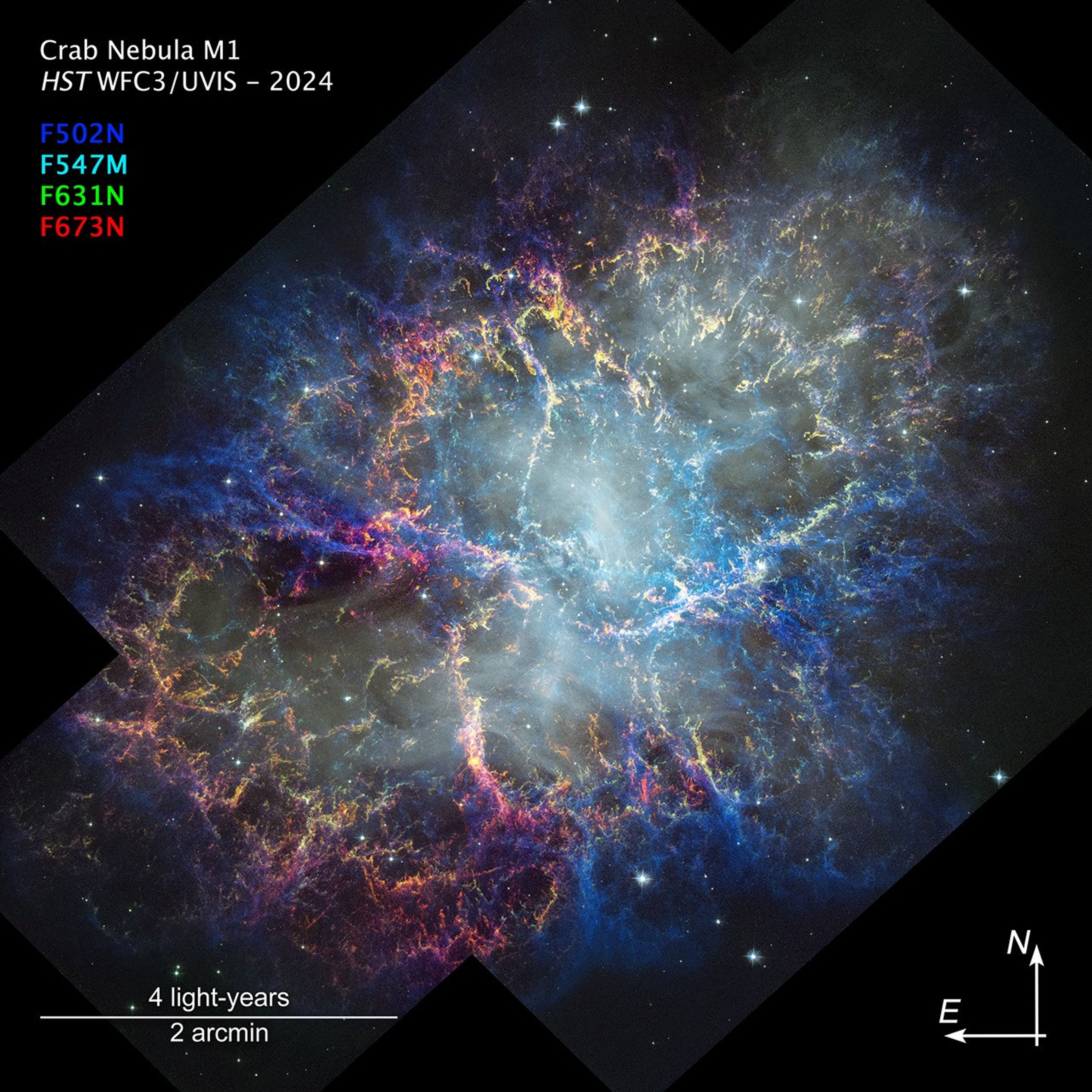
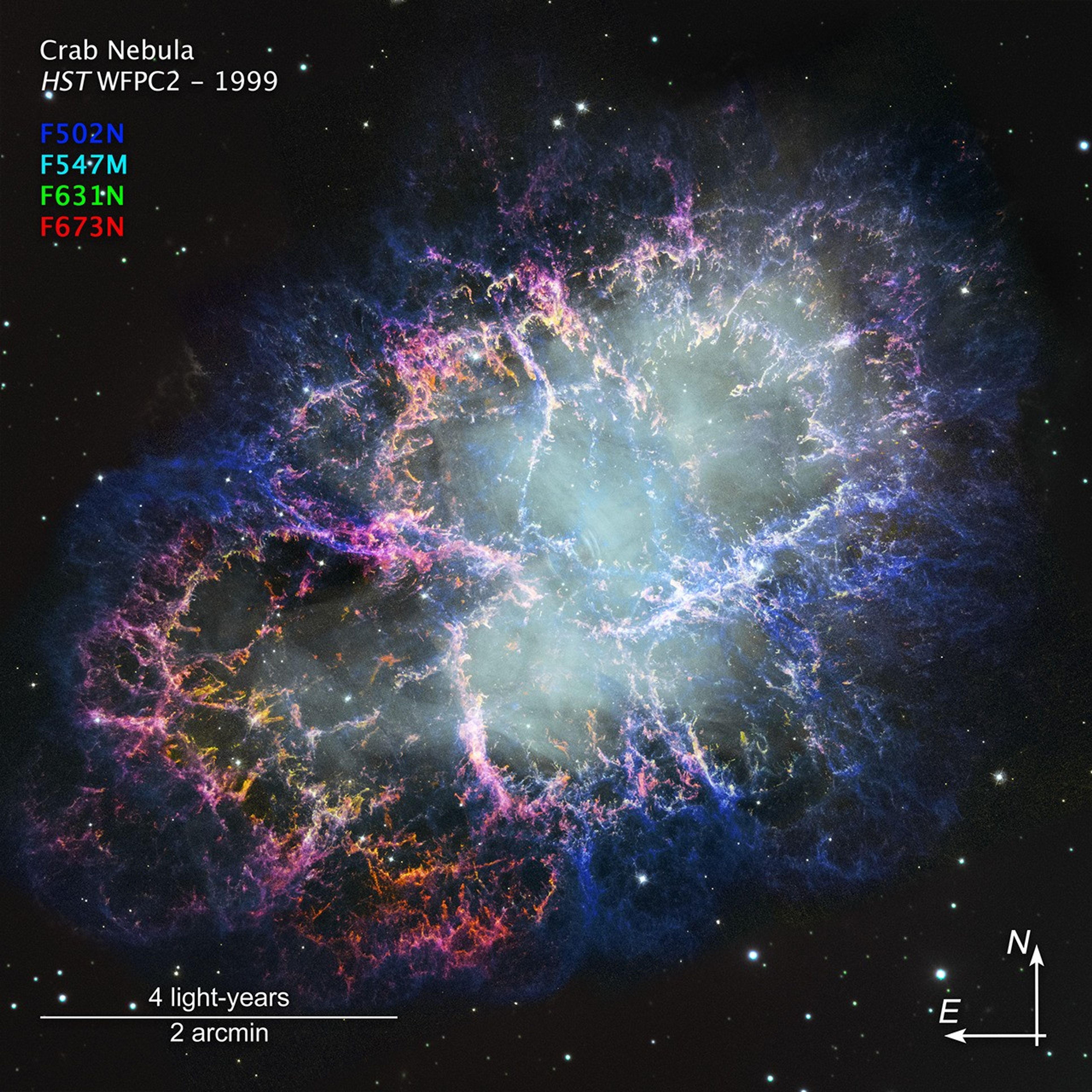
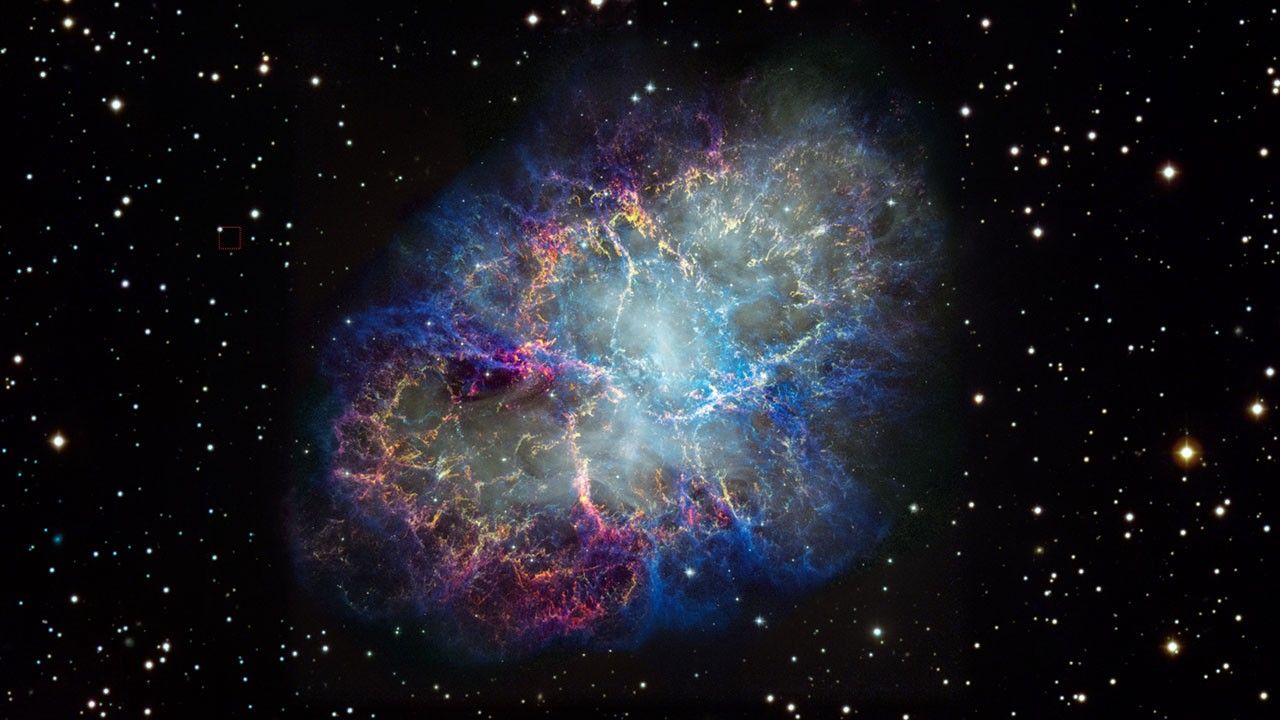
The Crab Nebula is a dynamic supernova remnant that has been expanding and evolving for nearly one thousand years. Often nebulas and other objects in space appear frozen in a single telescope snapshot, providing stunning detail but no sense of change over time. However, thanks to the unparalleled longevity and resolution of NASA’s Hubble Space Telescope, astronomers and the public can observe the Crab’s changes during a window of time spanning a quarter-century. Hubble began its observations of the full nebula in 1999 and returned for follow-up in 2024.
The expansion of the nebula over those years is evident in Hubble’s images. Its filaments are driven outward by energy from the dense, rapidly spinning pulsar at the core of the nebula, which is the remaining core of the star that originally went supernova. Astronomers are still analyzing all of Hubble’s data to discover the chemical and structural changes the Crab is undergoing.
Some differences between the images likely relate to the change in instruments on Hubble during the 25 years in-between. The 1999 image was taken with the Wide Field and Planetary Camera 2 (WFPC2) instrument, which was eventually replaced with the Wide Field Camera 3 (WFC3) in 2009 during astronauts’ last mission to Hubble. Each instrument took several shots to create a mosaic image of the full nebula. WFC3 has a slightly greater range of detection, both in surface area and filters for imaging.
- Release DateMarch 23, 2026
- Science ReleaseNASA’s Hubble Revisits Crab Nebula to Track 25 Years of Expansion
- CreditScience: NASA, ESA, STScI, William Blair (JHU); Video: Joseph DePasquale (STScI)
Related Images & Videos
Share
Details
Claire Andreoli
NASA’s Goddard Space Flight Center
Greenbelt, Maryland
claire.andreoli@nasa.gov