














1 min read
Egg Nebula Compass
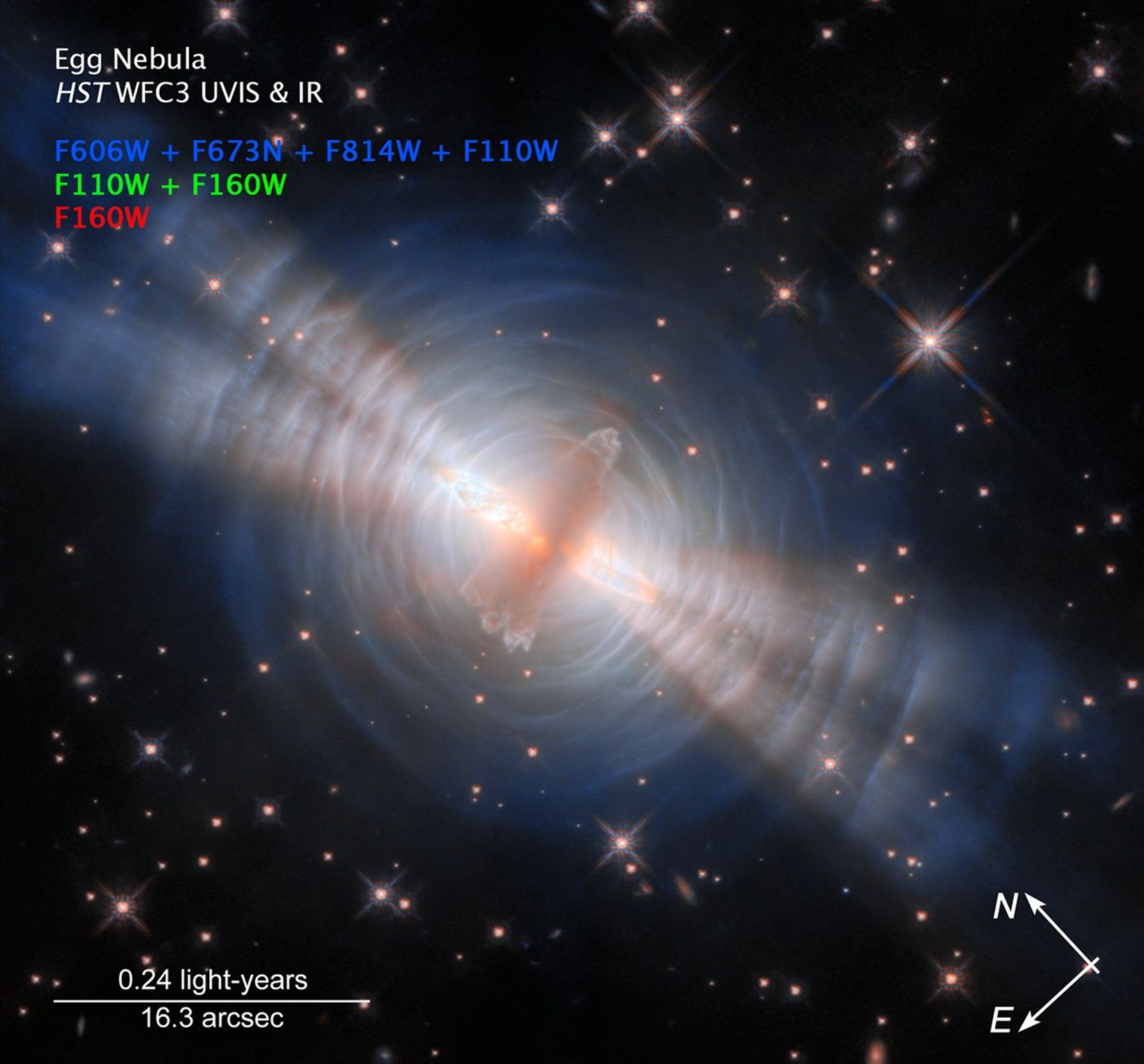
This image of the Egg Nebula was captured by the Hubble Space Telescope's WFC3 (Wide Field Camera 3).
The image shows a scale bar, compass arrows, and color key for reference.
The scale bar is labeled in light-years along the top, which is the distance that light travels in one Earth-year. (It takes about 3 months for light to travel a distance equal to the length of the scale bar.) One light-year is equal to about 5.88 trillion miles or 9.46 trillion kilometers.
The scale bar is also labeled in arcseconds, which is a measure of angular distance on the sky. One arcsecond is equal an angular measurement of 1/3600 of one degree. There are 60 arcminutes in a degree and 60 arcseconds in an arcminute. (The full Moon has an angular diameter of about 30 arcminutes.) The actual size of an object that covers one arcsecond on the sky depends on its distance from the telescope.
The north and east compass arrows show the orientation of the image on the sky. Note that the relationship between north and east on the sky (as seen from below) is flipped relative to direction arrows on a map of the ground (as seen from above).
This image shows visible and infrared wavelengths of light that have been translated into visible-light colors. The color key shows which WFC3 filters were used when collecting the light. The color of each filter name is the visible-light color used to represent the light that passes through that filter.
About the Object
- R.A. PositionR.A. PositionRight ascension – analogous to longitude – is one component of an object's position.21:02:18.75
- Dec. PositionDec. PositionDeclination – analogous to latitude – is one component of an object's position.+63:41:37.8
- ConstellationConstellationOne of 88 recognized regions of the celestial sphere in which the object appears.Cygnus
- DistanceDistanceThe physical distance from Earth to the astronomical object. Distances within our solar system are usually measured in Astronomical Units (AU). Distances between stars are usually measured in light-years. Interstellar distances can also be measured in parsecs.About 1,000 light-years
- DimensionsDimensionsThe physical size of the object or the apparent angle it subtends on the sky.Image is 1.12 arcmin across (about 0.97 light-years)
About the Data
- InstrumentInstrumentThe science instrument used to produce the data.WFC3 UVIS & IR
- FiltersFiltersThe camera filters that were used in the science observations.F606W, F673N, F814W, F110W, F160W
- Object NameObject NameA name or catalog number that astronomers use to identify an astronomical object.Egg Nebula; CRL 2688
- Object DescriptionObject DescriptionThe type of astronomical object.Pre-planetary nebula
- Release DateFebruary 10, 2026
- Science ReleaseNASA’s Hubble Captures Light Show Around Rapidly Dying Star
- CreditImage: NASA, ESA, Bruce Balick (UWashington)
These images were acquired by the WFC3 Instrument on the Hubble Space Telescope. The color results from assigning different hues (colors) to a monochromatic (grayscale) image. In this case, the assigned colors are: Blue: F606W+F673N+F814W+F110W, Green: F110W+F160W, Red: F160W
Related Images & Videos
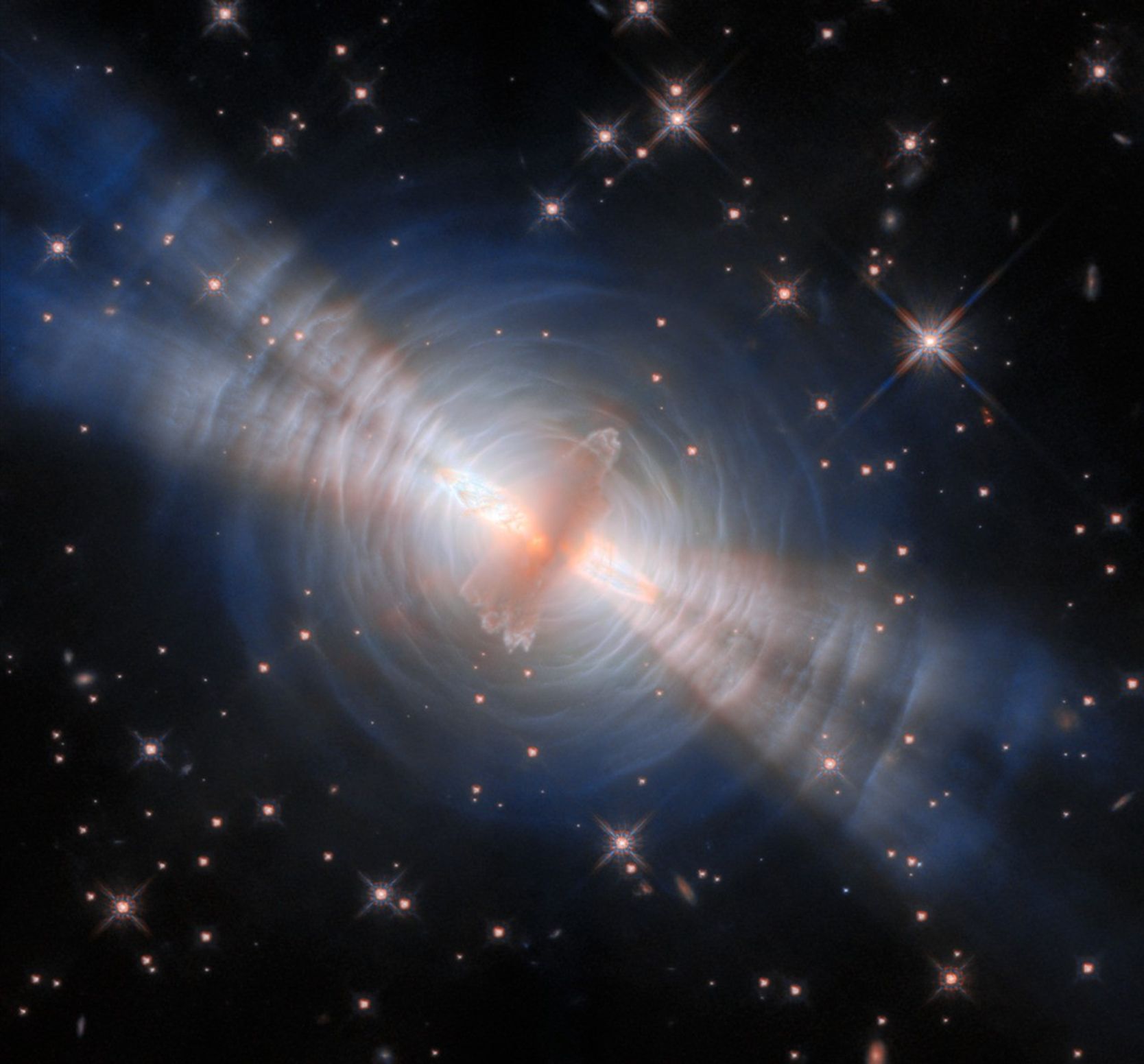
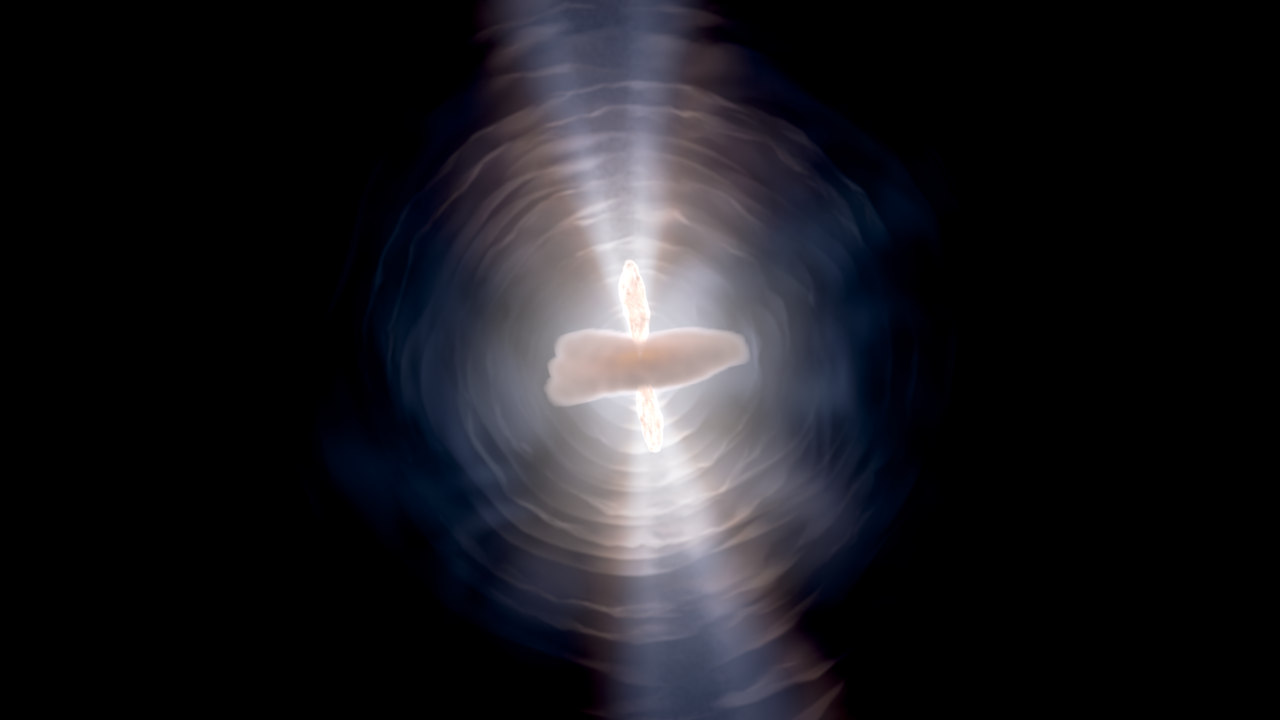
Exploring the Structure of the Egg Nebula
This visualization examines the Hubble Space Telescope image of the Egg Nebula and showcases the shape and development of its three-dimensional components. The dying star has repeatedly ejected thin shells of gas and dust over the last 5,000 years. During the last 400 years, bipo...
Share
Details
Claire Andreoli
NASA’s Goddard Space Flight Center
Greenbelt, Maryland
claire.andreoli@nasa.gov