







1 min read
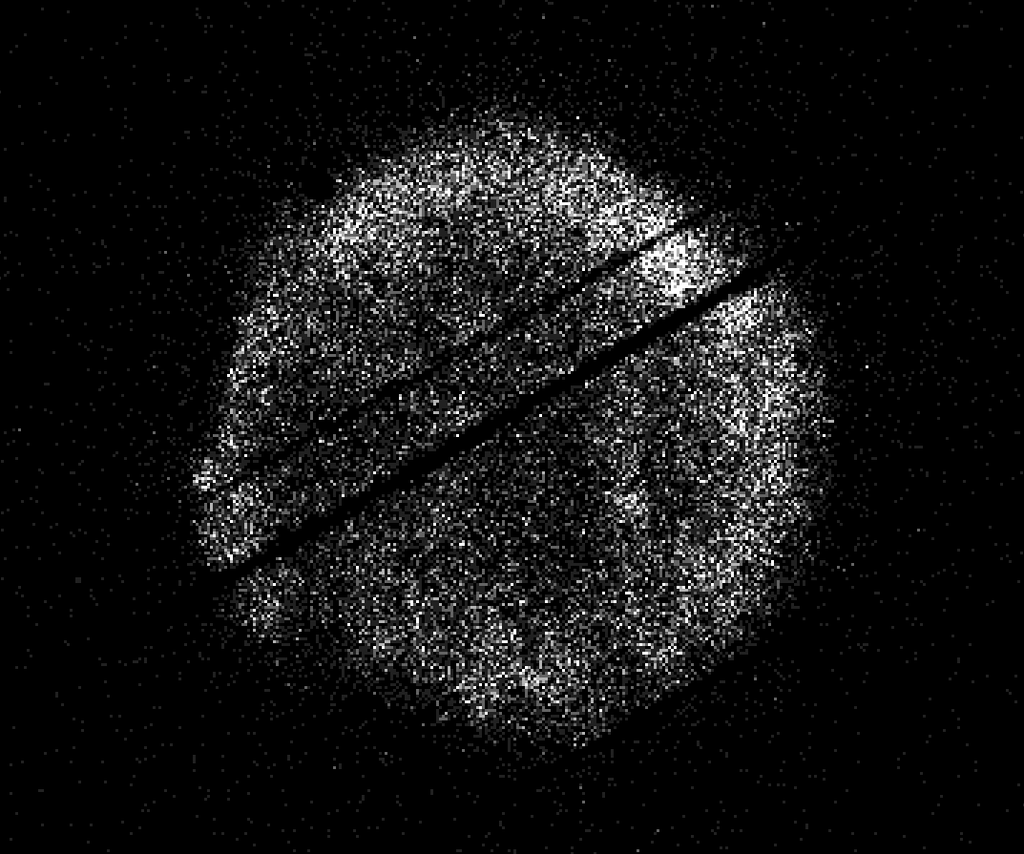
Centaur 10199 Chariklo (NIRSpec Reflectance Spectrum)

Reflectance spectrum of the double-ringed centaur 10199 Chariklo, captured by Webb’s Near-Infrared Spectrograph (NIRSpec) on October 31, 2022. This spectrum shows clear evidence for crystalline water ice on Chariklo’s surface.
A reflectance spectrum shows variations in the brightness of different wavelengths (colors) of reflected sunlight. The dips in the spectrum are related to the presence of water ice, which absorbs these wavelengths, decreasing the amount of light that is reflected back to the telescope.
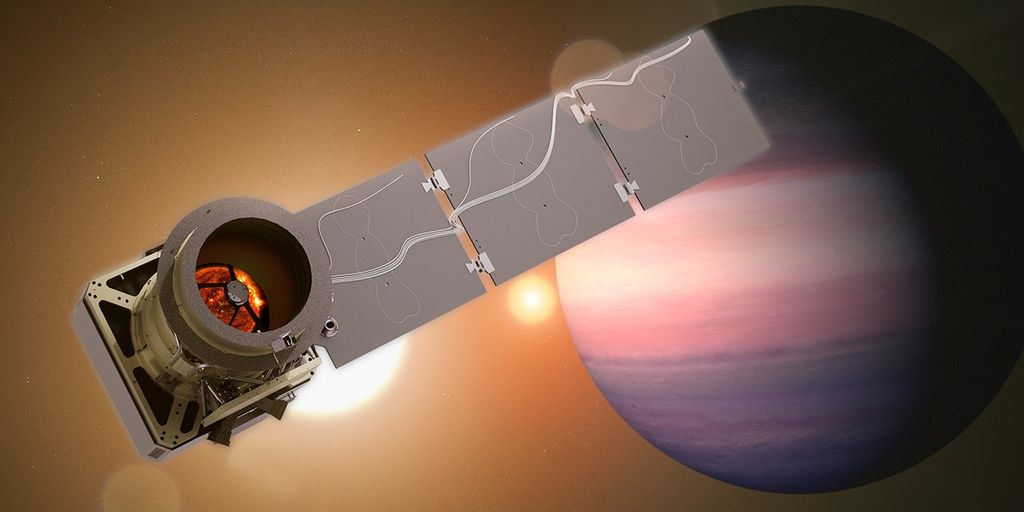
The background illustration of Chariklo and its rings is based on current understanding of the planet. Webb has not captured a direct image of Chariklo and its rings.
About the Object
- DistanceDistanceThe physical distance from Earth to the astronomical object. Distances within our solar system are usually measured in Astronomical Units (AU). Distances between stars are usually measured in light-years. Interstellar distances can also be measured in parsecs.orbits the Sun between the orbits of Saturn and Uranus
About the Data
- Data DescriptionData DescriptionProposal: A description of the observations, their scientific justification, and the links to the data available in the science archive.
Science Team: The astronomers who planned the observations and analyzed the data. "PI" refers to the Principal Investigator.Reflectance spectrum
- InstrumentInstrumentThe science instrument used to produce the data.NIRSpec
- Exposure DatesExposure DatesThe date(s) that the telescope made its observations and the total exposure time.October 31, 2022
- Object NameObject NameA name or catalog number that astronomers use to identify an astronomical object.10199 Chariklo
- Object DescriptionObject DescriptionThe type of astronomical object.Centaur
- Release DateJanuary 25, 2023
- CreditImage: NASA, ESA, CSA, Leah Hustak (STScI); Science: Noemí Pinilla-Alonso (FSI/UCF), Ian Wong (STScI), Javier Licandro (IAC)
Share
Details
Laura Betz
NASA’s Goddard Space Flight Center
Greenbelt, Maryland
laura.e.betz@nasa.gov
NASA, ESA, CSA, Leah Hustak (STScI)
Noemí Pinilla-Alonso (FSI/UCF), Ian Wong (STScI), Javier Licandro (IAC)