



















1 min read
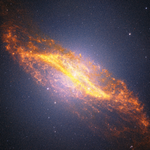
Centaurus A (MIRI Image)
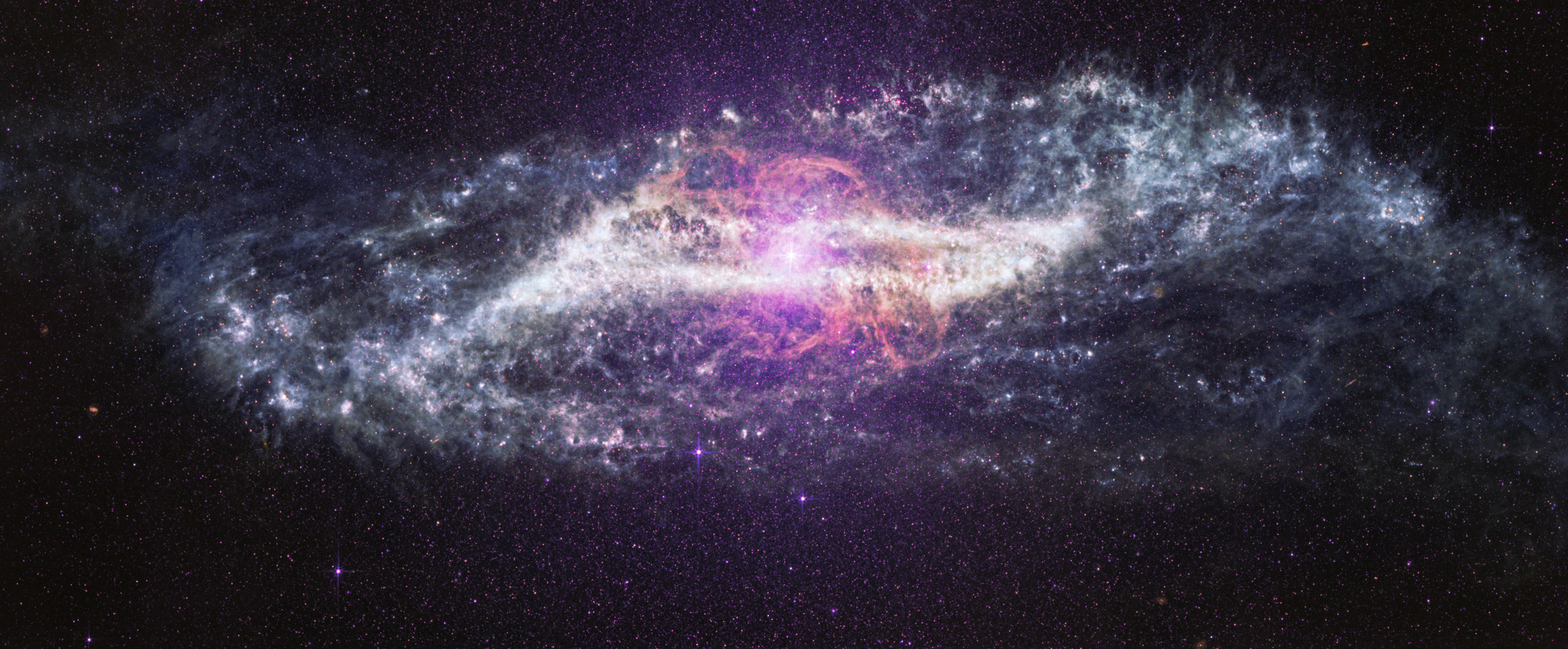
NASA’s James Webb Space Telescope’s Mid-Infrared Instrument (MIRI) reveals the nearby galaxy Centaurus A, exposing the dusty structures and hidden activity that shape this unusual system. Webb’s infrared vision unveils intricate filaments, loops, and glowing clouds of warm dust stretching across its center. At the heart of the galaxy, an actively feeding supermassive black hole shines brightly, surrounded by complex structures sculpted by a past galactic collision and ongoing activity.
Deeper Dive
Explore tours and points of interest in the interactive map below.
About the Object
- R.A. PositionR.A. PositionRight ascension – analogous to longitude – is one component of an object's position.13:25:30.09
- Dec. PositionDec. PositionDeclination – analogous to latitude – is one component of an object's position.-42:58:13.62
- ConstellationConstellationOne of 88 recognized regions of the celestial sphere in which the object appears.Centaurus
- DistanceDistanceThe physical distance from Earth to the astronomical object. Distances within our solar system are usually measured in Astronomical Units (AU). Distances between stars are usually measured in light-years. Interstellar distances can also be measured in parsecs.About 11 million light-years away
- DimensionsDimensionsThe physical size of the object or the apparent angle it subtends on the sky.This image is about 8.2 arcminutes across (26,000 light-years)
About the Data
- Data DescriptionData DescriptionProposal: A description of the observations, their scientific justification, and the links to the data available in the science archive.
Science Team: The astronomers who planned the observations and analyzed the data. "PI" refers to the Principal Investigator.This image was created with Webb data from proposal: 12496 (M. Garcia Marin).
- InstrumentInstrumentThe science instrument used to produce the data.MIRI
- Exposure DatesExposure DatesThe date(s) that the telescope made its observations and the total exposure time.22 Jan. 2026
- FiltersFiltersThe camera filters that were used in the science observations.F560W, F770W, F1000W
- Object NameObject NameA name or catalog number that astronomers use to identify an astronomical object.Centaurus A, NGC 5128, Caldwell 77
- Object DescriptionObject DescriptionThe type of astronomical object.Starburst galaxy
- Release DateJuly 6, 2026
- Science ReleaseNASA Webb Uncovers Unusual Galaxy Shaped by Cosmic Collision
- CreditImage: NASA, ESA, CSA, STScI; Image Processing: Alyssa Pagan (STScI), Joseph DePasquale (STScI), Macarena Garcia Marin (ESA Office at STScI)
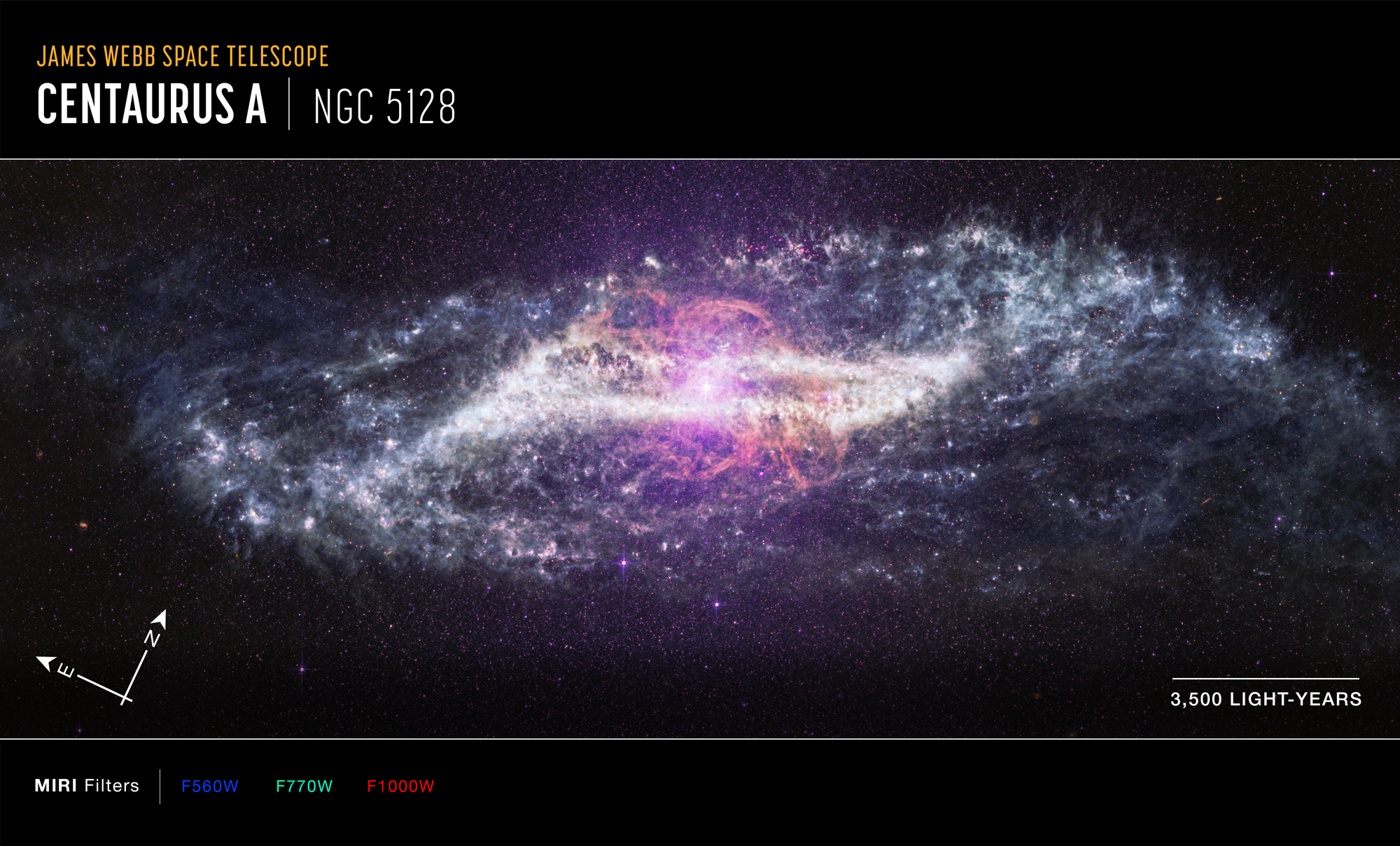
These images were acquired by the MIRI instrument on the Webb Space Telescope. Several filters were used to sample wide wavelength ranges. The color results from assigning different hues (colors) to each monochromatic (grayscale) image associated with an individual filter. In this case, the assigned colors are: Blue: F560W, Cyan: F770W, Red: F1000W
Interactive:
Journey into Centaurus A
Related Images & Videos
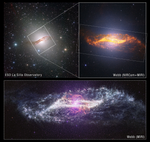
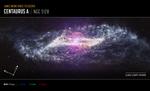
Centaurus A (MIRI Compass Image)
Annotated image of the active galaxy Centaurus A captured by the James Webb Space Telescope’s MIRI (Mid-Infrared Instrument), with compass arrows, a scale bar, and color key for reference. The north and east compass arrows show the orientation of the image on the sky. Note ...
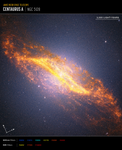
Centaurus A Crop (NIRCam and MIRI Compass Image)
Annotated image of the active galaxy Centaurus A captured by the James Webb Space Telescope’s NIRCam (Near-Infrared Camera) and MIRI (Mid-Infrared Instrument), with compass arrows, a scale bar, and color key for reference. The north and east compass arrows show the orientat...
Share
Details
Laura Betz
NASA’s Goddard Space Flight Center
Greenbelt, Maryland
laura.e.betz@nasa.gov