

























Helio and You: June 2026
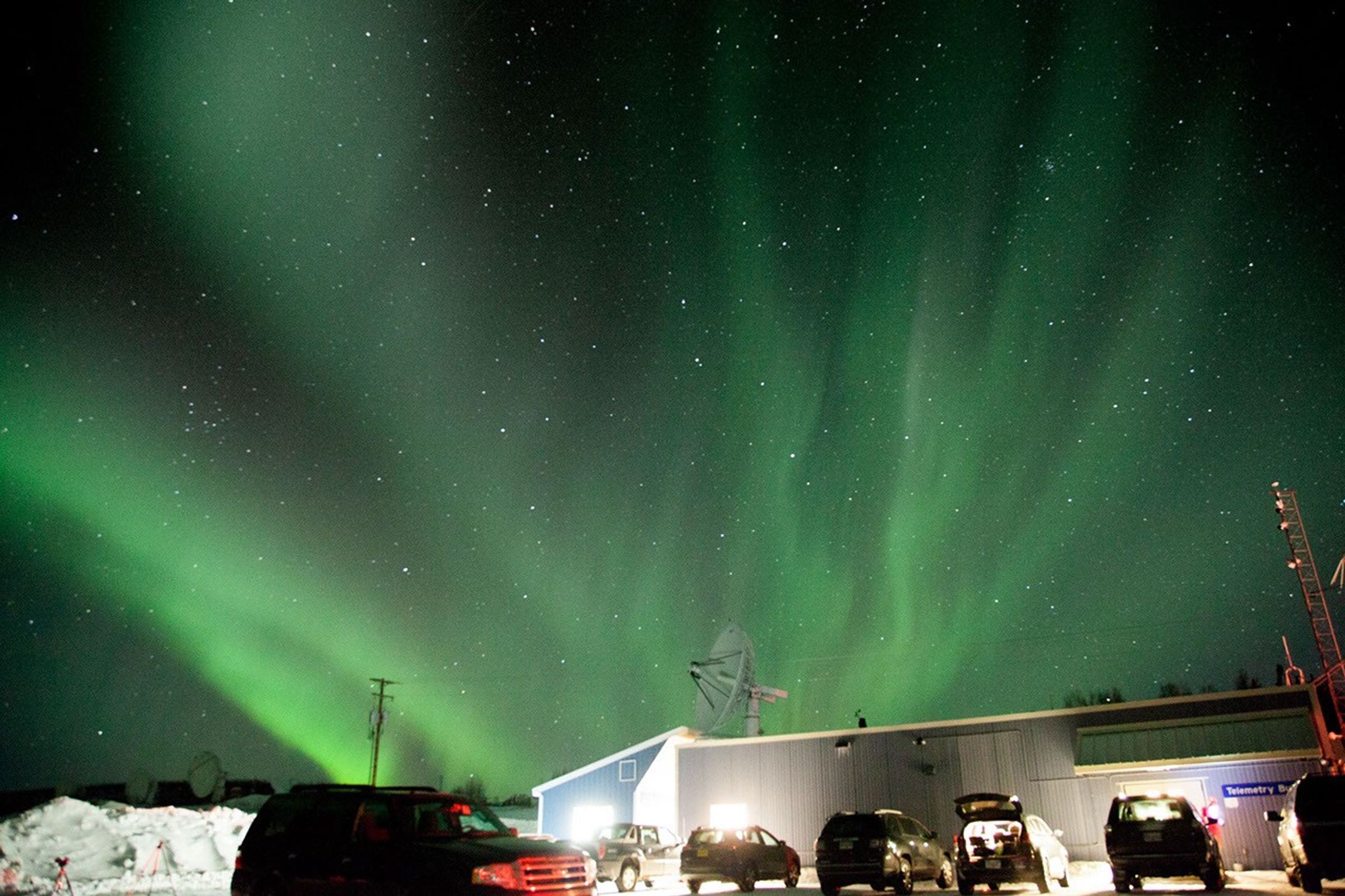
As the only state to lie partly within the Arctic Circle, Alaska experiences a wide range of extreme conditions. But with these extremes comes the chance to conduct science vital to understanding the Sun-Earth system, including launching sounding rockets to study solar flares, auroras, and other phenomena.
Learning About the Sun in the Far North
Solar Science at the Extremes
Of all the many places to study the Sun, there is perhaps none in the United States that experiences seasonal changes or weather quite so extreme as Alaska. But in spite of this extreme environment, or perhaps because of it, there are a number of benefits to conducting studies of the Sun, space weather, and their overall impact on the rest of the solar system, including Earth, from Alaska. For one thing, sounding rockets can be launched there to study auroras and other heliospheric phenomena. And every summer and winter, the conditions are primed to support different types of studies.
Each June, the Northern Hemisphere experiences its longest day of the year. This is called the summer solstice, and it happens when the northern half of Earth reaches its maximum tilt toward the Sun. Each December, the north experiences winter solstice, the shortest day of the year. This happens when the northern half of Earth is tilted farthest from the Sun’s light. The difference between summer and winter solstice is greater as you go farther north. Alaska is the only U.S. state to lie partly within the Arctic Circle. This circle encloses the region of the Northern Hemisphere within which you can get 24 hours of darkness or sunlight.

Sounding Rocket Science
Most people know that NASA launches rockets. Whether it’s to put satellites in orbit that look back at Earth or to send astronauts on a trip around the Moon, launch facilities at places like Kennedy Space Center and Vandenberg Space Force Base are crucial components of space exploration. But many people are not aware that these big rockets aren’t alone in NASA’s stable.
In fact, some very impactful science can be done with much smaller, cheaper rockets that briefly visit space before falling back to Earth. These are sounding rockets, and they are launched from places like Wallops Flight Facility on Wallops Island, Virginia, White Sands Missile Range in New Mexico, and other places around the world like Norway, Australia, and the Marshall Islands.
Sounding rockets are also launched from the University of Alaska’s Poker Flat Research Range in interior Alaska. Aside from being the largest land-based rocket research range in the world, Poker Flat is also the only high-latitude rocket range in the United States. It is located far enough north that the range is situated within the auroral oval, allowing scientists to study the aurora by launching rockets hundreds of miles over the sparsely populated tundra north of the range.

Heliophysics in the Land of the Midnight Sun
Auroras are not the only things to study in the far north. Juan Camilo “Milo” Buitrago-Casas is an Assistant Research Physicist at the University of California, Berkeley’s Space Sciences Laboratory (SSL). He also led the FOXSI-5 (Focusing Optics X-ray Solar Imager) mission, which launched from the Poker Flat Research Range on May 14, 2026. FOXSI is NASA’s first dedicated solar flare research campaign, designed to study large flares in real-time using sounding rockets. The FOXSI team waited to launch until multiple solar flares were erupting on the Sun, allowing them to capture the maximum amount of data with just one flight.
Launched in April 2024, the FOXSI-4 mission marked the first time a solar flare was the dedicated target of a rocket launch campaign. The launch occurred during solar maximum, when the Sun is most active, and observed a class M1 flare. These big flares are of interest to scientists like Milo, and FOXSI-4 observed one in tandem with several spacecraft and ground-based observatories. Scientists have learned a lot already with the observations gathered by the FOXSI-4 mission, but our knowledge about the dynamics of large solar flares can be greatly increased by observing additional flares. This is where FOXSI-5 comes in. Launched on May 14, 2026, it built upon the work done by FOXSI-4 by observing and gathering data on three small C-class flares.
There are several benefits to launching from Poker Flat in northern summer. Most rockets launched there are launched at night, to study auroras. But the long summer daylight hours provide ample opportunity to launch rockets that study the Sun — rockets like FOXSI-5. Launching from Poker Flat also allowed the FOXSI team to prepare the rocket for launch, start the countdown, and then hold off until something interesting happened. For FOXSI, this “something interesting” means large solar flares, which are more common near solar maximum.

A Community Effort
While some scientists need daylight for their work, others thrive in darkness. Robert Michell and Marilia Samara are two of them. They study auroras and use data from instruments aboard rockets launched at Poker Flat to learn more about the Sun-Earth system, including the systems which create the northern lights (aurora borealis). Unlike Milo and the rest of the FOXSI team, who make use the long daylight hours of northern summer for their work, Robert and Marilia need darkness for their studies.
Robert and Marilia’s team puts ground-based imagers beneath where their rockets fly, then coordinates the observations from both to build an image of the northern lights. Without the extra hours of darkness offered by northern winter, they would have less time to work, just as the FOXSI team would have less time to work if it weren’t for northern summer. All of these scientists stress the importance of collaboration between scientists and the citizens of Alaska, many of whom are part of the state’s large Indigenous community. Part of the work that Robert and Marilia do, for instance, involves installing imagers at small Native American villages. To accomplish this, the team works closely with the University of Alaska, which helps them to install small observatory buildings out in the remote villages where the imagers can be housed.
The scientists also point to the vitality of the collaboration between scientists at NASA and other institutions. Missions like FOXSI are made possible for organizations like SSL thanks to the ease of access to low-cost space research opportunities which NASA helps provide. This access has allowed great science to happen that might otherwise have stayed only in the minds of its planners.

Looking to the Future
Low-cost research like that being done at Poker Flat is also invaluable for training the next generation of researchers. The rockets launched there are a perfect platform to train current and future scientists to lead instrument teams anywhere in the United States. Take Milo, for example, who started off as a student researcher on FOXSI-2 and 3, then worked on FOXSI-4 as a postdoc before finally becoming the principal investigator for the FOXSI-5 mission. He hopes that the young researchers he mentored on that mission will follow in his footsteps.
Robert and Marilia worked with rockets as graduate students, too. Because aurora studies use smaller instruments, scientists like them are able to add multiple instruments to one rocket, which increases the amount and variety of scientific data that can be gathered from one mission. On the other hand, if you have a prototype instrument that's never flown before, a sounding rocket is the perfect chance to hitch a ride to test it out in space.
Alaska offers the right conditions to launch rockets like these on missions to study the Sun-Earth system. By collaborating with local communities, including diverse Indigenous populations, scientists can conduct experiments that would be difficult at lower latitudes. You might need to pack extra cold weather gear, but a trip to Alaska could be the key to unlocking secrets about the Sun that can only be discovered in extreme environments.
Resources for Educators ↓
Selected Lesson Plans
Related Educational Resources
Stay up-to-date with the latest content from NASA's Heliophysics Resource Database (HRD) as we explore the universe and discover more about the Sun and our Solar System.
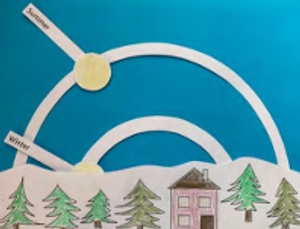
This activity provides a cardstock model for exploring the position of the winter and summer suns.
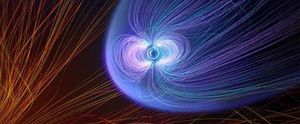
This approximately 3-minute video summarizes space weather and explains its effects on the rest of the Solar System.
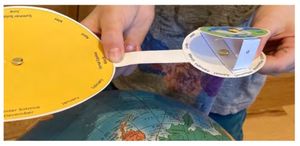
Activity to build a Sun-Earth model to explore how changing seasons affect the Arctic.
Helio and You
Find the full collection of Helio and You articles here, as well as additional resources to assist with Heliophysics education.
Learn More
Related Articles
Keep up with the latest news in NASA heliophysics and the Science Activation portfolio.
Christine Shupla and Claire Ratcliffe Adams, from the NASA Science Activation program’s NASA@ My Library project, facilitated a professional development Co-Design Space Science, Technology, Engineering, & Mathematics (STEM) Workshop for Tribal libraries on August 29, 2024, hosted at the New…
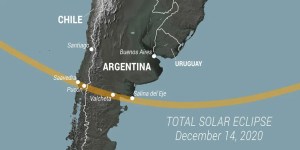
Total Solar Eclipse in South America – December 14, 2020 NASA Space Science Education Consortium (NSSEC) members delivered products, gave presentations, and collaborated with NASA en Español, Office of Communications, and Pontificia Universidad Católica de Chile to engage many with…
In January, the American Museum of Natural History (AMNH) hosted its monthly planetarium program, offering attendees an insightful journey into the study of our solar system’s star. On January 23, 2024, Dr. Nour Raouafi, project scientist of the Parker Solar…
Helio and You
Find the full collection of past and future Helio and You articles here, as well as additional information about Heliophysics education.
Learn More