

















All About Comets Animation
| Levels |
|
|---|---|
| Material Type |
|
| Heliophysics Big Ideas |
|
| NGSS |
|
| Heliophysics Topics |
|
| Heliophysics Missions |
|
| Material Cost per Learner | Free |
| Language | English |
A page from NASA's Solar System Exploration Directorate website which gives an overview of comets. The page includes links to pages about several well-known comets and provides details about them.
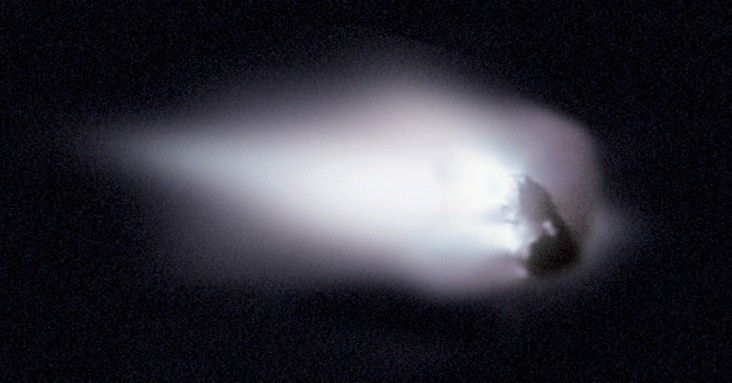
Comets are cosmic snowballs of frozen gases, rock, and dust that orbit the Sun. When frozen, they are the size of a small town. When a comet's orbit brings it close to the Sun, it heats up and spews dust and gases into a giant glowing head larger than most planets. The dust and gases form a tail that stretches away from the Sun for millions of miles. There are likely billions of comets orbiting our Sun in the Kuiper Belt and even more distant Oort Cloud. They are important to heliophysicists because the study of cometary tails has helped us learn about how the solar wind works, and how solar radiation affects planetary objects over time.