













Article: The Sun and Us
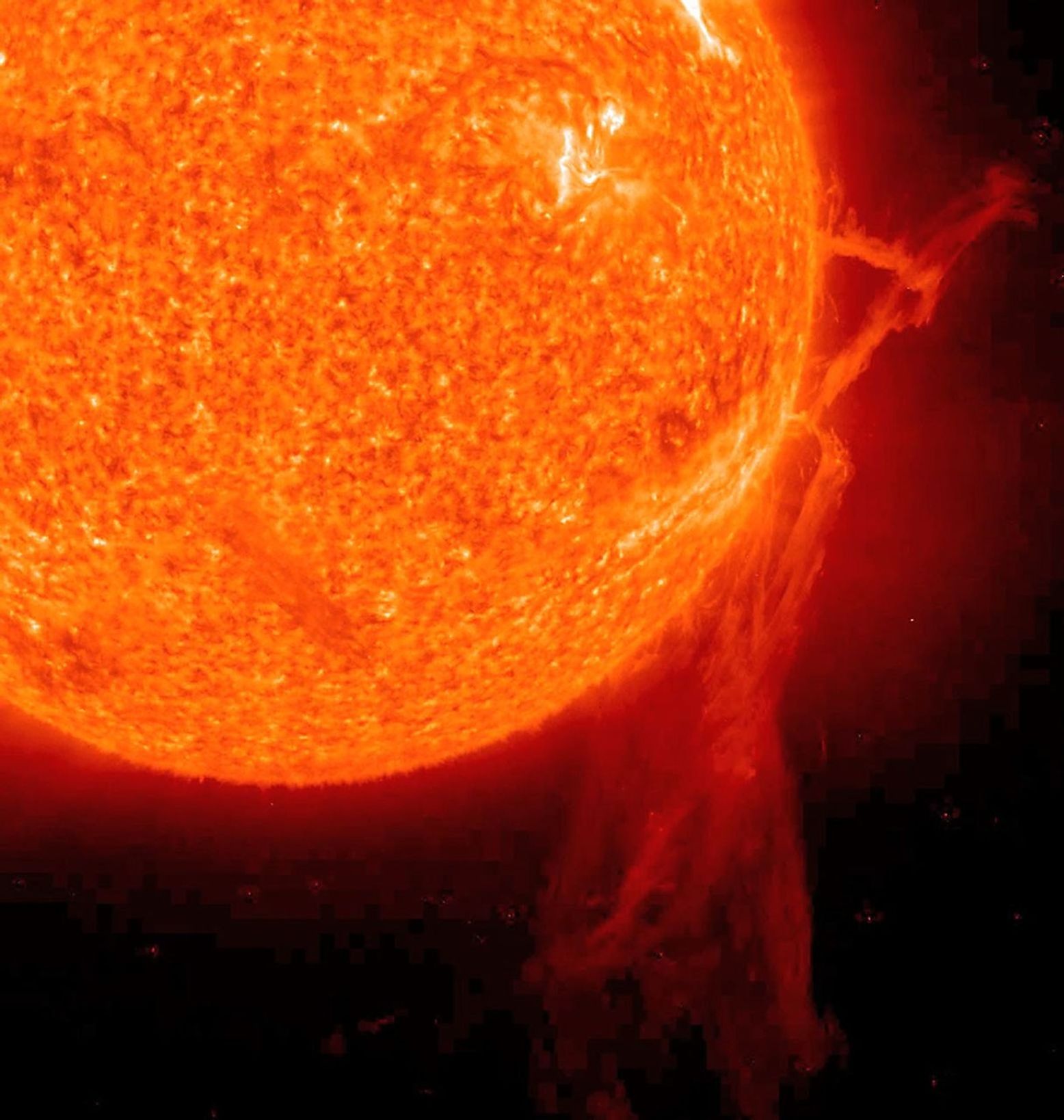
NASA image captured December 6, 2010 To view a video of this event go here: www.flickr.com/photos/gsfc/5258354738 A very long solar filament that had been snaking around the Sun erupted (Dec. 6, 2010) with a flourish. STEREO (Behind) caught the action in dramatic detail in extreme ultraviolet light of Helium. It had been almost a million km long (about half a solar radius) and a prominent feature on the Sun visible over two weeks earlier before it rotated out of view. Filaments, elongated clouds of cooler gases suspended above the Sun by magnetic forces, are rather unstable and often break away from the Sun. Credit: NASA/GSFC/SOHO NASA Goddard Space Flight Center enables NASA�s mission through four scientific endeavors: Earth Science, Heliophysics, Solar System Exploration, and Astrophysics. Goddard plays a leading role in NASA�s accomplishments by contributing compelling scientific knowledge to advance the Agency�s mission. Follow us on Twitter Join us on Facebook
| Levels |
|
|---|---|
| Material Type |
|
| Heliophysics Big Ideas |
|
| NGSS |
|
| Heliophysics Topics |
|
| Heliophysics Missions |
|
| Related Missions |
|
| Material Cost per Learner | Free |
| Language | English |
Articles | Grades 9-12+ | This informative NASA article provides advanced students with deep insights into the lifecycle of the Sun and its crucial role in driving Earth's climate and defining space. Teachers can seamlessly integrate this resource into high school physics or earth science curricula to explore core NGSS concepts like energy and matter. Students can review the text to analyze the characteristics of solar systems and current heliophysics missions, such as SOHO and Voyager, bridging the gap between theoretical space science and active space exploration.
Credits: History.nasa.gov