





















Messier 88
This galaxy's core holds supermassive black hole roughly 100 million times more massive than our Sun.
Distance
63 million light-years
Apparent Magnitude
9.5
constellation
Coma Berenices
object type
Spiral Galaxy
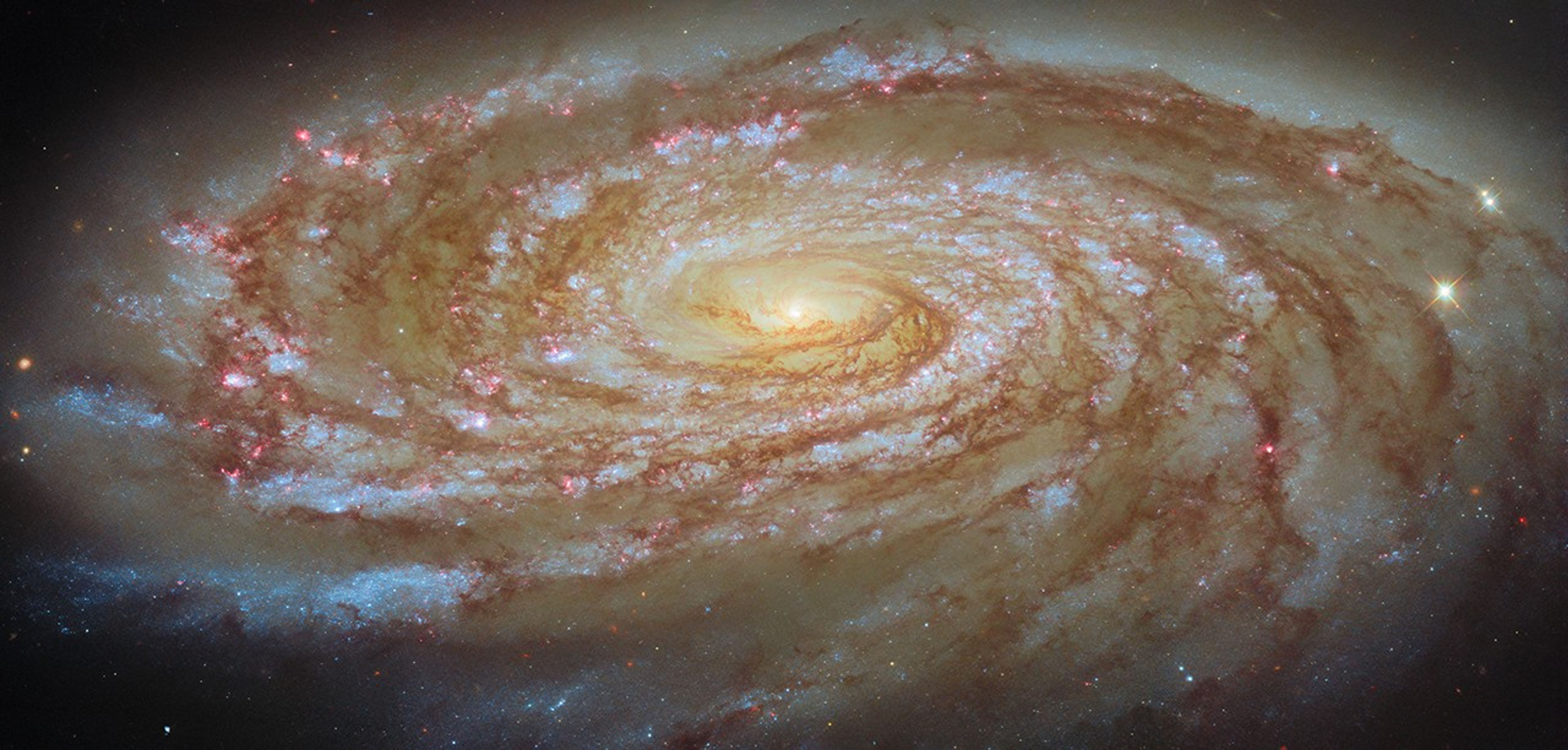
Located approximately 63 million light-years away, M88 is a spiral galaxy with well-defined and symmetrical arms. Although it is a member of the Virgo cluster of galaxies, it appears in the neighboring constellation of Coma Berenices.
M88 contains an active galactic nucleus, meaning the central region of the galaxy is more luminous than the rest of the galaxy. At the galaxy’s core resides a supermassive black hole estimated to be 100 million times more massive than our Sun. M88 contains around 400 billion stars and is traveling away from our galaxy toward the center of the Virgo Cluster, about two million light-years from where it is today. In 200–300 million years, M88 will make its closest approach to Messier 87, the massive elliptical galaxy that anchors the entire cluster.
Charles Messier discovered M88 in 1781 on the same night that he discovered eight other Messier objects. As one of the brighter Messier galaxies, it can be observed with a pair of large binoculars from a dark location under good viewing conditions. Smaller telescopes will reveal an elongated object with a brighter core, while larger telescopes will unveil further details, such as a more defined core. M88 has a magnitude of 9.5 and is best observed in May.

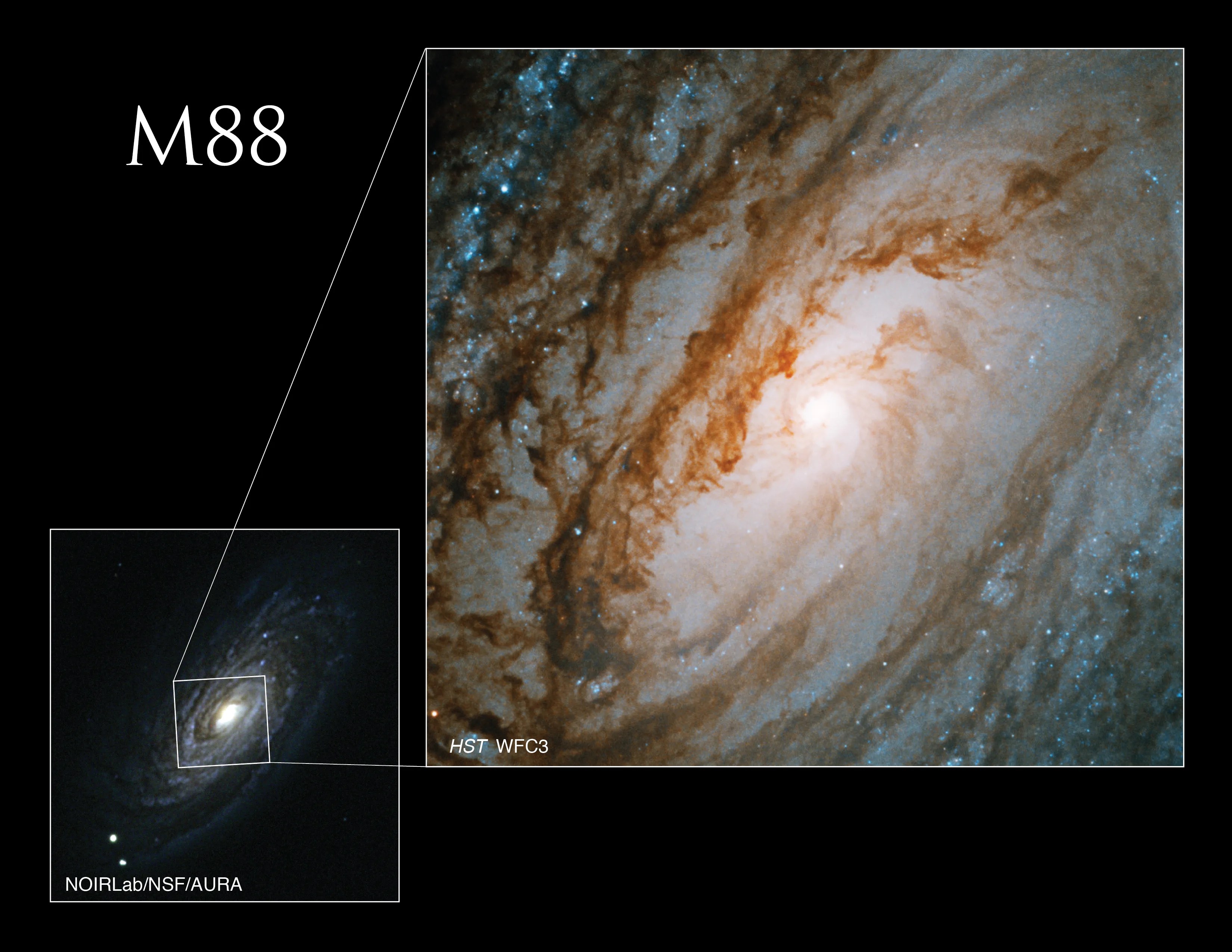
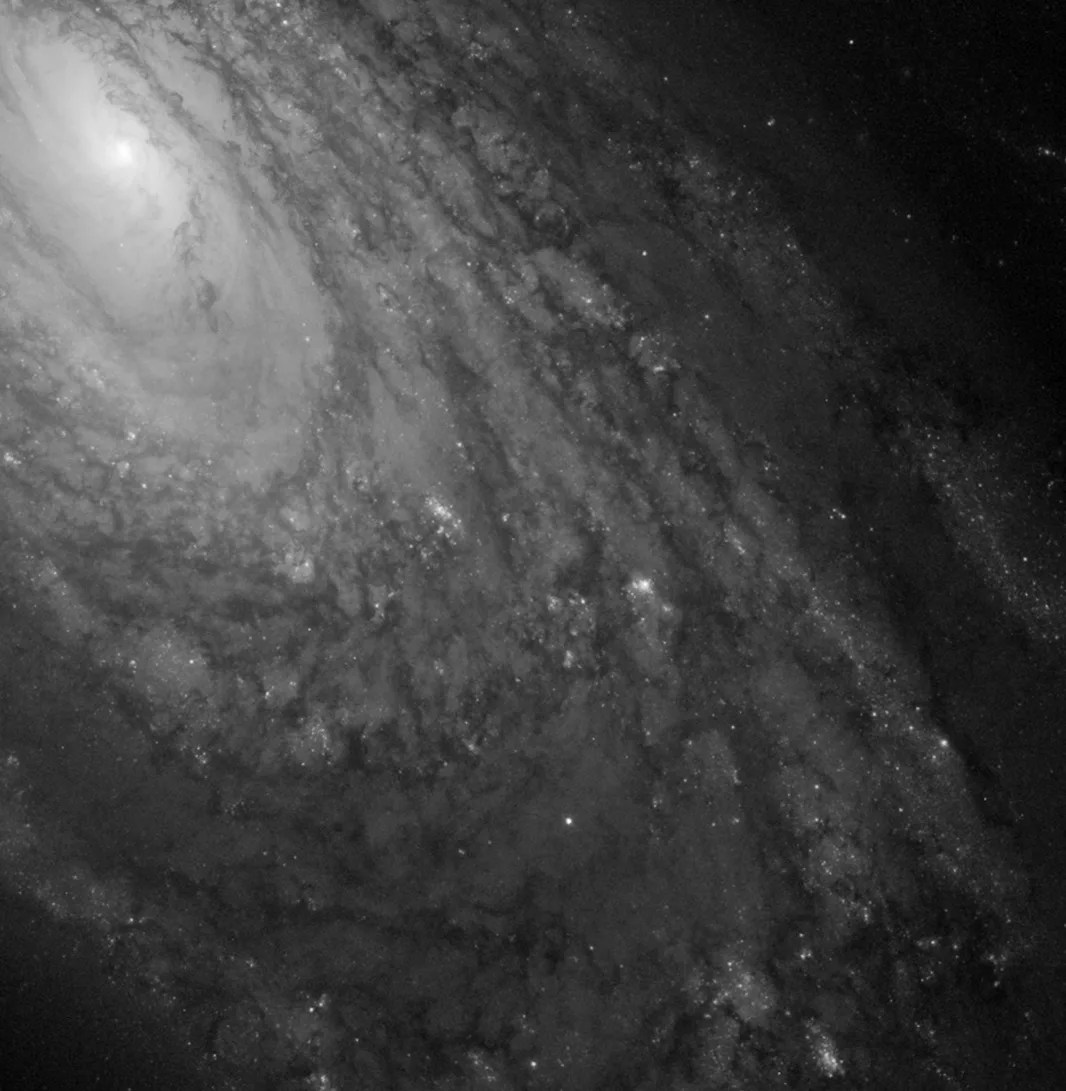
This Hubble observation of the core of M88 combines visible and infrared observations obtained by the Wide Field Camera 3, and captures swirling bands of dark dust as well as clusters of stars. It was taken as part of a study of galactic bulges ― the central group of stars surrounding a spiral galaxy’s core ― focusing on the process of galaxy evolution and the growth of supermassive back holes.

Explore Hubble's Messier Catalog
The following pages contain some of Hubble’s best images of Messier objects.
Overview The Messier catalog, begun by astronomer Charles Messier in the 18th Century and revised over the years, includes some…

Better known as the Crab Nebula, Charles Messier originally mistook Messier 1 for Halley’s Comet, which inspired him to create…
Hubble's image of Messier 2 is comprised of visible and infrared wavelengths of light.