














Webb Posters and Printables
An ever growing collection of Webb themed posters and printable products you can download and print.
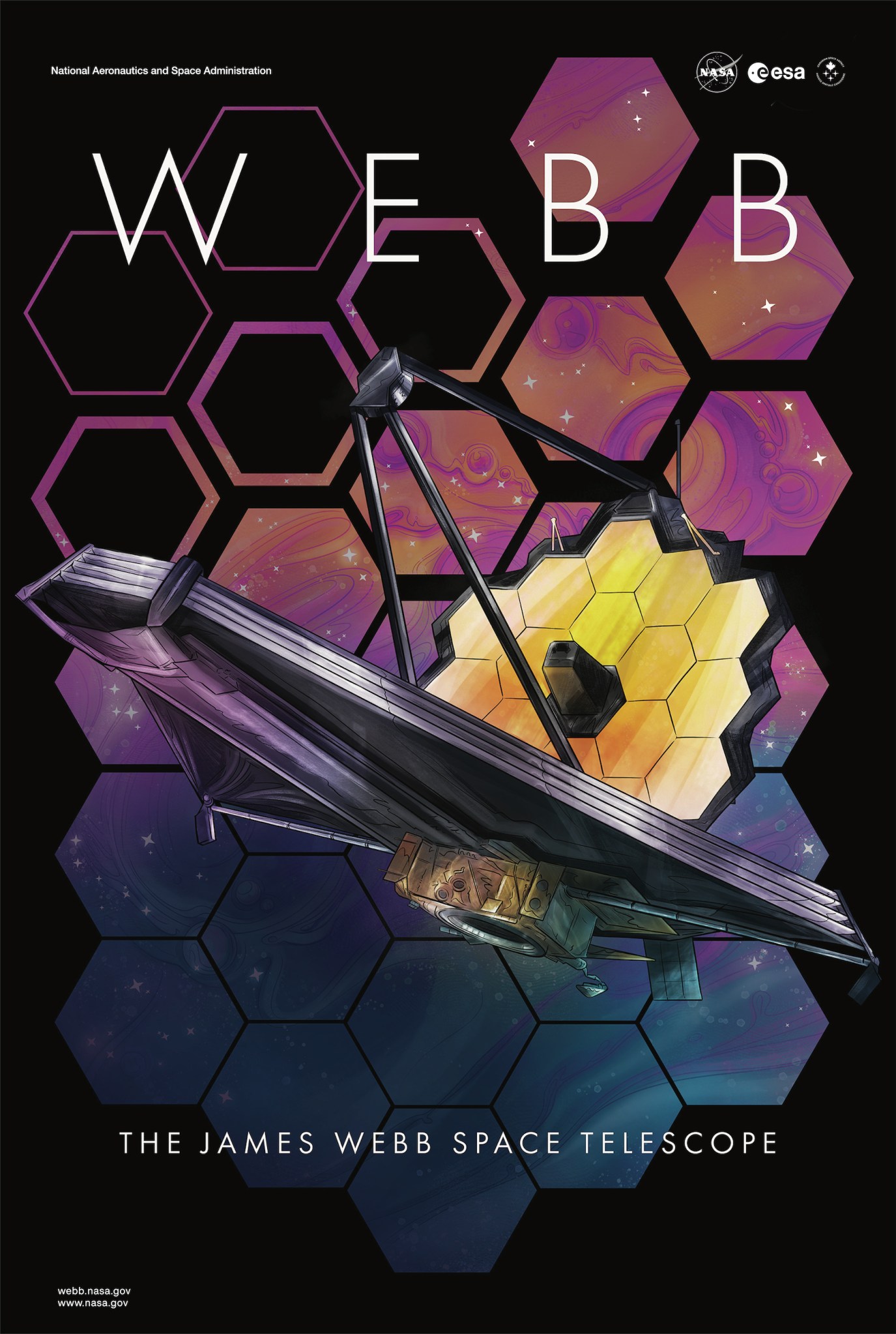
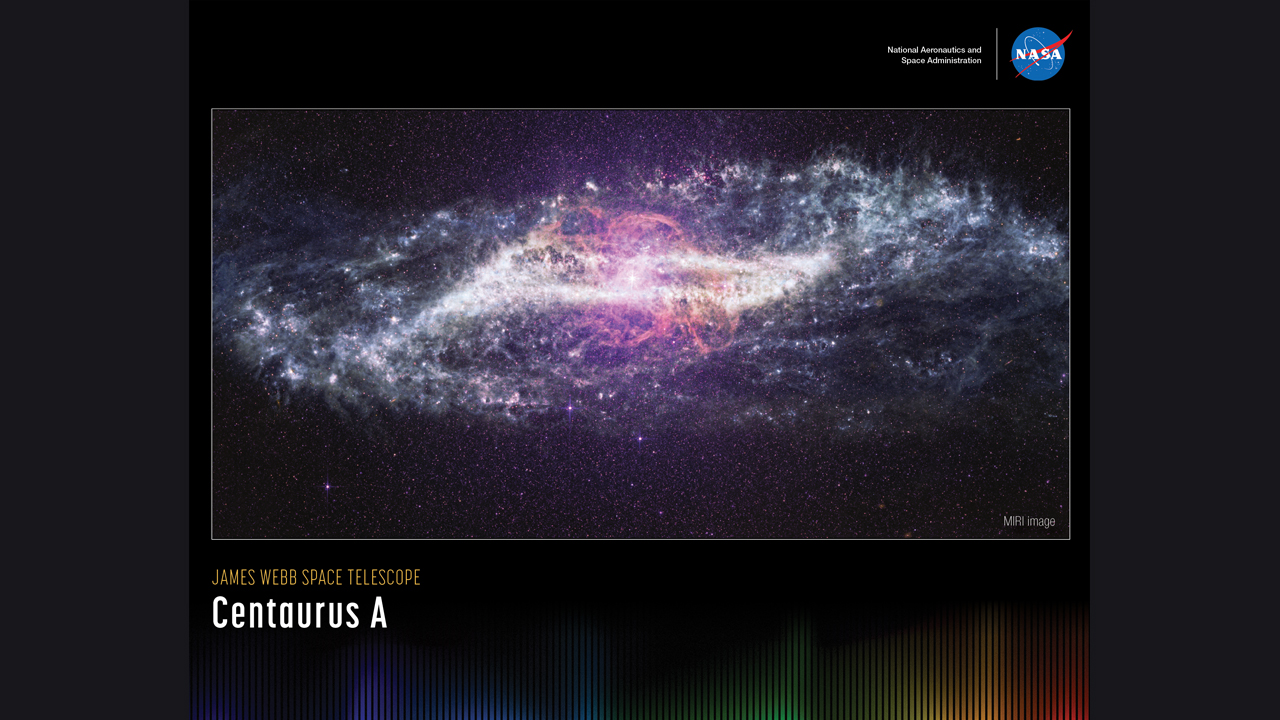
Download and print a mini poster featuring an image of the galaxy Centaurus A captured in 2026 by NASA's James Webb Space Telescope.
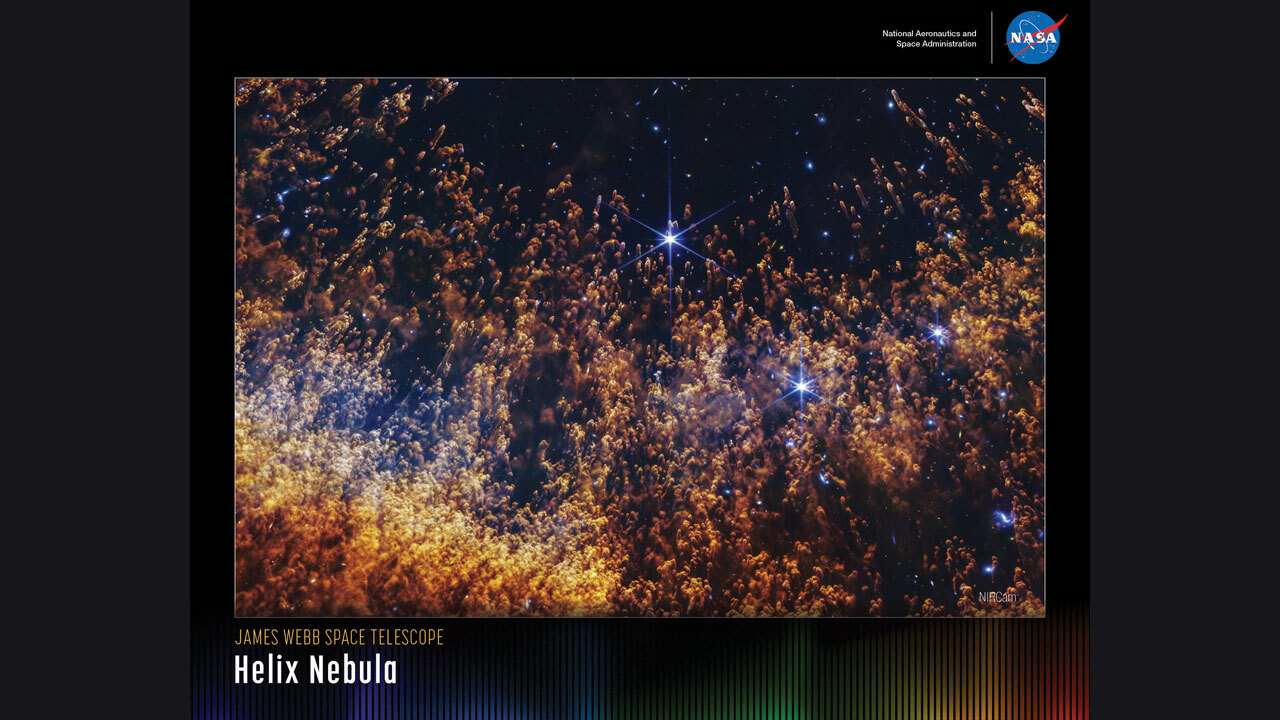
Download and print a mini poster featuring an image of the Helix Nebula, captured in 2024 by NASA's James Webb Space Telescope.
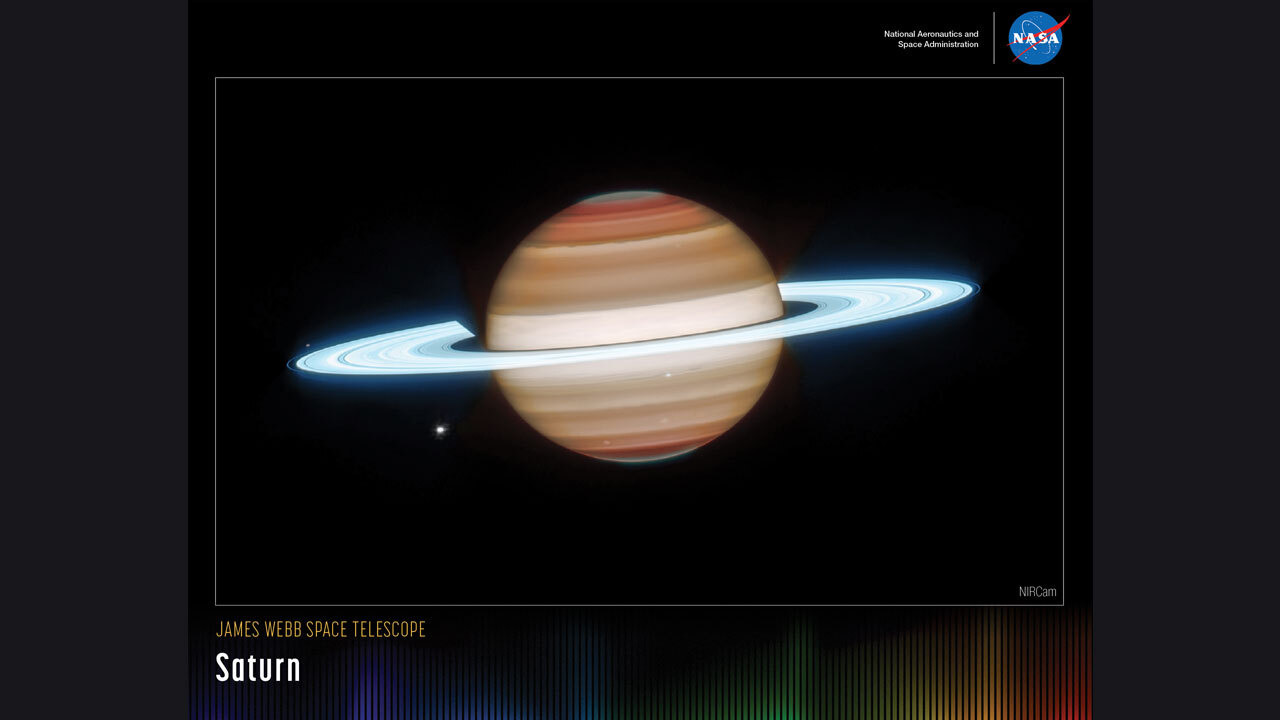
Download and print a mini poster featuring an image of Saturn captured in 2024 by NASA's James Webb Space Telescope.
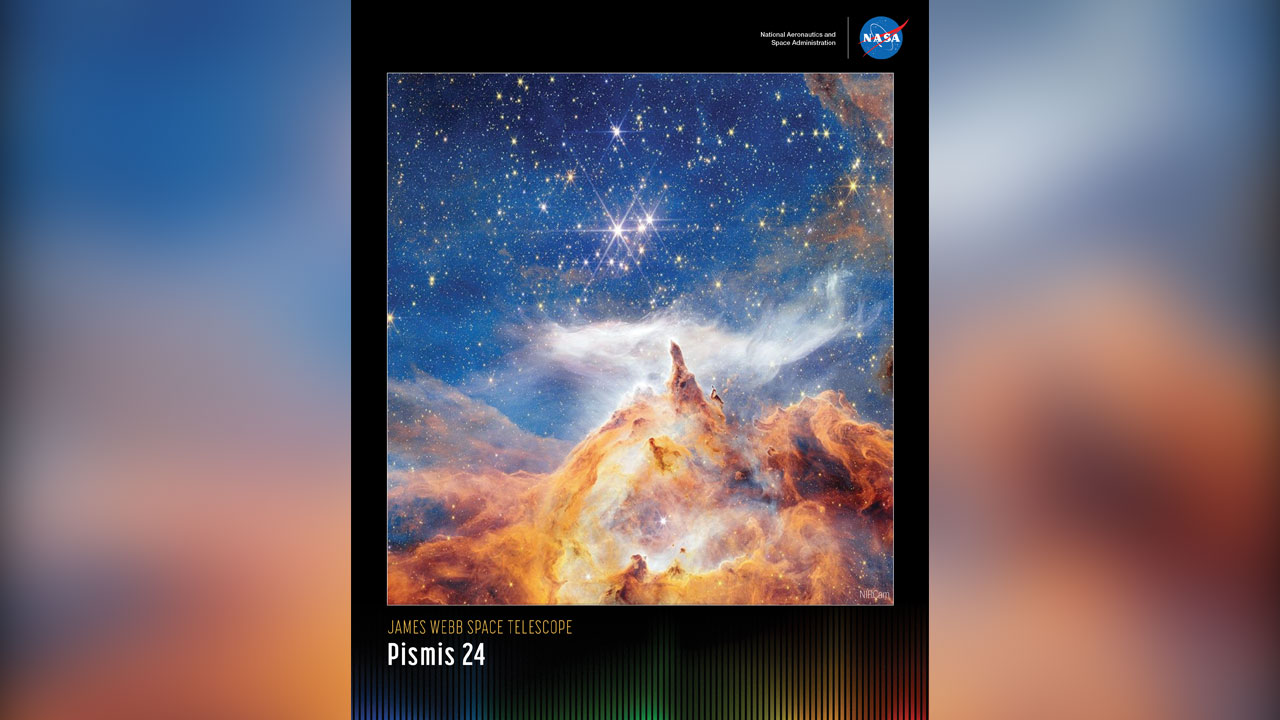
Download and print a mini poster featuring an image of Pismis 24 captured in 2025 by NASA's James Webb Space Telescope.
Image: NASA, ESA, CSA, STScI; Designer: Elizabeth Wheatley (STScI)
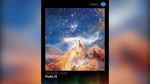
Download and print a mini poster featuring an infrared image of the Cat’s Paw Nebula captured in 2025 by NASA's James Webb Space Telescope.
Image: NASA, ESA, CSA, STScI; Designer: Elizabeth Wheatley (STScI)
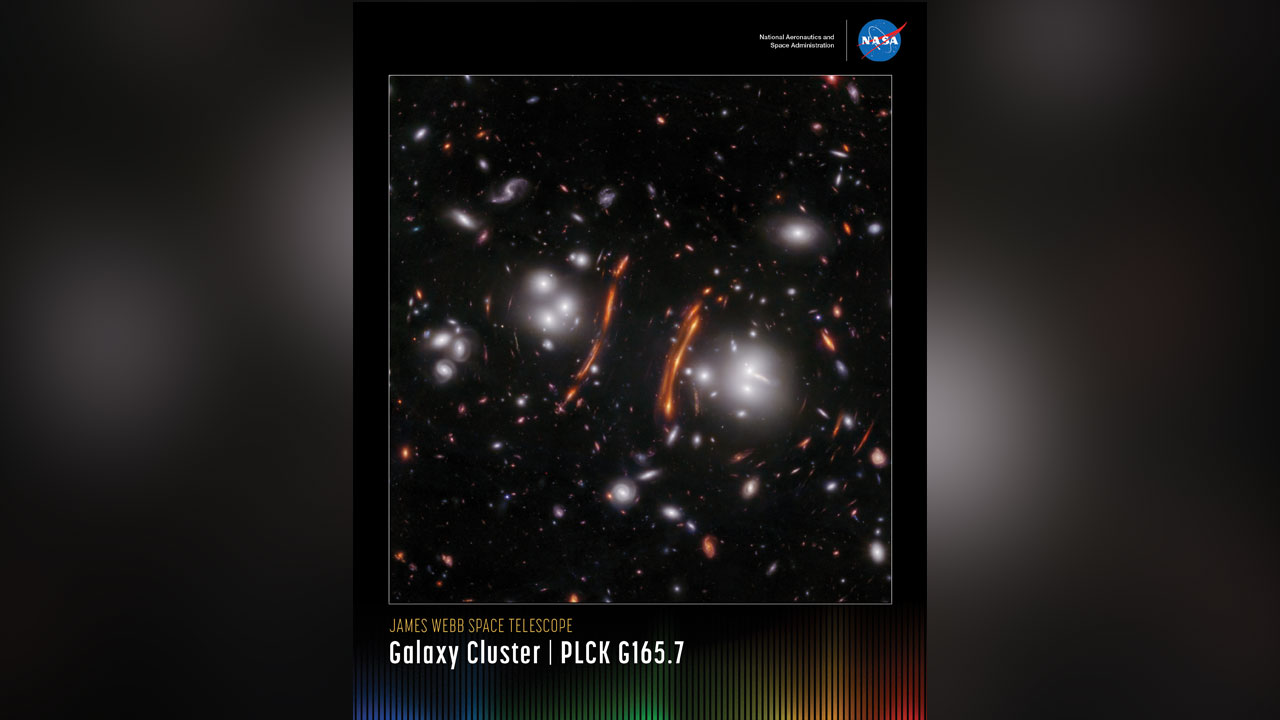
A vertical poster with an image of PLCK G165.7 against a black background. At left of center of the image, there is a red arc that stretches from 2 to 7 o’clock. At its left is a cluster of a few white galaxies. At right of the center, there are red arcs stretching from 3 to 5 o’clock, and a set of white galaxies at their right. There are white, blue, and red galaxies spread throughout with a few arc-shaped galaxies near the white galaxy clusters. Along the bottom is a series of thin vertical bars ranging from purple at left to blue, green, yellow, orange, and red at right. Bars are separated slightly, with black in between. Bar colors are brightest at the bottom, fading up to black. Brightness varies from bar to bar, giving the array an undulating feel. At upper right is text that reads, "National Aeronautics and Space Administration" and NASA's blue, white, and red meatball insignia. Title text appears at lower left that says, "James Webb Space Telescope: Galaxy Cluster, PLCK G165.7."
Image: NASA, ESA, CSA, Brenda Frye (University of Arizona), Rogier Windhorst (ASU), S. Cohen (ASU), Jordan D'Silva (UWA), Anton Koekemoer (STScI), Jake Summers (ASU); Designer: Elizabeth Wheatley (STScI)
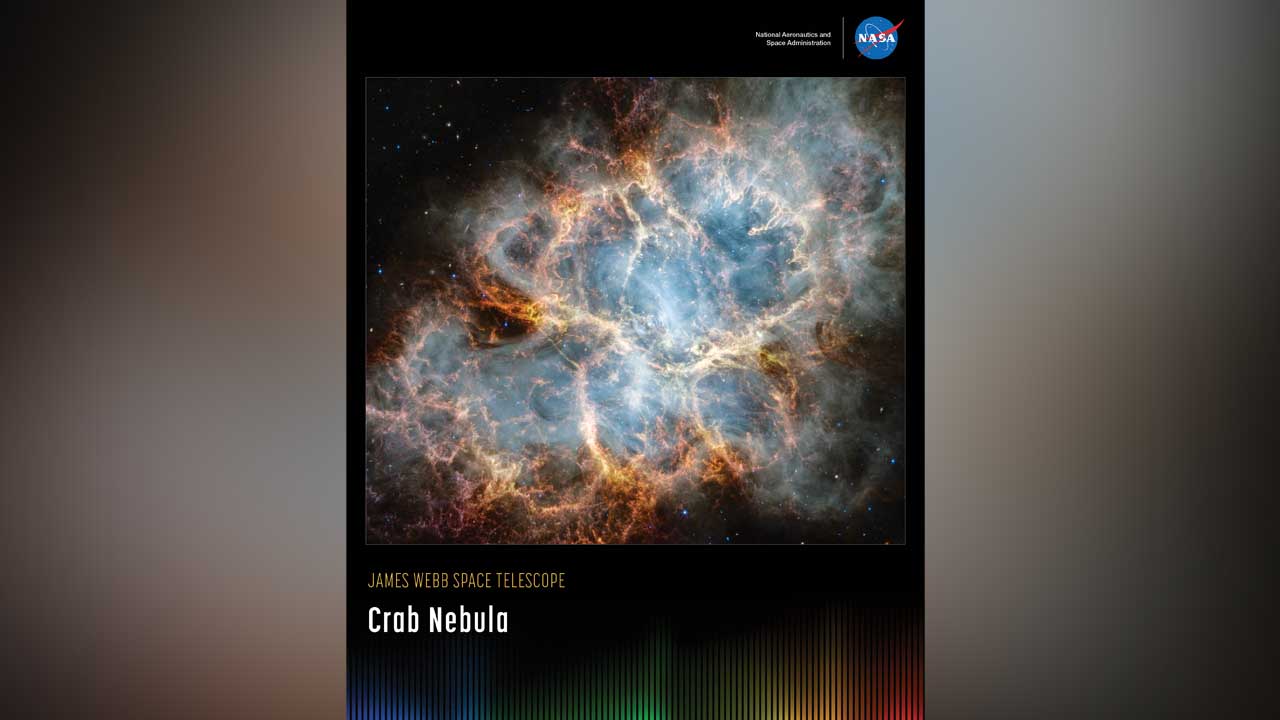
A vertical poster with an image of the Crab Nebula against a black background. On the oval-shaped nebula’s exterior lie curtains of glowing red and orange fluffy material. Translucent thin ribbons of smoky white lie within the remnant’s interior, brightest toward its center, and become more diffuse further outward. A faint, wispy ring of white material encircles the very center of the nebula. There are many blue, red, and yellow points throughout the image. Along the bottom is a series of thin vertical bars ranging from purple at left to blue, green, yellow, orange, and red at right. Bars are separated slightly, with black in between. Bar colors are brightest at the bottom, fading up to black. Brightness varies from bar to bar, giving the array an undulating feel. At upper right is text that reads, "National Aeronautics and Space Administration" and NASA’s blue, white, and red meatball insignia. Title text appears at lower left that says, "James Webb Space Telescope: Crab Nebula."
Image: NASA, ESA, CSA, STScI, Tea Temim (Princeton University); Designer: Elizabeth Wheatley (STScI)
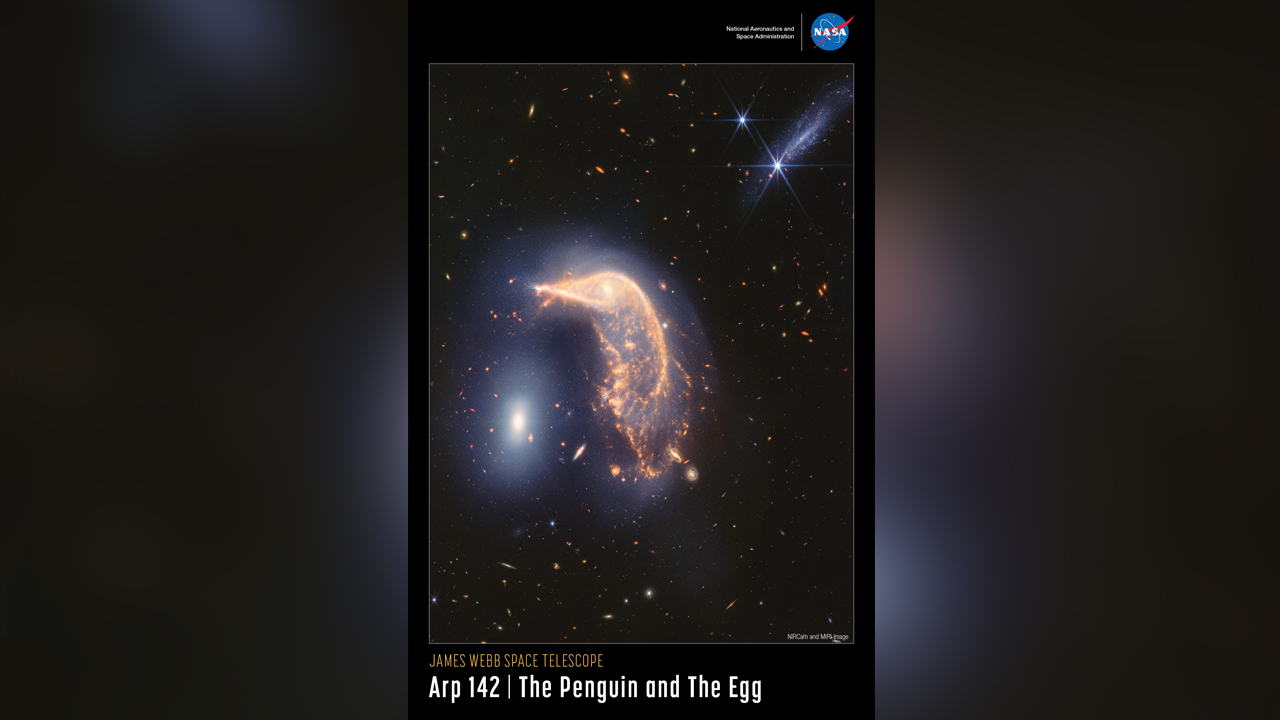
A horizontal poster displaying an infrared image of the two interacting galaxies, together known as Arp 142. At left is NGC 2937, nicknamed the Egg. Its center is bright white. There are six diffraction spikes atop its gauzy blue layers. At right is NGC 2936, nicknamed the Penguin. The beak-like region points to the left. Where the eye would be is a small, opaque yellow spiral. The galaxy’s distorted arms form the bird’s beak, back, and wide tail. A semi-transparent blue hue traces the Penguin and the Egg, packed with gas and stars. At top right is a comet-like light blue galaxy seen from the side. One foreground star with large, bright blue diffraction spikes appears over it and another near it. The entire black background is filled with tiny, extremely distant galaxies. At upper right is text that reads, "National Aeronautics and Space Administration" and NASA’s blue, white and red "meatball" logo. Title text appears at lower left that says, "James Webb Space Telescope: Arp 142, The Penguin and The Egg."
Image: NASA, ESA, CSA, STScI; Designer: Elizabeth Wheatley (STScI)
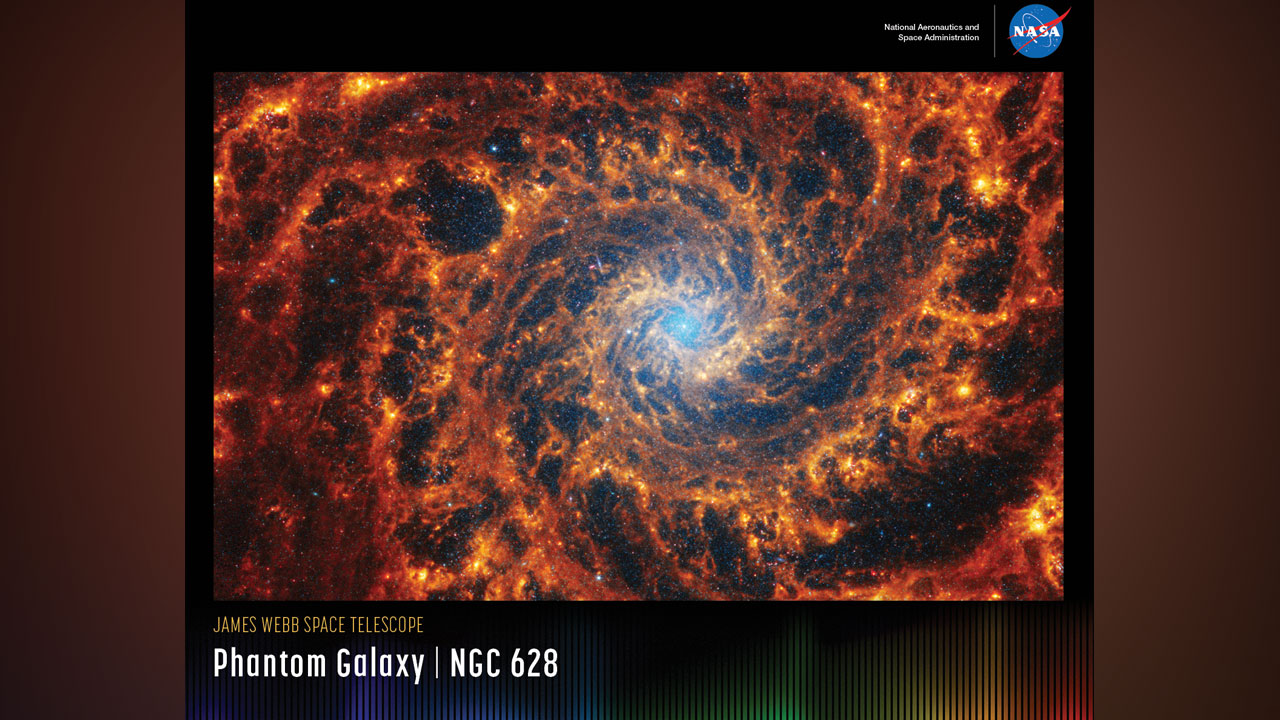
A horizontal poster displaying an infrared image of NGC 628. The galaxy's blue core, composed of older stars, is roughly centered. Its two spiral arms, which contain black pockets of different sizes, appear to rotate counterclockwise. The arms are composed of many filaments in different shades of orange, looking like a cross section of a nautilus shell. Brighter orange pockets indicate star formation. At upper right is text that reads, "National Aeronautics and Space Administration" and NASA's blue, white and red "meatball" logo. At lower left, the title text "James Webb Space Telescope" appears in small orange type on the top line with "Phantom Galaxy – NGC 628" in large white type below. Along the bottom is a series of thin vertical bars ranging from purple at left to blue, green, yellow, orange, and red at right. Bars are separated slightly, with black in between. Bar colors are brightest at the bottom, fading up to black. Brightness varies from bar to bar, giving the array an undulating feel.
Image: NASA, ESA, CSA, STScI, PHANGS Team, Janice Lee (STScI), Thomas Williams (Oxford); Designer: Elizabeth Wheatley (STScI)
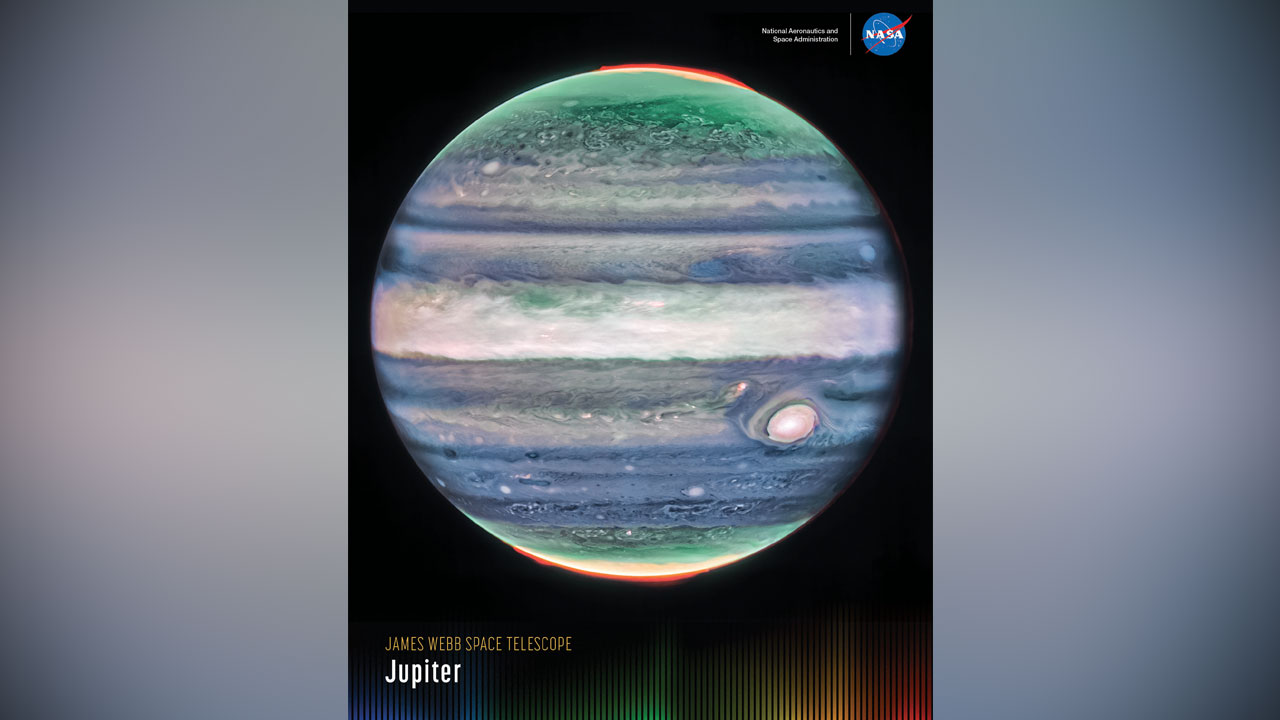
Vertically oriented poster with a colorful image of Jupiter against a black background. Title, “James Webb Space Telescope: Jupiter” is at lower left. Blue, white, and red NASA "meatball" logo and words “National Aeronautics and Space Administration” are at upper right. Along the bottom is a series of thin vertical bars ranging from purple at left to blue, green, yellow, orange, and red at right. Bars are separated slightly, with black in between. Bar colors are brightest at the bottom, fading up to black. Brightness varies from bar to bar, giving the array an undulating feel. Image shows infrared light from Jupiter translated into visible colors. The Great Red Spot in the lower right quadrant appears white with light pink around the edges. Planet’s atmospheric bands (zones and belts) form horizontal stripes of swirling pinkish-white, light to dark blue, greenish-gray, and gray. North and south polar regions appear to glow green, capped with bright yellow and orange.
Image: NASA, ESA, CSA, STScI, Imke de Pater (UC Berkeley); Designer: Elizabeth Wheatley (STScI)
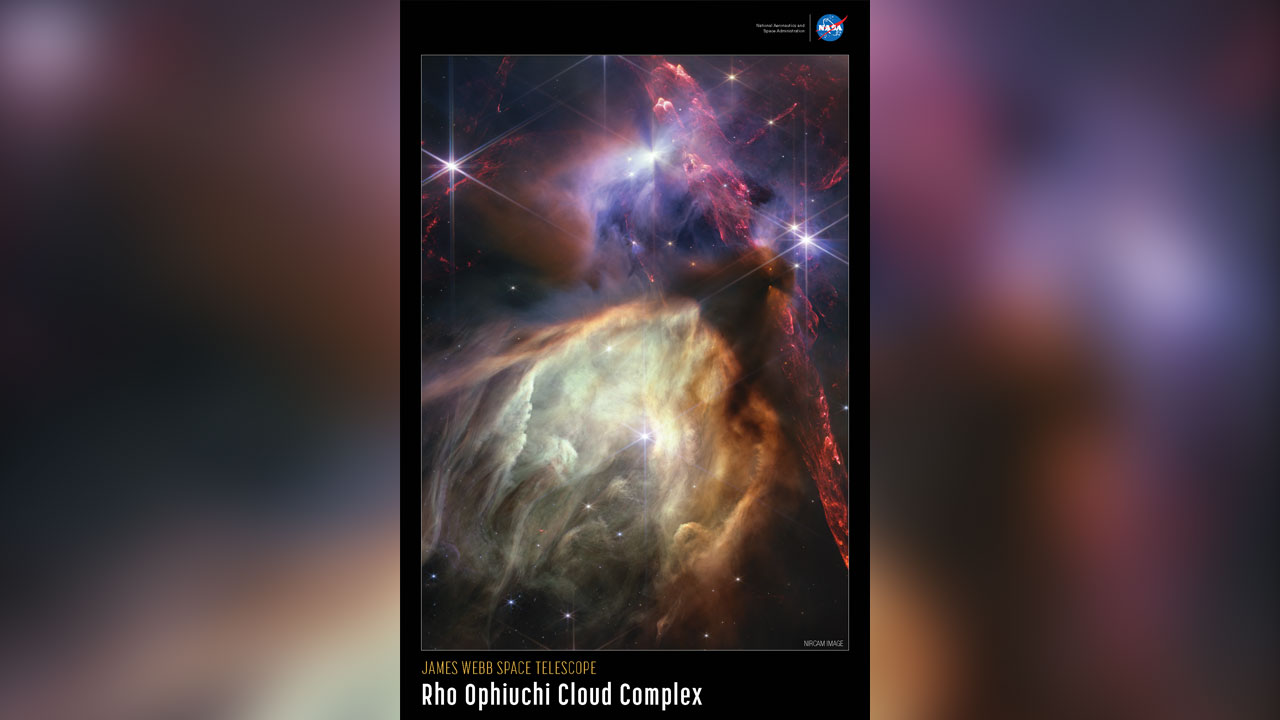
Near-infrared image of Rho Opiuchi outlined in white, set on a black background. Red dual opposing jets coming from young stars fill the darker top half of the image, while a glowing pale-yellow, cave-like structure is bottom center, tilted toward two o'clock, with a bright star at its center. At the top right of the poster is the blue, red, and white NASA logo, with the words "National Aeronautics and Space Administration", in white text to its left. The words "NIRCam Image" are set in a small white type on the bottom right of the image. The title is set below the image, along the bottom of the poster: "James Webb Space Telescope" appears in small orange type on the top line with "Rho Ophiuchi Cloud Complex" in large white type on the bottom line.
Image: NASA, ESA, CSA, STScI; Designer: Elizabeth Wheatley (STScI)
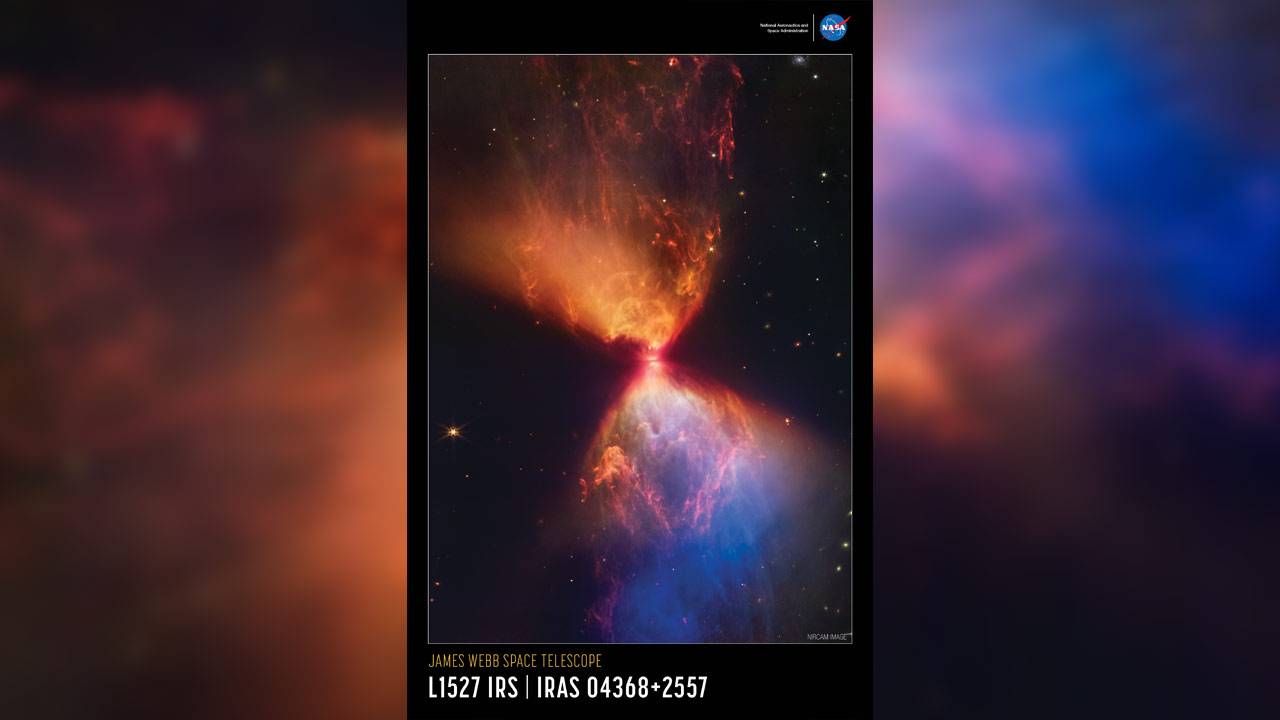
A portrait image of a near-infrared image of L1527 outlined in white, set on a black background. In front of the image’s central, bright orange object, a protostar, is a thin grey line, which is the protostar’s accretion disk. Above and below the protostar are orange, triangular clouds of gas that points to the top left and bottom right of the image respectively. The bottom cloud is a blend of pronounced blue and orange plumes of gas. Farther toward the bottom right, the color of the gas turns blue. To the top right of the outlined image is NASA’s blue, white and red insignia with the acronym’s meaning, "National Aeronautics and Space Administration", in white text to its left. The words “NIRCam Image” are set in a small white type on the bottom right of the image. The title is set below the image, along the bottom of the poster: “James Webb Space Telescope” appears in small orange type on the top line with “L1527 IRS IRAS 04368+2557” in large white type on the bottom line.
Image: NASA, ESA, CSA, STScI; Designer: Elizabeth Wheatley (STScI)
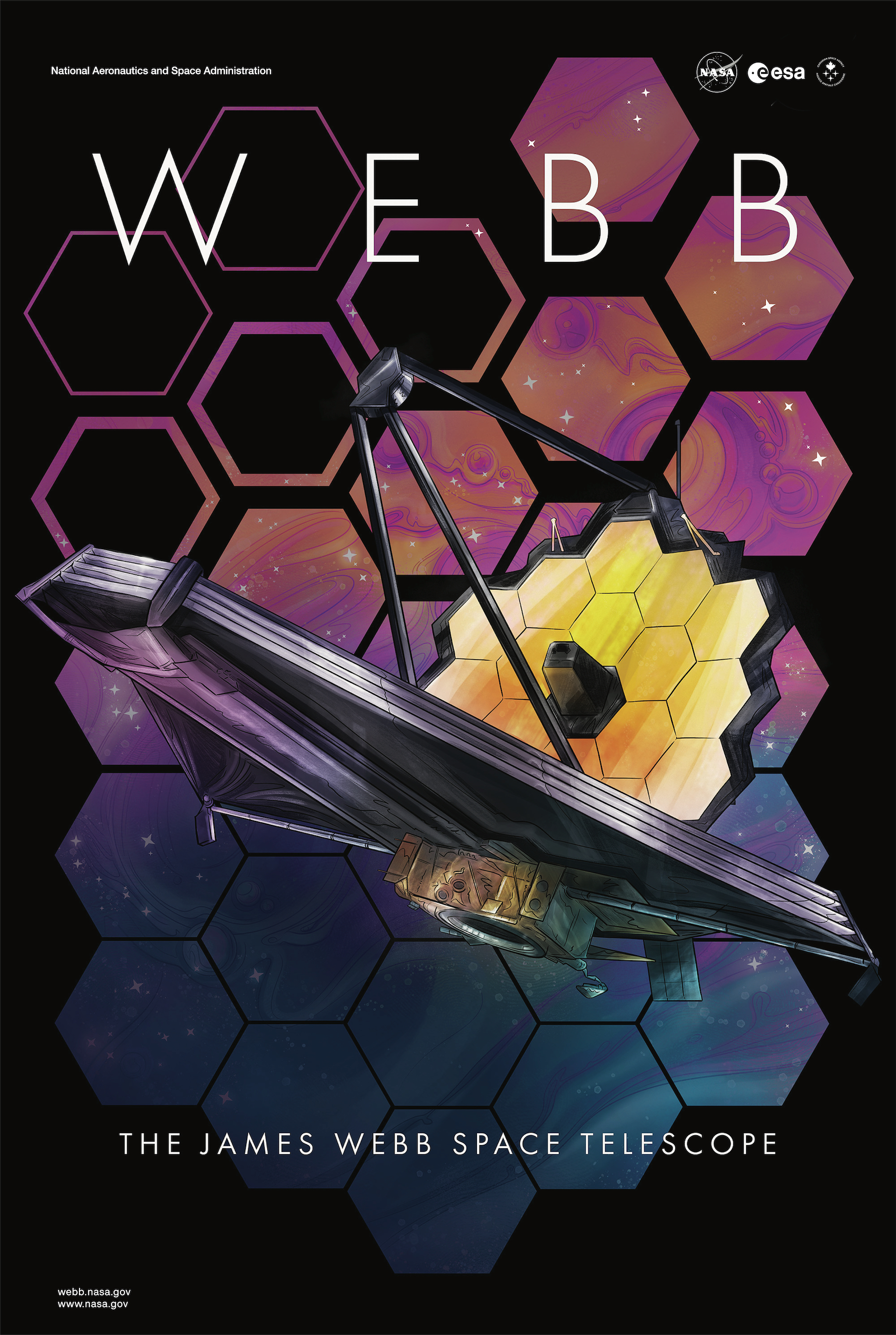
24"x 36" Anniversary Poster In Black
Webb Anniversary Poster - on Black

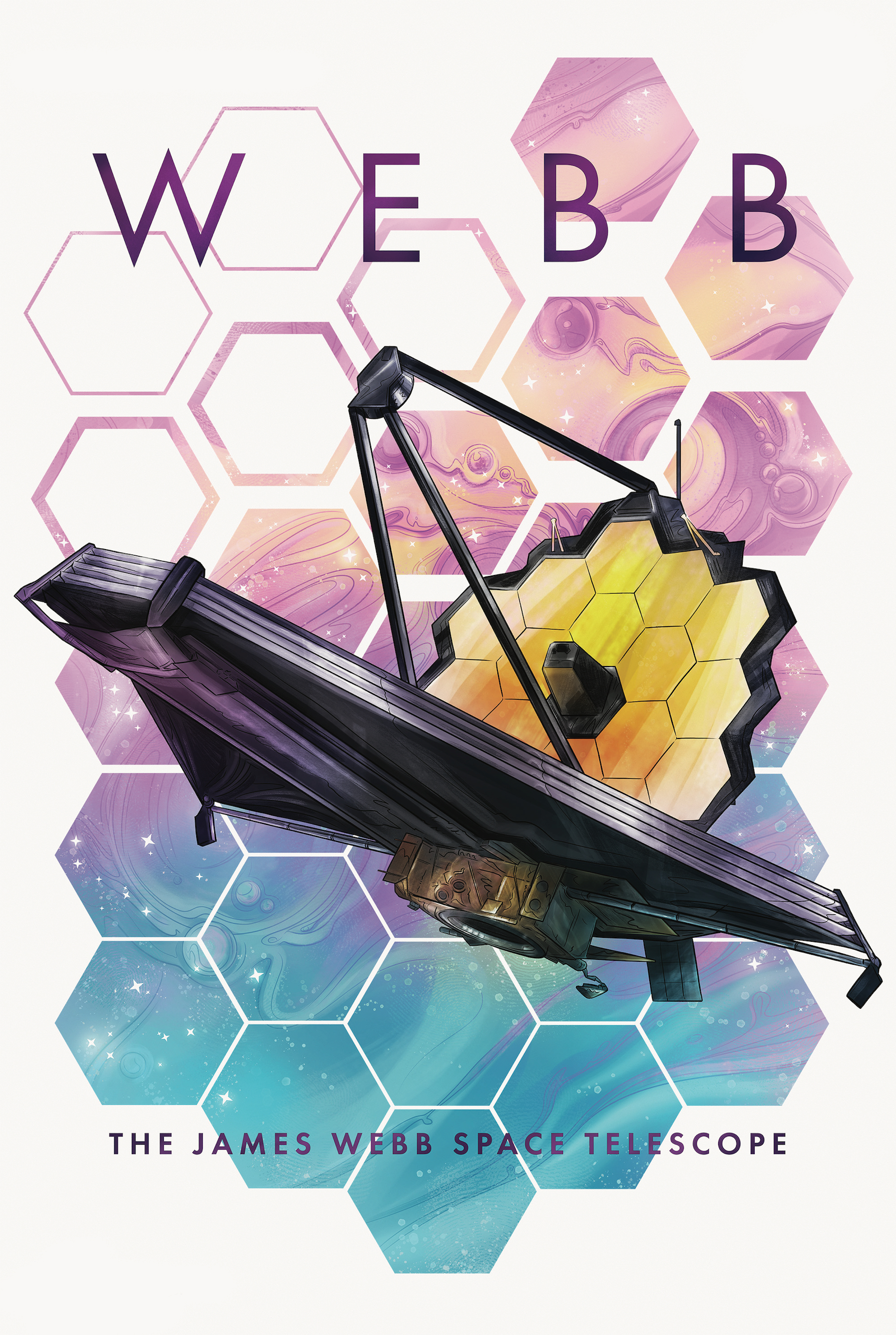
24"x36" Anniversary Poster In White
Webb Anniversary Poster - on White

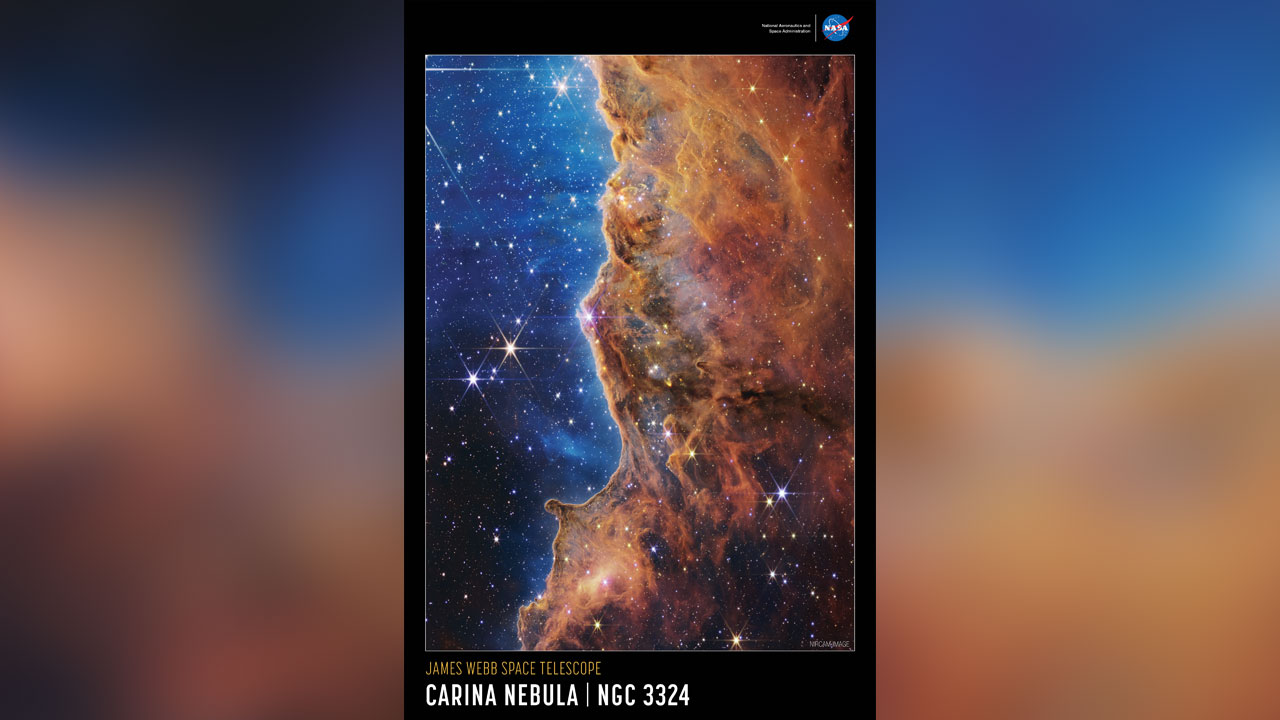
Colorful near-infrared image of the Carina Nebula outlined in white, set on a black background. The words “NIRCam Image” are set in very small white type on the bottom right of the image. The title is set below the image, along the bottom of the poster: “James Webb Space Telescope” appears in small orange type on the top line with “Carina Nebula, NGC 3324” in large white type on the bottom line. The poster has a portrait orientation.
Image: NASA, ESA, CSA, STScI; Designer: Dani Player (STScI)
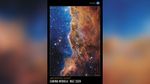
Colorful near- and mid-infrared image of a group of five galaxies known as Stephan’s Quintet, outlined in white and set on a black background. The words “NIRCam and MIRI Image” are set in very small white type on the bottom right of the image. The title is set below the image, along the bottom of the poster: “James Webb Space Telescope” appears in small orange type on the top line with “Stephan’s Quintet, HCG 92” in large white type on the bottom line. The poster has a portrait orientation.
Image: NASA, ESA, CSA, STScI
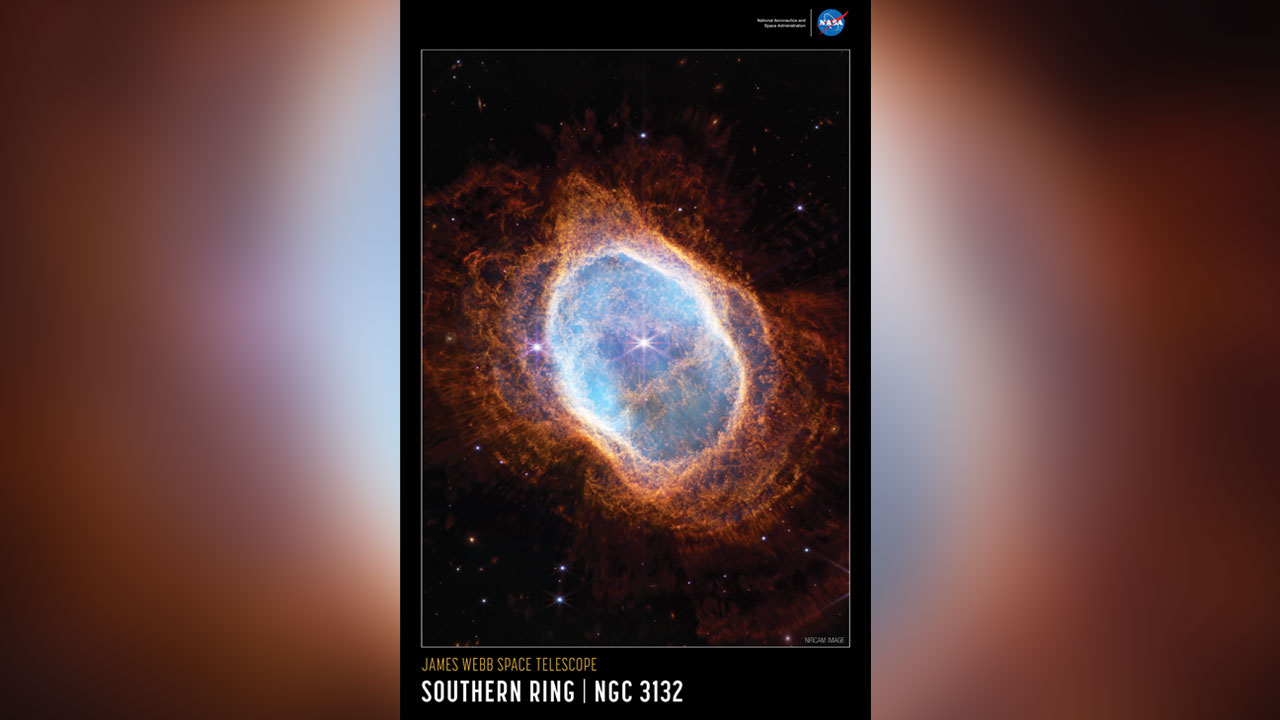
Colorful near-infrared image of the Southern Ring Nebula outlined in white, set on a black background. The words “NIRCam Image” are set in very small white type on the bottom right of the image. The title is set below the image, along the bottom of the poster: “James Webb Space Telescope” appears in small orange type on the top line with “Southern Ring, NGC 3132” in large white type on the bottom line. The poster has a portrait orientation.
Image: NASA, ESA, CSA, STScI
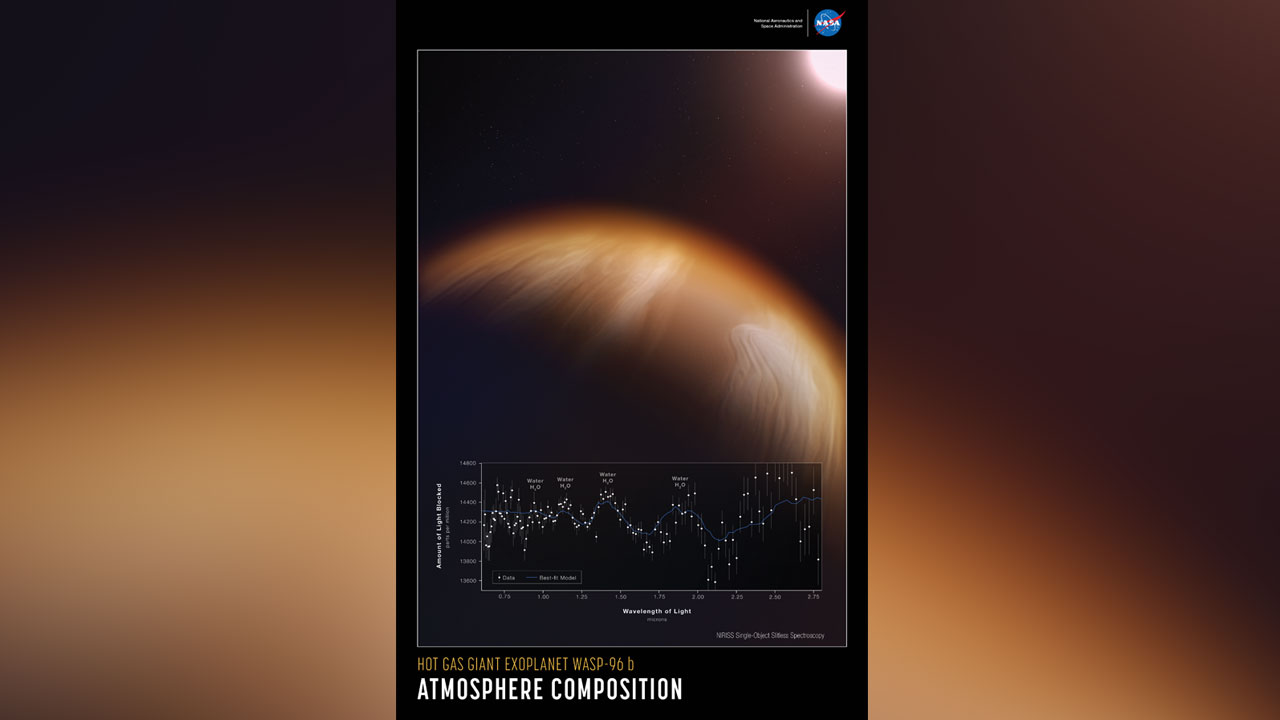
Detailed transmission spectrum showing the distinct signature of water in exoplanet WASP-96 b, with an illustration of the exoplanet and its star in the background. The title run along the top: “Hot gas giant exoplanet WASP-96 b” is in small orange type on the first line, with “Atmosphere Composition” in large white type on the second. Below the title the words “NIRISS Single-Object Slitless Spectroscopy” are set in very small white type. At the bottom left of the poster “James Webb Space Telescope” is set in small white type. The poster has a portrait orientation.
Image: NASA, ESA, CSA, STScI
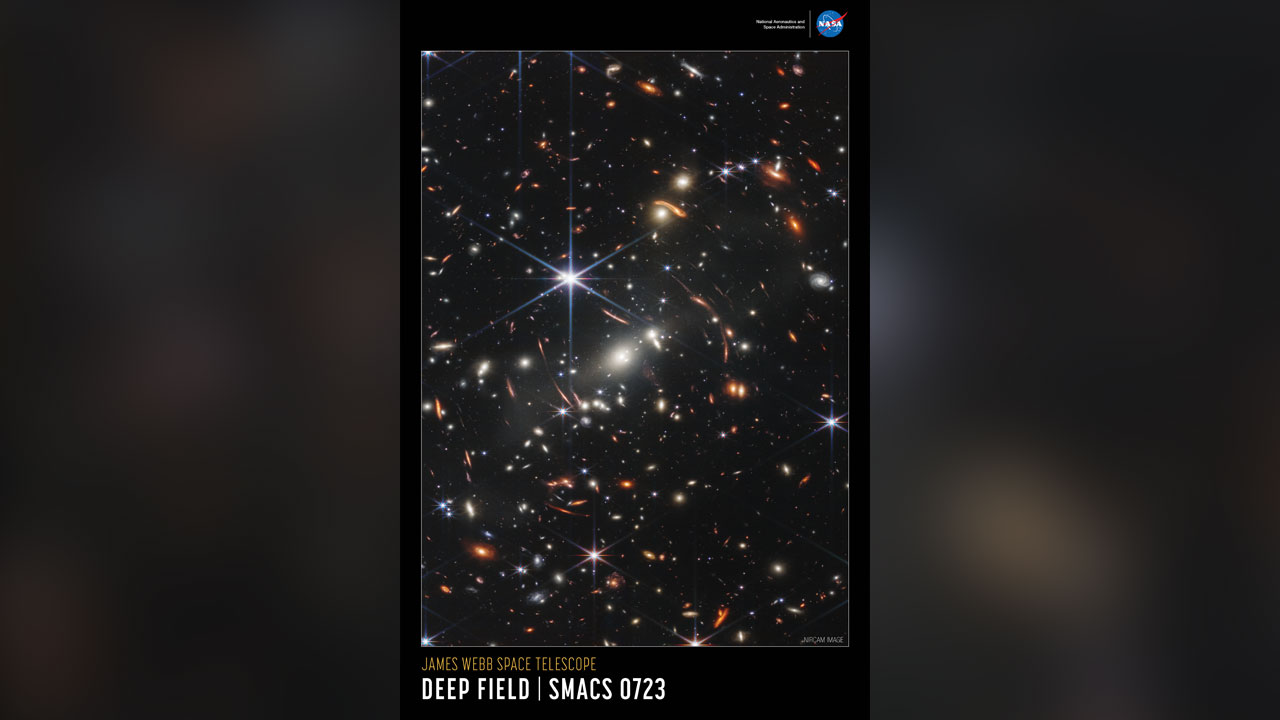
Colorful near-infrared image of the galaxy cluster SMACS 0723 outlined in white, set on a black background. The words “NIRCam Image” are set in very small white type on the bottom right of the image. The title is set below the image, along the bottom of the poster: “James Webb Space Telescope” appears in small orange type on the top line with “Deep Field SMACS 0723” in large white type on the bottom line. The poster has a portrait orientation.
Image: NASA, ESA, CSA, STScI
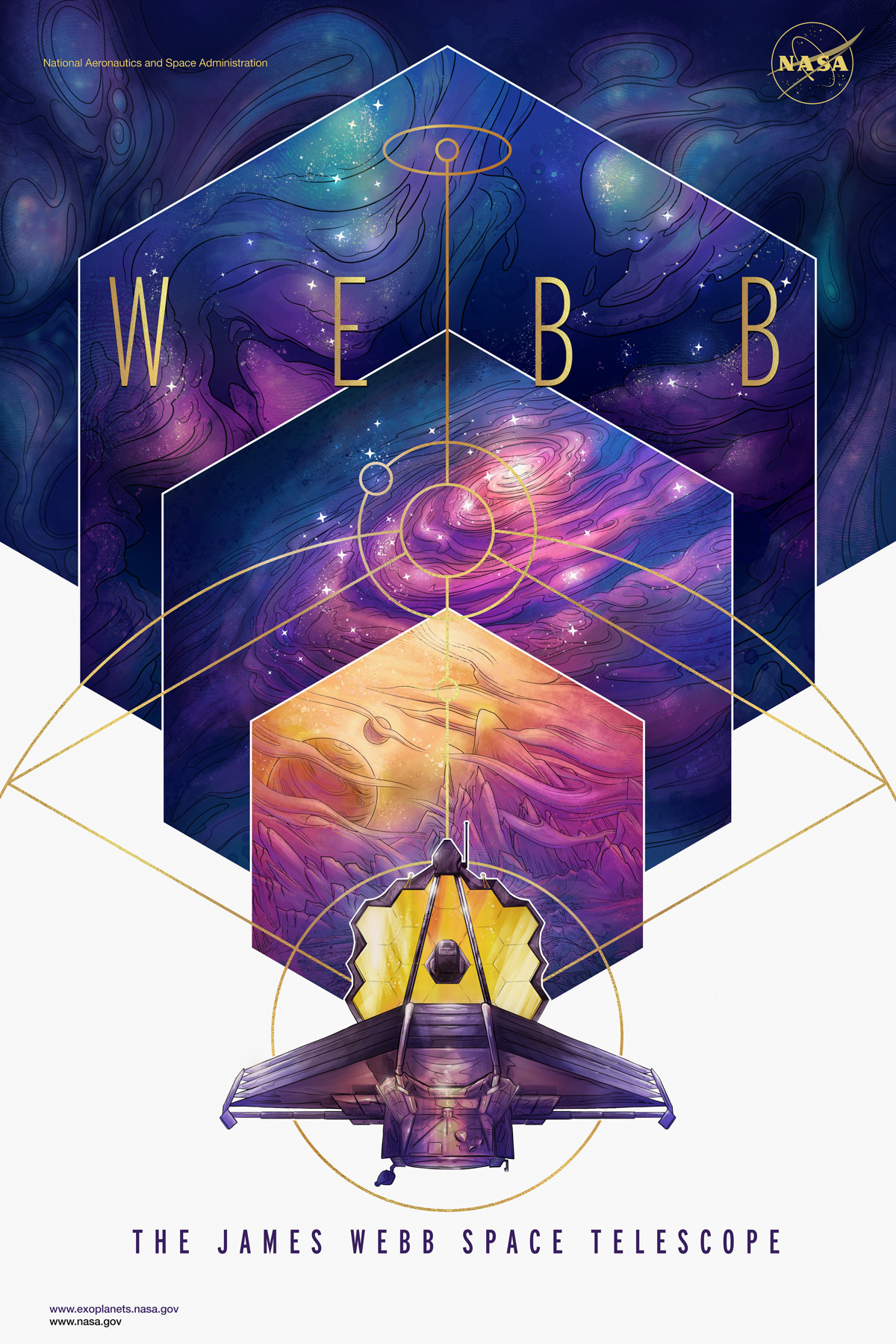
James Webb Space Telescope Poster - JPL
James Webb Space Telescope Poster - JPL


Seeing Farther Poster
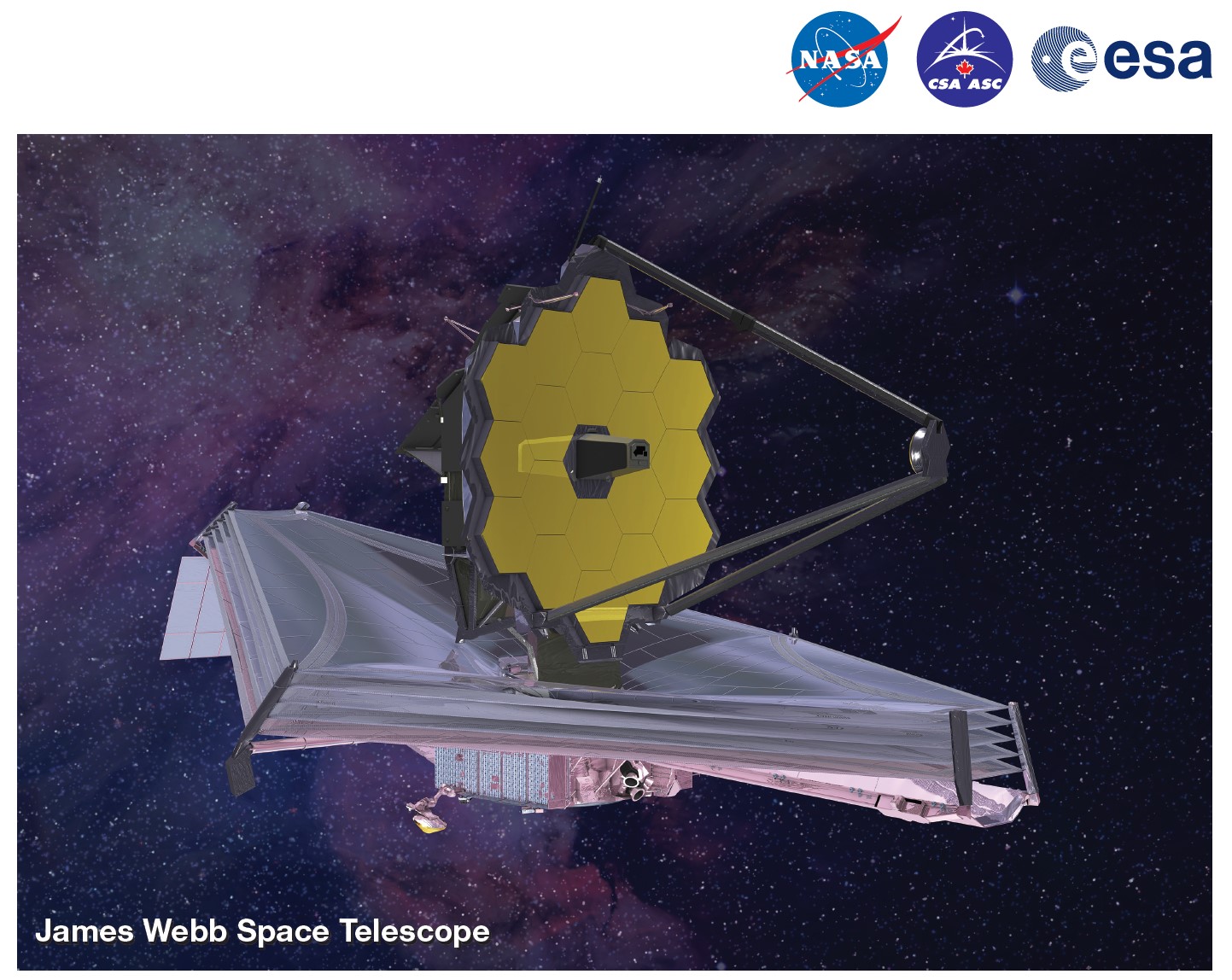
Webb Litho
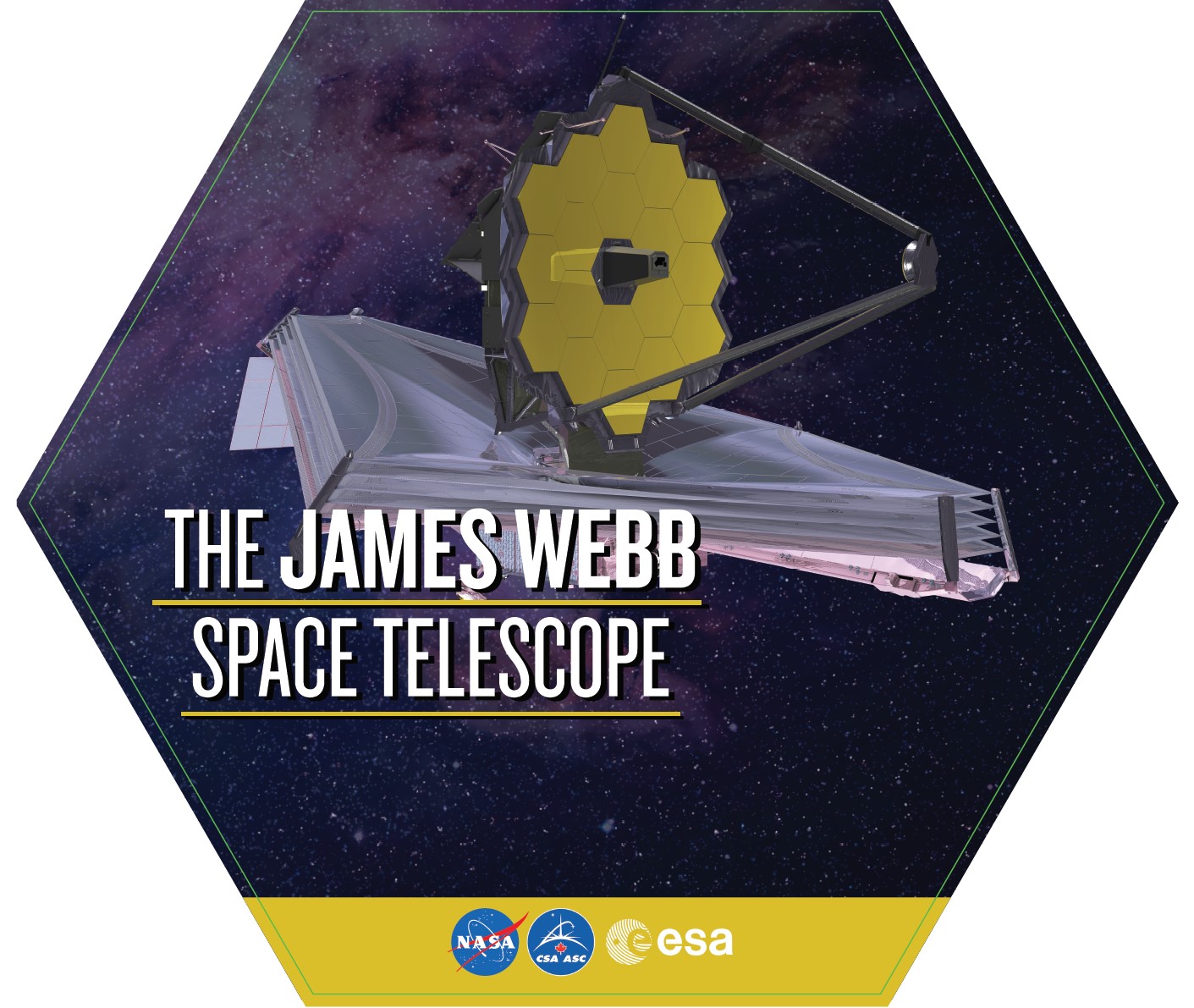
Webb Hexagon Litho
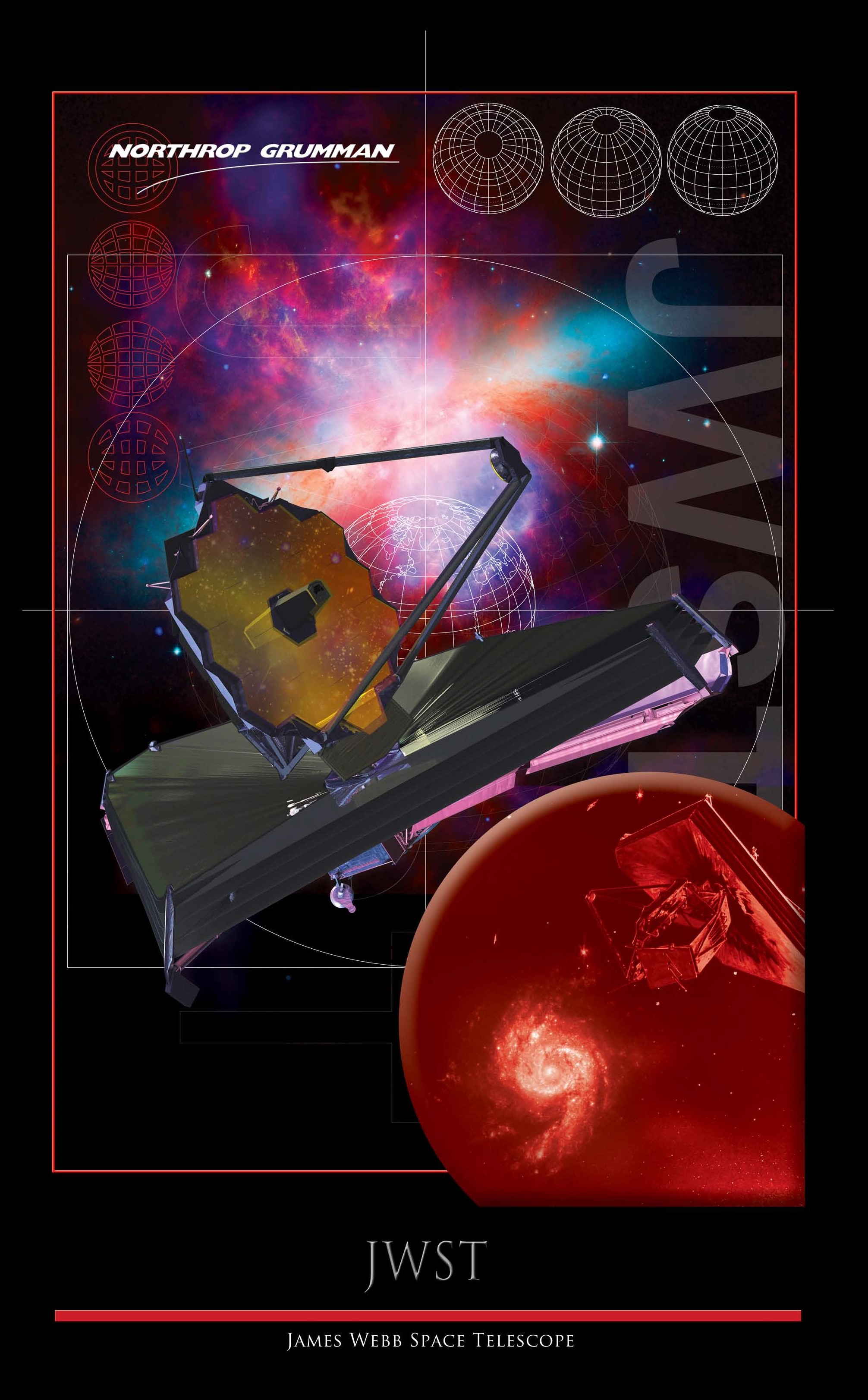
Webb Poster - NG1
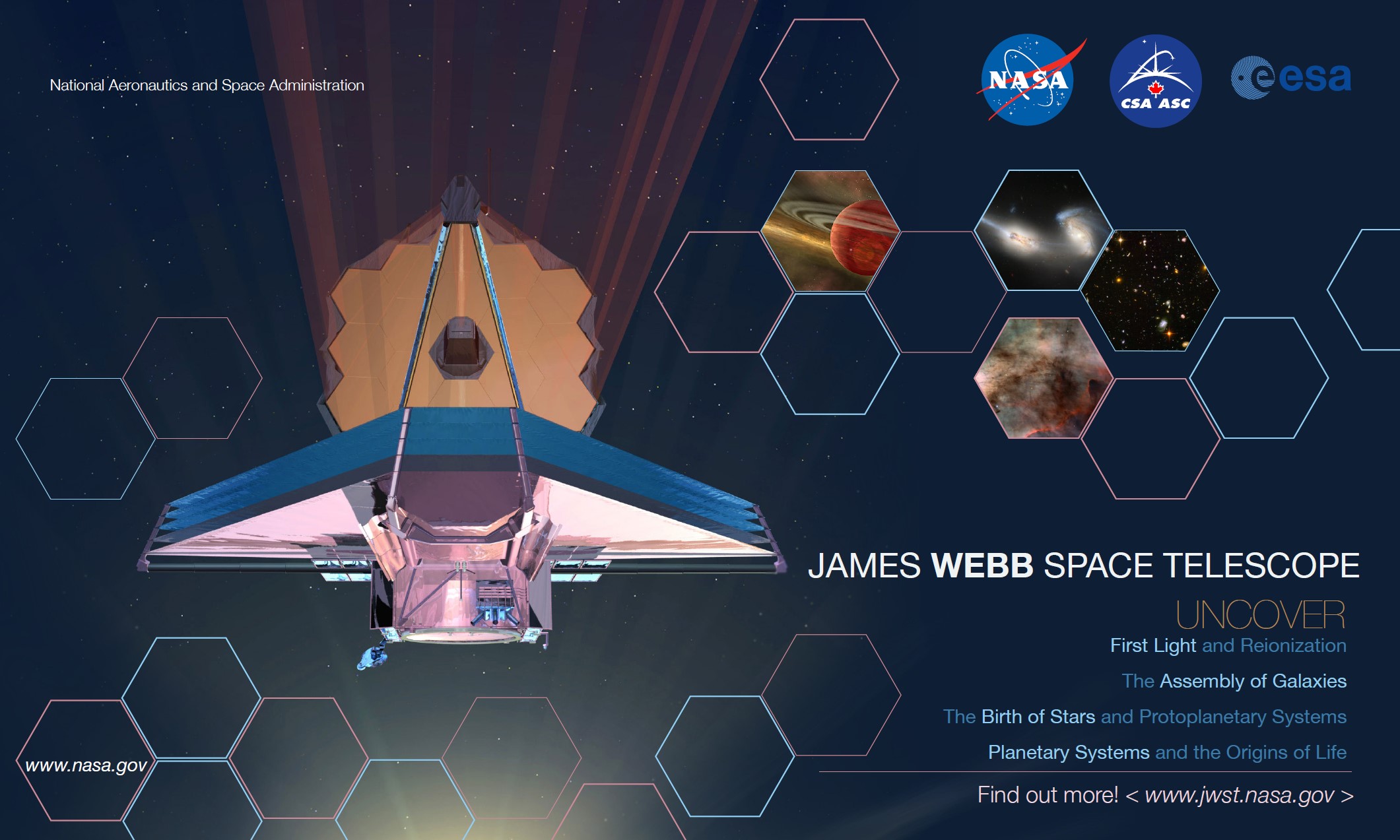
Webb Poster-2010