

















1 min read
Hubble Spectrum of White Dwarf HS 0209+0832
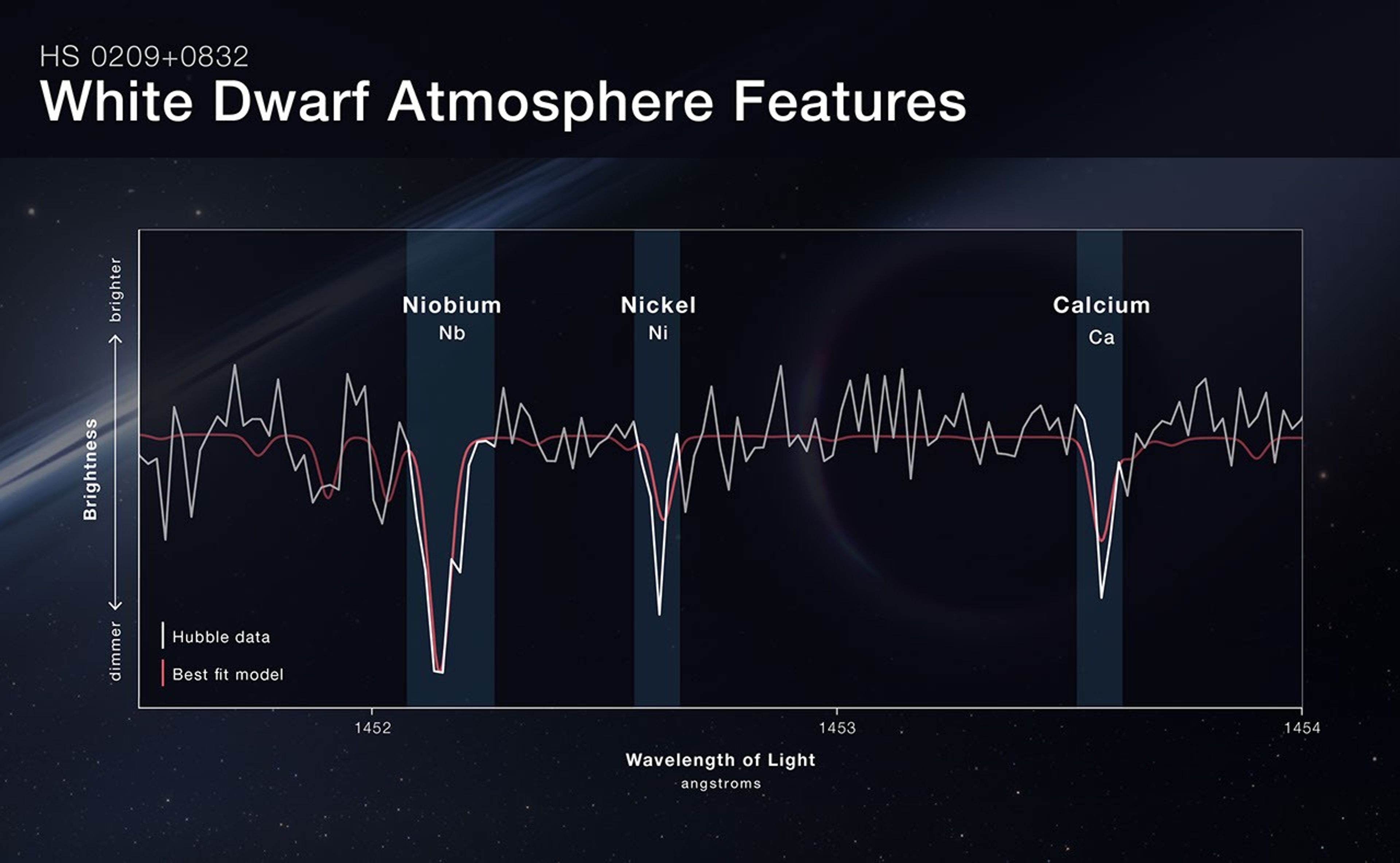
NASA’s Hubble Space Telescope spectrum shows the unusual abundances of certain elements it found in the HS 0209+0832 system. Dips indicate where niobium, nickel, and calcium are absorbing light, so less light in that part of the spectrum reached Hubble.
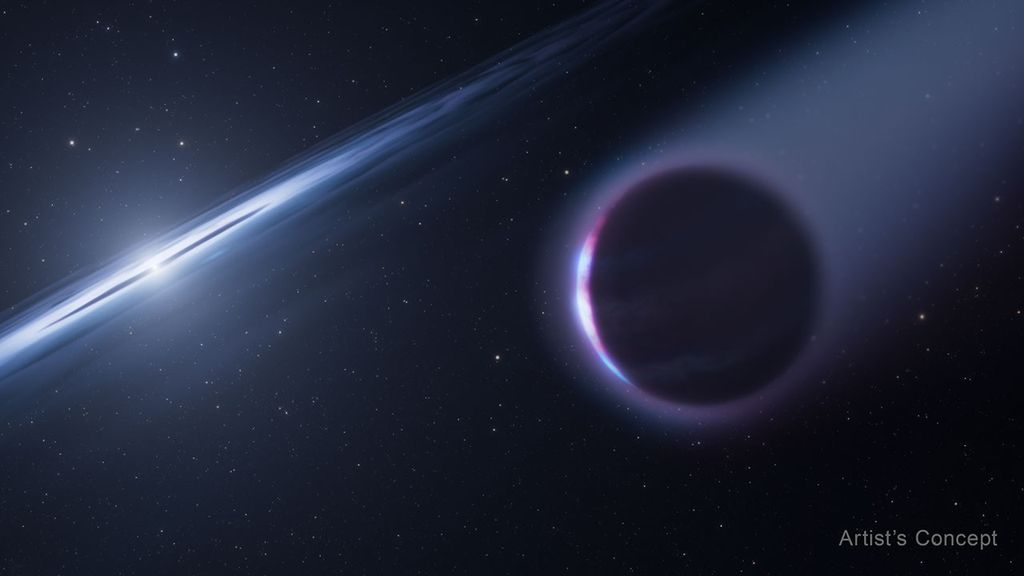
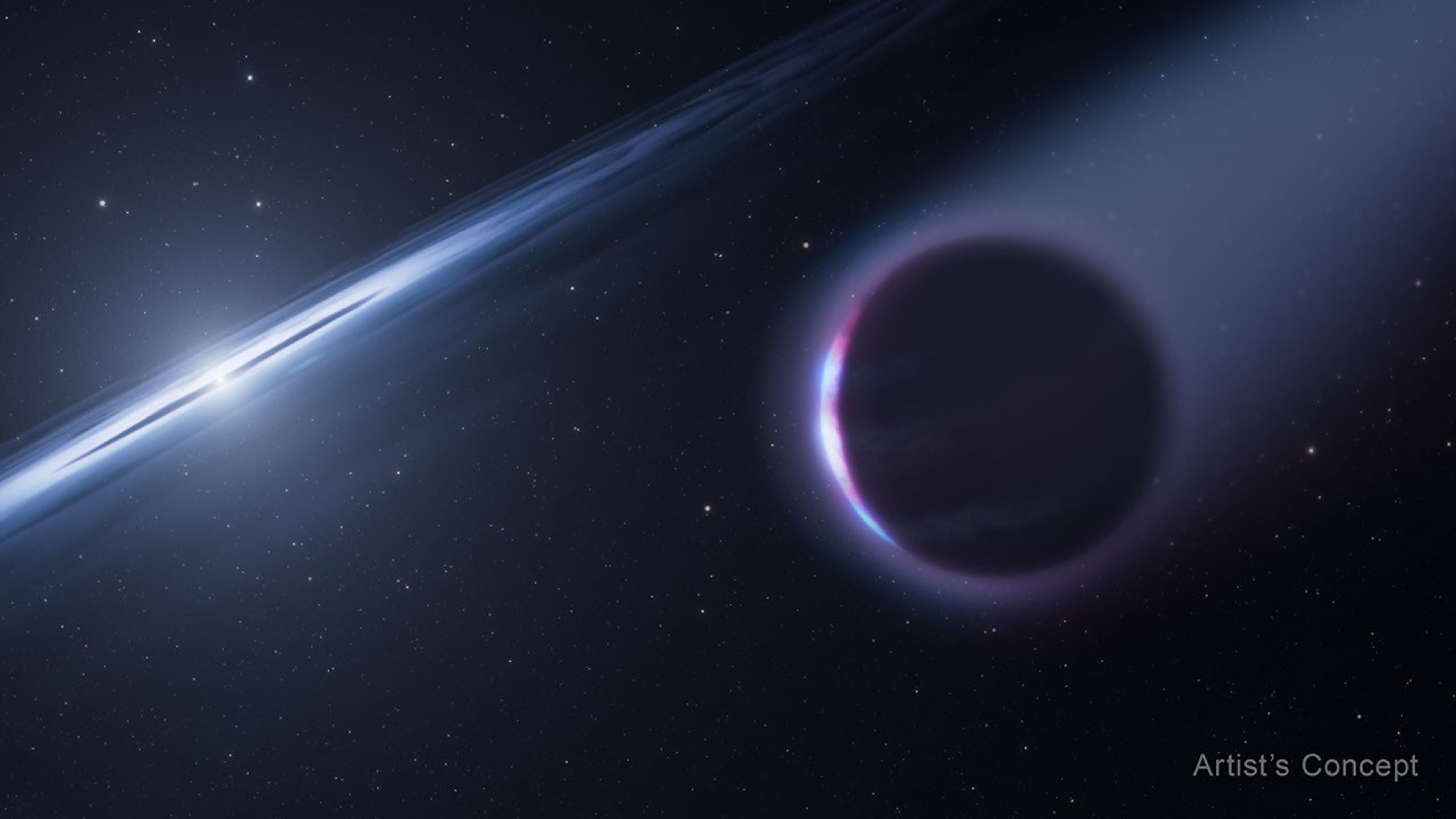
The reason the starlight is showing elements that astronomers attribute to a planet has to do with interactions between the white dwarf star and planet. The white dwarf is still hot and is blasting the planet with radiation, causing it to lose atmosphere to space. That atmospheric material is flowing back toward the white dwarf, forming a disk and then falling back onto its surface.
- Release DateOctober 5, 2026
- Science ReleaseSuspected Second-generation Planet Solves NASA Hubble Cold Case
- CreditIllustration: NASA, ESA, Leah Hustak (STScI)
Related Images & Videos
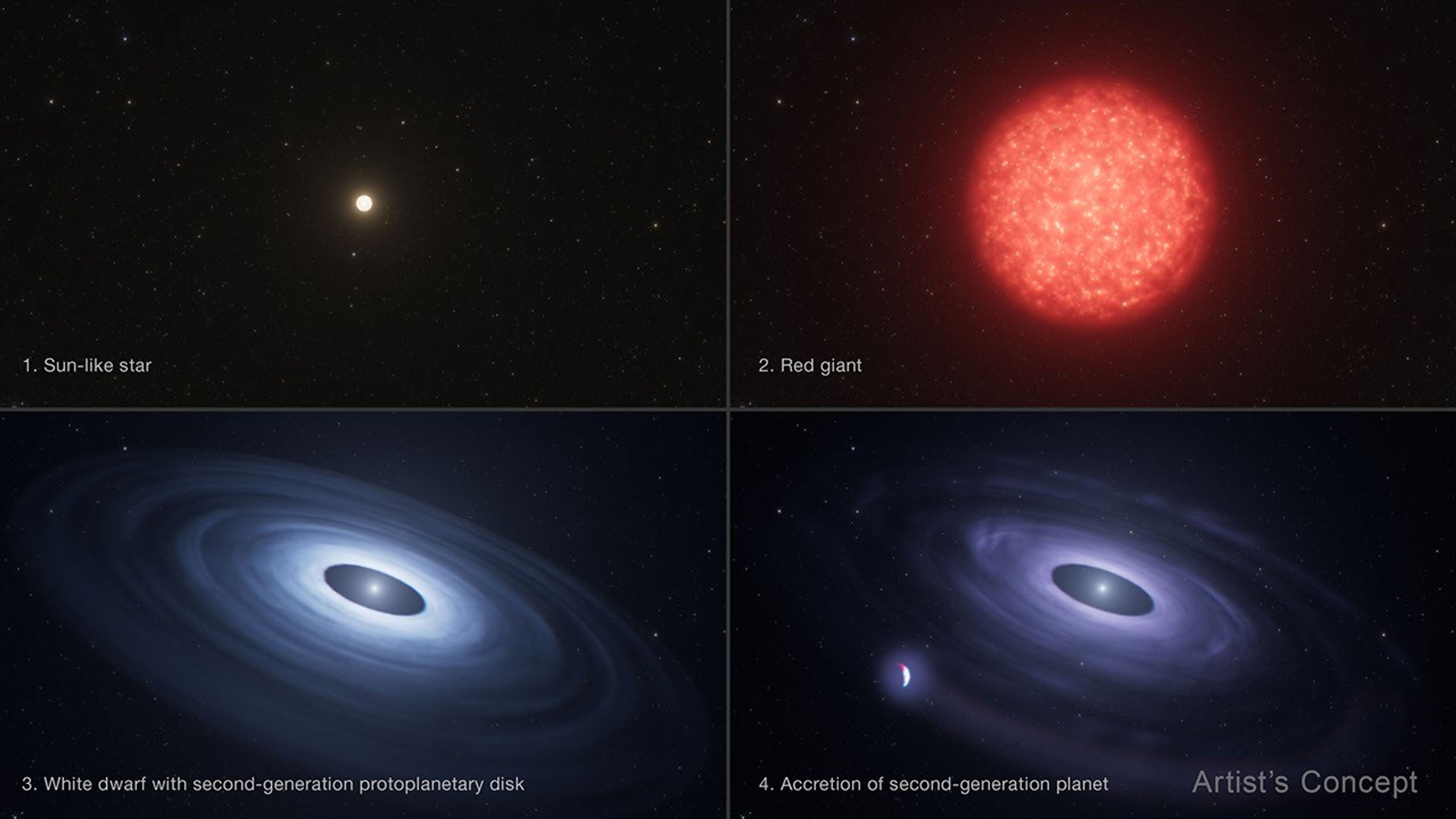
White Dwarf HS 0209+0832 over Time (Artist’s Concept)
This artist’s concept, not to scale, imagines the evolution of a Sun-like star (1) into an aging red giant (2) and then a small, bright white dwarf surrounded by a disk of its expelled outer layers (3), from which a second-generation planet forms (4).
Share
Details
Claire Andreoli
NASA’s Goddard Space Flight Center
Greenbelt, Maryland
claire.andreoli@nasa.gov