

















Messier 74
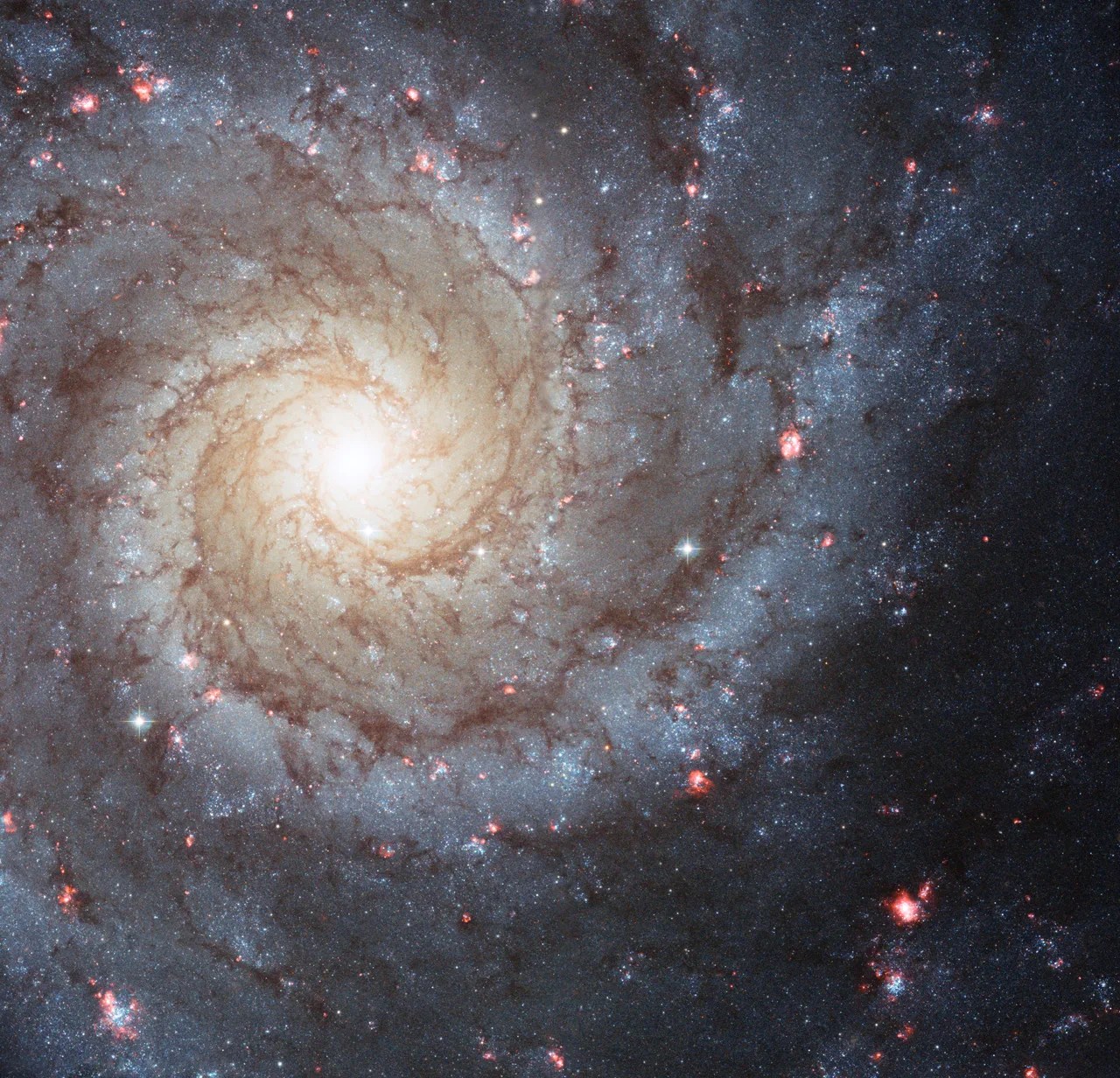
Hubble captured this face-on spiral galaxy at visible and infrared wavelengths.
Distance
32 million light-years
Apparent Magnitude
10.0
constellation
Pisces
object type
Spiral Galaxy
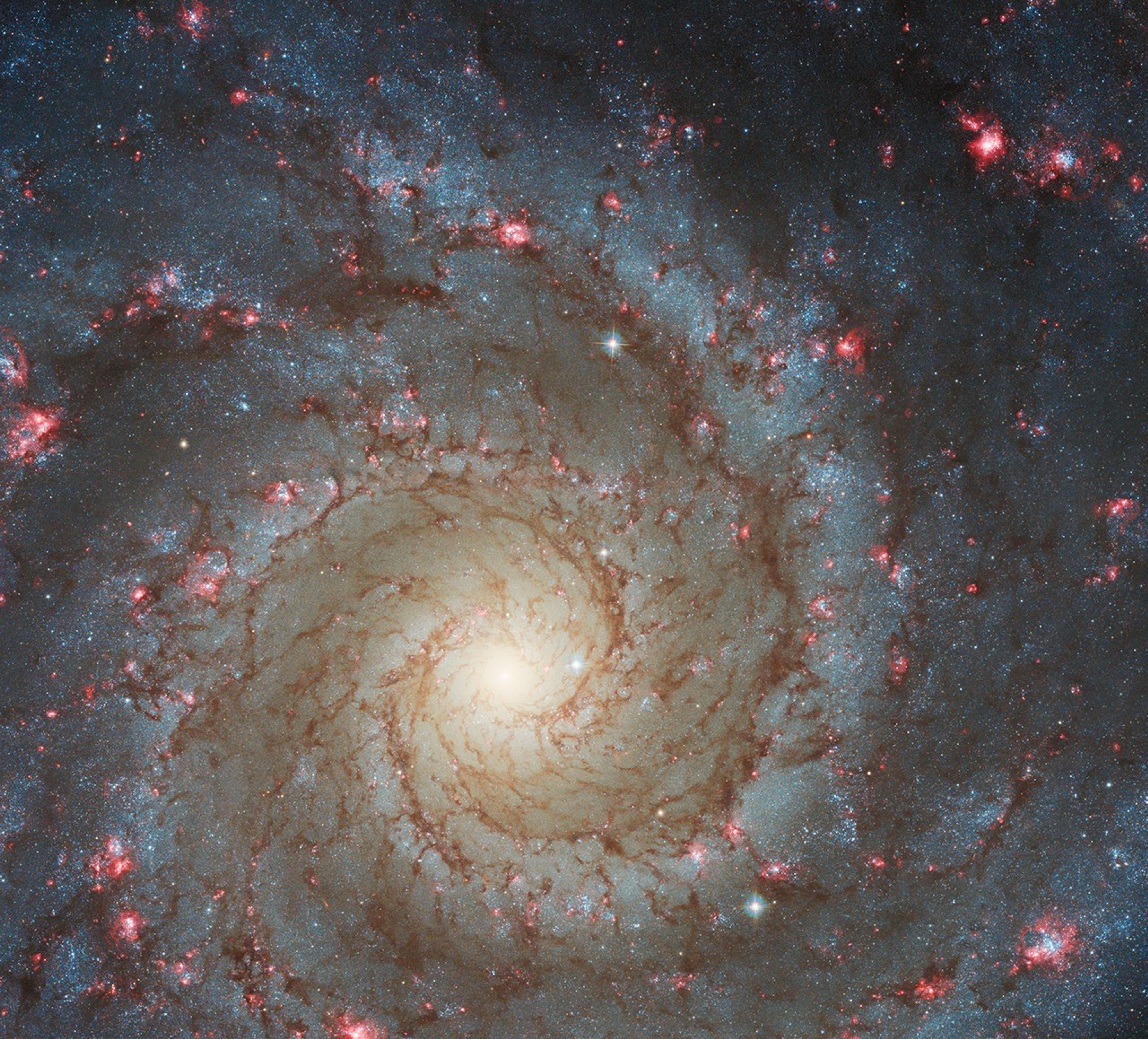
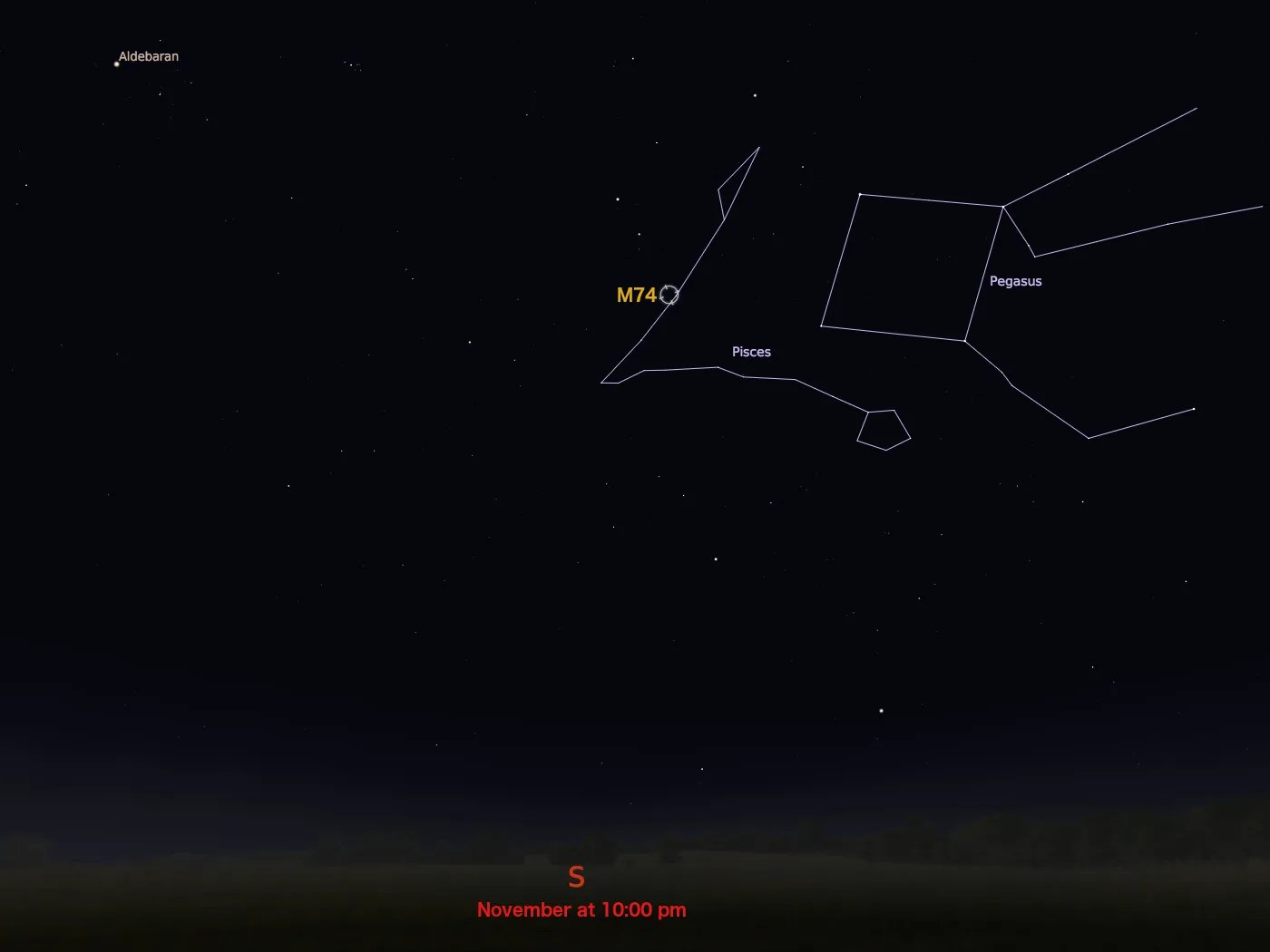
A stunning face-on spiral galaxy, M74 was discovered in 1780 by Charles Messier’s observing assistant, the French astronomer Pierre Méchain. M74 is located roughly 32 million light-years away from Earth in the constellation Pisces. With a low surface brightness and an apparent magnitude of only 10, the galaxy appears as a faint patch of light through small telescopes and is one of the most difficult Messier objects to observe. The best time to look for it in the sky is during November.
M74 is a perfect example of a grand-design spiral galaxy. Symmetrical spiral arms reach out from the galaxy’s central nucleus and are traced by winding dust lanes. The arms are dotted with clusters of young, blue stars and pink regions where the ultraviolet light from these young stars has ionized clouds of hydrogen and caused them to glow.
Amateur vs. Hubble Image

For more information about Hubble’s observations of M74, see:

Explore Hubble's Messier Catalog
The following pages contain some of Hubble’s best images of Messier objects.
Overview The Messier catalog, begun by astronomer Charles Messier in the 18th Century and revised over the years, includes some…

Better known as the Crab Nebula, Charles Messier originally mistook Messier 1 for Halley’s Comet, which inspired him to create…
Hubble's image of Messier 2 is comprised of visible and infrared wavelengths of light.