



























OSDR
NASA’s Open Science Data Repository (OSDR) enables the reuse of comprehensive, multi-modal space life science data—including omics, physiological, phenotypic, behavioral, and environmental telemetry—to advance basic and applied research as well as operational outcomes for human space exploration.
Data Repository
Search biological space-relevant datasets

Submission Portal
Submit your biological space-relevant data
Visualization
Explore OSDR Visualization Portals

OSDR AWGs
Join an OSDR Analysis Working Groups
About OSDR
The NASA Open Science Data Repository (OSDR) holds multi-modal, multi-hierarchical space life science data: omics, phenotypic, physiological, behavioral, biomedical, bioimaging, environmental telemetry, hardware; tabular, text, code, imaging, video; raw and processed; from humans, animals, model organisms, tissue chips, plants, and microbes. These data and metadata support reuse for fundamental biology, applied science, and operational outcomes across space exploration and discovery. To learn more, here is a publication covering all aspects. NASA OSDR expanded from GeneLab in 2021, integrating the Ames Life Sciences Data Archive (ALSDA).
Explore OSDR’s tutorials, the dashboard to explore OSDR data, the repository search portal, the OSDR Submission portal, the umbrella visualization-tool-api portal, the biorepository of spaceflight and space-relevant samples/tissues via the NASA Biological Institutional Scientific Collection (NBISC), the Space Microbial Culture Collection (SMCC), the BIOdata-API with example API calls to reuse, the multi-study viz analysis/knowledge graph portal, the Environmental Data Application (own API), RadLab (own API), and the SPLASH Hardware database. OSDR also has its data accessible via s3 and CLI on the Registry of Open Data on AWS. OSDR offers free, on-demand public workforce trainings: Bioinformatics (GL4U) and AI/ML for space biology, plus an associated GeneLab for High Schools program. OSDR has a sister Physical Sciences Informatics repository (portal, about page) and a data-sharing collaboration with the European Space Agency (Human and Robotic Exploration Data Archive). NASA Ames also hosts AI for Life in Space (AI4LS) research group, closely tied to OSDR. Lastly, here is the Horizons in Biosciences and Informatics Seminar Series (HBISS), open to AWG members, with a list of all past speakers, and previous recaps/recordings.

All OSDR-enabled publications, pre-prints, and student theses (including all AWG-driven ones) are listed on the OSDR Google Scholar and the OSDR Latest Publication pages
| Learn more about OSDR | |
|---|---|
| About OSDR | Data Processing Overview |
| Latest News | Standard Operating Procedures |
| Latest Publications | FAQ |
| Newsletters | Contact OSDR |
Project Overview
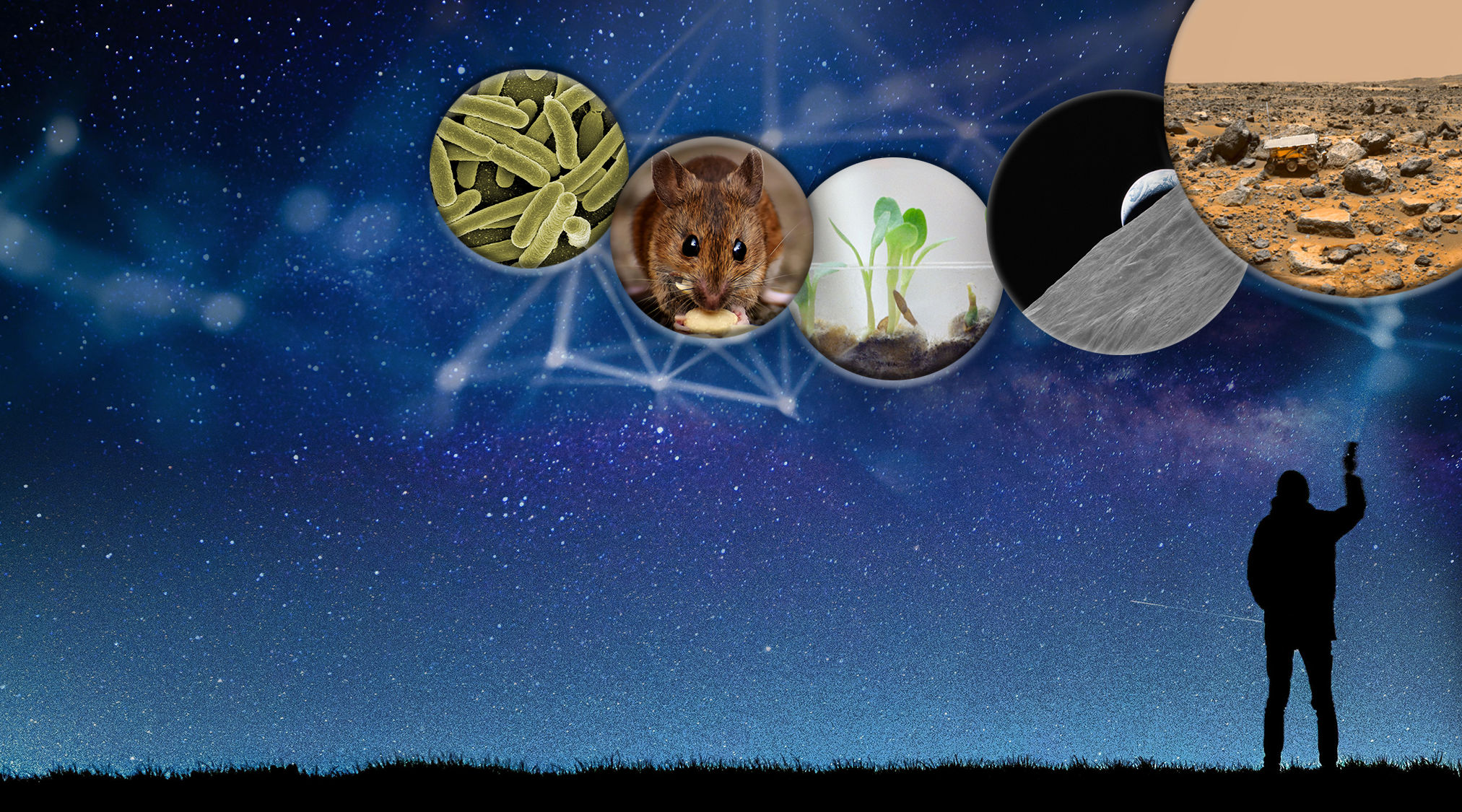
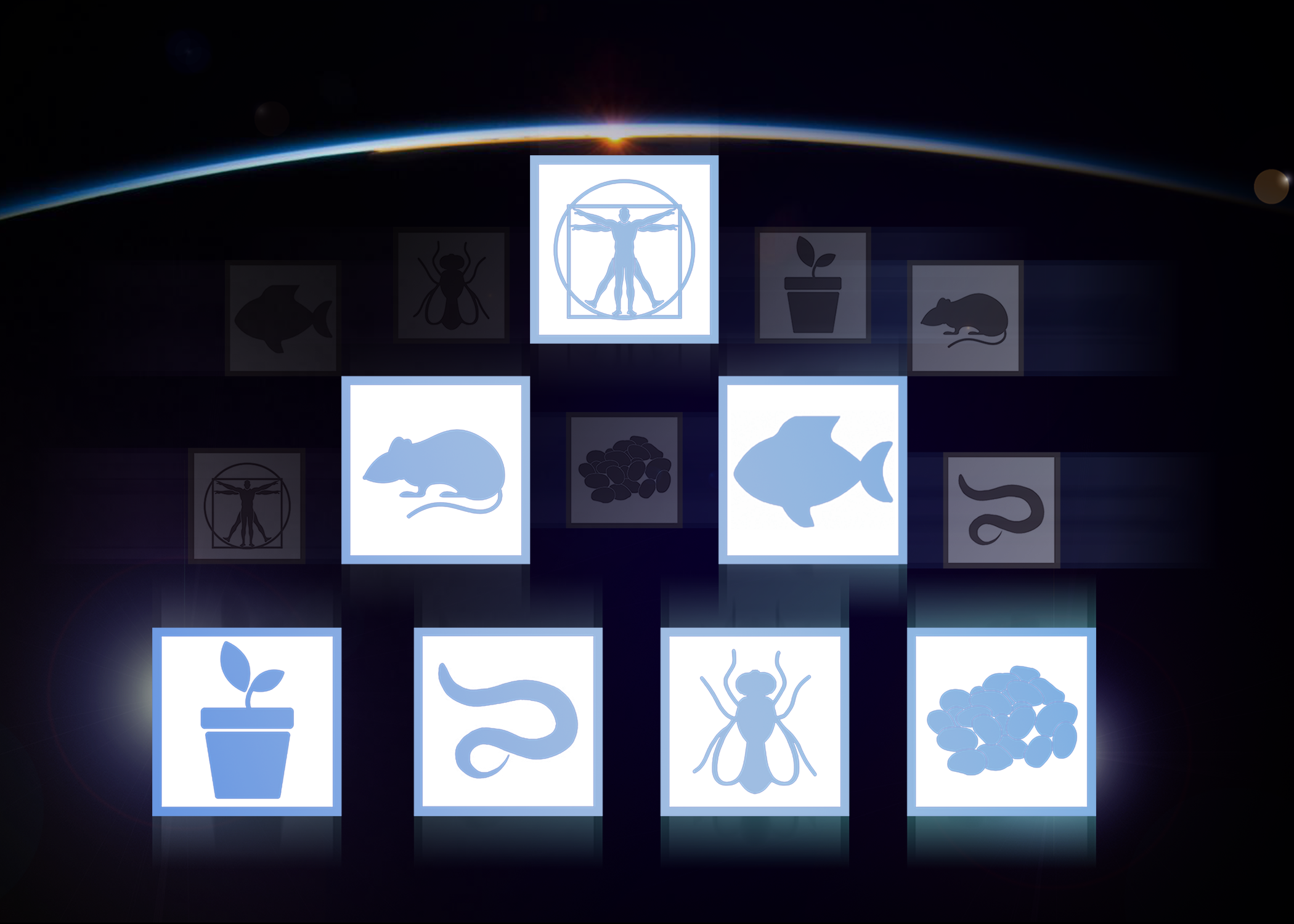
The NASA Open Science Data Repository (OSDR) is a comprehensive platform designed to maximize the scientific value of biological experiments conducted in space or under spaceflight-like conditions to enable future missions to the Moon and Mars. It provides a robust infrastructure for users to upload, download, store, analyze, and visualize biological and environmental data collected from space-relevant experiments involving organisms such as mice, fruit flies, plants, and microbes. OSDR datasets are meticulously curated using standardized ontologies and metadata formats that are normalized across studies. Such standards maximize the AI-readiness of these precious data thereby improving search capabilities, enabling cross-dataset analyses, and enhancing our knowledge about the impacts of spaceflight on terrestrial biology so we can develop effective mitigation strategies for long-duration spaceflight.
OSDR services the life sciences community through its data repository and visualization suite, consisting of omics data from GeneLab and physiological, phenotypic, behavioral, bioimaging, and environmental data from the Ames Life Sciences Data Archive (ALSDA). These resources not only advance our understanding of how biological systems respond to space conditions, including microgravity and radiation, but also have direct applications for human health on Earth, such as improving treatments for osteoporosis, cardiovascular disease, aging, and microbial infections.
ALSDA
The Ames Life Sciences Data Archive (ALSDA), located at NASA Ames Research Center, is the official repository for non-human life sciences data generated by NASA’s Space Biology and Human Research Programs. ALSDA archives, curates, and provides access to higher-order phenotypic datasets—including physiological, behavioral, tissue, organ, and whole-organism data—from spaceflight and ground-based experiments. With over 30 years of life sciences research, ALSDA has modernized its systems to align with FAIR principles and integrated into NASA’s Open Science Data Repository, offering improved data accessibility and reuse through tools like updated data management plans, a single-point data submission portal, and cloud-based repositories. The archive supports cross-mission and interdisciplinary research, enabling discoveries related to space biology and human health, including insights into conditions like muscle atrophy and bone loss relevant to long-duration missions to the Moon and Mars.
GeneLab
GeneLab is NASA’s first comprehensive open-access platform for storing, sharing, and analyzing omics data from spaceflight and related experiments. It enables scientists worldwide to explore how microgravity, radiation, and the space environment affect DNA, RNA, proteins, and metabolites by providing rigorously curated and standardized multi-omics datasets along with essential metadata. GeneLab supports discovery by integrating diverse biological data types—genomics, transcriptomics, proteomics, metabolomics, and more—from a range of organisms including plants, microbes, and animals. These data help uncover the molecular mechanisms underlying physiological changes in space, such as bone loss, immune dysregulation, and microbial evolution—insights that are vital for protecting astronaut health and advancing space exploration. With applications reaching beyond space, GeneLab data also contribute to breakthroughs in human disease research, plant biology, and microbiome science. By maximizing the scientific return from rare and valuable space experiments, fostering a collaborative international community, and standardizing protocols for data quality, GeneLab accelerates innovation that supports both Earth-based medicine and long-duration missions to the Moon, Mars, and beyond.
Data Repository and Visualization Suite
OSDR helps scientists understand how the fundamental building blocks of life itself – DNA, RNA, proteins, and metabolites – change from exposure to microgravity, radiation, and other aspects of the space environment, and how these changes impact phenotypes, physiology, and behavior. OSDR does so by providing fully coordinated multi-modal datasets including omics data from GeneLab and physiological, phenotypic, behavioral, bioimaging, and environmental data from the Ames Life Sciences Data Archive (ALSDA). These data are provided alongside essential metadata describing each spaceflight and space-relevant experiment hosted on the OSDR repository. To enhance the accessibility and reusability of these data, GeneLab designs and implements standardized, community-driven, open-source bioinformatics workflows to transform raw omics data into standardized processed data, and ALSDA data are transformed into standardized data formats. These standardized data products are available on OSDR and have been integrated into a suite of visualization tools, including environmental, radiation, and multi-study biological data visualization platforms, thereby allowing users to simultaneously compare both biological and environmental data across multiple studies.
OSDR datasets from hundreds of space studies have been reused for meta-analyses and in AI/ML approaches for space biology health. This has led to new insights and scientific publications that extend beyond the initial research, thereby enriching our understanding of biological responses to the space environment.
Data Repository Terms and Conditions
The NASA OSDR is where researchers submit, curate, and share their research outputs, such as datasets, tissue derivatives, images, and videos.
NASA BPS Open Science Repositories include, but are not limited to:
- The Physical Sciences Informatics (PSI) repository
- Ames Life Sciences Data Archive (ALSDA)
- GeneLab (GL)
- NASA Biological Institutional Scientific Collection (NBISC)
With NASA’s suite of open BPS repositories, scientists can use existing datasets to make new discoveries, propose future investigations, or influence research trends.
Read more here: https://science.nasa.gov/reference/osdr-help-terms-and-conditions/