
























Helio and You: July 2026
Scientific achievement has been a part of the American identity for as long as that identity has existed. Heliophysics is an important cornerstone of the history of astronomy, and many of the pioneers in this field have been American. Let's take a look at a few of these history-makers.
Heliophysics as an American Endeavor
250 Years of Making History
Scientific achievement has been a part of the American identity for as long as that identity has existed. Heliophysics is an important cornerstone of the history of astronomy, and many of the pioneers in this field have been American. These heliophysics pioneers have helped to shape their field from its earliest days.
As we celebrate 250 years of American history, it would be easy to be overwhelmed by the scale of scientific discovery in those years. When the Declaration of Independence was signed, there were still only six known planets in the solar system. William Herschel didn’t discover Uranus until March 13, 1781, almost five years after our first Independence Day. The Carrington Event of 1859, a vital catalyst in the history of heliophysics, happened when there were still only 33 U.S. states.
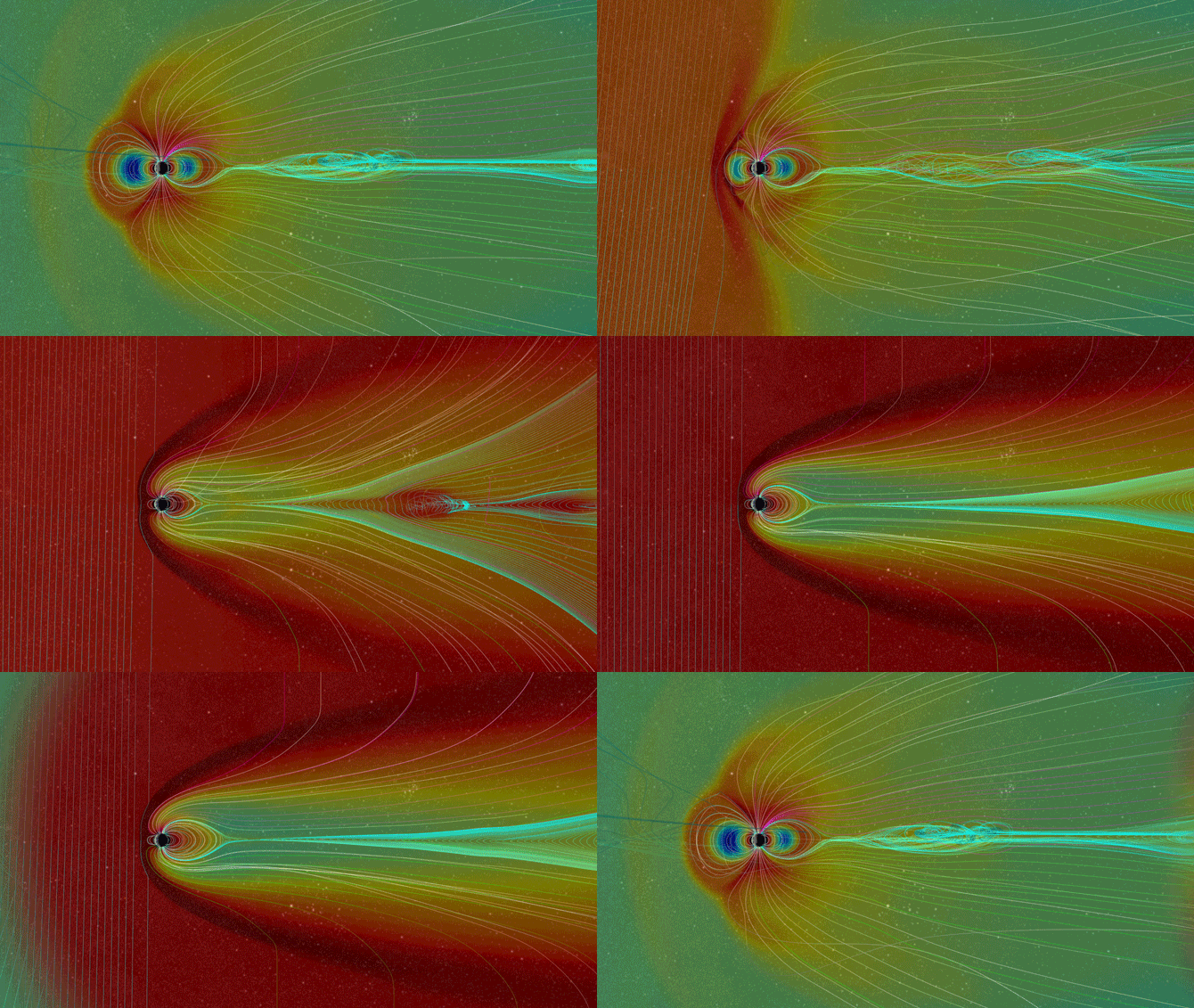
American astronomers have achieved much since the nation’s founding, and this includes helping catalyze the field of heliophysics as we know it today. From the discovery of the Van Allen radiation belts in 1958 to the ongoing voyage of NASA’s Parker Solar Probe today, even just the last seven decades of heliophysics history is full of achievements made by American astronomers.
One Man as a Microcosm
One significant figure in the record of American heliophysics achievement is George Ellery Hale. Hale was born June 29, 1868, in Chicago, where his father built his fortune by helping to rebuild the city after the Great Fire of 1871. After his graduation from the Massachusetts Institute of Technology in 1890, Hale convinced his father to build him an observatory on their property in Kenwood, Chicago. Kenwood Observatory is where Hale established the Astrophysical Journal and pioneered the spectroheliograph, an instrument still used today that captures imagery of the Sun at a single wavelength of light.
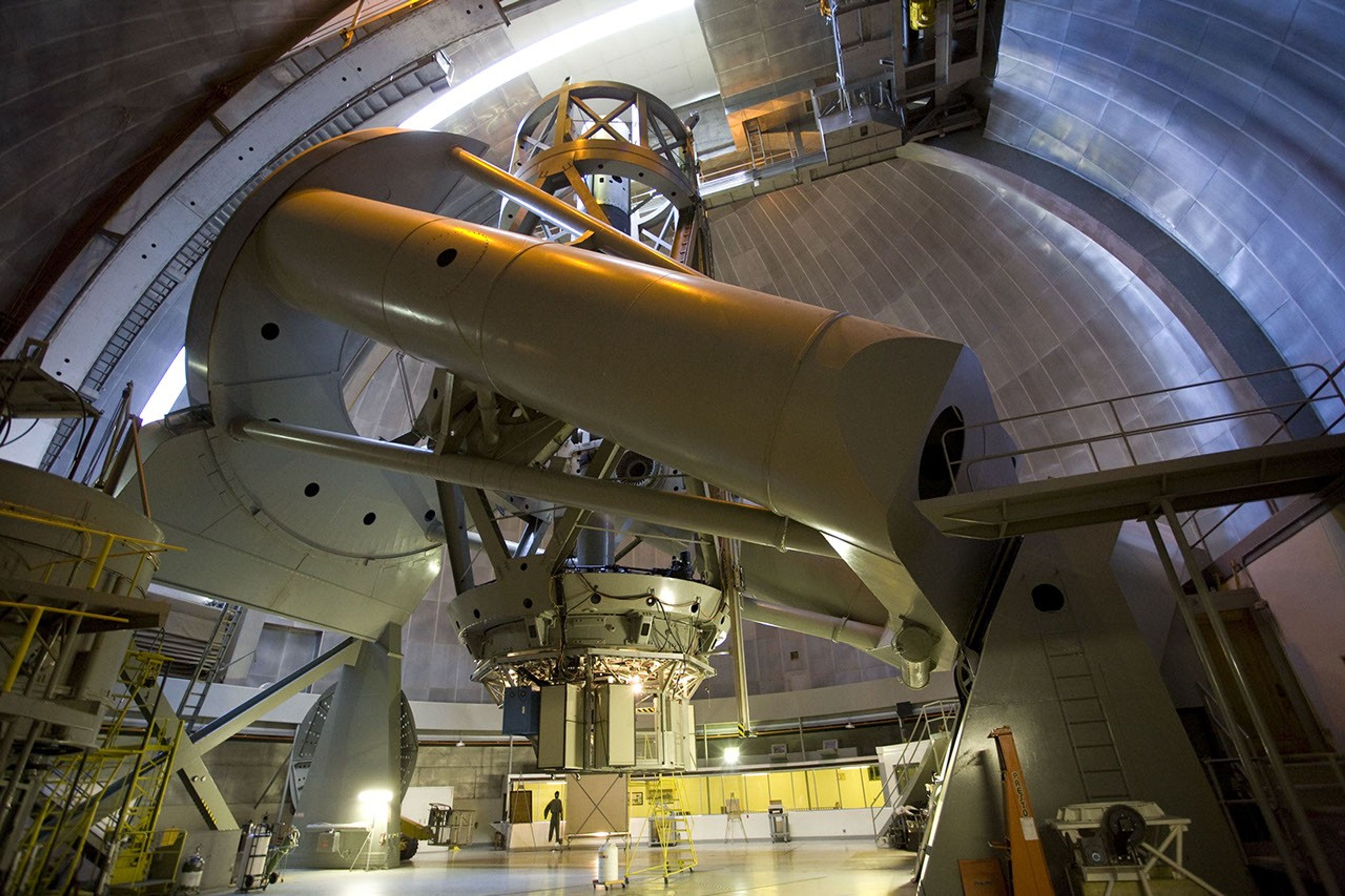
Hale was involved in the founding of several notable observatories, including Palomar Observatory in Southern California, and was instrumental in the founding of the National Research Council and the International Union for Cooperation in Solar Research (the latter of which evolved into the International Astronomical Union). He was also active in the budding field of heliophysics. His founding of the Hale Solar Laboratory and various solar telescopes at Mount Wilson Observatory helped usher in a new era for the discipline.

Hale was also the first astronomer to notice the Zeeman effect (the splitting of spectral lines in a magnetic field) beyond Earth, which was also a major breakthrough in spectroscopy, and used this discovery to deduce the existence of strong magnetic fields in sunspots. This work proved essential in developing heliophysics as a distinct category of astronomy, separate from the field of astrophysics in which Hale was also active.
Pioneers in Heliophysics
Heliophysics only truly emerged as a distinct discipline of science in the late 19th century. This emergence was spurred on by a powerful solar storm in August 1859. Named the Carrington Event after Richard C. Carrington (the English astronomer who studied its cause), this solar storm was so powerful that it caused auroras to be visible as far south as Florida in the continental United States.
By studying sunspots active at the time of the storm, Carrington deduced the connection between active regions and what we now call space weather. George Ellery Hale and other late 19th century American astronomers then built upon this discovery to pioneer heliophysics as a new field of astronomy. By helping to develop new technologies and research techniques, Hale helped bring heliophysics into its own as a dedicated science.
There are many other pioneers in American heliophysics, too. Eugene Parker, namesake of the Parker Solar Probe, was one. He proposed the concept of the solar wind in the late 1950s. Scott Forbush, a physicist at the Carnegie Institution in Washington, D.C., helped to develop the concept of space weather when he discovered protons from the Sun near Earth in 1946. In 1955, Caltech physicist Leverett Davis, Jr., hypothesized the existence of the heliosphere, the bubble-like cavity carved out of the interstellar medium by the solar wind.

More recently, the Wind mission (launched November 1994) discovered a new range of particle interactions between the solar wind and Earth’s magnetosphere. The Solar and Heliospheric Observatory (SOHO, launched December 1995), Solar and Terrestrial Relations Observatory (STEREO, launched October 2006), and Solar Dynamics Observatory (SDO, launched February 2010) have all brought continued improvements to how we see the Sun, and new missions like the Polarimeter to Unify the Corona and Heliosphere (PUNCH, launched March 2025) continue to advance our understanding of the Sun-Earth system.
These scientists and space missions have all pushed the boundaries of the known in search of new discoveries that would broaden our knowledge of the Sun. By following in their footsteps, modern scientists continue to develop a better understanding of the Sun-Earth system, which is especially vital in the new age of space travel and as society becomes more reliant on space-based technology.
Resources for Educators ↓
Selected Lesson Plans
Related Educational Resources
Stay up-to-date with the latest content from NASA's Heliophysics Resource Database (HRD) as we explore the universe and discover more about the Sun and our Solar System.
This activity includes two informative coloring book pages covering Solar Wind, extracted from the "Journey Through the Heliosphere" booklet. Perfect…
(Grades K-12+) A short video (~3 minutes) about how amateur astronomers have used data released from the ESA and NASA's…
(Grades 9-12+) This interactive Digi Kit uses NASA SOHO data to explore sunspot patterns, teaching frequency and period concepts through…
Helio and You
Find the full collection of Helio and You articles here, as well as additional resources to assist with Heliophysics education.
Learn More
Related Articles
Keep up with the latest news in NASA heliophysics and the Science Activation portfolio.
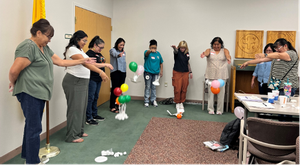
Christine Shupla and Claire Ratcliffe Adams, from the NASA Science Activation program’s NASA@ My Library project, facilitated a professional development Co-Design Space Science, Technology, Engineering, & Mathematics (STEM) Workshop for Tribal libraries on August 29, 2024, hosted at the New…
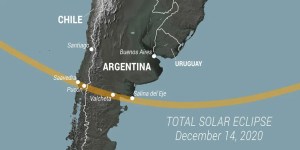
Total Solar Eclipse in South America – December 14, 2020 NASA Space Science Education Consortium (NSSEC) members delivered products, gave presentations, and collaborated with NASA en Español, Office of Communications, and Pontificia Universidad Católica de Chile to engage many with…
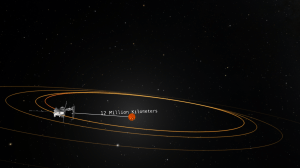
In January, the American Museum of Natural History (AMNH) hosted its monthly planetarium program, offering attendees an insightful journey into the study of our solar system’s star. On January 23, 2024, Dr. Nour Raouafi, project scientist of the Parker Solar…
Helio and You
Find the full collection of past and future Helio and You articles here, as well as additional information about Heliophysics education.
Learn More