







AI and Hubble Science
Artificial intelligence programs search massive data collections, assisting researchers in scientific investigations.
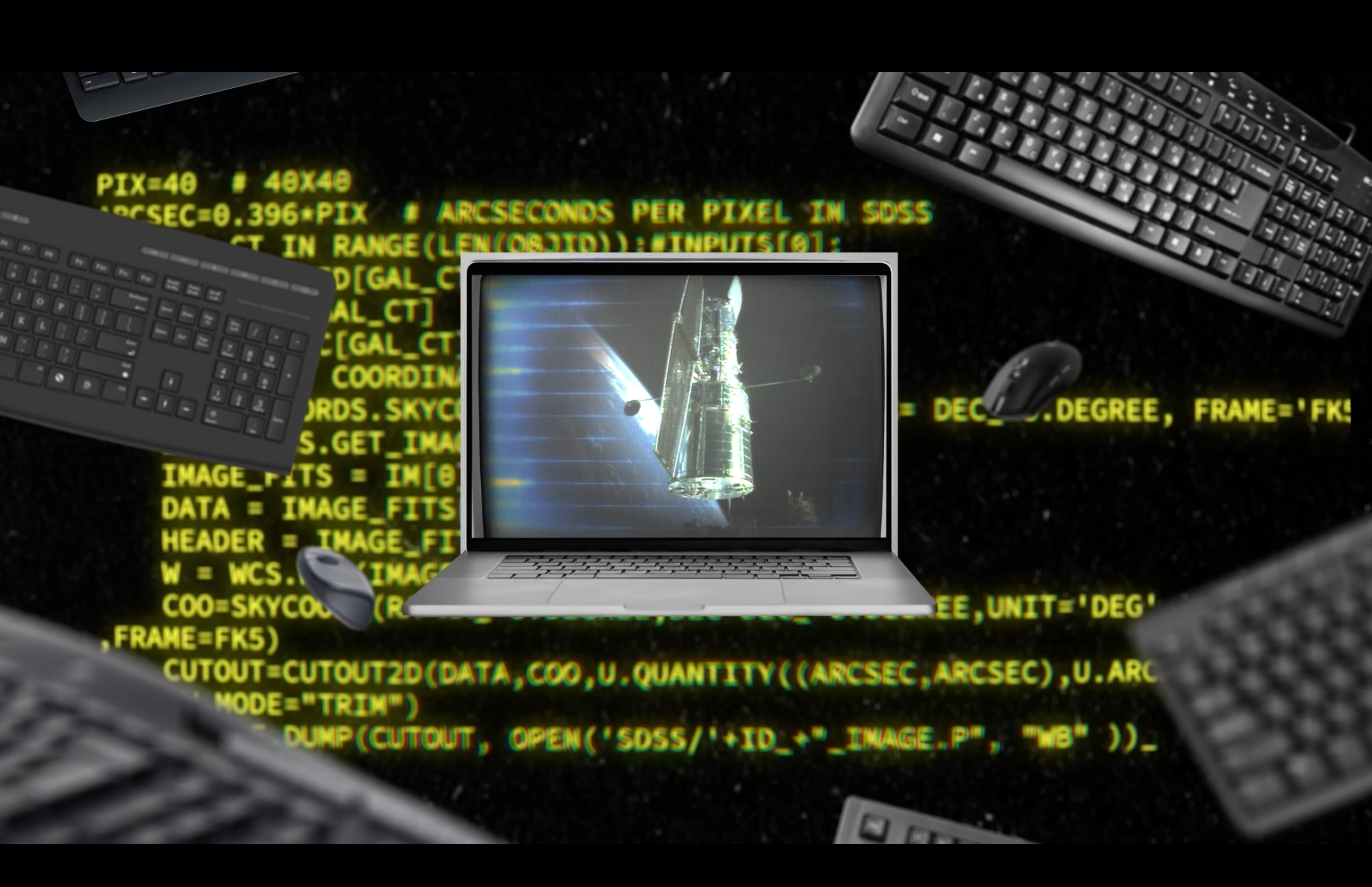
Huge sets of data pulled in from telescopes and observatories around the world, including the Hubble Space Telescope, provide a treasure trove of information for astronomers seeking to unlock the secrets of the cosmos. But while it would take countless hours for individuals to sort through information from years of observations, artificial intelligence (AI) programs can use pattern recognition to swiftly identify key components for astronomical investigations.
Astronomers have used AI and Hubble data to hunt asteroids in between the orbits of Mars and Jupiter. These small asteroids are faint and difficult to detect, but leave distinctive curved, streak-like trails on Hubble’s observations. Astronomers used machine learning algorithms, a form of AI, to identify these streaks in over 30,000 Hubble images. Combined with the efforts of some 11,000 citizen scientist volunteers, the project revealed 1,031 previously undiscovered asteroids, providing valuable information about the formation and evolution of our solar system’s asteroid belt.
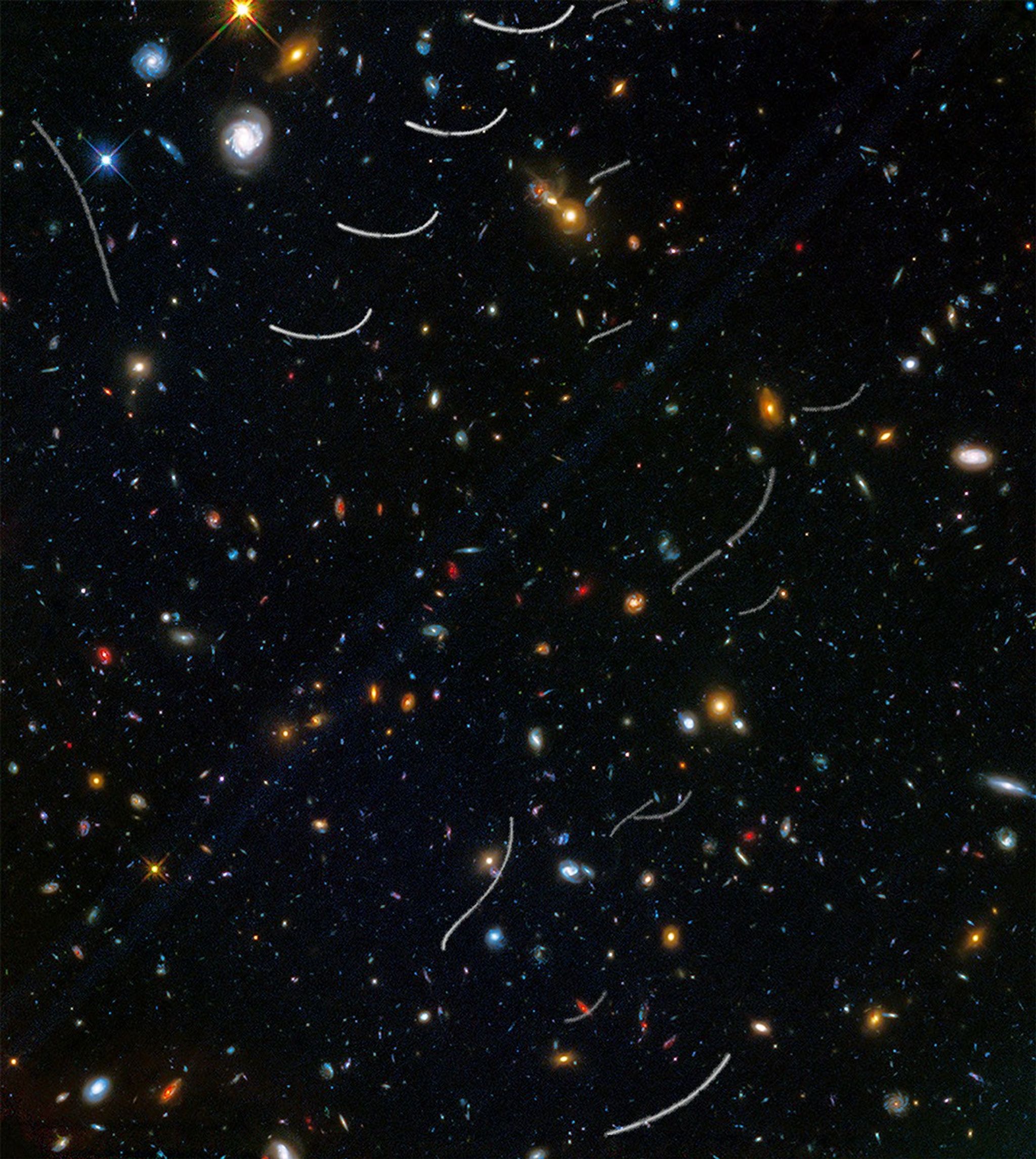
Similarly, Hubble observations of thousands of galaxies helped train AI programs to identify galaxy structures and forms – sometimes on a pixel-by-pixel basis. Researchers use such programs on data like the Hubble Legacy Field, a combination of nearly 7,500 separate Hubble exposures, representing 16 years of observations that contains over 265,000 galaxies, to speed through galaxy classifications. They also used Hubble data to test machine learning algorithms that remove flaws and dust clouds from “noisy” Hubble images, clarifying and refining images to reveal obscured details.

One team analyzed nearly 100 million image cutouts from the Hubble Legacy Archive, each measuring just a few dozen pixels (7 to 8 arcseconds) on a side. They identified more than 1,300 objects with an odd appearance in just two and a half days — more than 800 of which were undocumented in scientific literature. (To learn more, see: AI Unlocks Hundreds of Cosmic Anomalies in Hubble Archive)
As observatories become increasingly effective, their data collections also grow to create enormous archives of observations. With the help of AI programs that can sort through vast troves of data in search of identifiable patterns, researchers are poised to make new leaps in scientific discovery.

/Hubble%20Space%20Telescope%20(A).png?w=1920&h=1080&fit=clip&crop=faces%2Cfocalpoint)