











1 min read
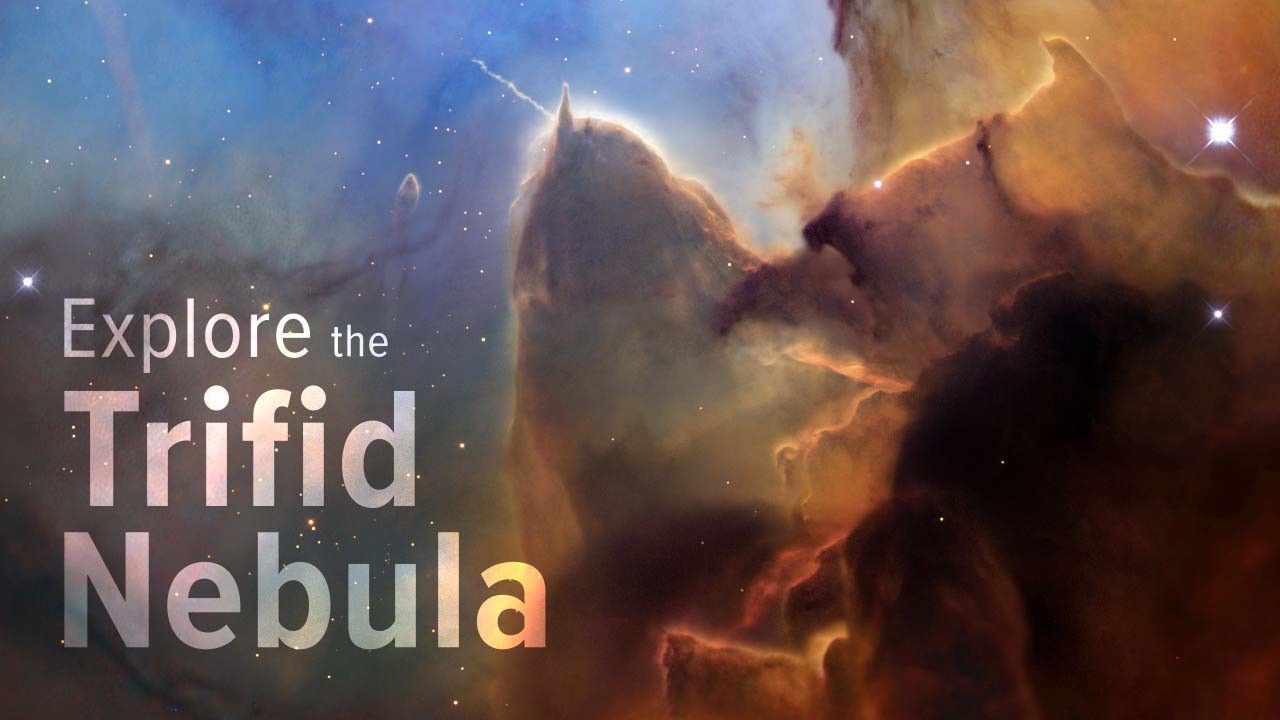
Explore the Trifid Nebula
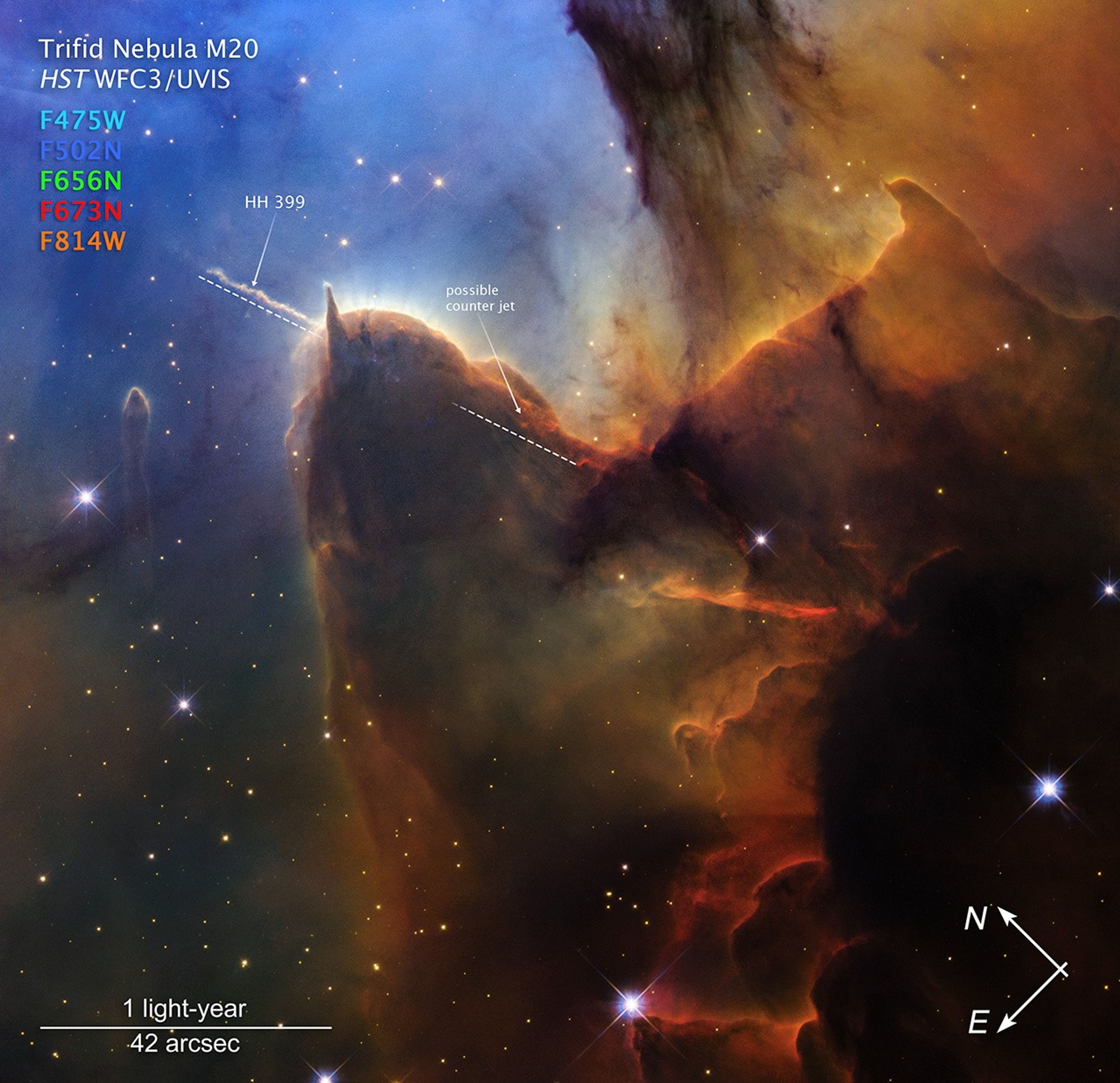
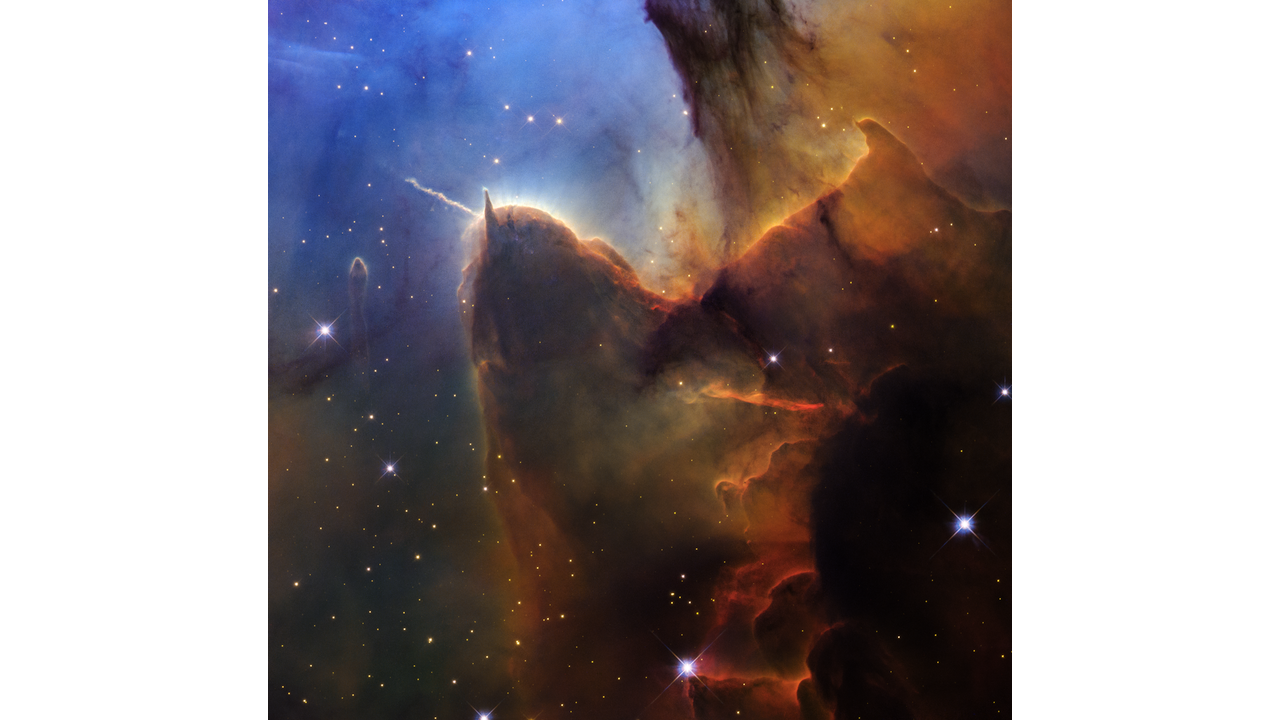
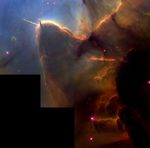
“Fly” through the Hubble Space Telescope’s view of the Trifid Nebula. The video “floats” over the ridges of gas and dust and moves up toward Herbig-Haro 399, at the top of a brown cloud that resembles a head with horns.
The thinner, irregular line pointing left formed from the ejections of an actively forming star.
To its left is a small, faint pillar that resembles a water bear. Much of this pillar’s gas and dust has been blown away, but the densest material at the top persists.
Read more about Hubble’s view of the Trifid Nebula.
- Release DateApril 20, 2026
- Science ReleaseNASA’s Hubble Dazzles With Young Stars in Trifid Nebula
- CreditVideo: NASA, ESA, STScI, Leah Hustak (STScI), Christian Nieves (STScI); Image Processing: Joseph DePasquale (STScI), Alyssa Pagan (STScI); Contributor: Subaru Telescope, Robert Gendler; Acknowledgment: Gregory Bacon (STScI), James Muzerolle (STScI), Frank Summers (STScI)
Related Images, Videos, & Articles

Image (2026): Trifid Nebula (Wide Field Camera 3)
NASA celebrates Hubble’s 36th anniversary with a new image of the Trifid Nebula, a star-forming region it first captured in 1997. The telescope leveraged almost its full operational lifetime to show us changes in the nebula on human time scales with an improved camera.
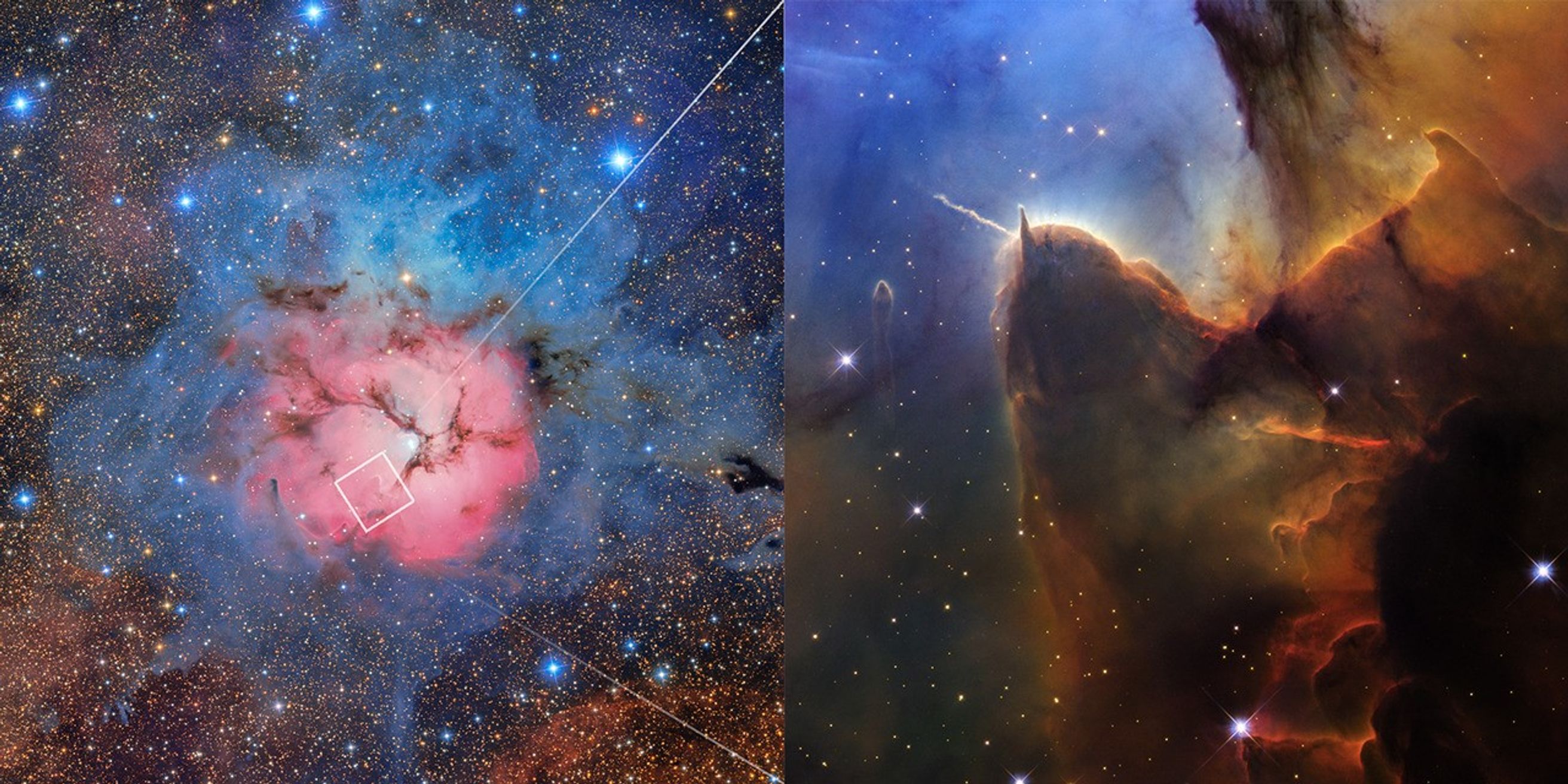
Image: Full Trifid Nebula (Rubin Image with Hubble Close-up)
A pullout shows where the Hubble Space Telescope’s close-up image is located within the wider Trifid Nebula. The image at left was taken by the NSF-DOE Vera C. Rubin Observatory in Chile. The color assignments in the images vary based on the filters in the telescopes’ cameras.
Share
Details
Claire Andreoli
NASA’s Goddard Space Flight Center
Greenbelt, Maryland
claire.andreoli@nasa.gov