











1 min read
Betelgeuse: Effect of Companion Star Wake
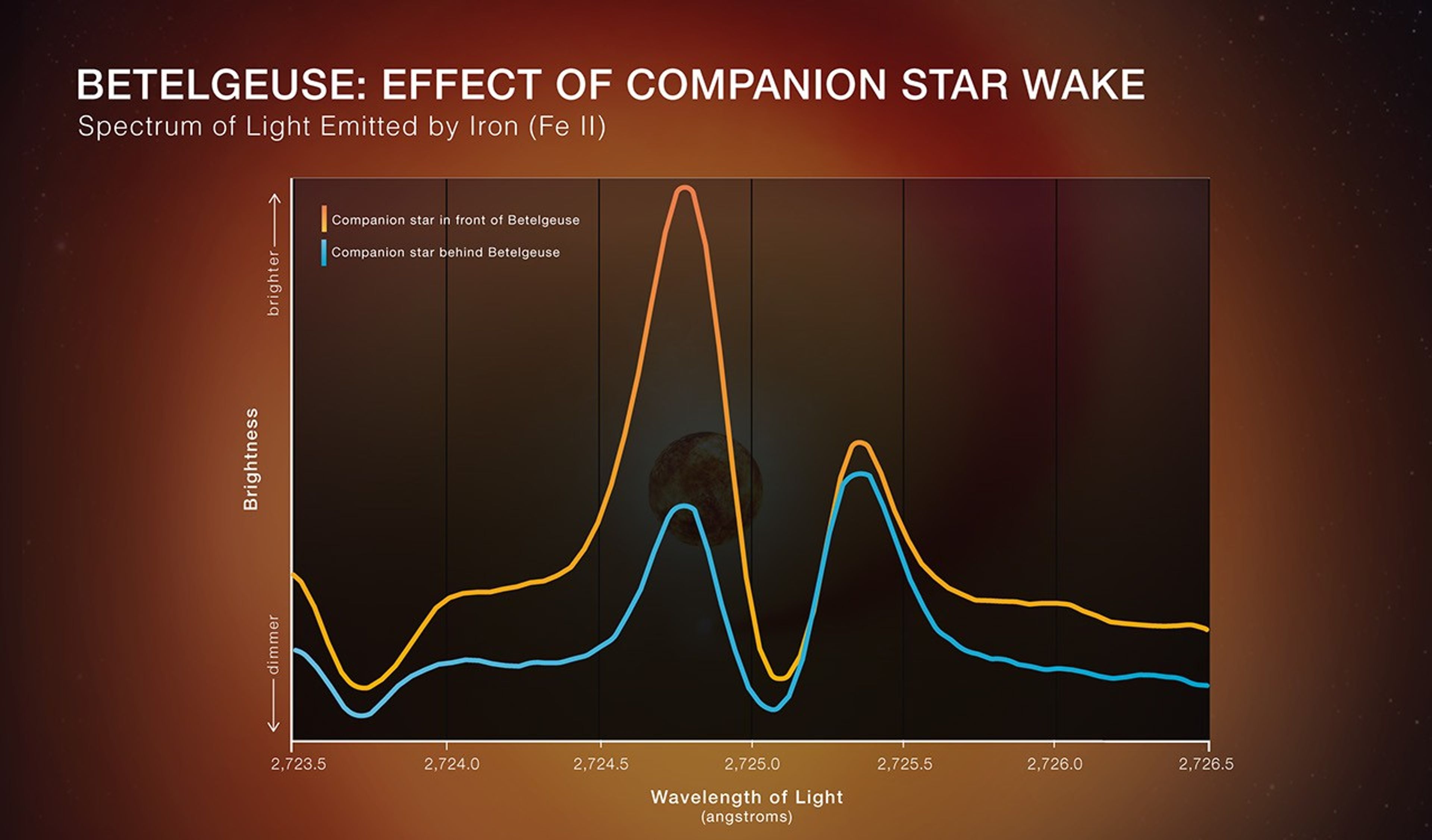
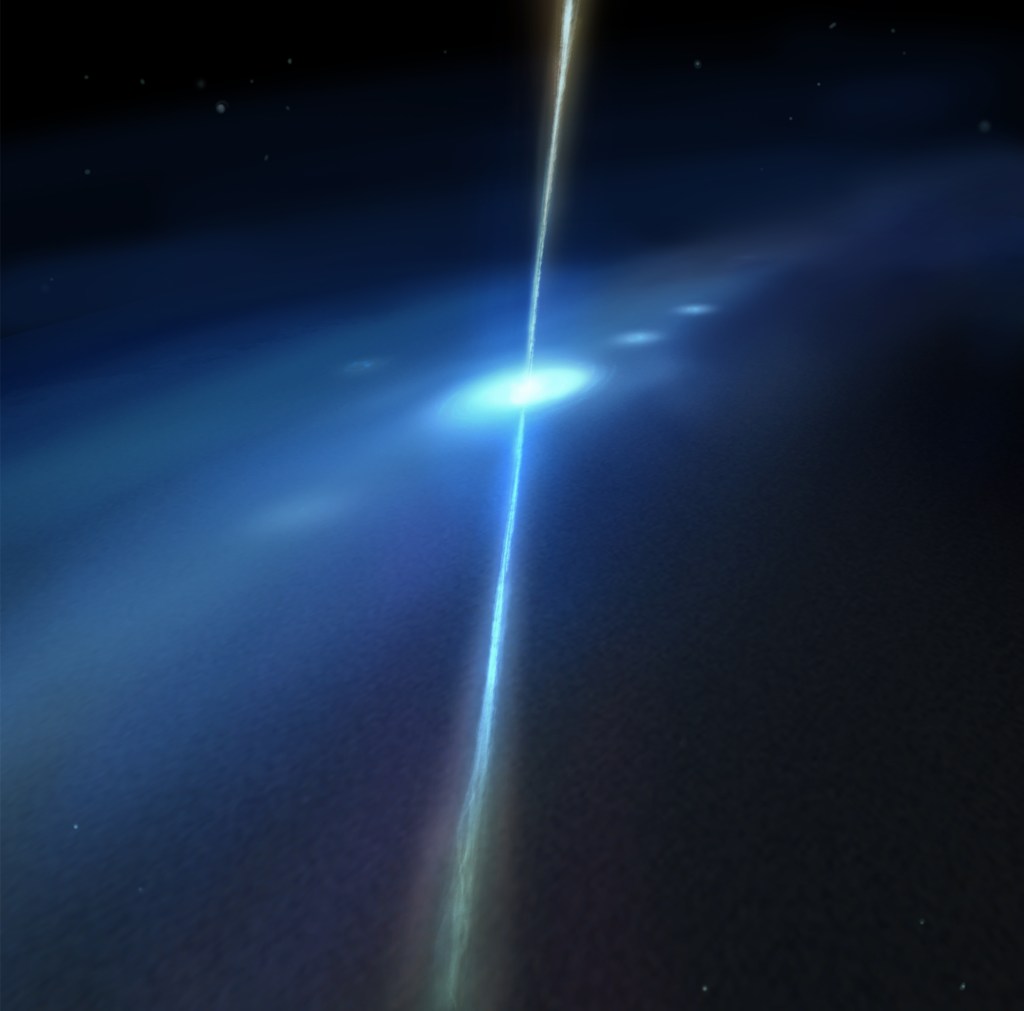
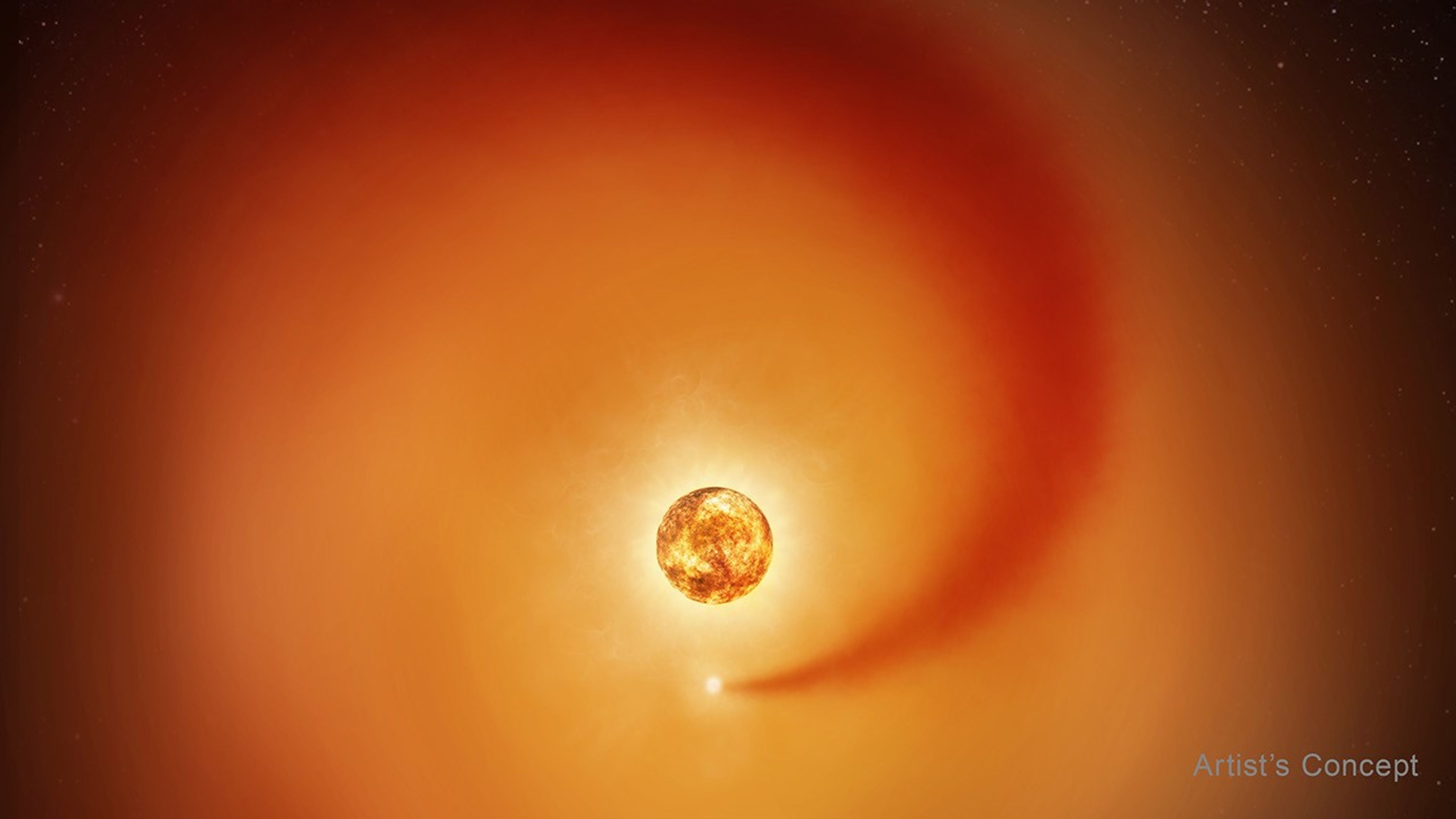
Scientists used NASA’s Hubble Space Telescope to look for evidence of a wake being generated by a companion star orbiting the red supergiant Betelgeuse. They narrowed in on ultraviolet light emitted by ionized iron (Fe II, which is an iron atom that has lost one electron).
Light from material moving toward us is shifted toward shorter wavelengths, or blueshifted. The team found a noticeable difference in blueshifted light, shown in the lefthand peak on the spectrum graph, when the companion star was at different points in its orbit. Specifically, they saw significantly more blueshifted light when the companion star is in front of Betelgeuse, versus when the companion is behind Betelgeuse.
This demonstrates that the supergiant’s atmosphere moves outward and absorbs the wake after the companion goes by, as would be expected by a wake. In other words, when the companion is in front, there is no wake to absorb the iron emission, so astronomers detect a strong peak, but after the companion passes in front of Betelgeuse, the wake that follows it absorbs the light from iron emission, leading to a shorter peak.
- Release DateJanuary 5, 2026
- Science ReleaseNASA Hubble Helps Detect ‘Wake’ of Betelgeuse’s Elusive Companion Star
- CreditIllustration: NASA, ESA, Elizabeth Wheatley (STScI); Science: Andrea Dupree (CfA)
Share
Details
Claire Andreoli
NASA’s Goddard Space Flight Center
Greenbelt, Maryland
claire.andreoli@nasa.gov